2024 Sustainability Report
Discovery
Domain: Mobilising knowledge for action
Aspiration to 2030: We aspire to be justifiably regarded as a place where students and academics do the highest-quality sustainability research that addresses difficult questions and major challenges.

Progress against targets
| Target | Target status | Progress in 2024 |
|---|---|---|
| Sustainability research is integrated with campus operations and planning, to be an international exemplar of a sustainable community. |  In progress |
|
| The highest-quality research is conducted, contributing to knowledge, action and impact across the disciplinary and interdisciplinary dimensions of sustainability. |
On track |
|
| Researchers make considered decisions on the sustainability impact of their research practices and activities. | In progress |
|

Explore our progress
and our stories
Our progress
The sustainability impact of the University’s research outputs
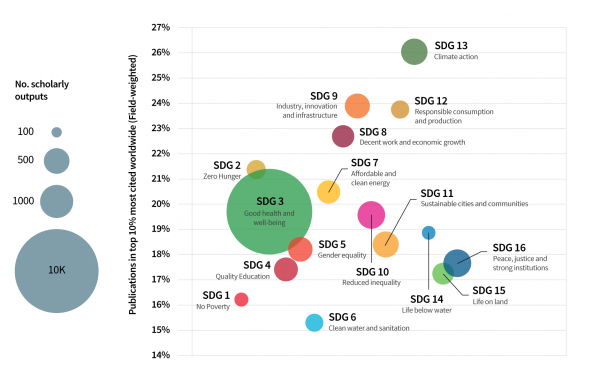
The University’s sustainability research impact has been analysed using the Field Weighted Citation Impact (FWCI ) data sourced from Scival. FWCI is the ratio of the total citations actually received and the total citations expected, based on the average of the subject field.
This analysis looked at the percentage of research outputs in the top 10 percent of citations, to estimate the University’s contribution to the most influential, highly cited publications. A random sample of research outputs from all institutions should have 10 per cent of outputs in the top 10 per cent most cited. If the result for an institution is above 10 per cent of outputs in the top 10 per cent most cited, this indicates a better than average performance.
Across all SDGs, the University has significantly more than 10 per cent of research outputs in the top 10 per cent of citations. This is an indication of the University’s commitment to high-quality sustainability research that delivers impact.
Percentage of SDG-related research outputs in the top 10% of citations (field weighted)

Source: SciVal (Elsevier, Accessed 15-January 2025). SDG mapping based on Elsevier 2023 method. Elsevier does not map to SDG 17.
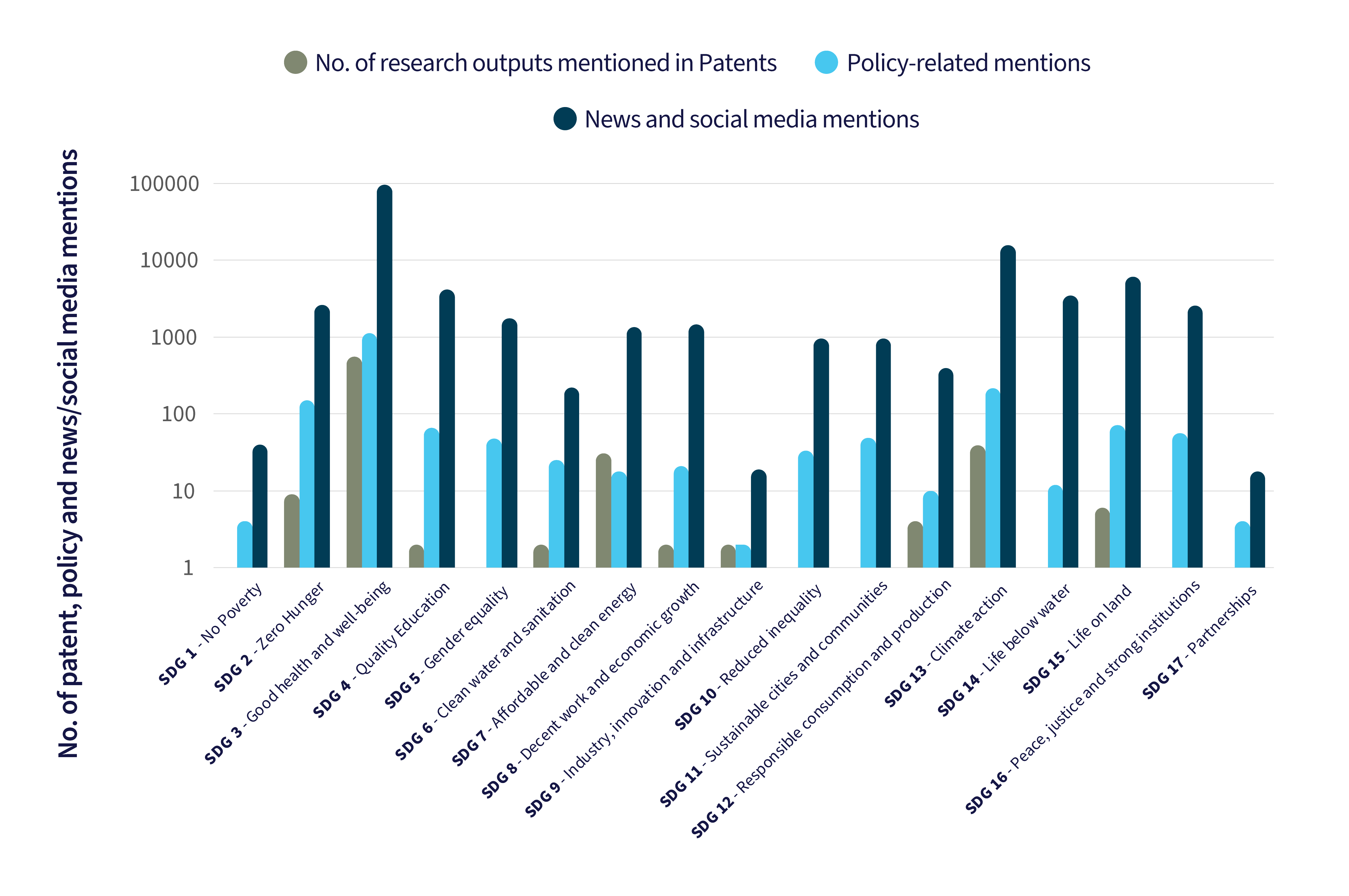
Research outputs mentioned in 2024 in patents, news and social media, and related to policy, were also mapped. This mapping included mentions of University research published at any time prior to the end of 2024.
Click here to see data table of dataset used above
Number of patent, policy and news/social media mentions for research outputs mapped to SDGs
Source: Altmetric Explorer. SDG mapping based on SpringerNature/Digital Science method.
Click here to see data table of dataset used above
As in 2023, at an institutional level, the University’s research were most prominent in relation to SDG 3 – Good Health and Well-being, and SDG 13 – Climate Action. Outputs across 16 of the 17 SDGs increased compared with the figures reported in 2023.
SDG 3 – Good Health and Well-being
- 16,291 outputs published between 2021 and 2024 were mapped to SDG 3 – Good Health and Well-being (Source: SciVal), approximately 10 times more than the next highest, which was 1,646 outputs mapped to SDG 16 - Peace, justice and strong institutions.
- 20 per cent of the outputs mapped to SDG 3 were amongst the top 10 per cent most cited.
- SDG 3 also had the highest number of news and social media, and policy-related and patent mentions in 2024, with over 95,000 mentions in total. This is an increase of 73 per cent on 2023 figures (Source: Altmetric Explorer).
SDG 13 – Climate Action
- SDG 13 had the highest percentage of outputs published between 2021 and 2024 in the top 10 per cent most cited at 26.1 per cent (Source: Scival).
- SDG 13 had the second highest number of news and social media, and policy-related and patent mentions in 2024, with almost 16,000 mentions in total. (Source: Altmetric Explorer).
Our stories
Revolutionising sustainability in the Healthcare Carbon Lab
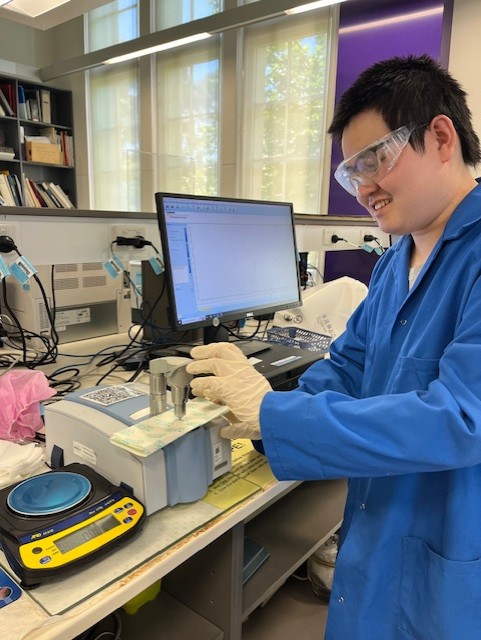
The Healthcare Carbon Lab (HCL), launched in May 2024, confronts the pressing challenge of healthcare's environmental footprint. With healthcare responsible for a significant portion of Australia's carbon emissions and waste, the HCL aims to revolutionise sustainability within the sector. By measuring waste, carbon emissions, and energy usage in hospitals, the lab pioneers innovative solutions to mitigate environmental harm while upholding patient care standards. HCL invites students to engage in educational projects relating to healthcare sustainability and life cycle assessments in their programs.
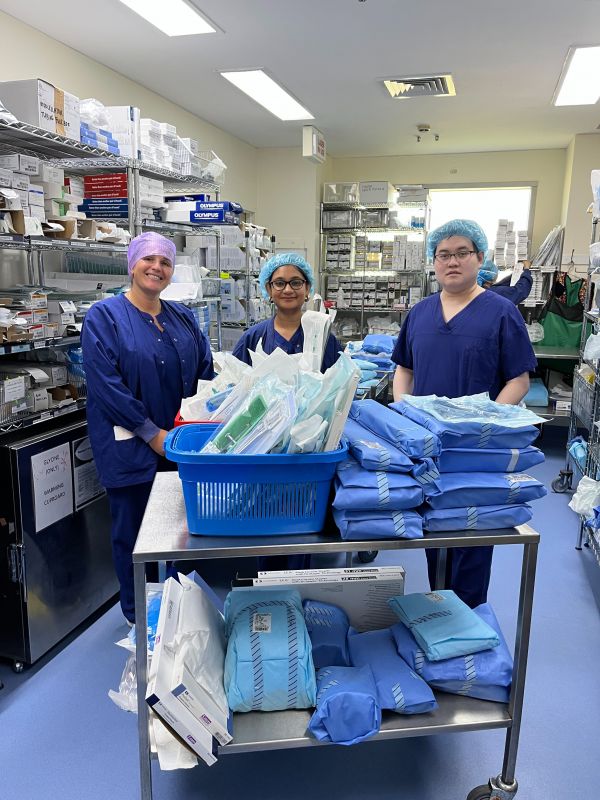
HCL offers a growing number of students both internship and volunteering opportunities. These applied learning opportunities are contributing to HCL's cornerstone initiative to build a life cycle inventory of medical consumables from the ground up. This library of healthcare products is fast becoming a toolkit for LCA researchers to accelerate healthcare sustainability studies. To date, students are charting the 'Top 100' most used healthcare products and have been busy gathering data using FT-IR ATR spectroscopy to identify the material makeup of each product. They have also been learning more about the process of life cycle analysis to understand how their data will feed into a discovery of emissions generated, and resources used throughout each product's lifecycle. There is interdisciplinary collaboration with engineers and healthcare professionals, to help students identify opportunities to reduce waste and energy consumption, contributing to the HCL’s mission to drive sustainability in healthcare practices.
Supporting sustainability innovation with the Materials Characterisation and Fabrication Platform Sustainability Grants

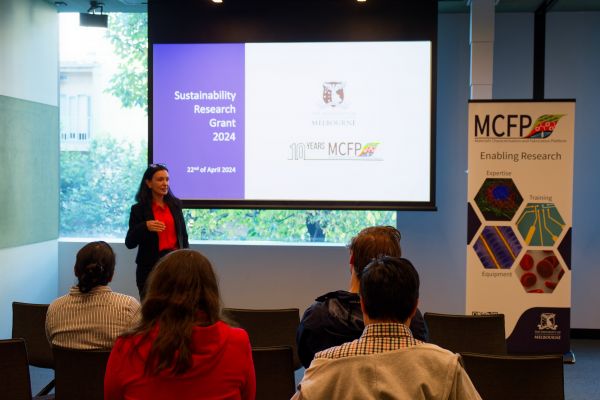
The University’s Materials Characterisation and Fabrication Platform (MCFP) is a multiuser facility that enables research across engineering, physics and life sciences. In 2024, MCFP invested in early- and mid-career researchers in the field of sustainability, awarding a total of $12,500 in MCFP Sustainability Grants to nine awardees. The MCFP Sustainability Grants enabled researchers to pursue innovative projects exploring novel approaches to renewable energy, sustainable agriculture and eco-friendly materials, without the pressure of securing large-scale funding.
The grants covered cutting-edge research on solar cells and advanced battery technologies to critical studies on the impact of pollution on insects and the Great Barrier Reef. Awardee and PhD candidate Genting Liu focused his grant funding on exploring the role of atmospheric pollution in the decline of global insect populations. He said, “I have already discovered fantastic results from my biological samples because of this grant funding. The platform is highly professional, and staff members are well-trained and provide me lots of assistance.” So far, the grants have been acknowledged in three academic journal publications, including in Nature.
The grants also create opportunities for early- and mid-career researchers to develop their skills in project management, grant writing, and experimental design, enhancing their ability to contribute to the field of sustainability in the long term.
Sustainability initiatives at the University
Researchers across all University faculties and research centres contribute to advancing global sustainability. Our research endeavour spans the breadth of sustainability and climate change, including the challenges and opportunities it presents in political, social, the built environment, economic, arts and health sectors. The University is home to 27 research initiatives with a focus on sustainability:
- The Indigenous Knowledge Institute aims to advance research and education in Indigenous knowledge systems, including Healthy Country as a core research focus.
- The Environmental Research Hub brings together all the sustainability, environment and climate knowledge from the University.
- Melbourne Climate Futures connects and amplifies the depth and breadth of University of Melbourne research, creates a portal to share ideas and collaborate on real action, and empowers the next generation of climate scholars, practitioners and leaders.
- The Melbourne Energy Institute delivers influential, interdisciplinary research on the transition to a clean energy system, working with the community, industry and government on some of the world's most pressing energy challenges.
- The Melbourne Biodiversity Institute is a collective of researchers, innovators and problem-solvers from across the University of Melbourne dedicated to addressing Earth’s biodiversity crisis.
- Advanced Digital Design + Fabrication is a research hub at the Melbourne School of Design that brings together researchers covering a diverse field of expertise, including digital design, construction robotics, 3D printing, mixed reality, and BIM. The research hub seeks innovative and sustainable solutions that apply to industries – ranging from construction, health and well-being, to the arts, entertainment, and design disciplines.
- Informal Urbanism Research Hub (InfUr) is an assemblage of researchers and projects focused on the role of urban informality in the creative production of cities of both the Global South and North.
- The Retrofit Lab is a Research and Innovation Laboratory activating the transition of Australia's buildings, infrastructure and landscapes for resilient, healthy, and sustainable cities.
- The Transport, Health and Urban Systems Research Lab (THUS) aims to explore the effects of physical and social systems on the health of populations. THUS develops and applies novel methods using big data, artificial intelligence, and advanced analytics to provide new insights thereby influencing urban policies, globally.
- The Urban Ecology and Design Lab (UEDLAB) seeks to merge applied urban ecology with landscape architecture and environmental planning, implementing projects that focus on climate adaptation, green infrastructure and engineered ecosystems.
- The Melbourne Environmental Data Analytics Lab, commencing in 2025, focuses on sustainability behavioural analysis and behaviour change, particularly around EV use, and data collection and analysis, including energy use and emissions data collection.
- The Healthcare Carbon Lab (HCL) confronts the pressing challenge of healthcare's environmental footprint. With healthcare responsible for a significant portion of Australia's carbon emissions and waste, the HCL aims to revolutionise sustainability within the sector. By measuring waste, carbon emissions, and energy usage in hospitals, the lab pioneers innovative solutions to mitigate environmental harm while upholding patient care standards.
- The Climate CATCH Lab (Collaborative Action for Transformative Change in Health and Healthcare) accelerates the University of Melbourne's climate change and human health research, engagement and education for enhanced impact.
- The Centre for Spatial Data Infrastructures and Land Administration aims to advance spatial data infrastructures and modernise land administration systems. It focuses on creating an advanced 3D virtual information system that integrates, models, and visualises data, making it accessible to address contemporary societal challenges.
- The Victoria Drought Resilience Adoption and Innovation Hub, led from the University of Melbourne’s Dookie Campus, addresses issues of drought-related preparedness, environmental resilience, food security, and economic sustainability.
- The Peter Cook Centre for Carbon Capture and Storage Research aims to develop environmentally and socially acceptable, cost-effective carbon capture and storage solutions for a carbon constrained world.
- The Centre for Disaster Management and Public Safety delivers world-class interdisciplinary research and innovation to improve the whole-system response and resilience of infrastructure, institutions and communities against extreme events and critical incidents, and contribute to the UN Sustainable Development Goals.
- The National Centre for Coasts and Climate works to identify the best ways of addressing climate change impacts in Australian coastal ecosystems.
- Melbourne Centre for Cities focuses on the role of cities in major societal challenges like climate change, how city leadership can address these challenges, and the information needed to do so in a connected but also disrupted and unequal time.
- The Sustainable and Healthy Environments Lab conducts applied research aimed at understanding how the built environment can improve sustainability and health through the design of high-performance spaces.
- The Wildfire Futures Hallmark Research Initiative is a future-focused research program that takes an interdisciplinary approach to link new ways of predicting changes in fire, climate and ecosystems with the preferences and knowledge of communities.
- The Pollution and Health Hallmark Research Initiative aims to develop a research program for environmental pollutant monitoring and health impact assessment
- The Melbourne Social Equity Institute conducts and facilitates interdisciplinary research that addresses the causes and consequences of social inequities and advances knowledge about effective ways to respond.
- The Grimwade Centre for Cultural Materials Conservation delivers innovative solutions to industry and community embedded problems which impact the sustainability of cultural material. Focused on sustainable practice, the Centre brings together cross-sectoral teams to progress solutions for environmental and climate change threats to cultural heritage.
- The Melbourne Centre for Law and the Environment promotes research into the protection of the environment and the promotion of ecologically sustainable development; the production and distribution of energy, including climate change law and regulation; the sustainable development of natural resources; and environmental justice.
- The Oceania Institute has been established to enhance connection and collaboration between the University of Melbourne and people and institutions throughout Oceania. Read more about the Institute’s first year of operation.
- The Environmental Microbiology Research Initiative is a research consortium that investigates the complex microbial networks, or microbiomes, which form a critical component of Earth’s environmental systems.
Our sustainability strategy
At the University of Melbourne, our efforts in sustainability are guided by Sustainability Plan 2030 - a roadmap for sustainable delivery of our institutional strategy Advancing Melbourne.
Read more about how we are advancing sustainability at the University:
