2024 Sustainability Report
Indigenous knowledges
Domain: Mobilising knowledge for action
Aspiration to 2030: The University has respectfully integrated Indigenous knowledges and participation into our approach to sustainability.
Progress against targets
| Target | Target status | Progress in 2024 |
|---|---|---|
| The University has an increased understanding of sustainability from an Indigenous perspective through co-created or Indigenous-led reciprocal learning. |  In progress |
|
Explore our progress
and our stories
Our stories
Cultivating global networks for Indigenous knowledges
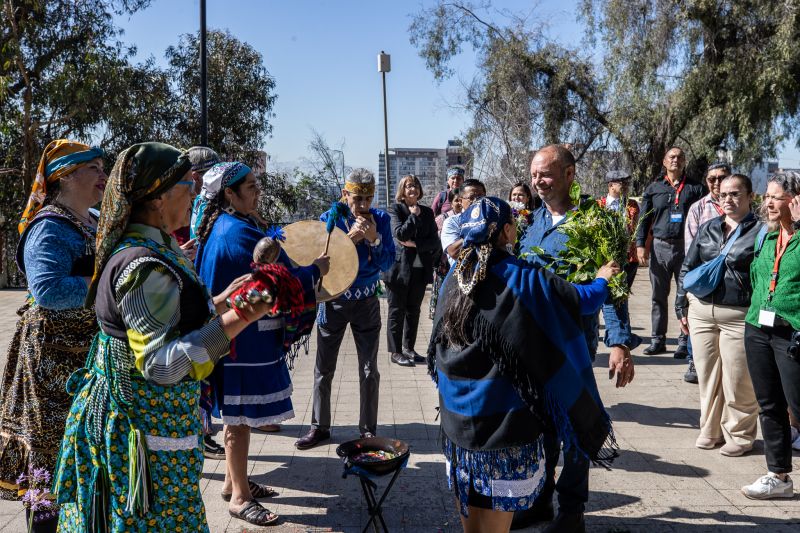
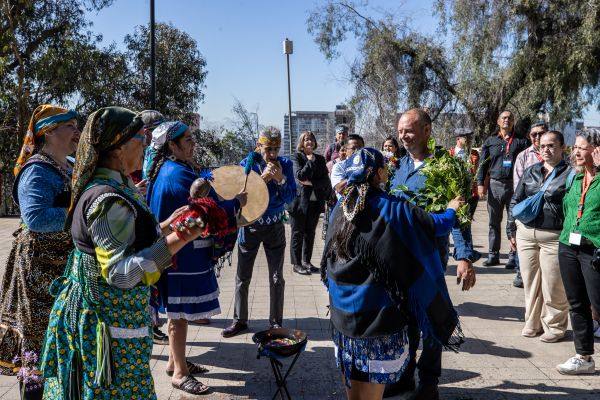
The University continued its leadership in convening the Association of Pacific Rim Universities (APRU) Indigenous and First Nations Knowledges Network in 2024. The Network’s key activities included an online seminar series, Roots and Bridges: APRU Indigenous Connections exploring case studies of Indigenous Knowledges and the experiences of Indigenous people in the academy, and the third annual workshop, hosted by University of Chile in Santiago. The workshop featured a panel on climate change and the role of Indigenous Knowledges, with speakers from University of Chile, Universidad San Francisco de Quito, University of Hawai’i at Mānoa, Wechekeche Ka Itrofillmongen (Mapuche Environmental Conservation Organisation) and the Environment Office of the Municipality of Rapa Nui. Read more about the workshop here.
The University also commenced development of its updated Indigenous Internationalisation Plan for 2025-2027. This is the key mechanism for delivering on our commitment to ensuring that Indigenous voices are at the fore of our engagement with tertiary institutions and networks across the world, and that we continue to play a leading role in shaping and developing these global Indigenous research and education networks. It recognises that engaging with international institutions and communities enriches our endeavours and extends our ability to address global challenges and opportunities.
Melbourne Law School Learning on-Country subjects
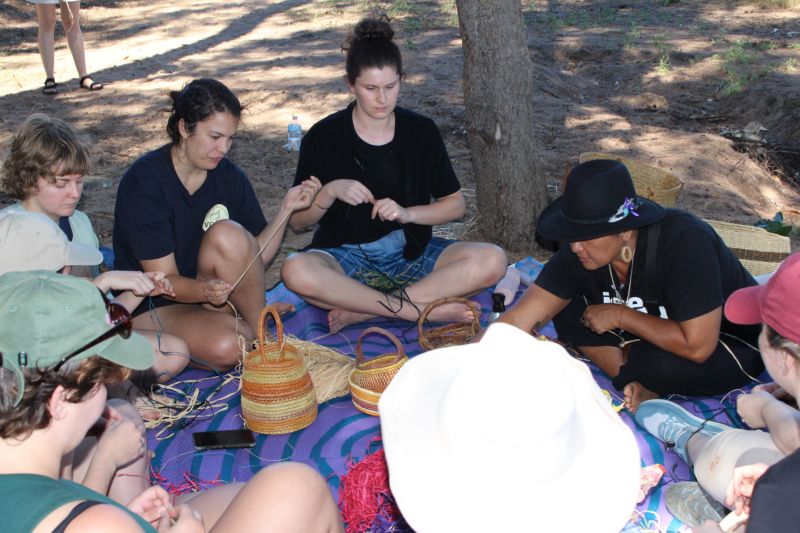
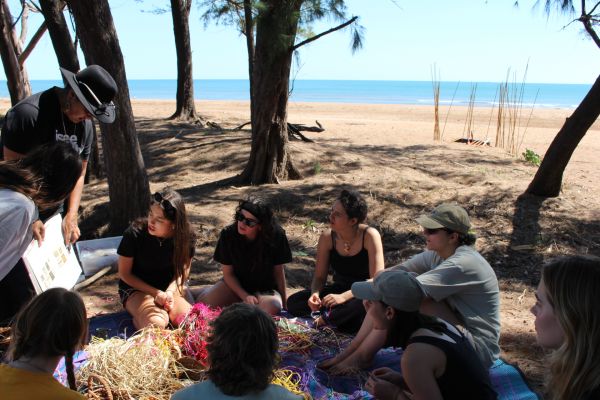
The Indigenous Law and Justice Hub (ILJH) at the Melbourne Law School currently offers two on-Country elective subjects for students in the Melbourne Law School Juris Doctor program. These subjects each give students the opportunity to learn about Indigenous knowledges including environmental governance through intensive place-based learning. This curriculum project is led by ILJH academics Professor Eddie Cubillo (Larrakia, Wadjigan and Central Arrente) and Jaynaya Dwyer, and are taught through visiting grounded in long-term relationships with people and organisations working in relation to Indigenous justice. They support the Hub’s overall goal, to put the legal profession in service of Indigenous peoples’ justice agendas.
Access to Justice on Country is currently taught on Larrakia Country, Darwin. The subject considers ‘access to justice’ as a term used regularly in legal and public policy settings, reflecting on the contextual complexity of ‘access to justice’ in specific settler-colonial contexts in Australia, including questioning what justice is and who gets to define it.
"Going to Larrakia Country for the Access to Justice on-Country subject was an invaluable experience in my law studies and development as a future legal professional. The subject was truly intensive, in that I learnt more about the role of law and legal practitioners in affecting the lives of Aboriginal and Torres Strait Islander people than I could have ever learnt in years of learning only on campus. Claire, JD student
Indigenous Law in Aotearoa and Australia is taught intensively in Aotearoa (New Zealand) and considers the manner in which New Zealand Law engages with Indigenous legal systems, and the role of Te Tiriti o Waitangi in organising Indigenous-Settler relations. It provides an opportunity to join leading Māori scholars and advocates in reflection on learnings.
Each subject draws on traditions of ‘on-Country’ or land-based learning to offer students a deeper understanding of place, custodianship of Country and sustainability grounded in Indigenous knowledges, including through dialogue with Traditional Owner groups, Land Councils and environmental organisations.
Our sustainability strategy
At the University of Melbourne, our efforts in sustainability are guided by Sustainability Plan 2030 - a roadmap for sustainable delivery of our institutional strategy Advancing Melbourne.
Read more about how we are advancing sustainability at the University:
