2024 Sustainability Report
Community of sustainability learners and practitioners
Domain: Amplifying action through campus and communities
Aspiration to 2030: The University is a thriving community that shares, co-creates and practices sustainability knowledge and action.
Progress against targets
| Target | Target status | Progress in 2024 |
|---|---|---|
| The University’s faculties and portfolios support and learn from each other to embed sustainability in practice and in learning – formal, non-formal and informal. |  On track |
|
| The University community shows increased uptake of positive sustainability skills, knowledge and behaviours through non-formal and informal learning. | On track |
|
| The University offers a suite of student-centred, formal and non-formal applied sustainability learning opportunities, informed by inter and trans-disciplinary approaches. | On track |
|
| Academic and professional staff have increased their participation in and contribution to formal and non-formal learning to develop their general and role-specific sustainability skills. |  In progress |
|
| The University has increased its engagement with alumni regarding sustainability. |
In progress |
|
Explore our progress
and our stories
Our stories
Taking the pulse of the University community with the Sustainability Survey
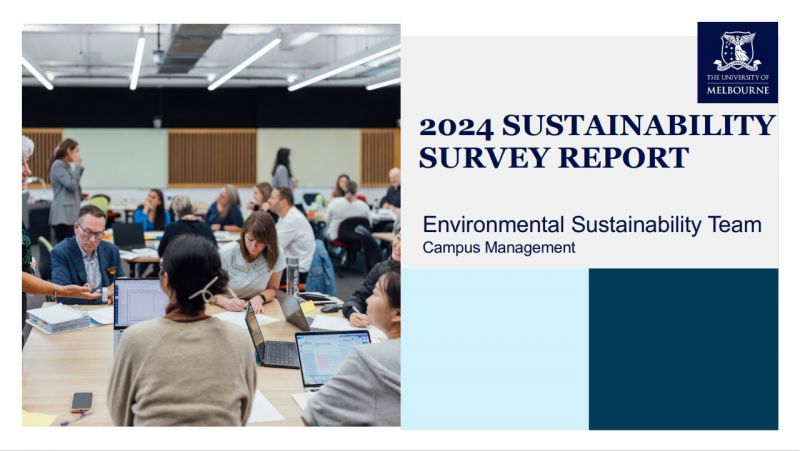
In July 2024, students and staff were invited to participate in the biennial Student and Staff Sustainability Survey, offering them a valuable opportunity to provide feedback on sustainability initiatives at the University. The results help assess current efforts, shape future initiatives, and track progress towards the SP2030.
A total of 1,304 responses were received, revealing that waste management and embedding circular economy principles have become the top priorities for improvement, overtaking the long-standing focus on reducing the University’s carbon footprint.
The survey identified several areas for improvement, including further progress in embedding ethical and sustainable procurement practices, and enhancing event management. The results showed positive perceptions of the University’s efforts to enhance campus biodiversity, along with significant gains in participation rates in sustainability initiatives, driven by greater communication.
These findings will help the University continue to enhance its operations and governance, ensuring the community's voice remains central in driving meaningful sustainability outcomes.
Extra-curricular sustainability learning: Melbourne Plus Sustainability Advocacy
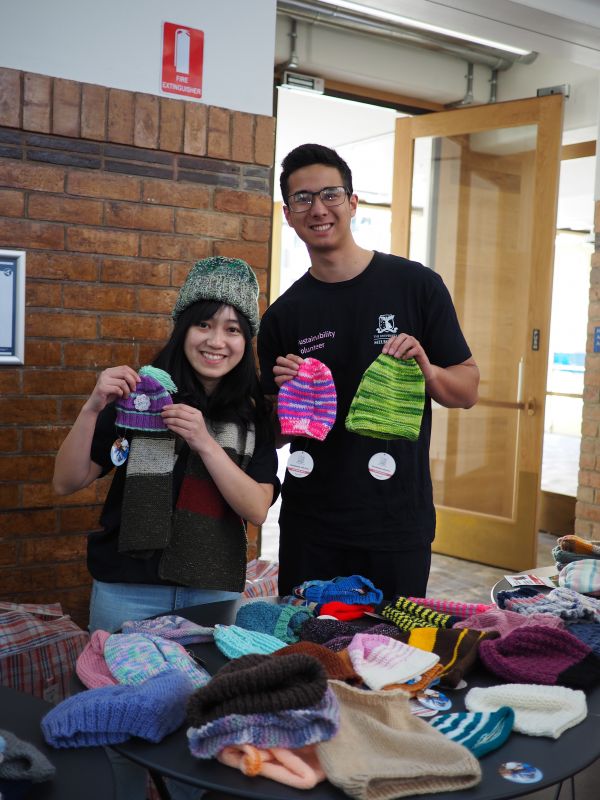
Melbourne Plus is the University's co-curricular recognition program, supporting students to get involved in activities that develop their capabilities and connect them with the University community. Students can develop four capabilities and earn four digital credentials that are verified by the University and shareable with online networks. One of these capabilities and corresponding credentials is in Sustainability Advocacy.
In 2024, 404 students participated in 12 Sustainability Advocacy activities under Melbourne Plus and 230 of those students earned a Sustainability Advocacy digital credential verified by the University. Melbourne Plus helped students find ways to contribute to the University's sustainability goals and gave them confidence to look for more opportunities, acting as a catalyst to growth and discovery.
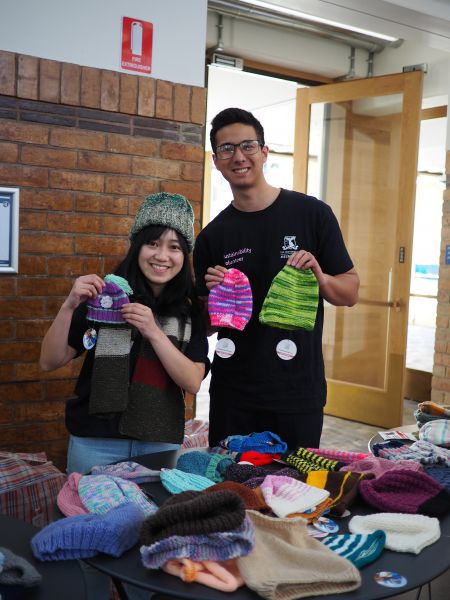
Susan Wen, a Bachelor of Design student who was a Sustainability Volunteer as part of Melbourne Plus said, "This experience has taught me that I need to continue stepping out of my comfort zone, because those who do not don't experience the vast opportunities for growth and leadership out there.”
Melbourne Plus is coordinated by the Student Life team in SASS in collaboration with the many staff members across the University and affiliate organisations who deliver co-curricular activities to students. To find out more, contact the team at melbourne-plus@unimelb.edu.au.
Driving sustainability at the Professional Staff Conference
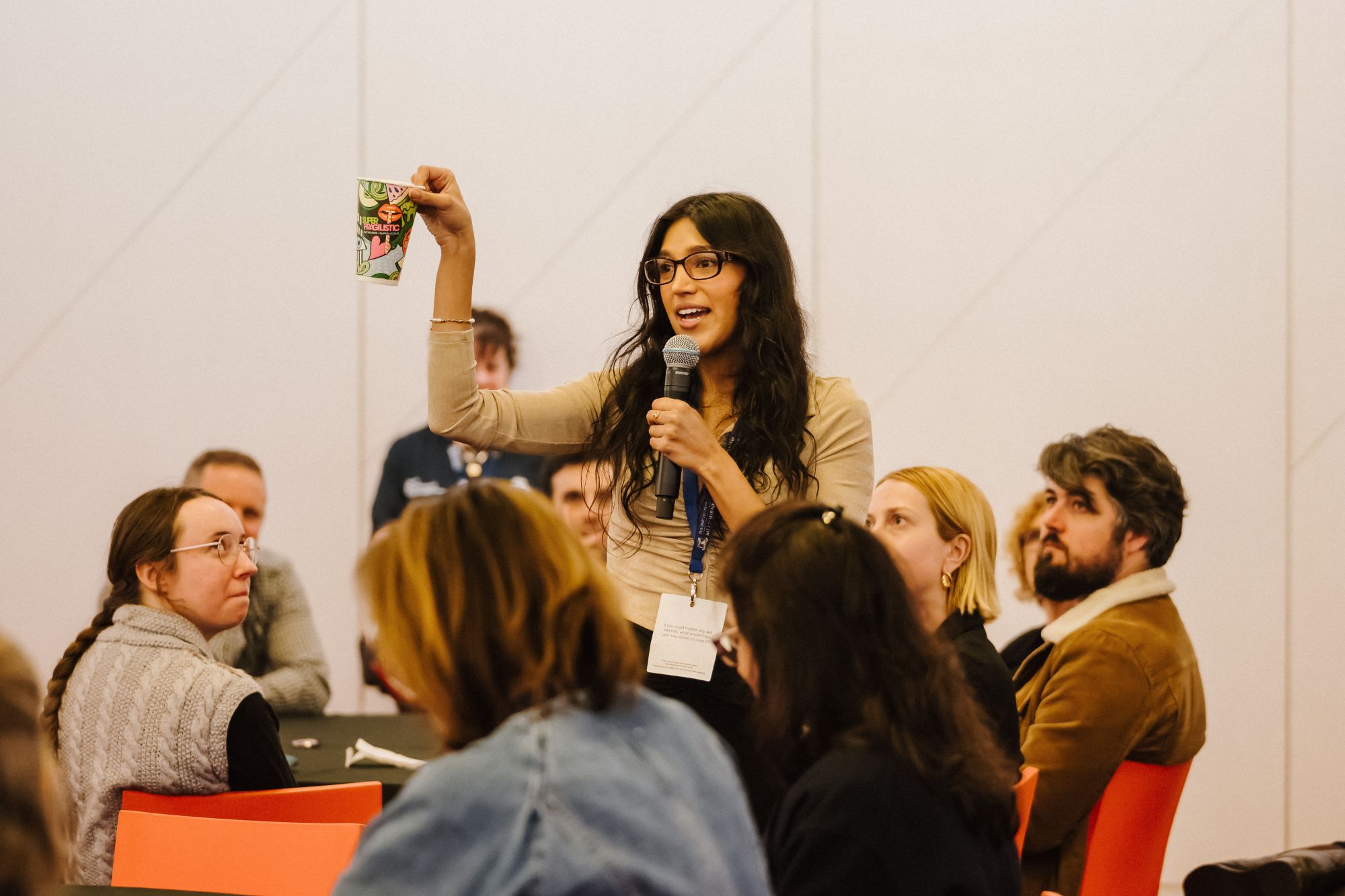
For the second year, the Professional Staff Conference prioritised sustainability. The event was selected as a pilot for the ACTS Sustainable Event Certification, meeting rigorous sustainability standards.
With 900 attendees, the October 2024 conference generated approximately 40 tonnes of carbon, determined using the My Climate Event Carbon Calculator. To mitigate this, carbon credits were purchased from Carbon Neutral (37.9 tonnes), offsetting travel emissions and operational requirements. The funds will support biodiversity and rainforest conservation projects in Australia.
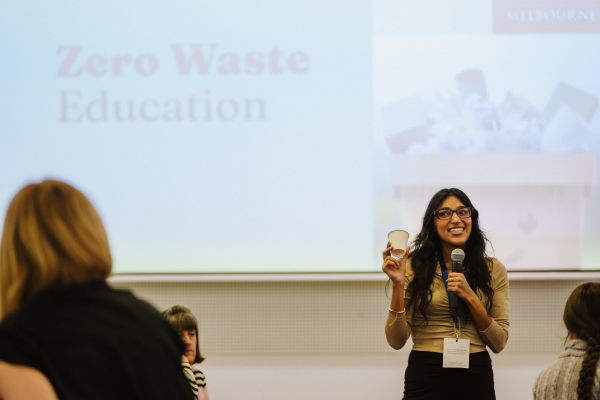
Additionally, the Mastering Your Waste Practices: Transforming Knowledge into Action session engaged 100 staff in addressing waste management challenges, exploring efficiency tools, and fostering collaboration. Participants gained practical strategies to improve waste practices, recycle correctly, and divert waste from landfill, enhancing staff engagement in reducing contamination and raising awareness of the sustainability targets in the SP2030.
Enhancing our understanding of the embodied carbon of construction
The University's Corporate Development team plays a central role in the ideation and design phase of campus building projects. To equip the team with essential knowledge and skills for tackling environmental challenges, 25 team members completed a comprehensive training program on the impacts and management of embodied carbon in construction.
The training consisted of two interactive workshops conducted by experts from the Faculty of Architecture, Building and Planning. The first workshop provided a foundational understanding of embodied carbon, its impact on the environment, and its significance to the University's environmental footprint. Participants explored data sources, case studies, and strategies to address uncertainties in embodied carbon assessments.
Building upon this knowledge, the second workshop delved into life cycle approaches and methodologies for reducing embodied carbon across different stages of construction projects. Through real-world case studies and discussions, the team gained practical insights into integrating embodied carbon assessments into informed decision-making processes.
By completing this training, the Corporate Development team acquired a grounding in the impacts of carbon in construction. They are now better equipped to incorporate embodied carbon considerations into the ideation and design phases, aligning campus development projects with the university's broader environmental goals and commitment to sustainability.
Our sustainability strategy
At the University of Melbourne, our efforts in sustainability are guided by Sustainability Plan 2030 - a roadmap for sustainable delivery of our institutional strategy Advancing Melbourne.
Read more about how we are advancing sustainability at the University:
