In the 1880s, a gift of £20,000 gift from the grazier and philanthropist Francis Ormond allowed the University’s first endowed Chair, the Ormond Professorship of Music, to be established. The Conservatorium of Music opened as part of the University in 1895.
In its early days, the Conservatorium offered the unique combination of a practical musical education within an academic university environment in its first degrees—a Bachelor of Music, Diploma of Music, and Doctor of Music—on a model that was at the time little-known elsewhere in the English-speaking world. Many music students throughout the history of music training at the University, go on to become music teachers themselves. In the late 1930s, the Conservatorium established a Council for Music in Schools bringing together musicians who were broadly interested in music education, and in the following decade introduced both a Certificate for Music in Schools and a Degree in Music Education. Music Education became a focus at the University across the 1970s and 80s, further helped by the amalgamation with the Music Department in the State College (the Melbourne Teachers’ College).
Teaching, learning, and researching music uses and produces lots of material, from the tools and instruments that assist instrumental practice, to the archival materials, documents, and books the facilitate musicological research at higher degree levels. These objects are always evolving: for current students, centuries old sheet music is used alongside digital scores read from iPads, while metal tuning forks and mechanical metronomes become tuning and time-keeping apps.
One of the greatest musical resources at the University is the Music Library. Now a collection of considerable international importance, its lending materials of scores, books, and recordings are complemented with an expansive collection of scholarly literature, rare recordings of both Western and Indigenous musics, historically significant illuminated manuscripts, composer manuscripts, and an extensive set of concert programmes. The function of the Library has changed many times across its history, notably and primarily supporting the University Symphony Orchestra through the 1920s, but at the establishment of the Faculty of Music in 1926 growing to become a major research collection
-
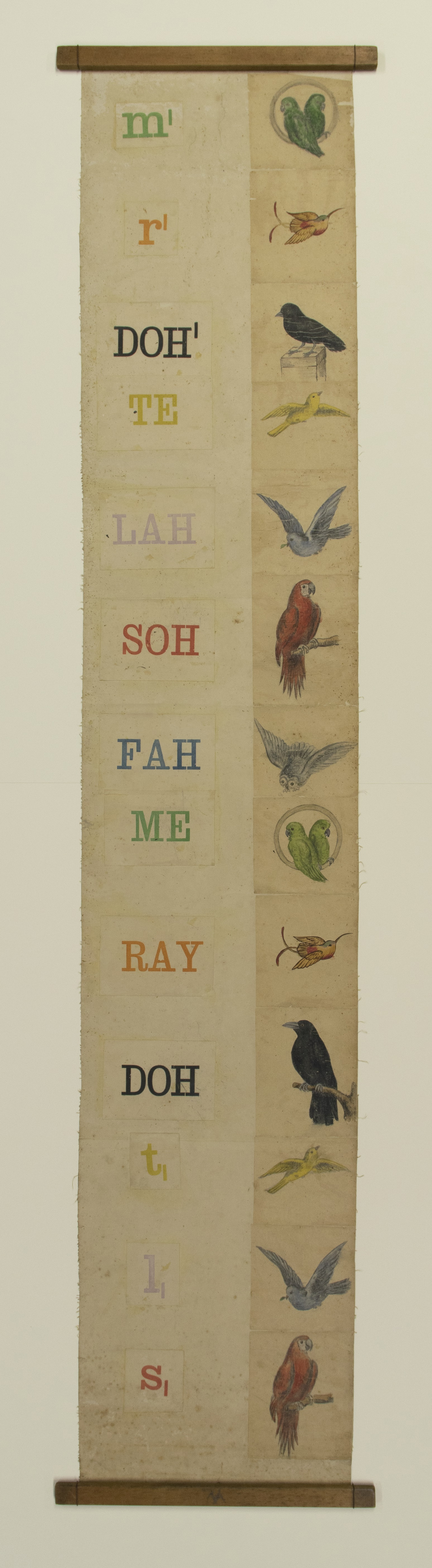
Samuel McBurney, Sol-fa chart, c.1900.
This chart was made by Mona McBurney’s brother, Samuel (b. Glasgow, UK 1847, d. Melbourne 1909), who taught sight singing and ear training at the Conservatorium of Music. Probably the first of its kind made in Australia, the chart features hand-drawn birds to represent the notes of the scale. All the birds of the tonic triad—a black crow and jackdaw for doh, green lovebirds for me, and a red parrot for soh—are shown seated, representing stability. The rest of the birds are shown in flight: ray is an orange hummingbird, fah a blue owl, lah a violet dove, and te a yellow canary. Grainger Museum Collection, University of Melbourne. Gift of the McBurney family, 1985. -
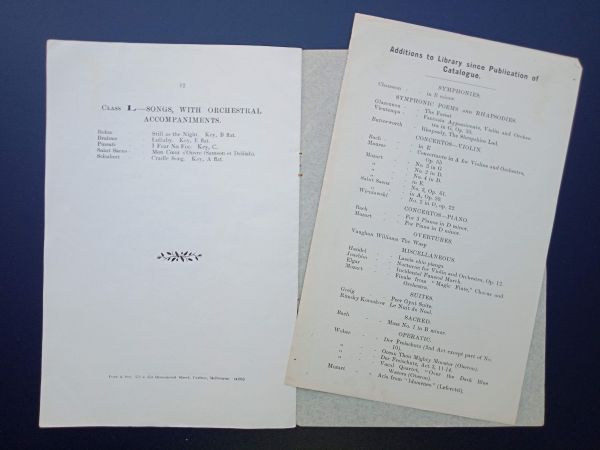
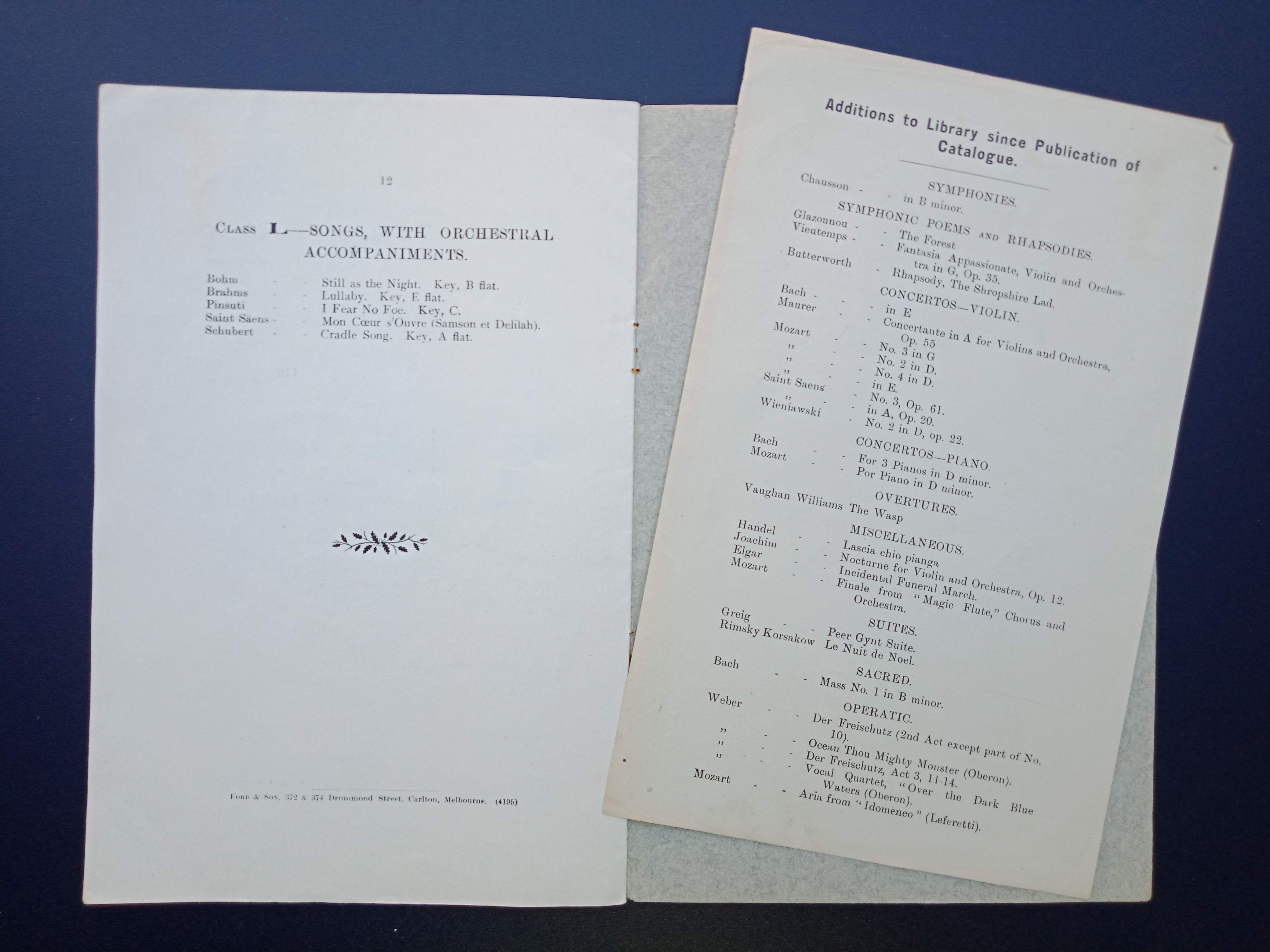
Ford and Son, Melbourne (publisher), Catalogue of Music Library, University of Melbourne: Choral and Orchestral Works, 1914.
The function of the Music Library has changed many times across its history. While in its early years it primarily supported the University Symphony Orchestra, the Music Library has grown to become a major research collection. Today, its lending materials of scores, books and recordings are complemented with an expansive collection of scholarly literature, rare recordings of both Western and Indigenous music, historically significant illuminated manuscripts, composer manuscripts and concert programmes. Rare Music, Special Collections, University of Melbourne -
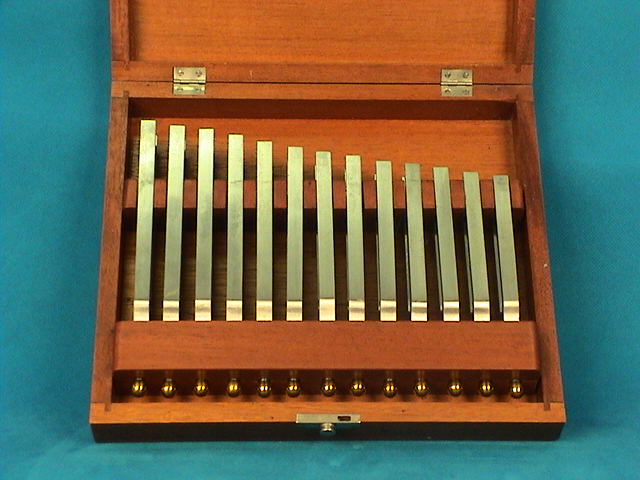
Max Kohl, Diapason normal tuning forks, c.1907.
Throughout the nineteenth-century, debates raged across Europe about what the standard pitch should be. By 1900, the French diapason normal was becoming preferred, but Australians still used the higher ‘English’ pitch. When Franklin Peterson, the second Ormond professor, arrived at the Conservatorium in 1901, he attempted to standardise Melbourne’s pitch, seeking donations from Nellie Melba, Clara Butt and Kennerley Rumford, the MSO and the Victorian government to purchase new French-pitch instruments. These instruments were bought in 1907, and the state government officially adopted the lower pitch. At this time, the government supplied the university with this set of French-pitch forks. Ed Muirhead Physics Museum, University of Melbourne -
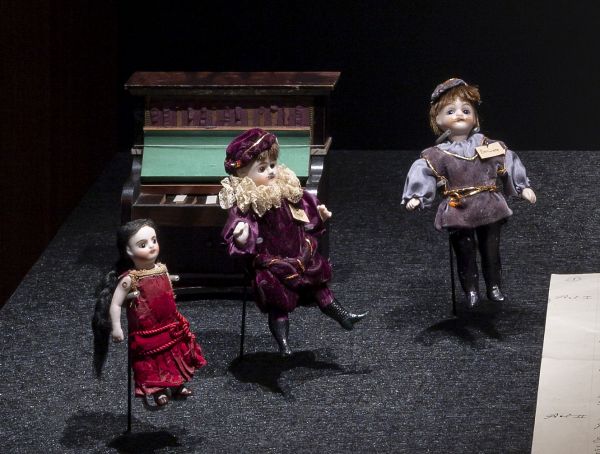
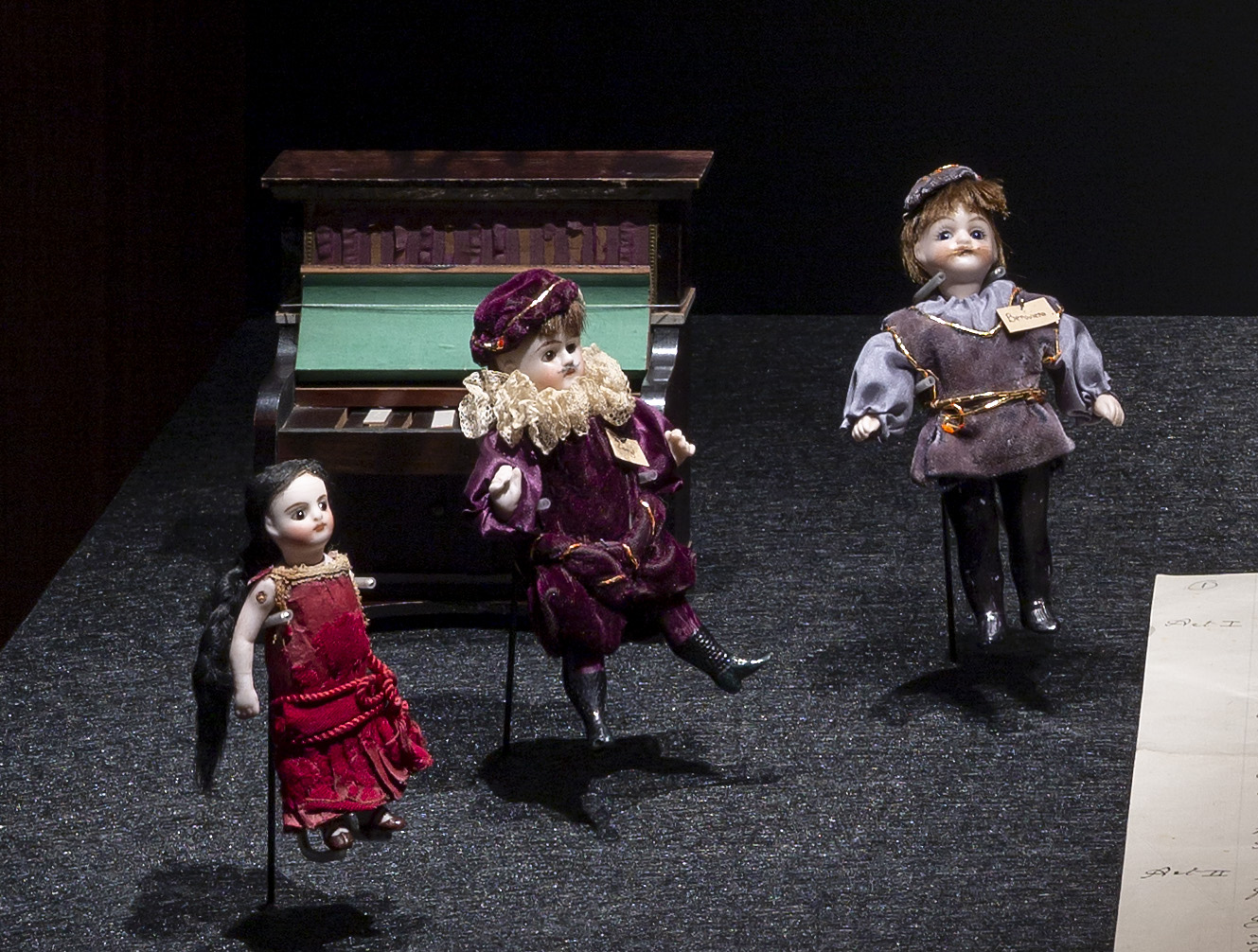
Mona McBurney, Dolls used by Mona McBurney for her opera The Dalmatian, (c. 1926).
The Dalmation was the first opera written by a woman to be performed in Australia. Its libretto was adapted from F. Marion Crawford’s novel, Marietta: A Maid of Venice. Excerpts were performed in late 1910, and the first full performance was given in 1926. As scholar Louise Jenkins has observed, ‘The opera stands as proof of the benefits that can be reaped when society provides equal encouragement, support and opportunity for men and women in their musical endeavours.’ The score of the opera The Dalmatian is held by the Grainger Museum. Conservation treatments on the McBurney Collection, to prepare the objects for display in Multivocal, have been generously funded by Julia and Kevin Selby. Grainger Museum Collection, University of Melbourne. Photo: Christian Capurro Gift of the McBurney family, 1985. -
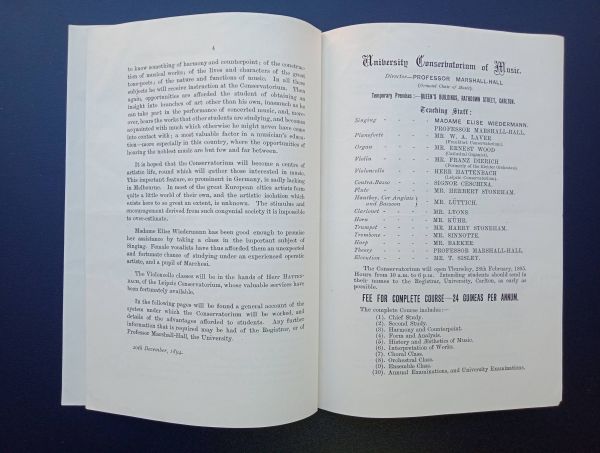
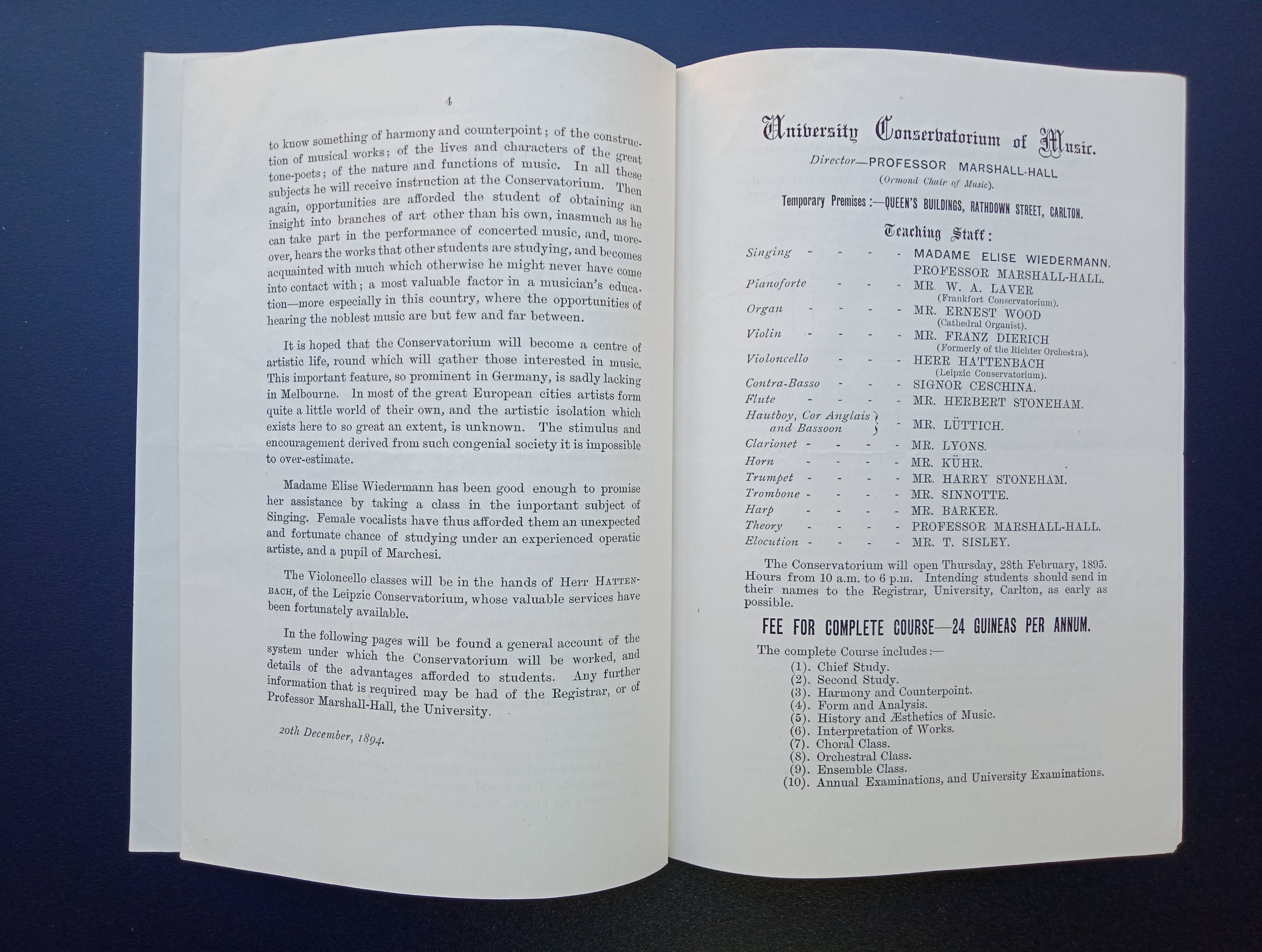
The Conservatorium, Carlton (publisher), Prospectus [detail], University Conservatorium of Music, 1895.
First Ormond Professor of Music, George W.L. Marshall-Hall, introduced the new Conservatorium of Music to potential students in this first prospectus. In a lengthy introduction, Marshall-Hall provided a ‘general account of the system under which the Conservatorium will be worked, and details of the advantages afforded to students’. Marshall-Hall, who was a brilliant and bohemian figure, wrote that ‘It is hoped that the Conservatorium will become a centre of artistic life, round which will gather those interested in music … The stimulus and encouragement derived from such congenial society it is impossible to over-estimate.’ The official opening of the Conservatorium took place on 28 February 1895, in the Queen’s Coffee Palace at the corner of Rathdowne and Victoria Streets, Carlton, which was the first home of the ‘Con’. The first students had been enrolled from 11am that morning. Rare Music, Special Collections, University of Melbourne Music. -
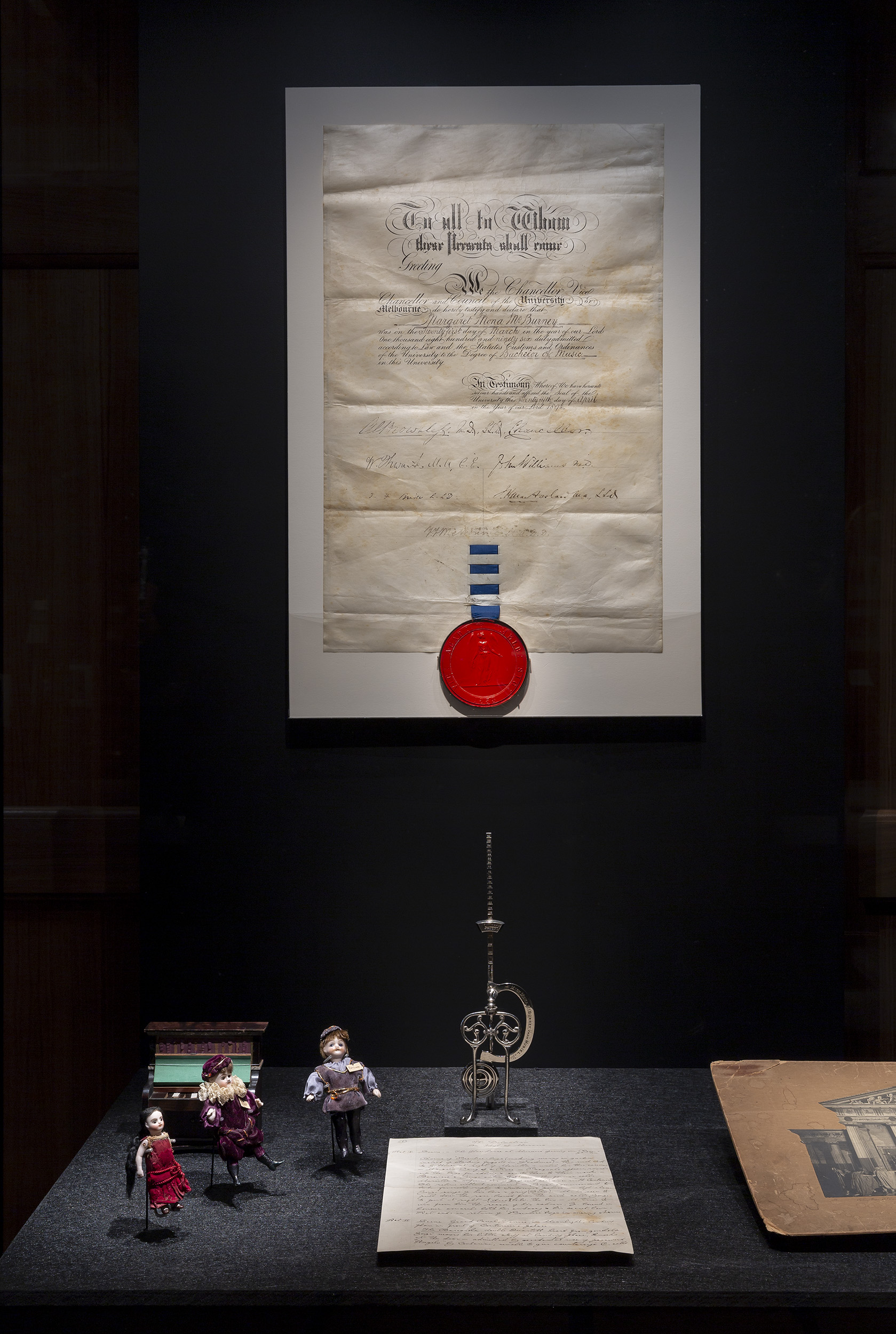
University of Melbourne (publisher), Bachelor of Music certificate awarded to Mona McBurney, 1896.
In 1896 Mona McBurney graduated from the Bachelor of Music at the University of Melbourne, becoming the first woman in Australia to receive this degree. Born on the Isle of Man, McBurney came from a musical and scholarly family. Moving to Victoria in 1881, she enrolled as a music student at the University in 1892. She was well-known as both a composer and performer and enjoyed Australian and international success in both respects. From 1918, she returned to the Conservatorium to teach Italian and French remaining in this role until her death in 1932. She was known as an enthusiastic and inspiring teacher, described by Margaret Sutherland (one of her students) as “one of the most sensitive, gentle, yet vital persons I ever knew”. Grainger Museum Collection, University of Melbourne. Gift of the McBurney family, 1985. -
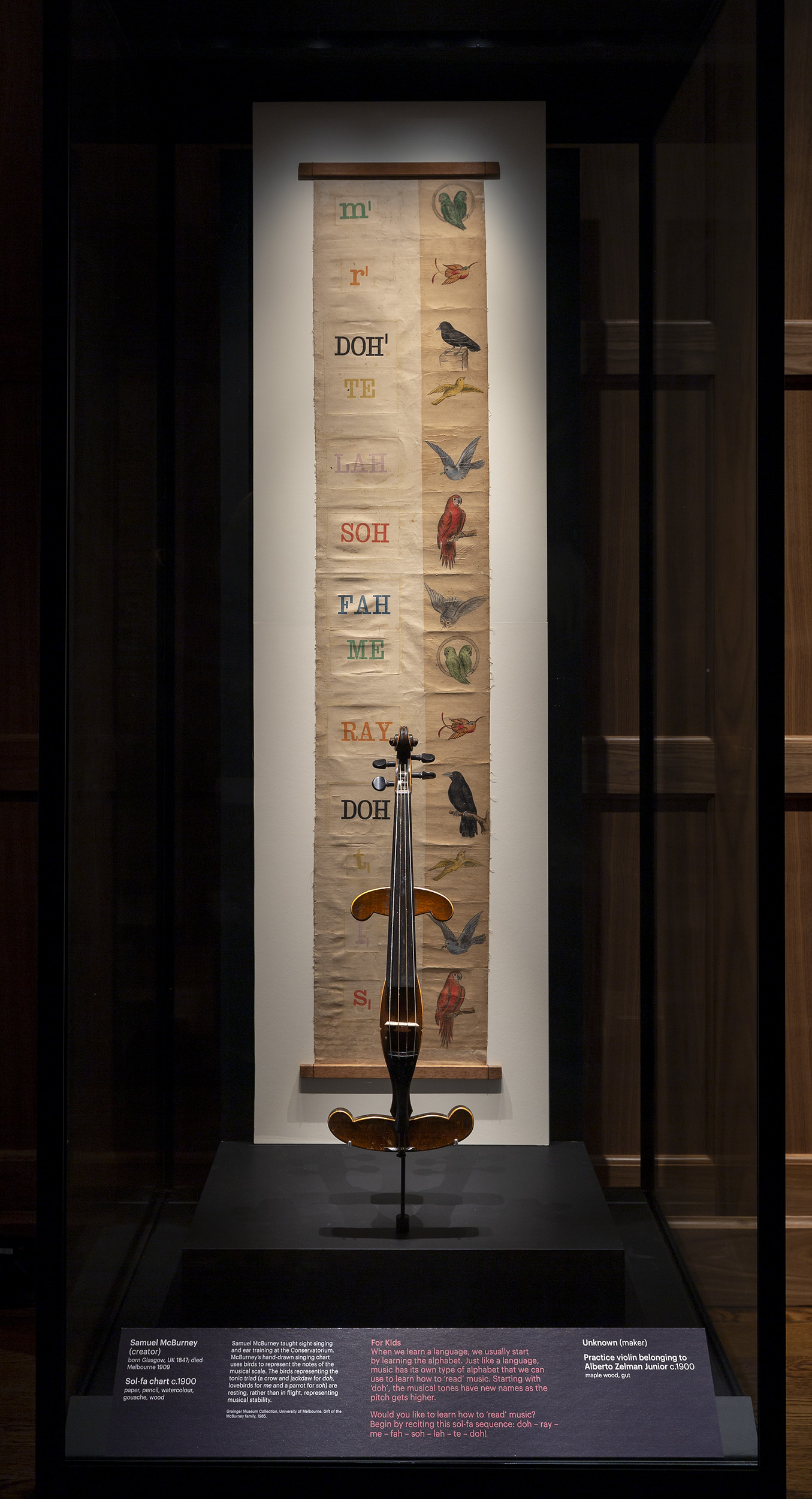
Maker unknown, Practice violin belonging to Alberto Zelman Junior, c.1900.
Alberto Zelman Jr was a violin prodigy, performing across Australia and New Zealand from the age of six. From 1900—around the time this practice violin was built—he was leader of the second violins in George W.L. Marshall-Hall’s orchestra, going on to become one of the most well-known violin teachers at the University Conservatorium. A practice violin feels like a regular violin to the performer, but has no resonant chamber meaning it produces a thin, quiet sound, and can be played without disturbing others. Grainger Museum Collection, University of Melbourne. Photo: Christian Capurro Gift of the Zelman Memorial Symphony Orchestra, 1984. -
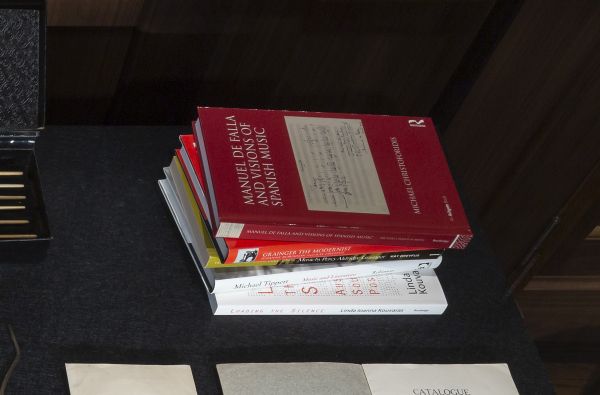
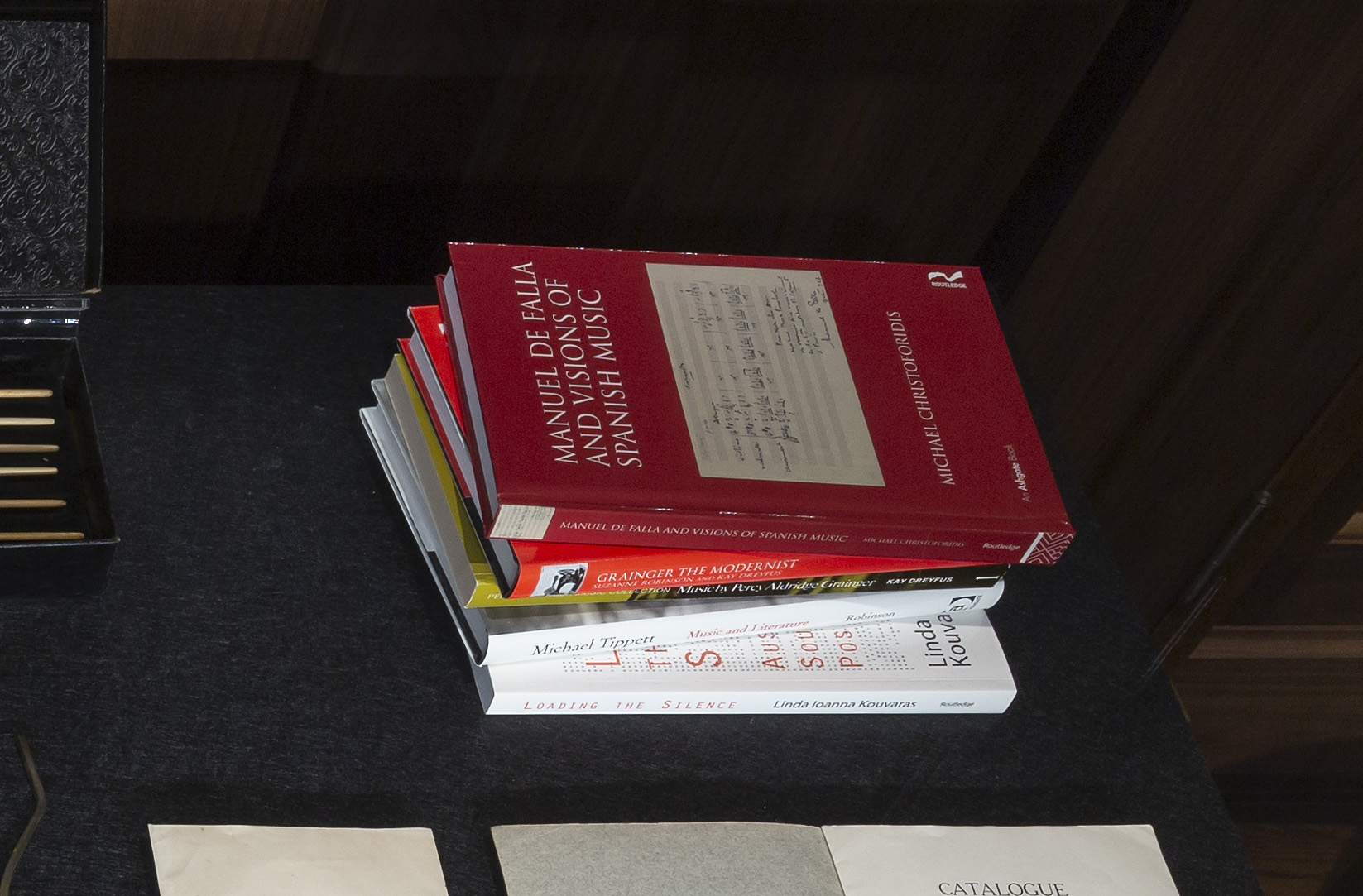
Various Publishers, Musicology research books [details], various dates.
Shown here are a small selection of the many books produced by graduates of the Conservatorium’s musicology doctoral programme. These include monographs from early graduates including Kay Dreyfus (the first musicology PhD graduate, finishing in 1971) and Thérèse Radic, works by current senior scholars at the Con including Michael Christoforidis and Elizabeth Kertesz, Suzanne Cole, Linda Kouvaras, Kerry Murphy, Suzanne Robinson, and Jan Stockigt, and more recent graduates, such as Caroline Ellsmore, Roderick McNeill, and Simon Purtell. Details of these resources: Michael Christoforidis and Elizabeth Kertesz, Carmen and the Staging of Spain: Recasting Bizet's Opera in the Belle Epoque (Oxford: Oxford University Press, 2019). Suzanne Cole, Thomas Tallis and His Music in Victorian England (Woodbridge: Boydell Press, 2008). Kay Dreyfus. Music by Percy Aldridge Grainger (Parkville, Vic.: Board of the Grainger Museum, University of Melbourne, 1978). Caroline Ellsmore, Verdi’s Exceptional Women: Giuseppina Strepponi and Teresa Stolz (London: Routledge, 2017). Linda Kouvaras. Loading the Silence: Australian Sound Art in the Post-digital Age (Burlington: Ashgate, 2013). Roderick McNeill, The Australian Symphony from Federation to 1960 (Farnham: Ashgate, 2014). Kerry Murphy, Hector Berlioz and the Development of French Music Criticism (Ann Arbor, Mich.: UMI Research Press, 1988). Simon Purtell, Tuning the Antipodes: Battles for Performing Pitch in Melbourne (University Of Melbourne, Vic.: Lyrebird Press, 2016). Thérèse Radic. Melba, The Voice of Australia (South Melbourne: Macmillan, 1986). Suzanne Robinson, Michael Tippett: Music and Literature (Aldershot: Ashgate, 2002). https://trove.nla.gov.au/version/46570889 Janice B. Stockigt, Jan Dismas Zelenka (1679–1745): A Bohemian musician at the Court of Dresden (Oxford: Oxford University Press, 2000). Private collections and University of Melbourne Library. Install photo: Christian Capurro -
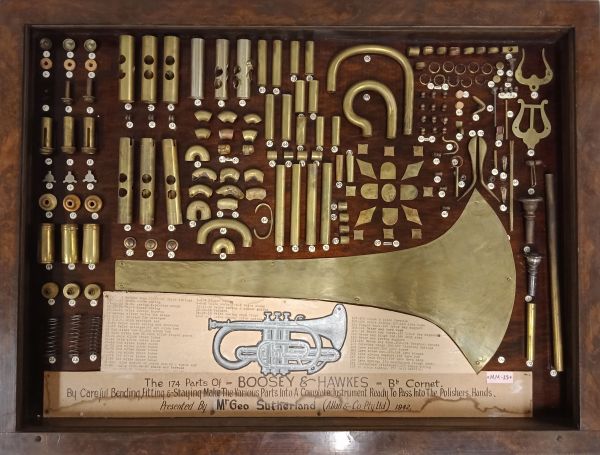
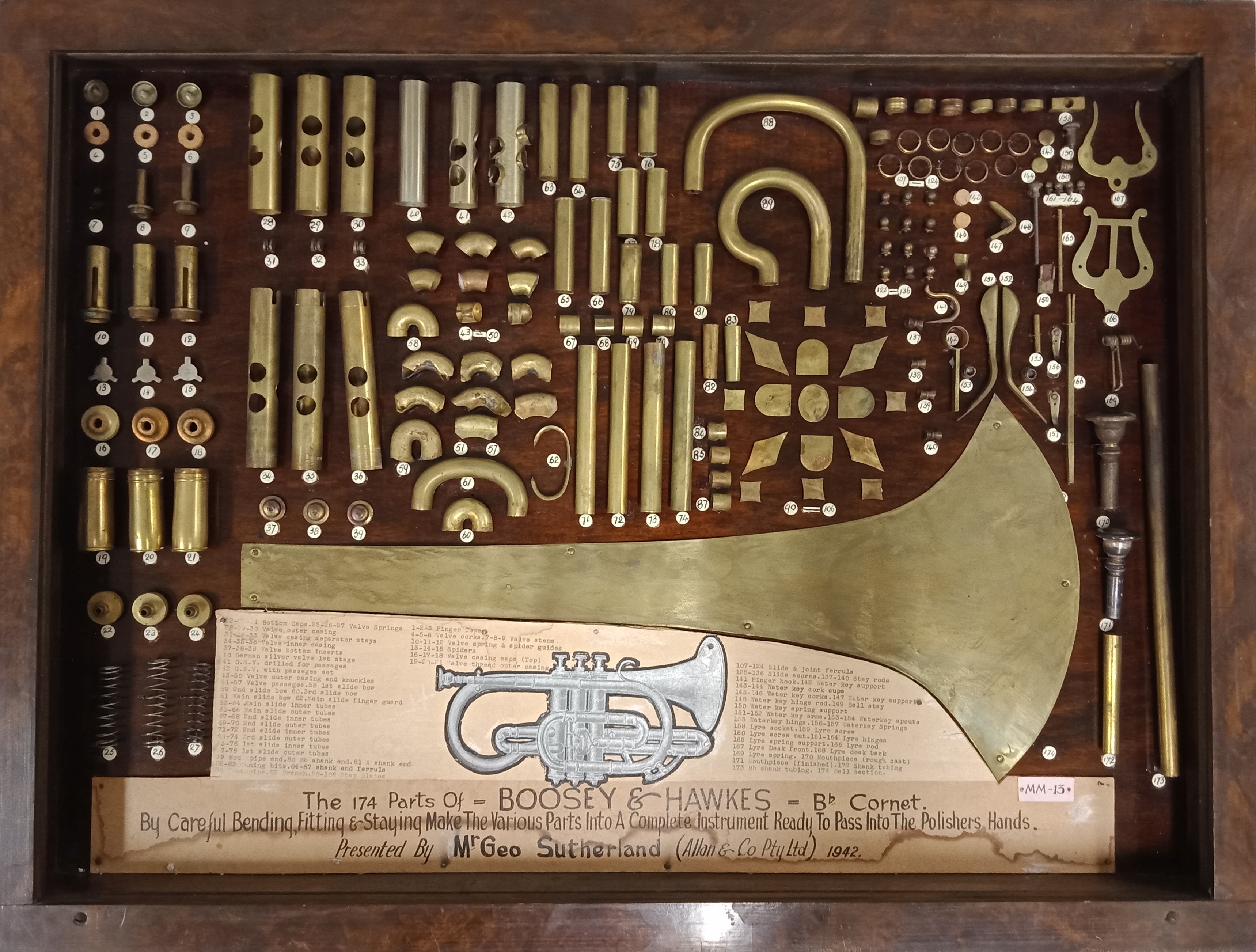
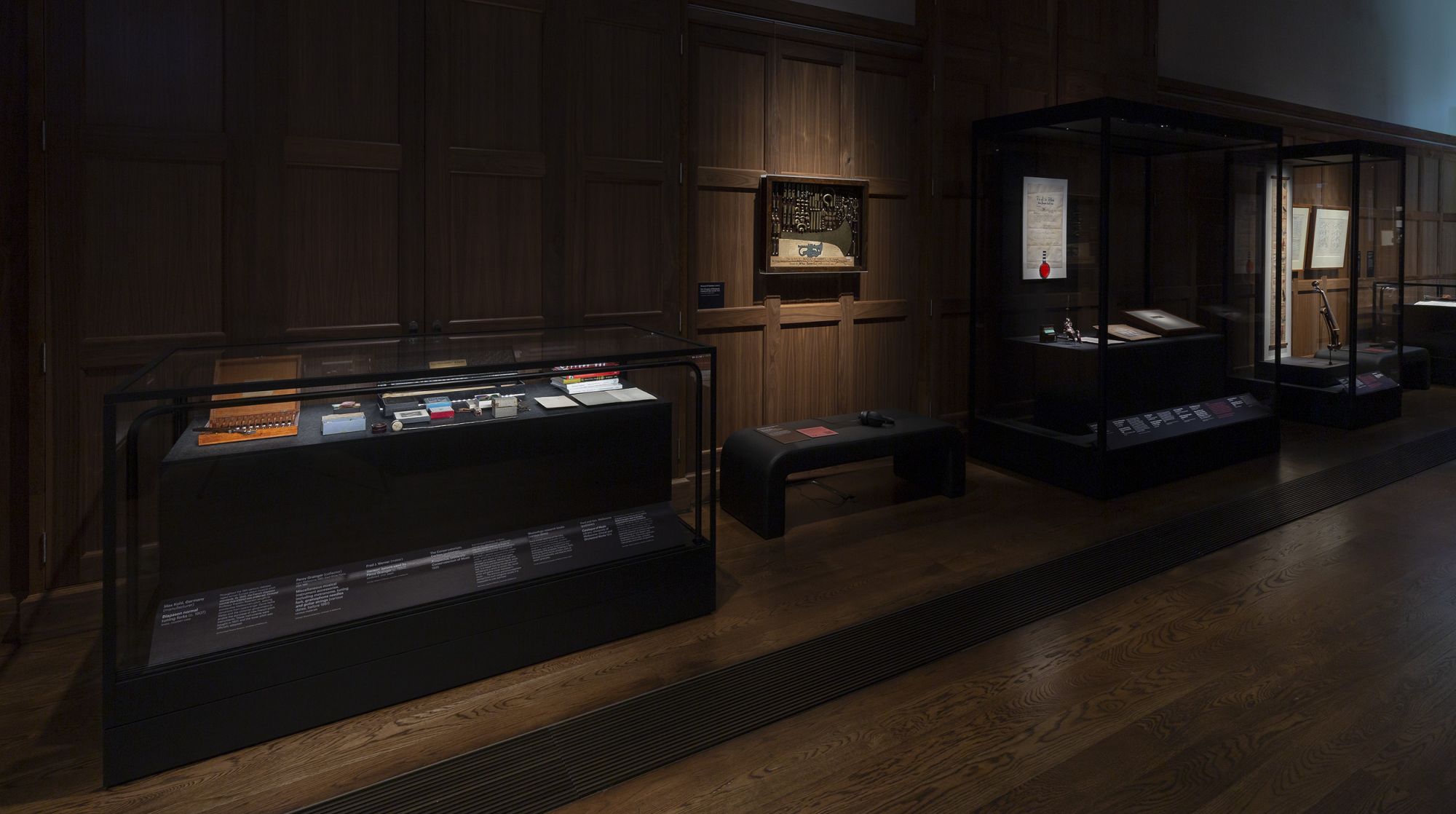
Boosey & Hawkes, The 174 parts of Boosey & Hawkes B-flat cornet, 1942.
metal, wood, paper, paint. Grainger Museum Collection, University of Melbourne -
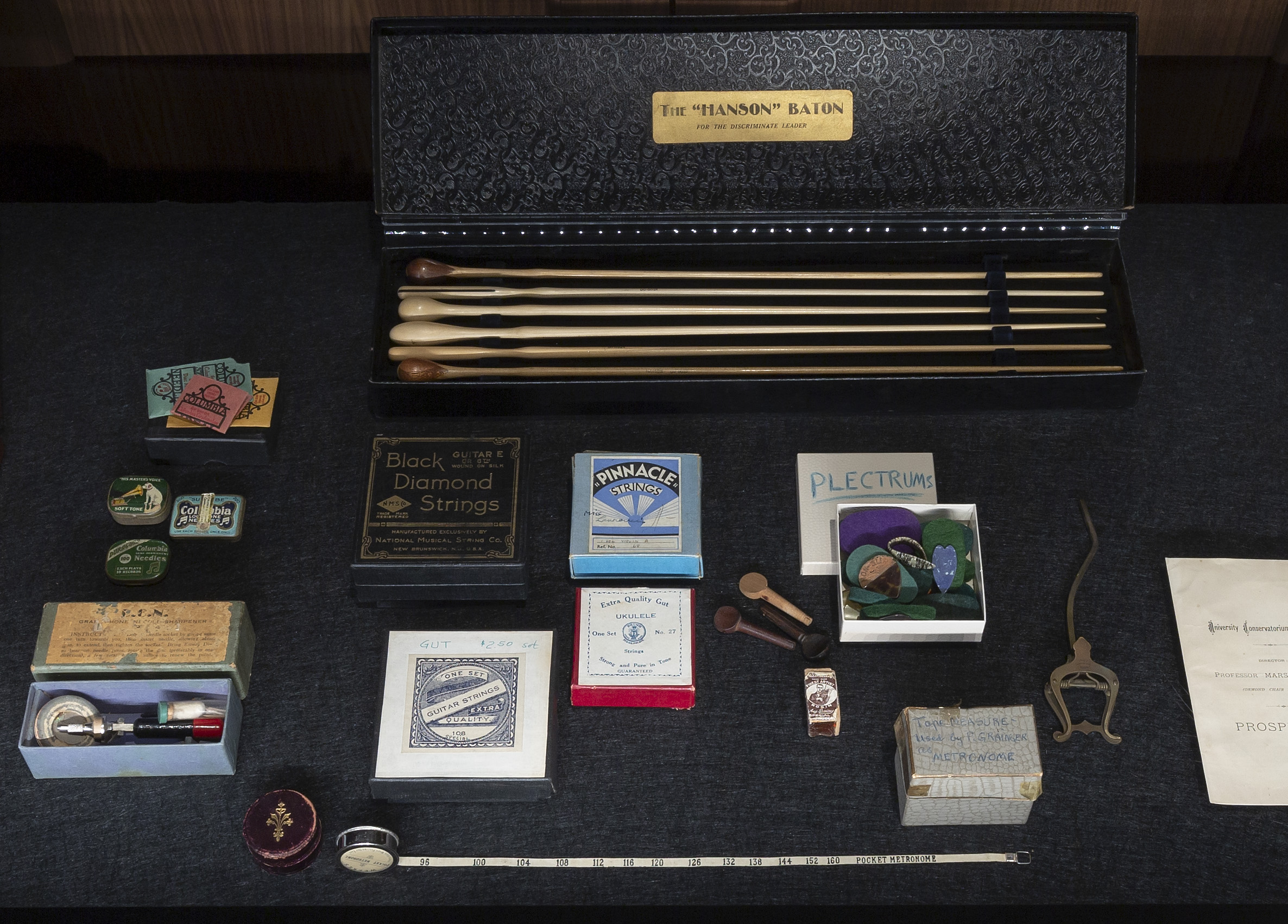
Various makers, Miscellaneous musical instrument accessories, including metronome, tuning fork, gramophone needles and guitar strings, (various dates, before 1961).
Percy Grainger (collector) born Melbourne 1882; died White Plains, USA 1961 various materials Grainger Museum Collection, University of Melbourne -
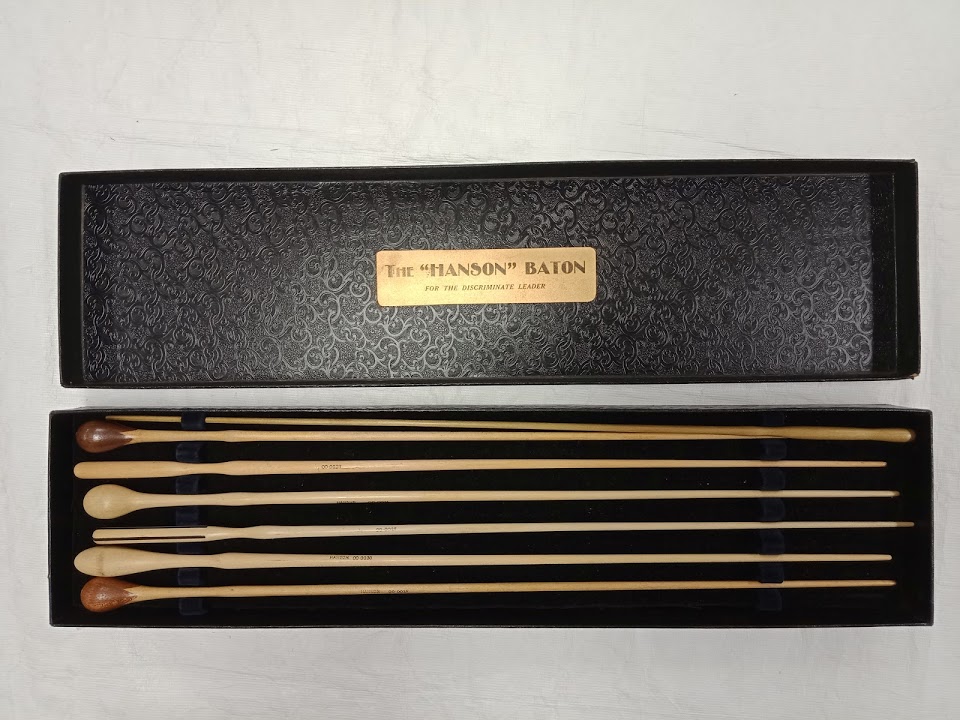
Fred J. Werner, ‘Hanson’ batons used by Percy Grainger, c. 1950.
Fred J. Werner (maker) cardboard, vinyl, paper Grainger Museum Collection, University of Melbourne