Ensembles include Chinese instrumental music, West African drum and dance, the Indonesian Gamelan, Japanese Shakuhachi (bamboo flute), and Afro-Brazilian Samba music, while the World Music Choir teaches students to sing in a range of vocal styles and traditions from Africa, Europe, Asia and the Americas.
Non-western musics are also studied by research students and staff in the ethnomusicology department, exploring aspects of diverse (and sometimes their own) musical cultural heritage and practice. Current students and recent graduates’ research has focused on music from Samoa and the Pacific Islands, China, Japan, and other parts of Asia, Uganda, Iran and the Middle East, and parts of Eastern and Northern Europe. The cultural collections of the University also hold a number of historic non-Western musical objects, particularly in the Grainger Museum, many of which were collected in the nineteenth and early twentieth century.
-
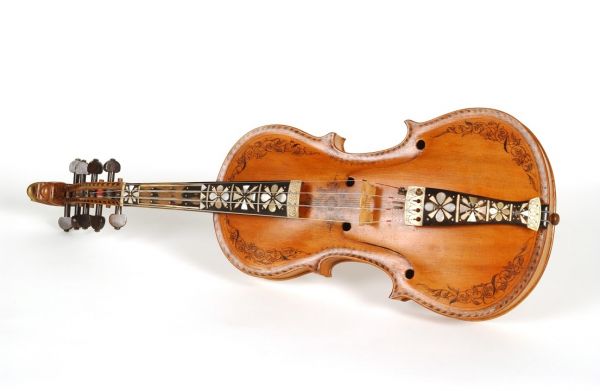
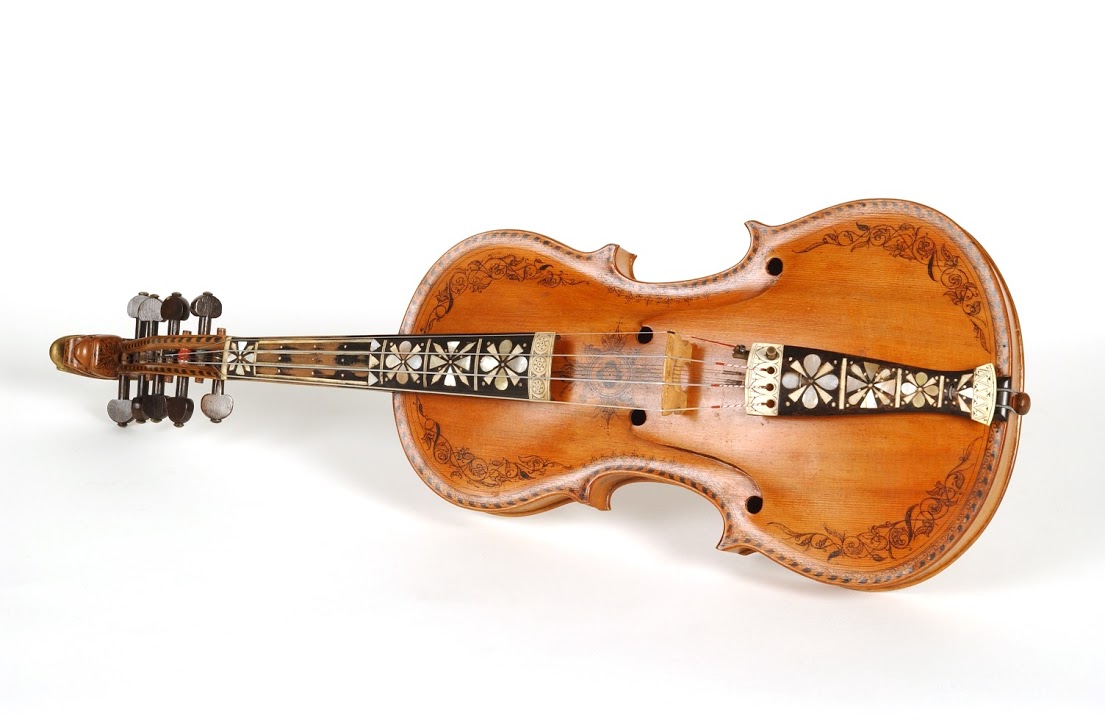
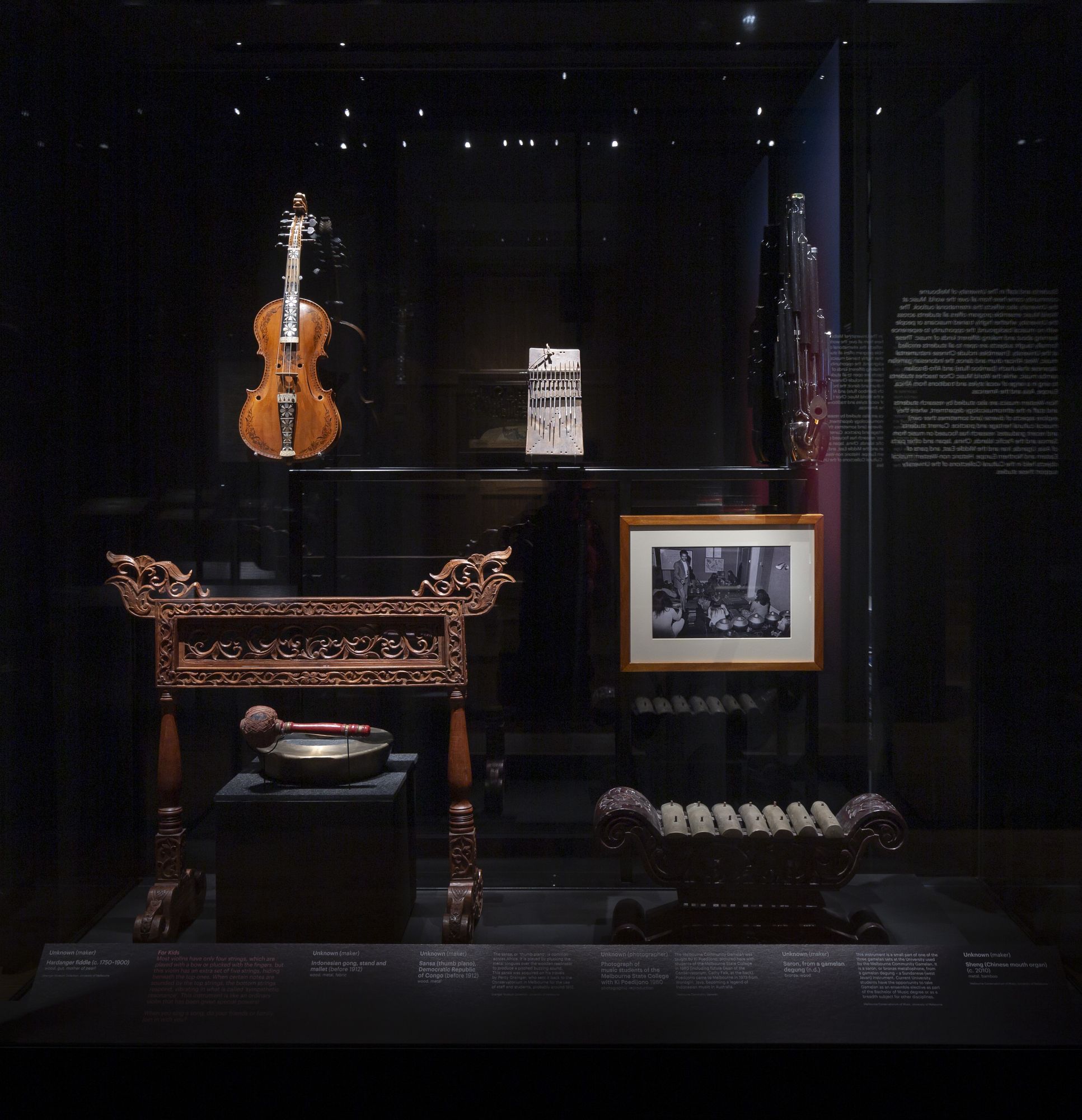
Unknown maker, Hardanger fiddle, c.1750–1900.
wood, gut, mother of pearl This is a traditional Norwegian instrument, with two sets of strings—four that are bowed, and five that resonate ‘sympathetically’ beneath the fingerboard, creating a drone. This fiddle has characteristic and finely stencilled decorations known as ‘Rosemåling’ around the edges, a fingerboard inlaid with mother-of-pearl, and a decorative dragon head on the pegbox. This instrument was given to Australian composer and pianist Percy Grainger in 1933 by his friend Alfhild Sandby (née de Luce)—a Norwegian pianist, who had previously toured with Grainger. Grainger Museum Collection, University of Melbourne. -
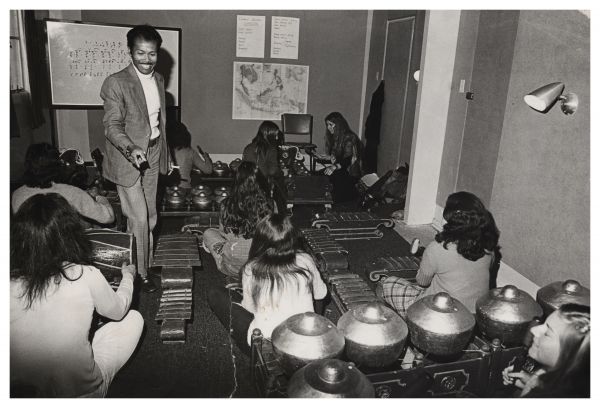
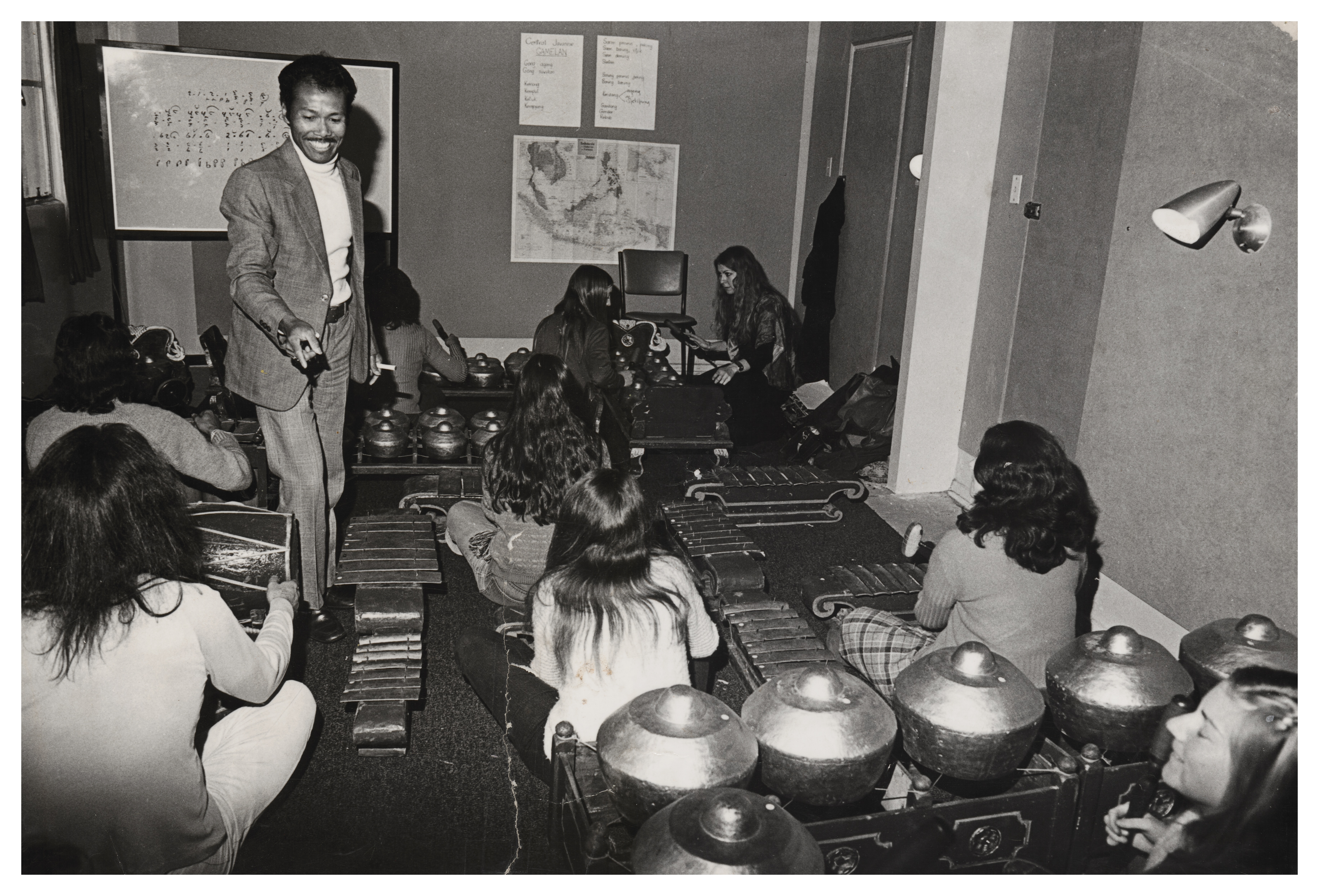
Unknown photographer, Photograph of music students at the State College with Ki Poedijono, 1980.
The Melbourne Community Gamelan was taught by Ki Poedijono, pictured here with students of the Melbourne State College in 1980 (including future Dean of the Conservatorium, Cathy Falk, at the back). Poedijono came to Melbourne in 1973 from Wonogiri, Java, becoming a legend of Indonesian music in Australia. He was awarded an OAM in 1994 and a Satya Lencana medal from the Indonesian government in 2007 for his services to promoting Indonesia culture in Australia. Image courtesy Melbourne Community Gamelan. -
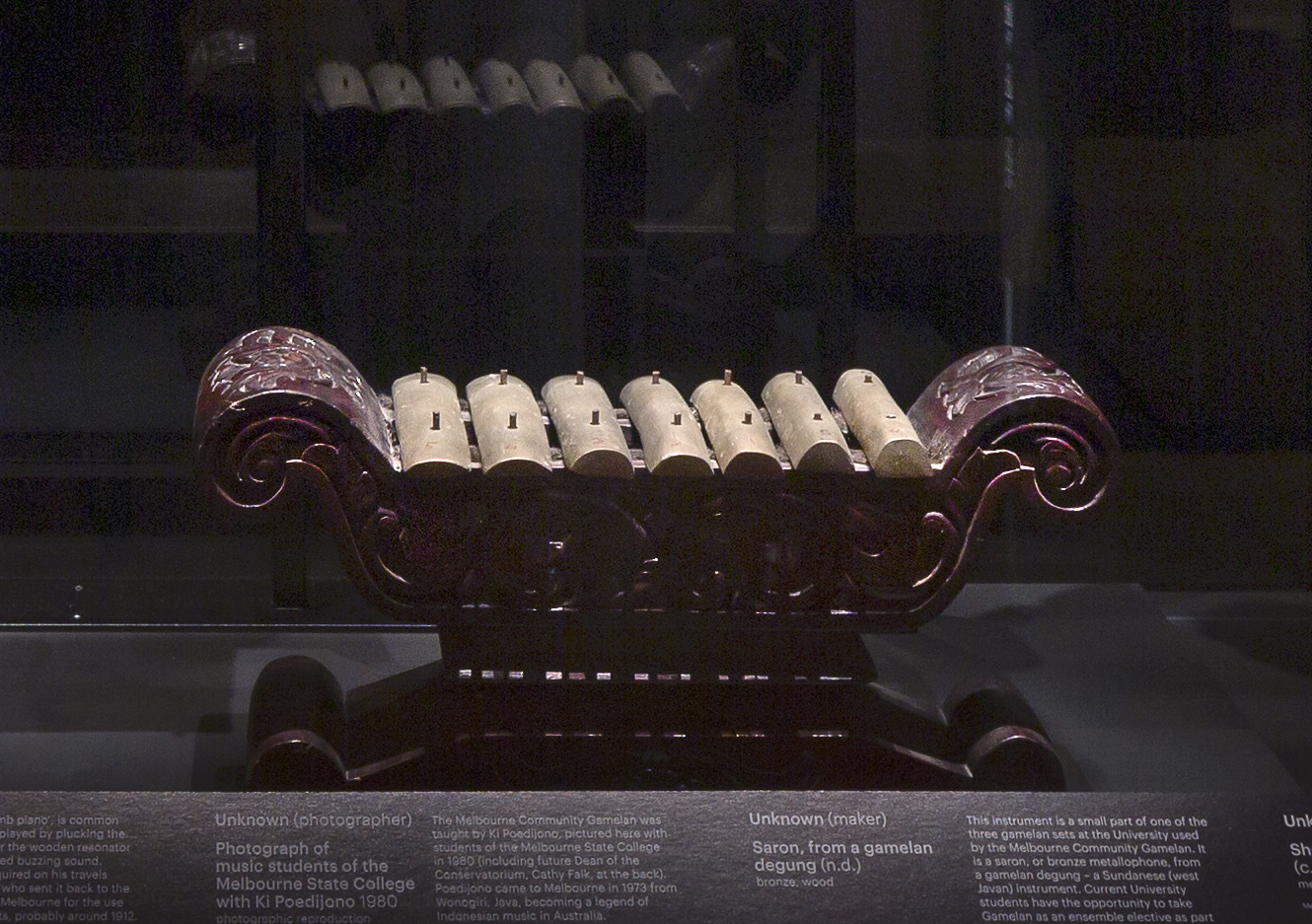
Unknown maker, Saron, from a gamelan degung, date unknown.
bronze, wood This instrument is a small part of one of the three gamelan sets at the University used by the Melbourne Community Gamelan. It is a saron, or bronze metallophone, from a gamelan degung – a Sundanese (west Javan) instrument. Current University students have the opportunity to take Gamelan as an ensemble elective as part of the Bachelor of Music degree or as a breadth subject for other disciplines. Melbourne Conservatorium of Music, University of Melbourne. Photo: Christian Capurro -
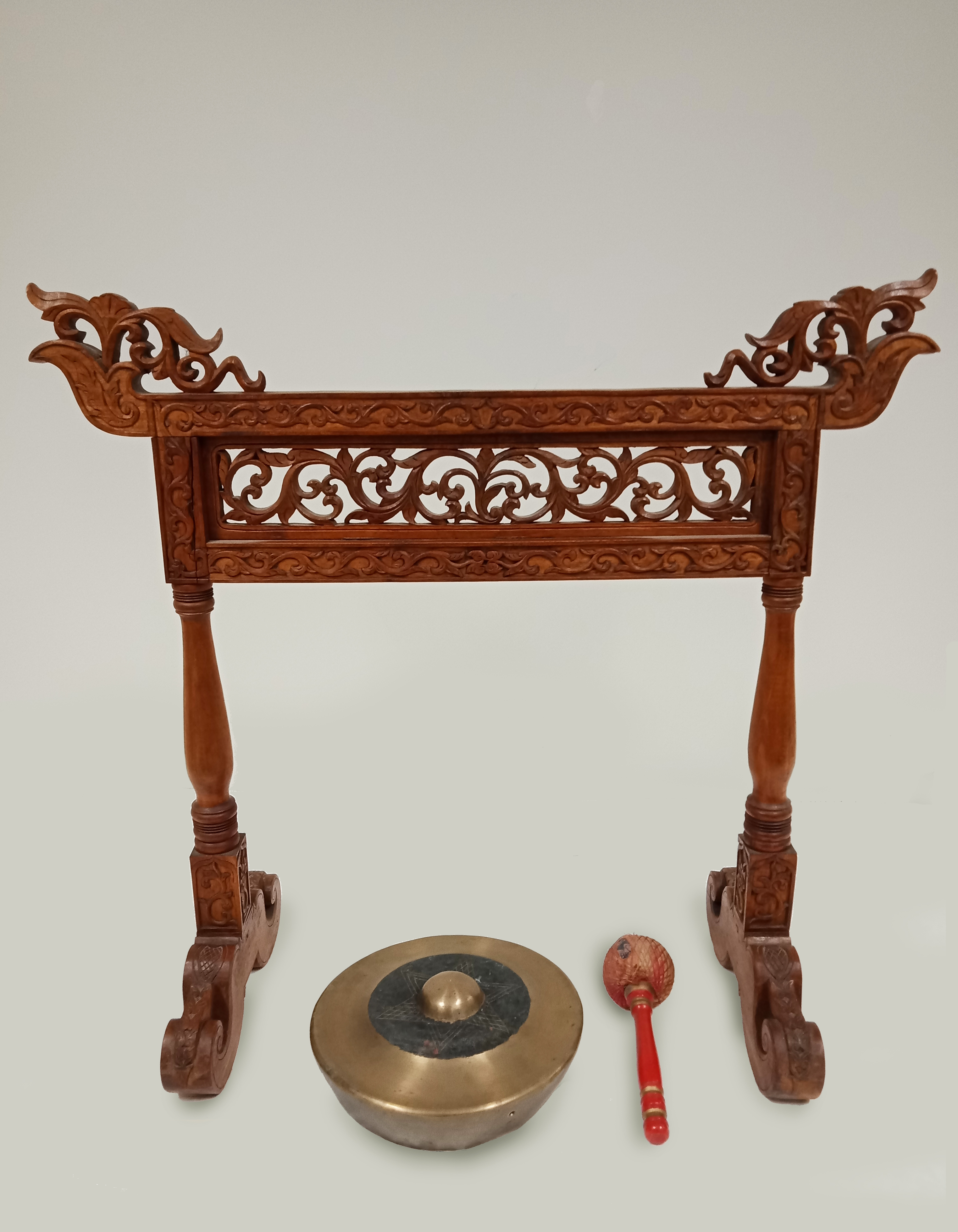
Unknown maker, Indonesian gong, stand and mallet, before 1912.
This set of instruments, purchased in the Netherlands, was used by Percy Grainger for rehearsals of his experimental composition Random Round. The stand and gong are from separate instruments. A stand like this would typically suspend a bigger gong as part of a set of colotomic or punctuating gongs, while this kind of kettle gong would form part of a rack of tuned gongs. Grainger Museum Collection, University of Melbourne. -
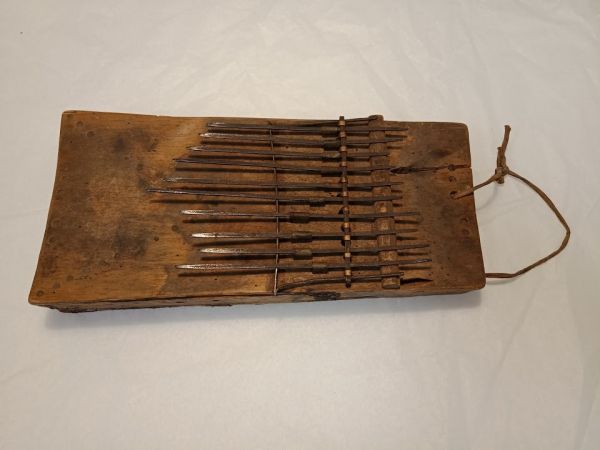
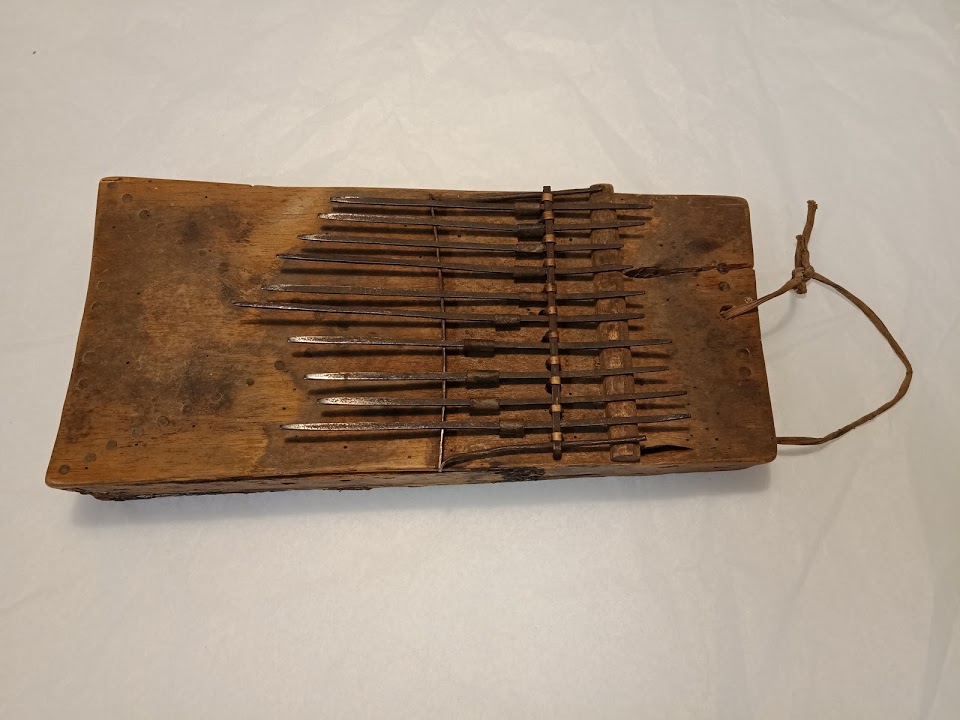
Unknown maker, Sansa (thumb piano), before 1912.
Democratic Republic of Congo The sansa or ‘thumb piano’ is common across Africa. It is played by plucking the metal tongues over the wooden resonator to produce a pitched buzzing sound. This sansa was acquired on his travels by Australian composer and pianist Percy Grainger, who sent it back to the Conservatorium of Music in Melbourne for the use of staff and students, probably around 1912. Grainger Museum Collection, University of Melbourne.