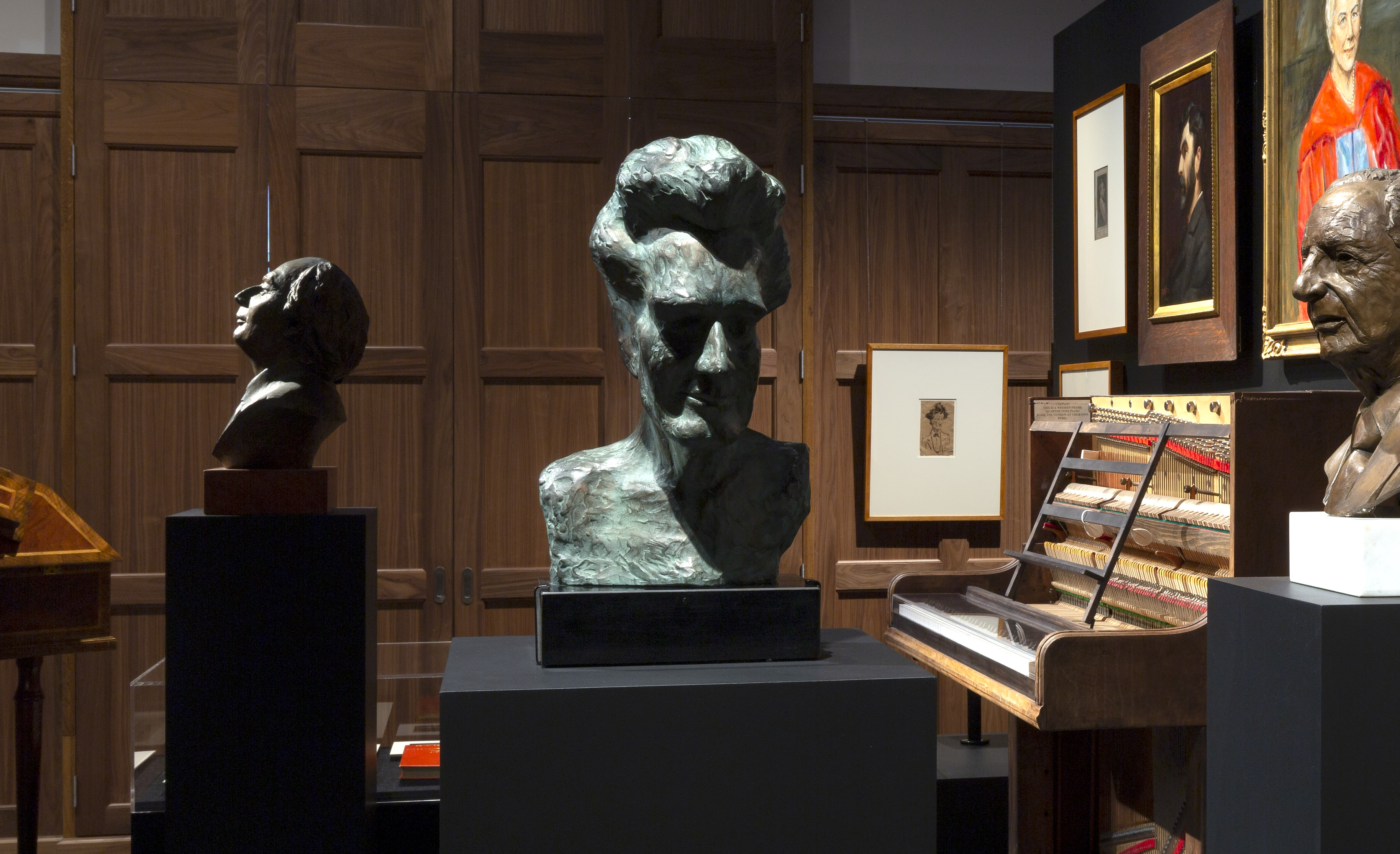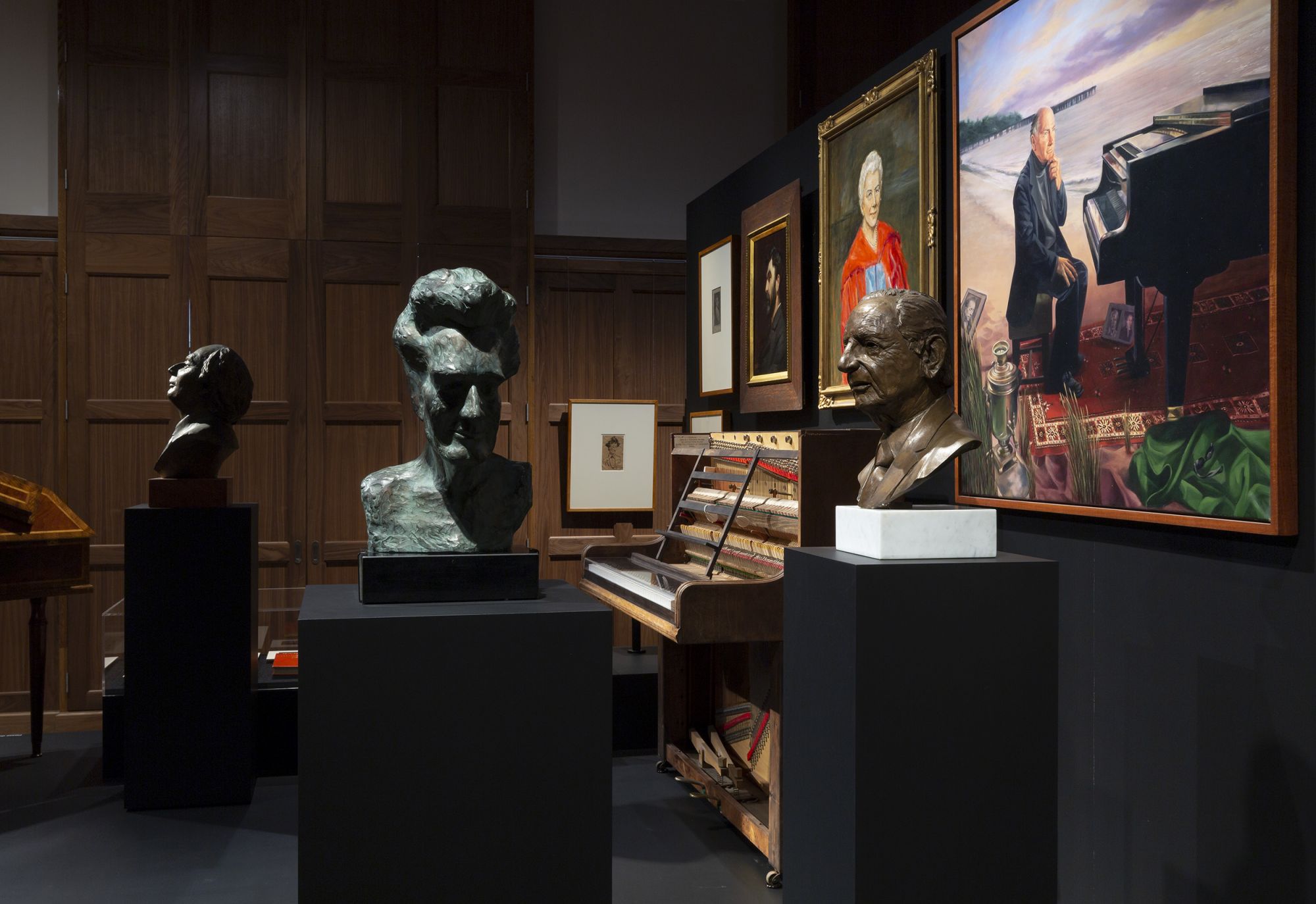
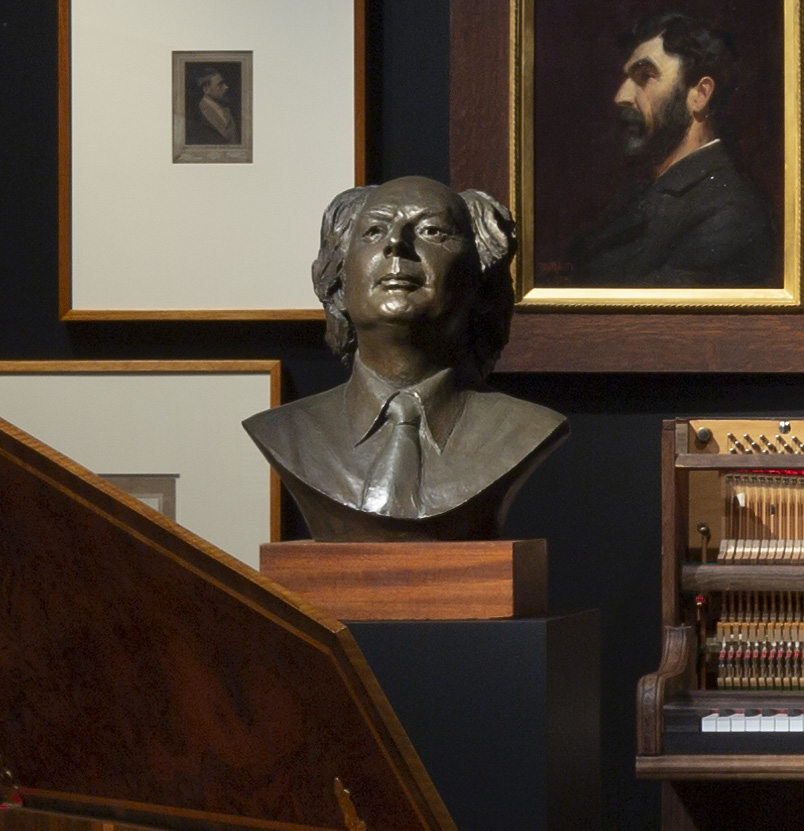
Other images in the portrait selection tell a story about the relationship between the creator and their subject – from the pencil sketch portrait of cello teacher Louis Hattenbach set down by music student Ernest Moffitt on a piece of music examination paper, to the photographic portrait of artist Arthur Streeton dedicated to fellow music-lover Marshall-Hall, and the bust of composer Percy Grainger sculpted by his friend and physician, Kaare Nygaard. These portraits point to the importance of the shared musical experience and relationships that form through a mutual love of music. One of the earliest portrait images in the exhibition, Georgette Peterson’s triumphantly gestural photographic portrait, conducting baton raised high, is a powerful testament to the significance of women making their mark throughout the history of music at Melbourne University.
-
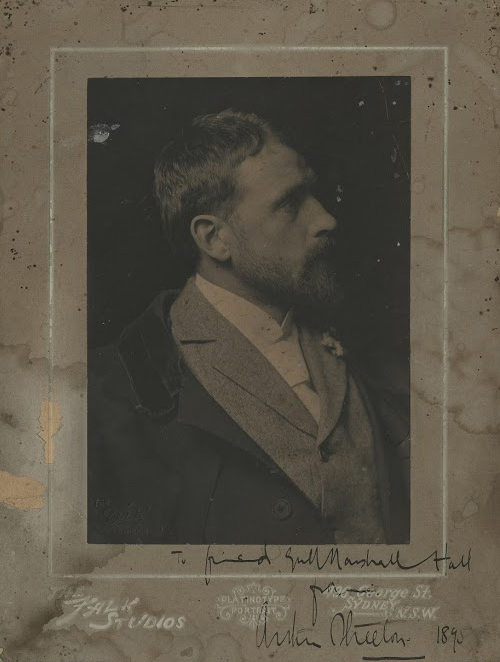
Henry Walter Barnett, Arthur Streeton, c.1890.
Henry Walter Barnett (photographer) born Melbourne 1862; died Nice, France 1934 platinotype on card In 1893, the conductor and composer George W.L. Marshall-Hall was invited to join Arthur Streeton, Tom Roberts and other painters at Curlew Camp in Sirius Cove, Mosman Bay, on Sydney Harbour’s north shore. Today the friendship forged between Streeton and Marshall-Hall is visible through an assortment of objects; gifts of art, poetry, music and photography shared between the two have created a kind of time capsule dedicated to the artists’ camp, including this photograph, presented to Marshall-Hall in 1895. The photograph was taken in portrait photographer Henry Barnett’s famous Falk Studios in Sydney. Open since 1887, Barnett’s studio had built up a reputation for photographs of visiting actors and actresses, including Sarah Bernhardt. H. Walter Barnett was a leading portrait photographer of the late Victorian, Edwardian and interwar periods. Grainger Museum Collection, University of Melbourne. -
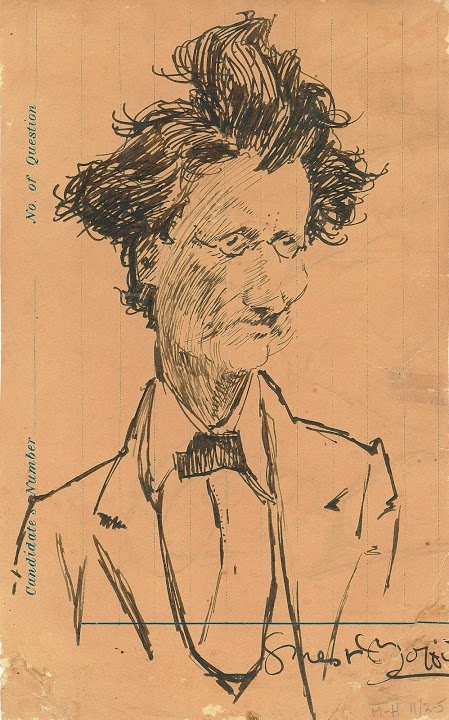
Ernest Moffitt, Louis Hattenbach, c.1890s.
Ernest Moffitt (artist) born Bendigo 1871; died Melbourne 1899 ink on paper Louis Hattenbach (1869–1932) was a Leipzig-trained cellist and teacher at the Conservatorium. He was one of the original teaching staff employed under Marshall-Hall, was the leader of the cello section of Marshall-Hall’s orchestra, and a member of the Melbourne String Quartet with Alberto Zelman. He was also often a soloist with the University Symphony Orchestra, and occasional conductor of the Melbourne Symphony, sometimes conducting his own compositions, which were influenced by the Australian bush. This sketch—on a sheet of examination paper—is by Ernest Moffitt, the first student at the Conservatorium in 1891. Grainger Museum Collection, University of Melbourne. -
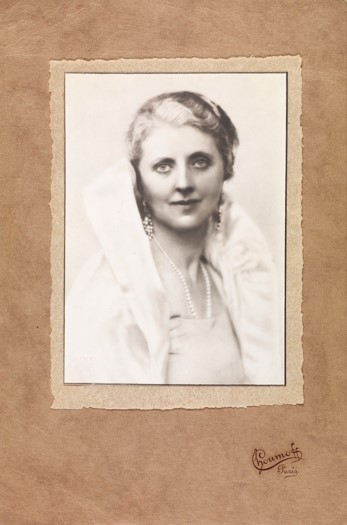
Pierre Choumoff, Portrait of Louise Hanson-Dyer, c. 1930.
Pierre Choumoff (photographer) born Belarus 1872; active Paris; died Poland 1936 silver gelatin photograph, mounted on card Louise Hanson-Dyer (1884–1962) was an Australian patron of the arts and music publisher, known for establishing Éditions de l'Oiseau-Lyre in Paris in 1932. A talented musician, she was influential in musical life in Melbourne and studied piano at the Albert Street Conservatorium. She established the British Music Society of Victoria, was an active member of the Alliance Française, and patron of many philanthropic causes. Éditions de l'Oiseau-Lyre was renowned for its historical editions of early, but also modern music, and she promoted many Australian composers. When she died, she left an important archive and bequest to the University. Rare Music, Special Collections, University of Melbourne. -
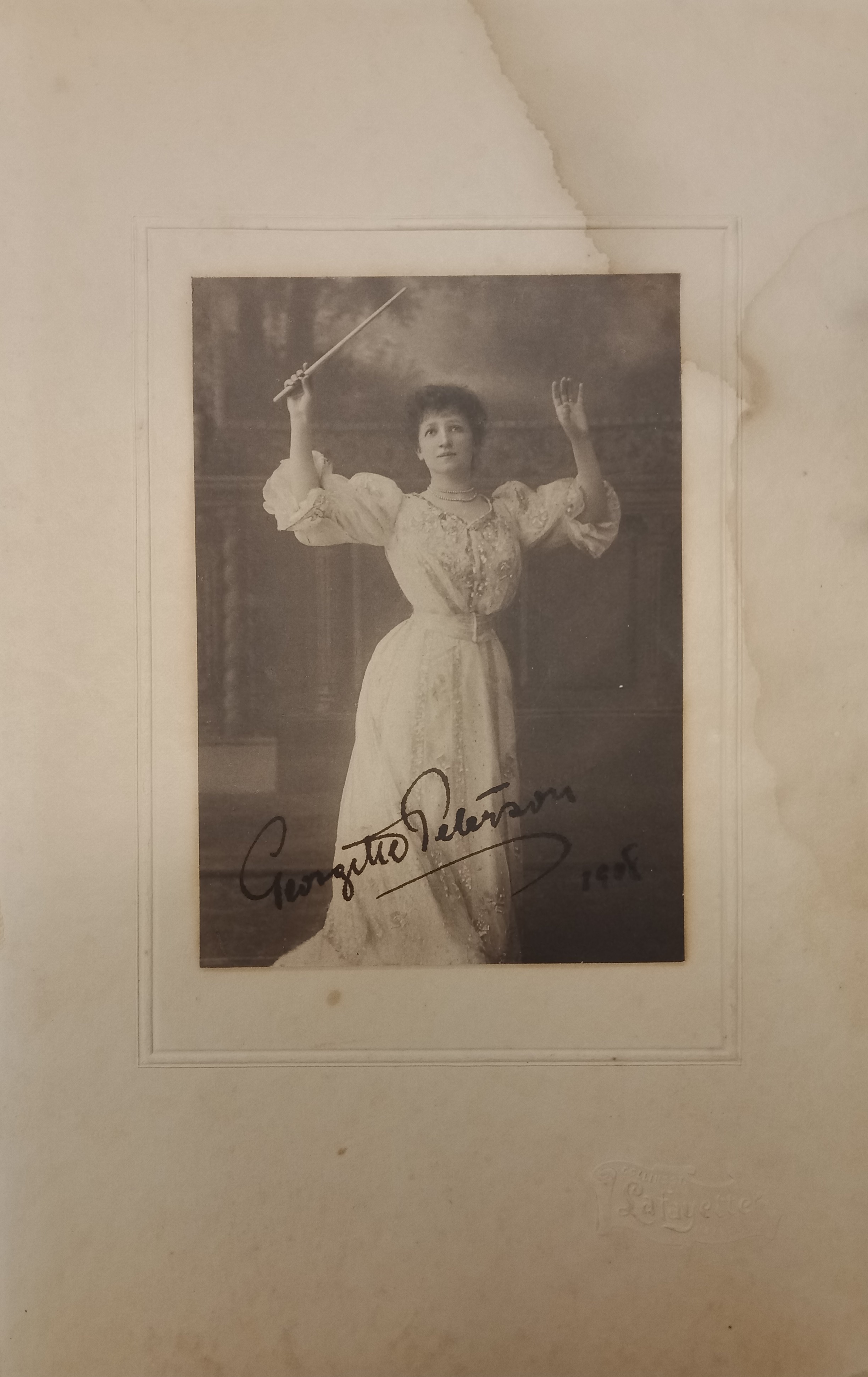
Lafayette Studios, Studio portrait of Georgette Peterson, 1908.
Lafayette Studios (photographers) active Collins Street, Melbourne early 20th century sepia-toned photograph Born in Budapest and studying music and painting at the Royal Budapest Academy, Georgette Peterson (1863–1947) came to Melbourne in 1901 when her husband, Franklin Sievright Peterson was appointed the second Ormond professor at the Conservatorium. Known as both a painter and composer, Peterson formed a choir at the university and in 1907 conducted a 1300-voice women’s choir at the Australian Exhibition of Women’s Work. Over the next years she also ran a smaller women's choir, organising many fundraising events, including for Melba Hall. Grainger Museum Collection, University of Melbourne. -
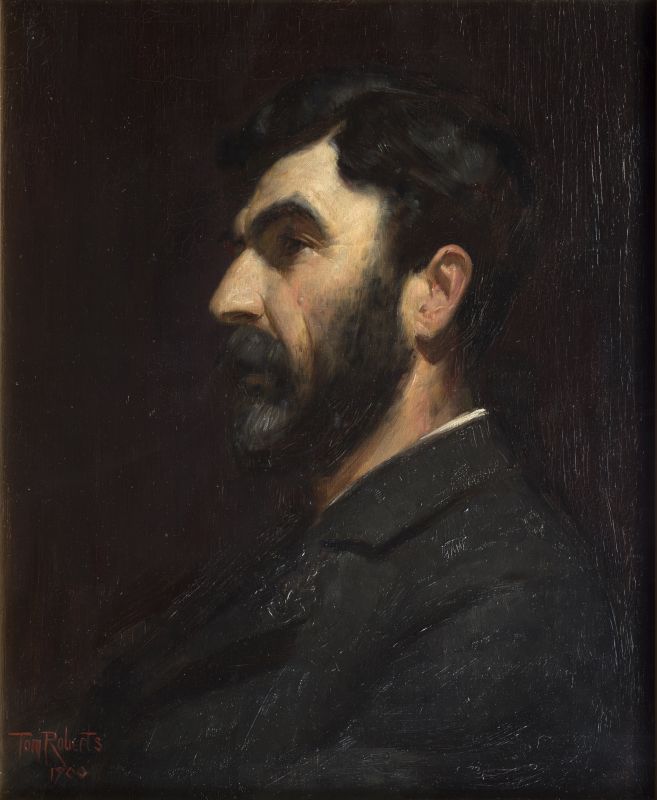
Tom Roberts, Portrait of Professor George W.L. Marshall Hall, 1900.
Tom Roberts (artist) born Dorchester, England 1856; died Melbourne 1931 oil on canvas Australian pastoralist and philanthropist Francis Ormond endowed the first Chair of Music at the University of Melbourne in 1891. The first occupant – known thereafter as the Ormond Professor of Music – was George W.L. Marshall-Hall (1862–1915), serving from 1891. Marshall-Hall was, to quote Thérèse Radic, a ‘flesh and blood Bohemian, who believed passionately in Art and in God not at all’, and many of his controversial views, practices, and poetry, prompted outrage. He established and conducted the Marshall-Hall Orchestra between 1892 and 1912, introducing much music of European reputation to Melbourne, and himself composed a number of significant and large-scale works. After a series of controversies, he did not have his professorship renewed in 1900, and he left the University to establish a rival music school. Reinstated as Ormond chair in 1915, he died suddenly not long after. In Australia, he became close friends with many of the painters of the Heidelberg School, including Arthur Streeton, and Tom Roberts, who painted this portrait in 1900. Marshall-Hall’s ear is central to this painting, as it was to his career, despite a childhood illness which left him temporarily deaf, and had distorted his sense of tone, perhaps for life. Grainger Museum Collection, University of Melbourne. -
Peter Latona, John Hopkins, 1979.
Peter Latona (sculptor) born Sydney 1947 bronze John Hopkins (1927–2013) was one of Australia’s most significant conductors, and had a long association with the VCA. Moving to Australia in 1963, he became the Federal Director of Music for the ABC where he was known for his innovative programming, and championing Australian and international avant-garde music. In 1974 he became the first dean of the VCA’s School of Music, and in later years became Convenor of Conducting and an Honorary Professorial Fellow at the Faculty of Music. He was received an OBE in 1970 and was appointed a Member of the Order of Australia (AM) in 2013. The University of Melbourne Art Collection. Victorian College of the Arts Collection. Photo: Christian Capurro -
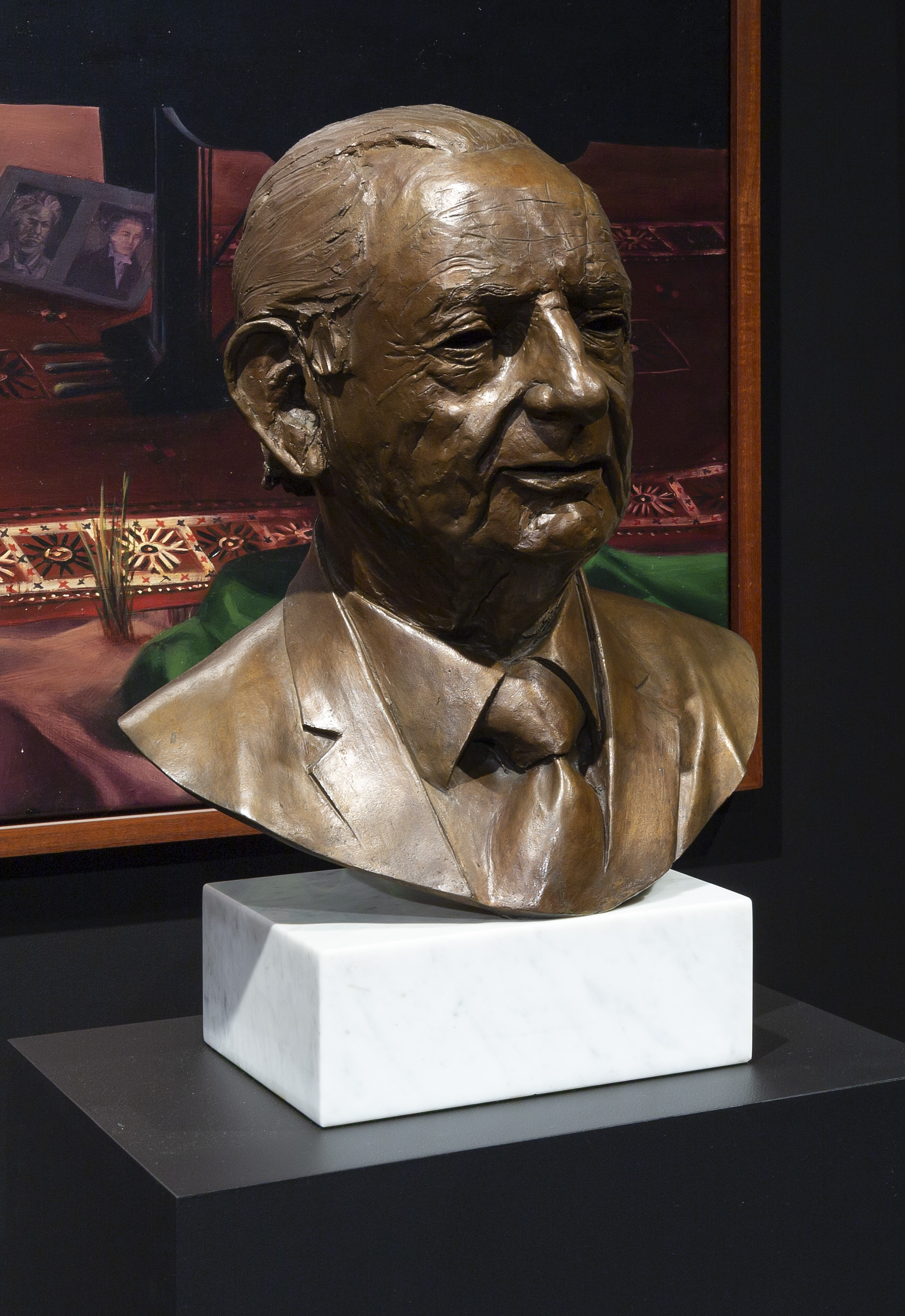
Peter Latona, Bernard Heinze, 1979.
Peter Latona (artist) born Sydney 1947 bronze, marble Starting as an undergraduate in music at The University of Melbourne in 1912, Bernard Heinze went on to further study in London and Paris, before returning to the Conservatorium as a teacher in 1923. Heinze was soon after appointed to the role of Ormond Professor of Music. As chief conductor of many orchestras, he was pivotal in forming a professional orchestral culture in Melbourne. Heinze was also significant to the development of broadcasting, with major roles at 3LO-3AR and the ABC. The University of Melbourne Art Collection. Photo: Christian Capurro -
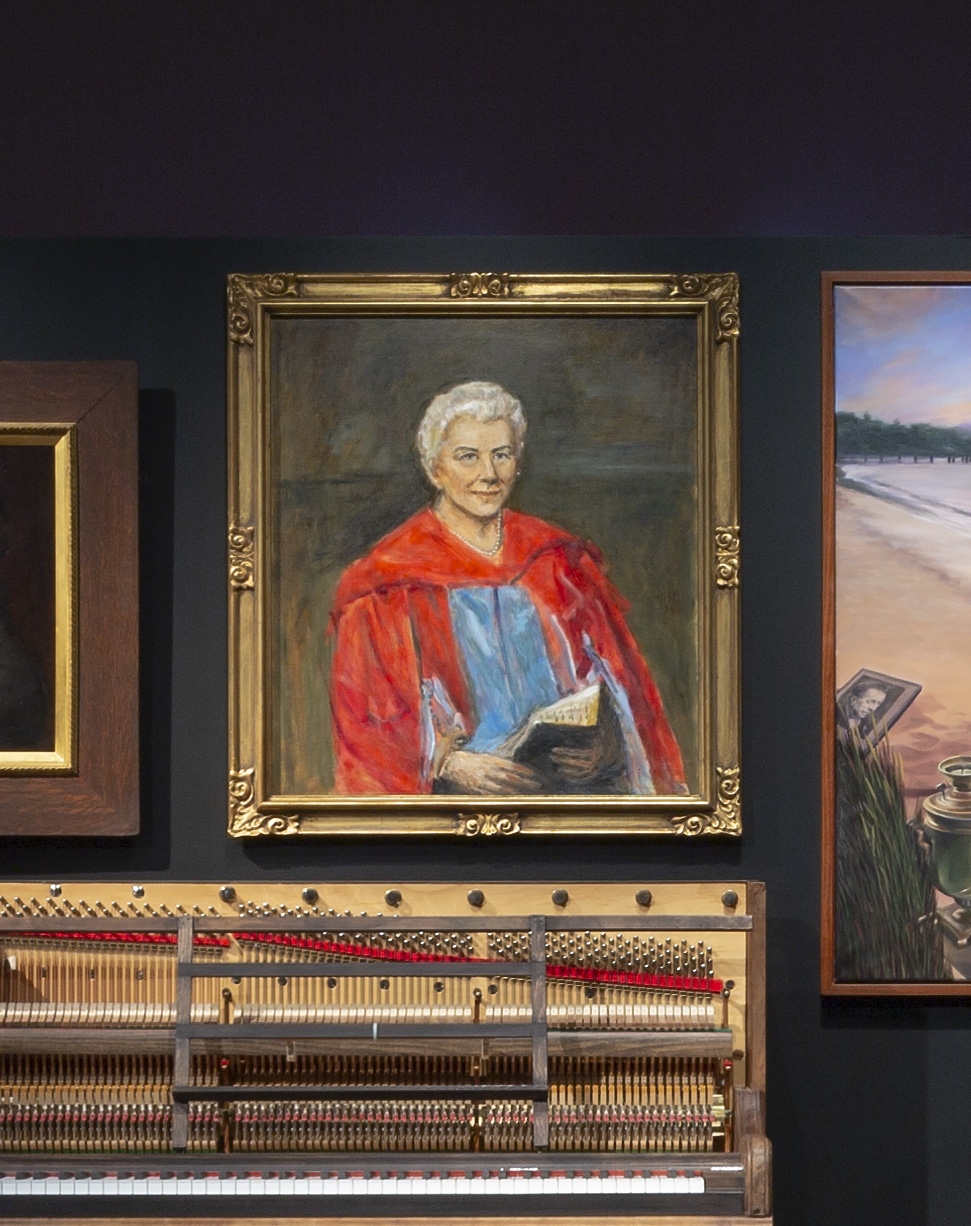
Unknown artist, Joan Hammond, mid-1970s.
oil on canvas Hailed as one of the great operatic sopranos of the postwar era, Dame Joan Hammond was an important patron and adviser to many Australian musical institutions. She was appointed Head of Voice at the VCA in 1975 and was an influential teacher to many Australian singers. The University of Melbourne Art Collection, Victorian College of the Arts Collection. Photo: Christian Capurro -
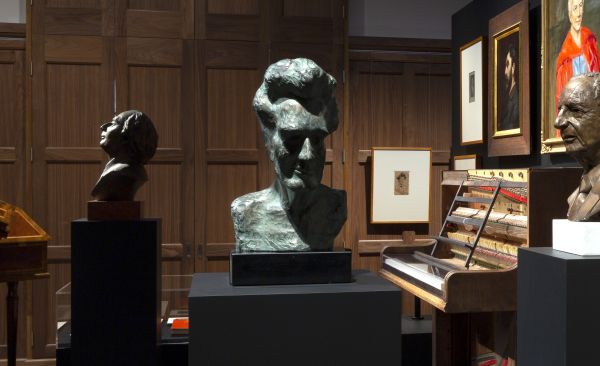
Kaare Kristian Nygaard, Composer and pianist Percy Grainger, 1952.
Kaare Kristian Nygaard (artist) born Lillehammer, Norway 1903; died White Plains, USA 1989 bronze When Percy Grainger opened his ‘Grainger Museum and Music Museum’ at The University of Melbourne in 1938, there were hundreds of images of him in the collection, ranging from sculpted busts to paintings, photographs and printed publicity. Grainger Museum Collection, University of Melbourne. Photo: Christian Capurro