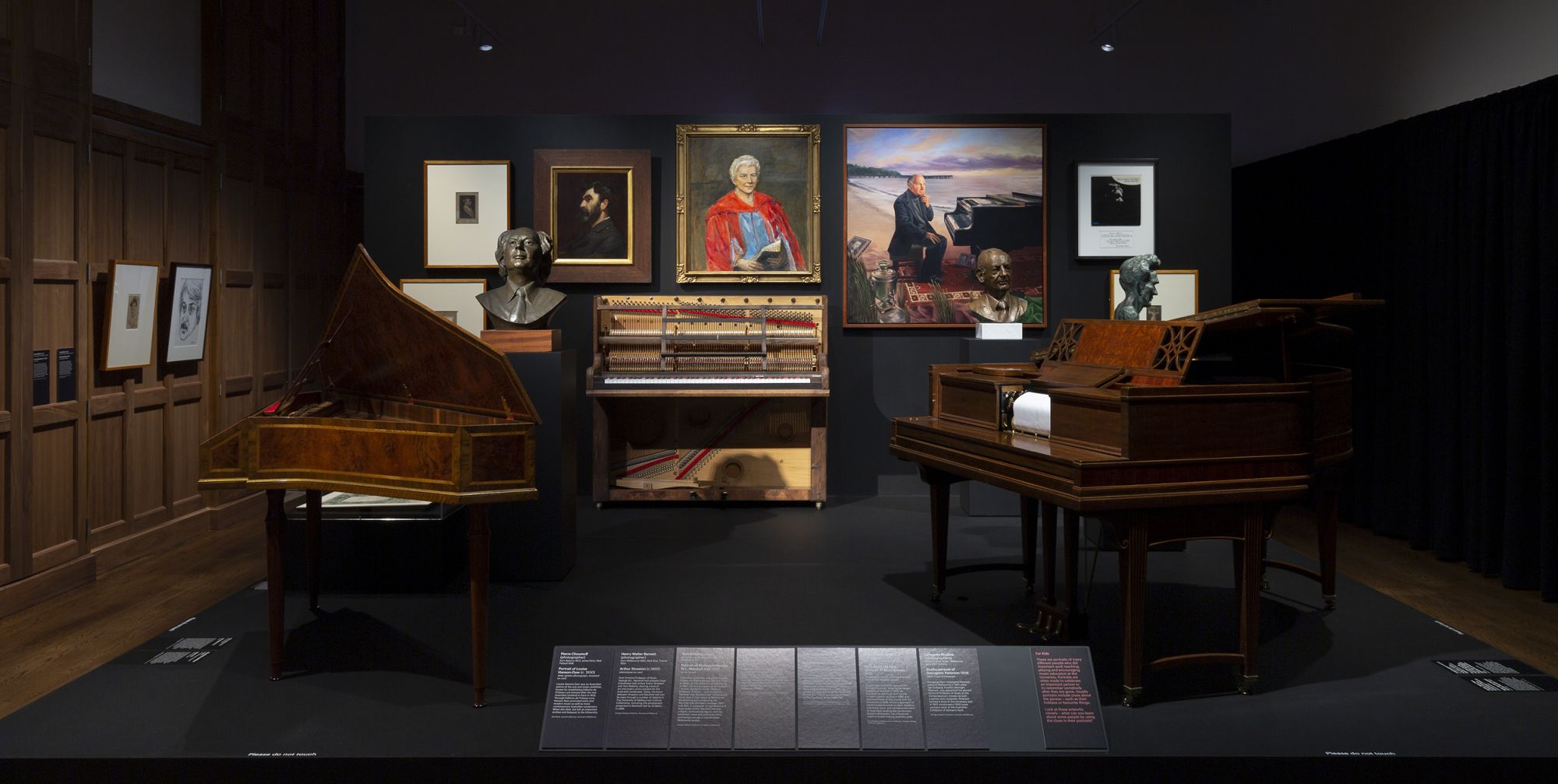
With appointments of significant European pianists to staff in the early twentieth century—including Czech pianist Edward Goll, who taught many notable Australians including Margaret Sutherland and Dorothy Mattingley—the Con further secured its reputation as one of the leading keyboard schools. Equally, as one of the founding institutions of the Australian Music Examinations Board (AMEB) the music faculty has shaped the learning of pianists across Australia from their earliest lessons.
The kinds of keyboard music encountered at the University go well beyond the traditional Classical and Romantic repertoire. Early music is played on the harpsichords and spinets of the Early Music studio (such as the one built by Meridith Moon), or is represented in the large collection of Medieval, Renaissance and Baroque keyboard music—including the complete works of François Couperin—published by Louise Hanson-Dyer's Parisian publishing house Éditions de l'Oiseau-Lyre in the 1930s. In contrast, students also perform the newest compositions for keyboard, using extended techniques, synethesisers, and the high-tech Disklavier, or even new experimental instruments like Jonathan Mills’s quarter-tone piano, often collaborating with composition students.
Many of the keyboard departments’ most distinguished past and present teachers—including Max Cooke, Mack Jost, and Ronald Farren-Price—were also once Con students themselves. The current keyboard faculty, headed by Professor Ian Holtham, hosts many internationally renowned performers and teachers, with students and graduates going on to play important roles in the Melbourne musical community, as soloists, chamber musicians, teachers, and accompanists.
-
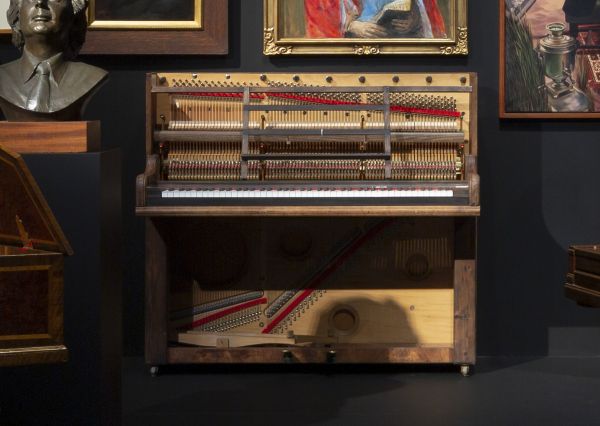
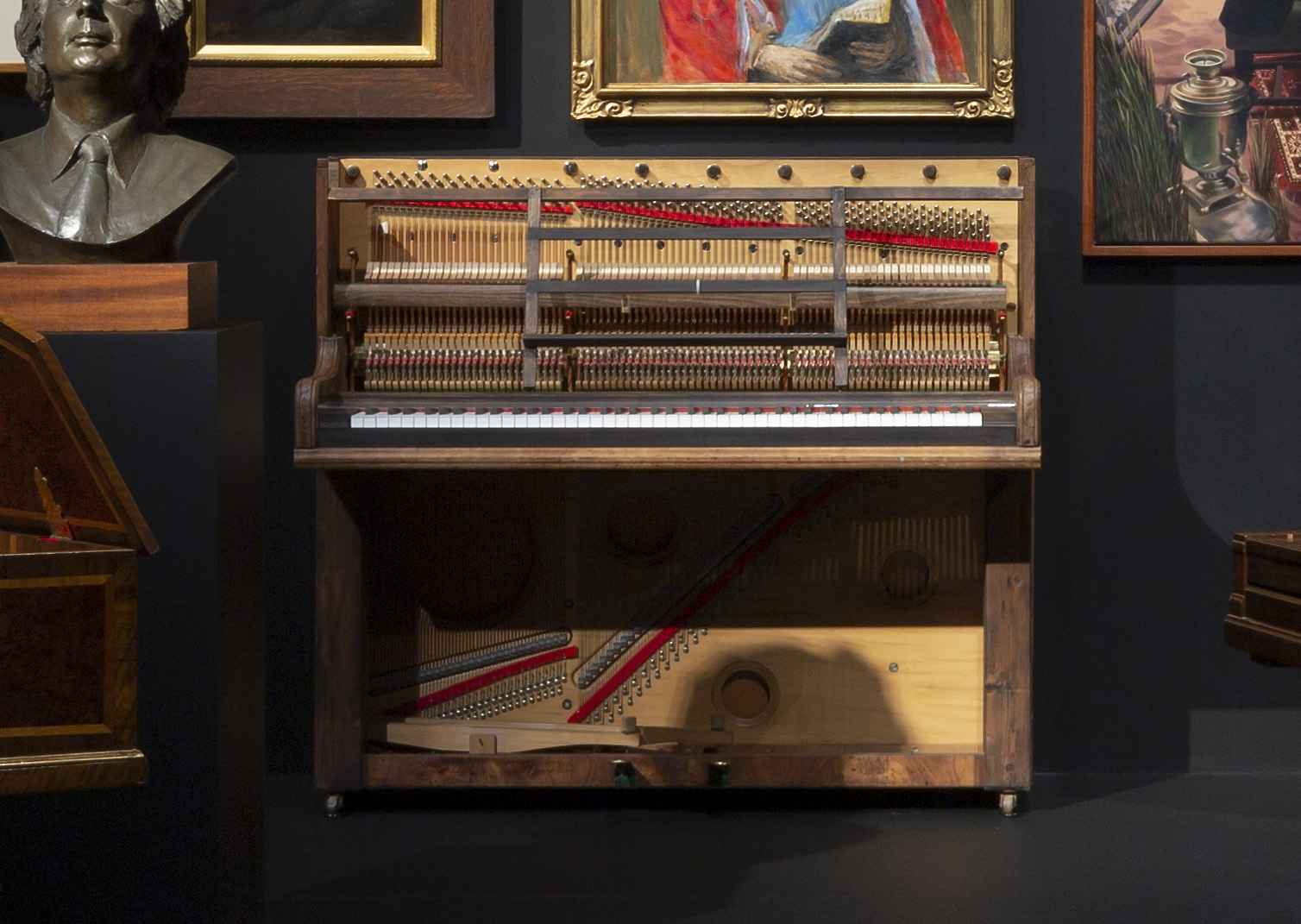
Wayne Stuart, Microtonal piano [detail], 1995–96.
Wood, metal Unlike a traditional piano, which uses intervals of a semitone or a distance of 100 cents between each key, the keys on this specialised microtonal piano are a quarter tone or 50 cents apart. Made for composer and pianist Sir Jonathan Mills, the piano was brought to The University of Melbourne in 2016, when it was used in a performance as part of the Cultural Collisions: Grainger|Griffins festival. Grainger Museum Collection, University of Melbourne. Gift of Sir Jonathan Mills 2017. -
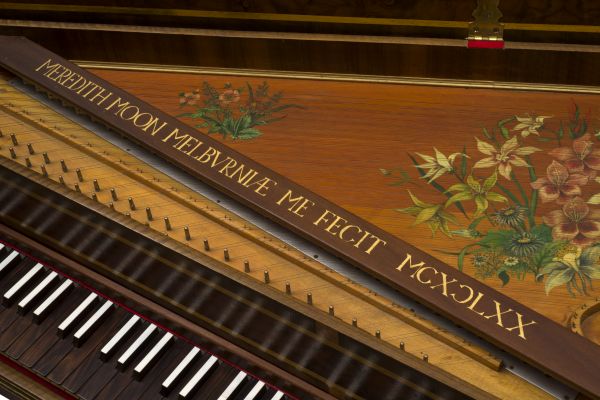
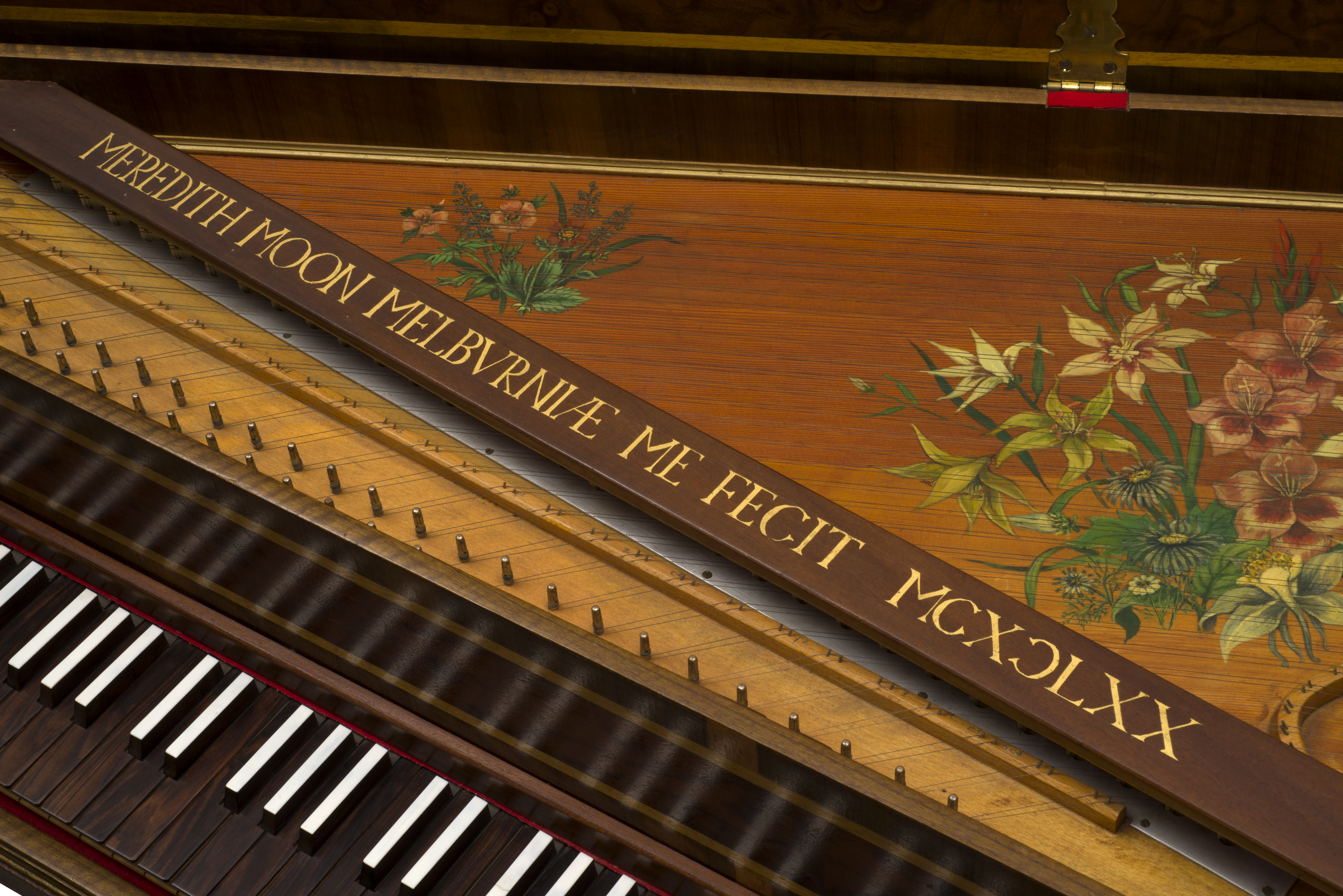
Meredith Maxwell Moon, Spinet, 1970.
This instrument was hand-crafted by Faculty of Music lecturer and musicologist, Meredith Maxwell Moon, with its traditional inscription reading MEREDITH MOON MELBURNIAE ME FECIT MCXCLXX. Fascinated by early music, Moon began building reproduction instruments while working at the Bodleian Library in Oxford during the 1960s. In Australia, his expertise fostered the ‘Clifton Hill School’ of harpsichord makers. Through his teaching, personality and character, Moon became one of the legends of the university’s Musicology department, inspiring a generation of prominent scholars, including the eminent Professor Kerry Murphy. Possibly Moon’s last instrument, this spinet was donated to the Faculty’s Early Music Studio at his death. It is a striking example of a particular kind of twentieth-century engagement with early music. Grainger Museum Collection, University of Melbourne. Gift of the Faculty of Music, 2005. -
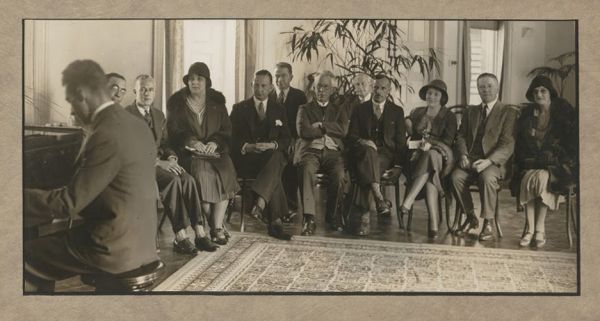
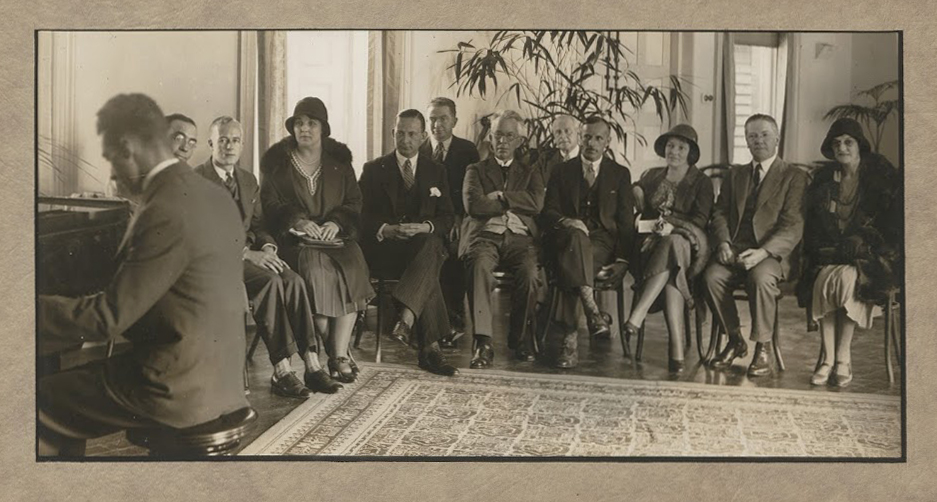
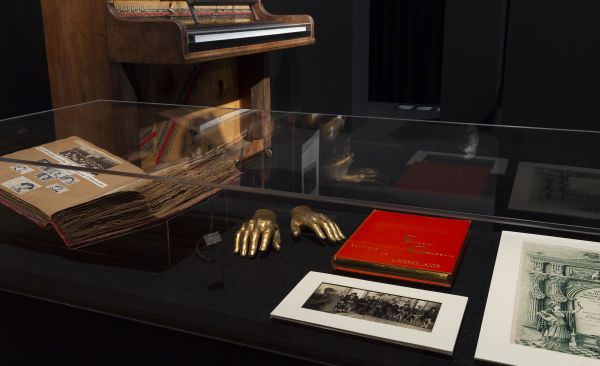
Unknown photographer, Photograph of Melbourne musicians listening to a pianist in Tallis Wing, Conservatorium of Music, University of Melbourne, c. 1932–1935.
This photograph was taken in the Tallis Wing of the Conservatorium at some time in the early 1930s. While the pianist has not been identified (though some have suggested it might be Raymond Lambert, or less likely, Percy Grainger) the seated figures are, from left to right, Henri Penn, Roy Shepherd, Elsie Fraser, Bernard Heinze, Gordon McKeown, Fritz Hart, Leslie Middleton, Wally Seidel, Margaret Sutherland, Jimmy Steel, and Ruth Flockhart. Almost all are Conservatorium pianoforte staff members. Rare Music, Special Collections, University of Melbourne. -
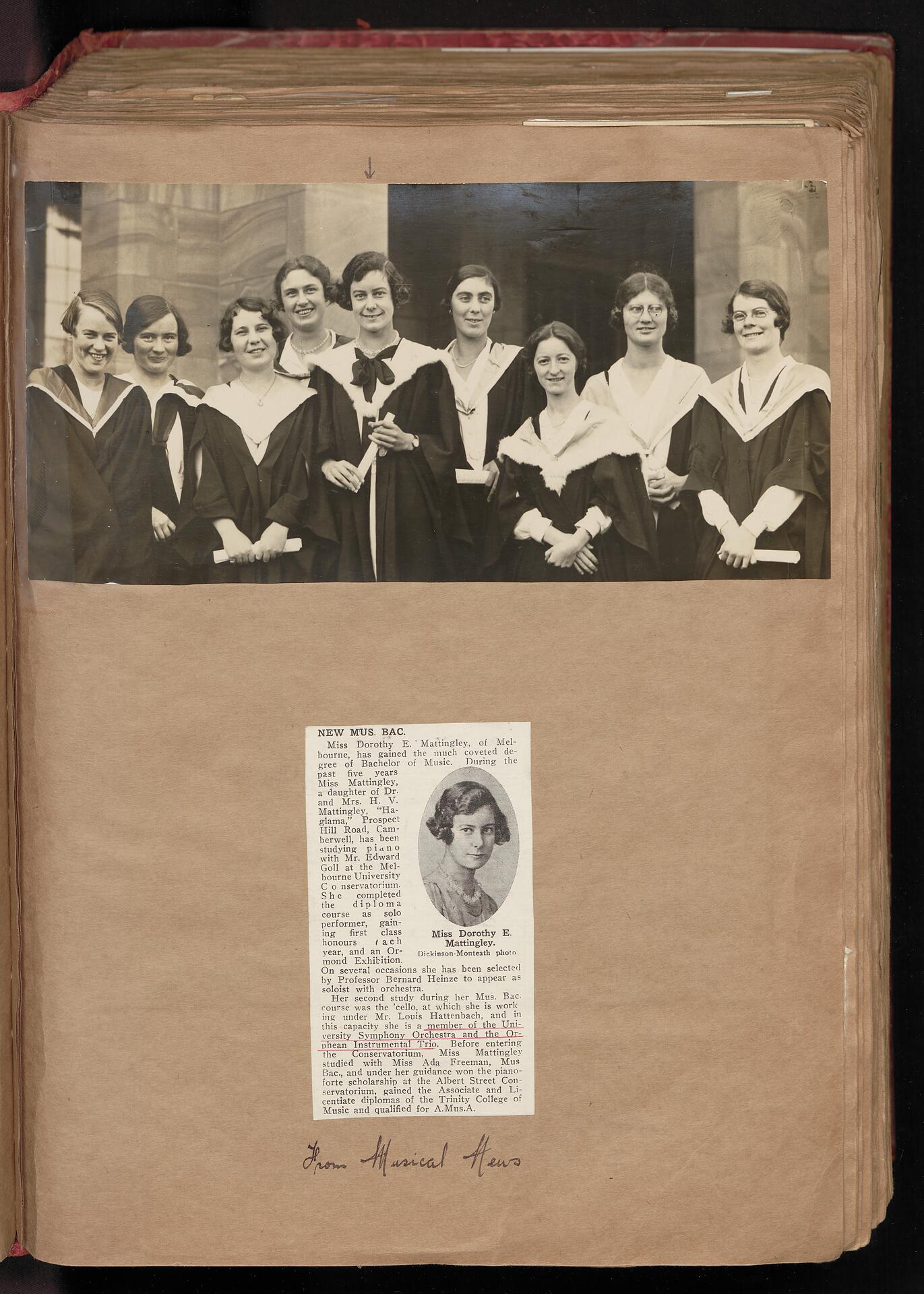
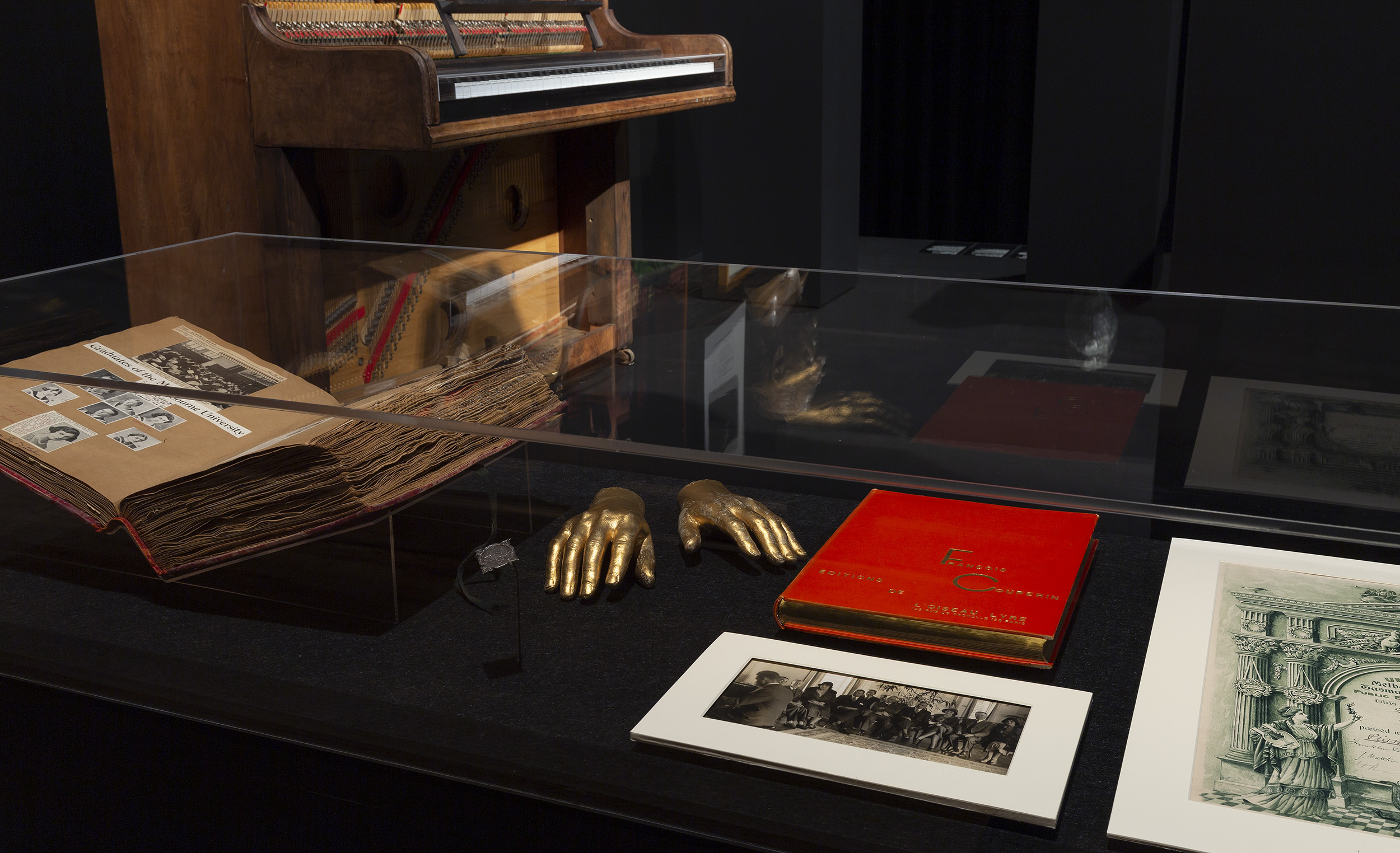
Dorothy Rutherford (nee Mattingley), ‘Truth’ scrapbook [detail], 1920s–1950s.
In 1930, Dorothy Mattingley finished five years at the Conservatorium of Music, University of Melbourne. During her student years, she studied piano with Edward Goll, and learnt cello as her second instrument. Dorothy joined the University Symphony Orchestra, under Bernard Heinze, in her second year of study. She was also a member of the Conservatorium tennis team. Dorothy compiled this scrapbook of material relating to both her own career and the wider Melbourne musical community, spanning a long period of musical activity from the 1920s to the 1950s. The scrapbook is a unique and valuable part of the University of Melbourne’s Cultural Collections. This group of images is an extended selection from the 131 pages of the volume, with many additional documents pasted in. Grainger Museum Collection, University of Melbourne. Gift of David Rutherford to the Grainger Museum, 1996. -
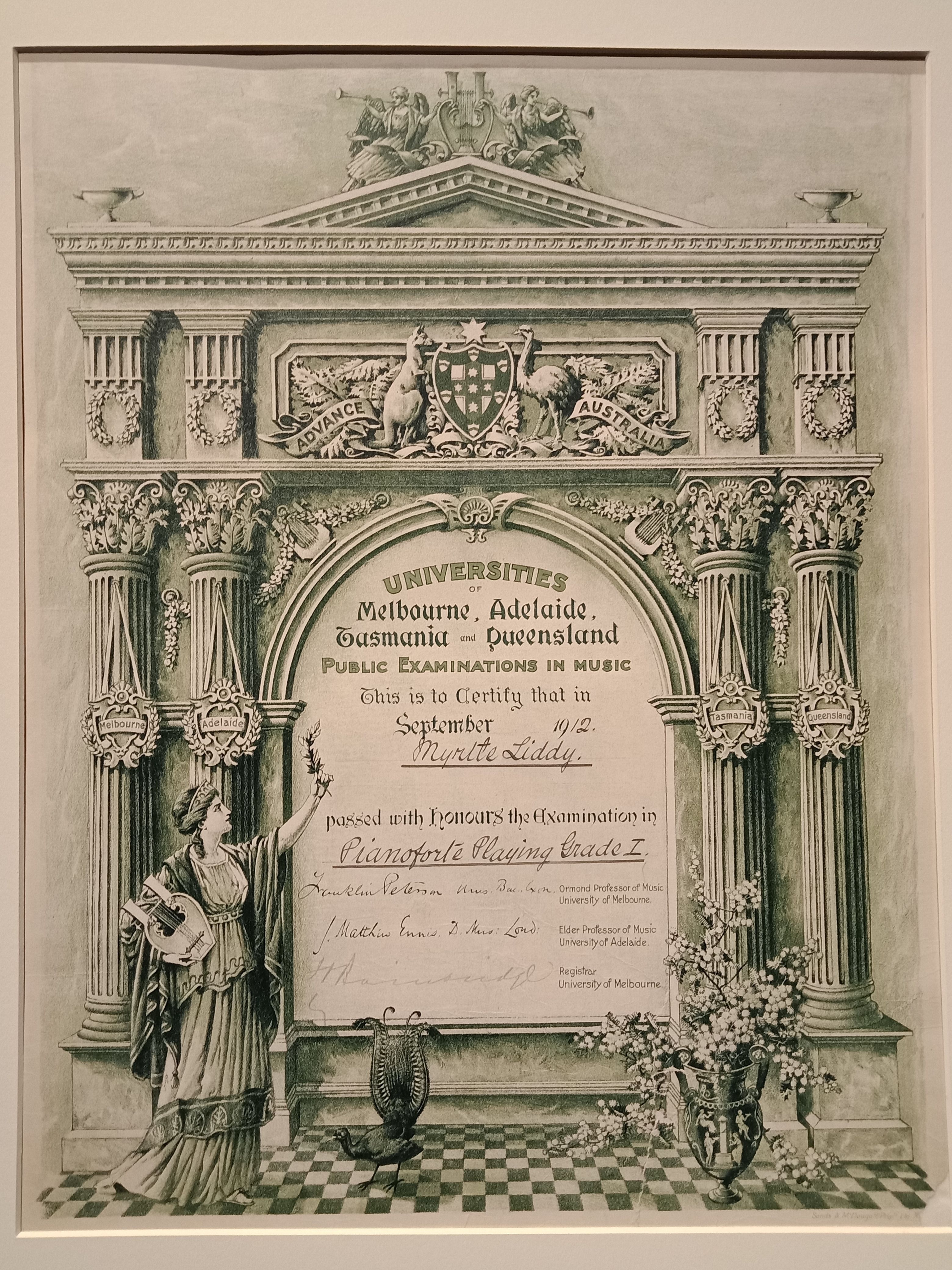
Universities of Melbourne, Adelaide, Tasmania and Queensland (publishers), Pianoforte Grade One Certificate awarded to Myrtle Liddy, September 1912.
When it began offering exams in 1918, the numbering system of Australian Music Examinations Board (AMEB) grades went from Grade 8 (the lowest) to Grade 1 (the highest). In 1939, the AMEB reversed their numbering system to match the British Associated Board of the Royal Schools of Music standard. This Grade One music examination diploma, awarded to Myrtle Liddy in 1912, was the highest grade that a student could achieve at the time. Liddy entered the Conservatorium to study piano in 1914. Grainger Museum Collection, University of Melbourne. -
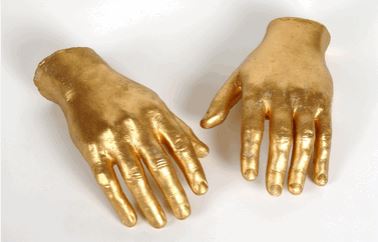
Nelson William Illingworth, Plaster casts of Edward Goll’s hands, date unknown.
Nelson William Illingworth (sculptor) born Portsmouth, England 1862; died Sydney 1926 gilded plaster Pianist Edward Goll was a well-known and loved teacher at the Conservatorium. Goll had plaster casts of his hands made in Sydney. According to his piano student Dorothy Mattingley, to whom Goll gave the casts in the 1940s, the pianist nearly lost his right hand in the process. Grainger Museum Collection, University of Melbourne. Gift of David Rutherford, 1996. -
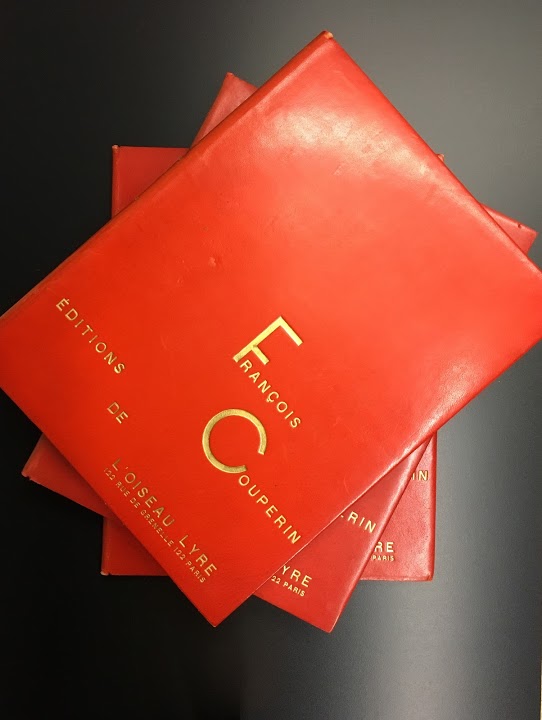
Louise B.M. Hanson-Dyer, Œuvres complètes de François Couperin; publiées par un groupe de musicologues sous la direction de Maurice Cauchie [detail], 1932–33.
Published score This is the 10th volume of a 12-part collected edition of the complete works of François Couperin – the inaugural publication by Louise Hanson-Dyer's Parisian publishing house, Éditions de l’Oiseau-Lyre. Rare Music, Special Collections, University of Melbourne. -
'Multivocal' (install shot), Christian Capurro, 2021