Formal music study began at the Conservatorium, which moved around Melbourne before the 1909 Art Nouveau Conservatorium building in Parkville was opened and was continued in the Music school at the VCA, which opened in 1974. While the individual identities of these schools have been tested and challenged throughout their history—from debates about the place of practical music study on a traditional university campus in the Con’s early days, to the maintaining of the VCA’s distinct character, in face of multiple amalgamations and de-amalgamations—many students have also found their own place in the courses, research networks societies these places offer.
In addition to spaces dedicated to jazz, the Early Music Studio (founded in 1996 by John Griffiths), electronic music, Australian music, and a variety of other research centres, there are also long musical histories associated with the various colleges (all have choirs or musical institutions), bands heard at the Student Union, music societies in many other faculties, research undertaken in the Music Library, and the overall musical chaos of the Grainger Museum, established by Percy Grainger in the late 1930s. 2019 also brought new spaces, with the renamed Faculty of Fine Arts and Music finding its new home in the Ian Potter Southbank Centre.
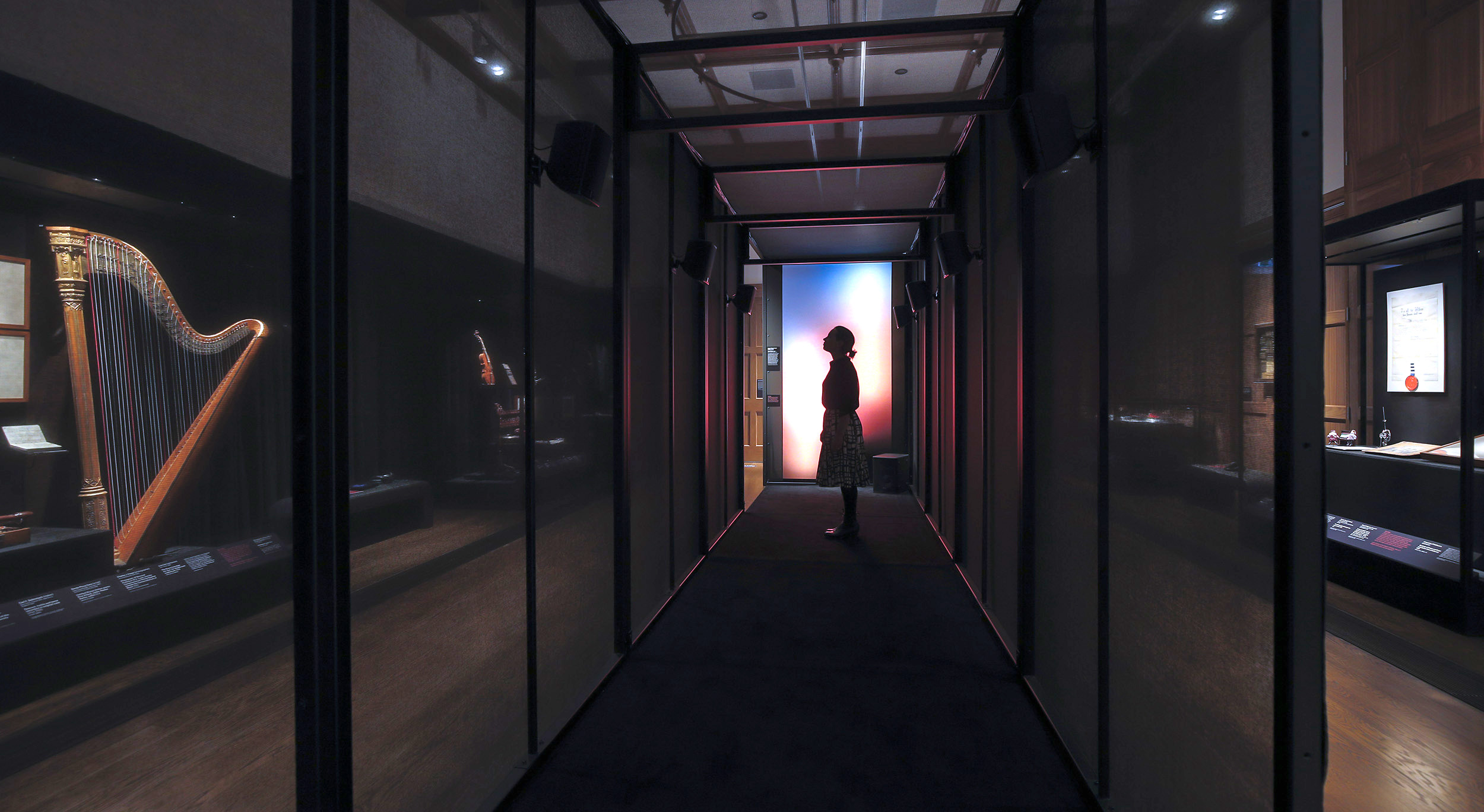
A new commission exploring the sounds of music students practising and rehearsing as part of their studies in the Faculty of Fine Arts and Music is a central feature of the exhibition Multivocal. Alumnus composer Imogen Cygler has created a soundscape, Spaces Places, which explores the experience of moving through the corridors and spaces of any of the music buildings on the University campus today. Spaces Places incorporates performances from current students and staff as well as archival recordings. Imogen is an Honours graduate in the Bachelor of Music (Interactive Composition) from the VCA.
-
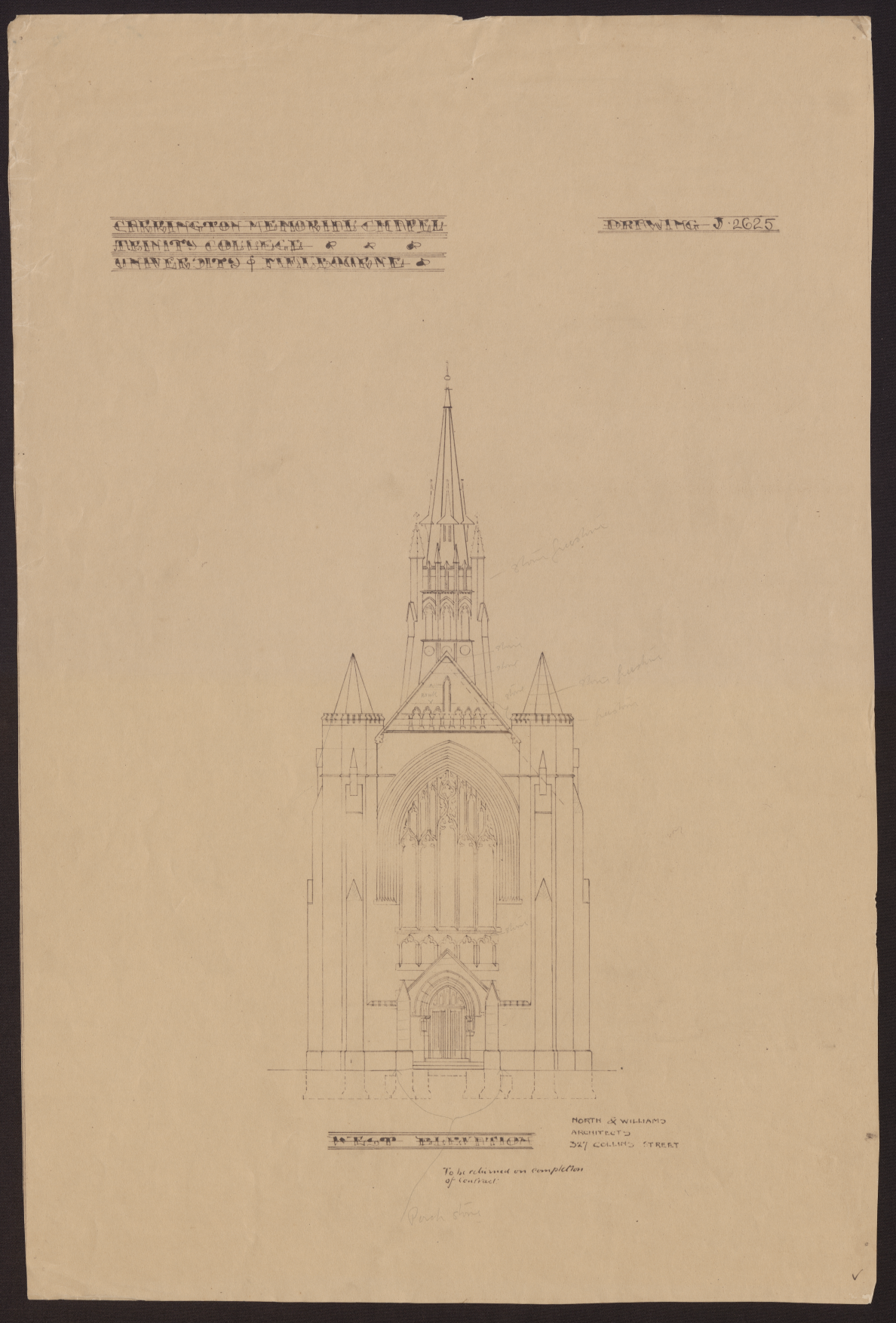
North and Williams (architects), Front elevation of the Horsfall Chapel (Carrington Chapel), 1915.
This is one of 24 architectural drawings of the Trinity College Chapel during its early construction. Although Trinity College only had a professional director of music from 1976, with the appointment of Professor Peter Dennison, a chapel choir had existed from the College’s earliest days. Today, the Chapel is central to musical activities at Trinity, with its renowned choir singing in both regular Anglican services and public concerts, undertaking international tours and producing recordings. Trinity College Archives, TA 001/S12 Architectural Drawings and Plans, AT 002113.08. -
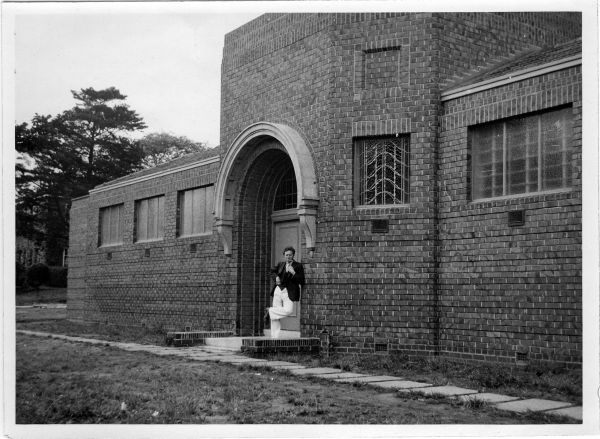
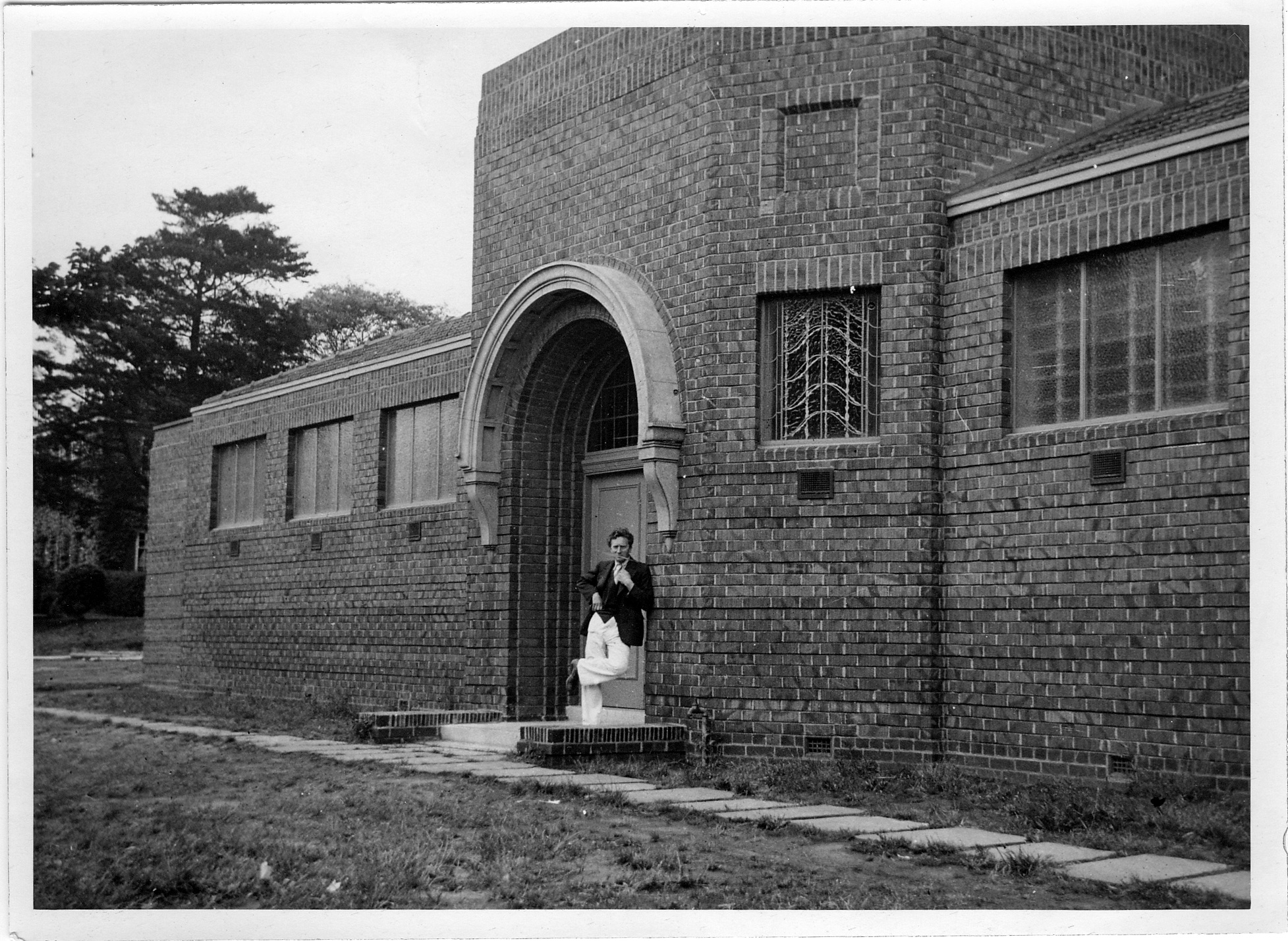
Richard Hindle Fowler (photographer), Percy Grainger outside the Grainger Museum, December 1938.
Australian composer and pianist Percy Grainger is photographed here outside his museum which he had built on the grounds of the University just north of the Conservatorium of Music. Designed by both Grainger and the University's staff architect John Gawler, Grainger funded the Museum’s construction, and filled the building with his own collection of musically related objects, for the opening in December 1938. Grainger intended the museum to 'celebrate musical life in Australia', as well as other under-represented musics from around the world, and to stand as a source of compositional creativity into the future. Since Percy Grainger’s death in 1961, the Museum has performed many functions for the music communities of the University of Melbourne, serving at different times as a teaching and research venue, a compositional hub, an electronic music studio, a performance space and a public museum. Grainger Museum Collection, University of Melbourne. -

Bates, Peebles and Smart (architects), Proposal for Conservatorium of Music Plan, first floor; section, AB, CD (1968.0013.00247), 1909.
The Conservatorium of Music, officially opened in 1895, was originally housed in the Queen’s Coffee Palace on Rathdowne and Victoria streets, before moving to the Victorian Artists’ Society in East Melbourne in 1900. In 1909 construction on the Parkville building began. Melba Hall was added in 1913, the Tallis Wing in 1927, and the Marshall-Hall Wing in 1935. While the building includes many Art Nouveau elements, it is often described as striving for an Australian homegrown aesthetic. It was heritage listed in 1979. The Conservatorium continues as a key musical venue for the University on the Parkville campus, complimenting other key venues on the Southbank Campus including the Victorian College of the Arts, the Wilin Centre for Indigenous Arts and Cultural Development, VCA, and the new Ian Potter Southbank Centre. Elevation, front, back (1968.0013.00249) 1909. University of Melbourne Archives, Bates Smart and McCutcheon (1968.0013, job 123). -
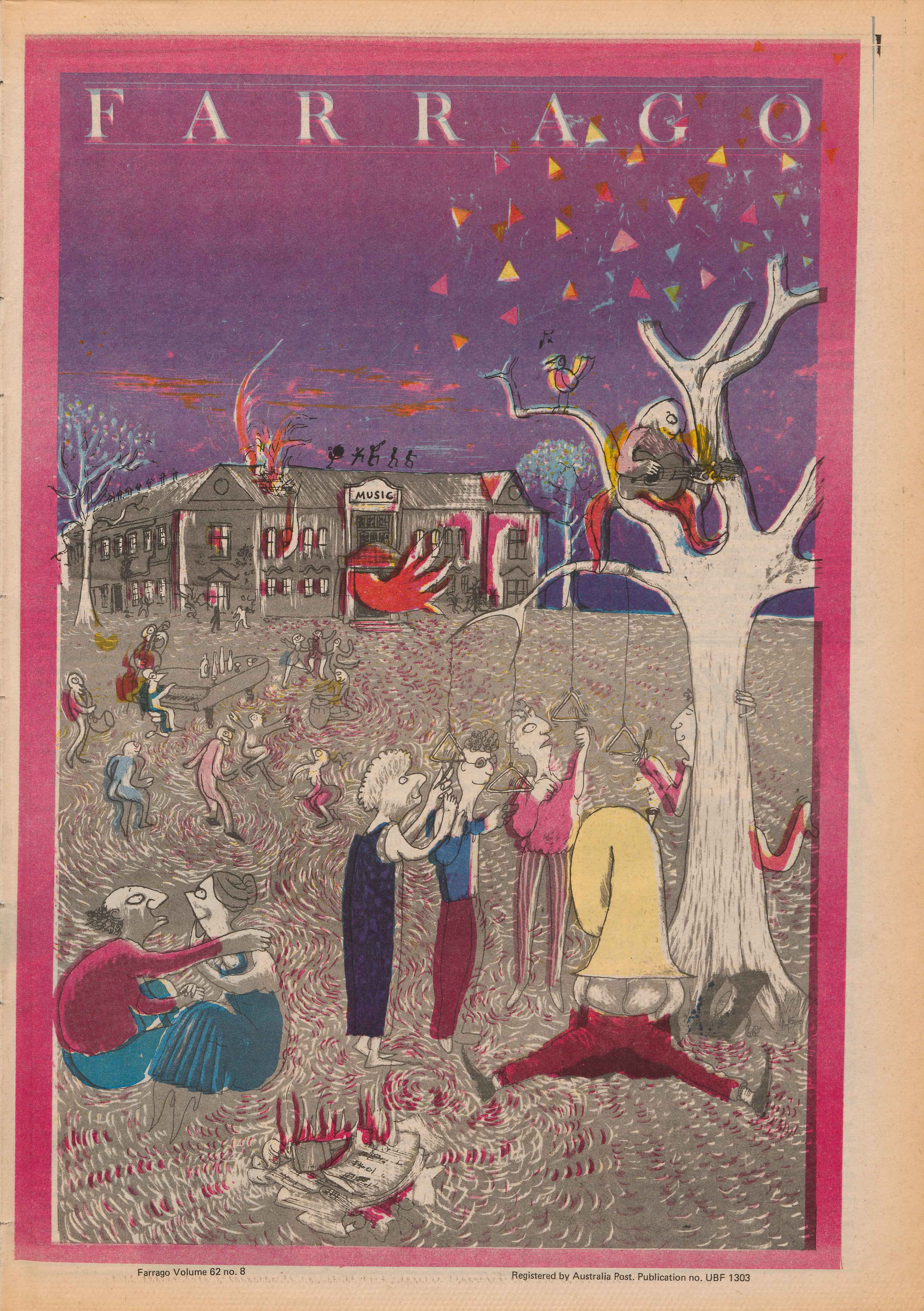
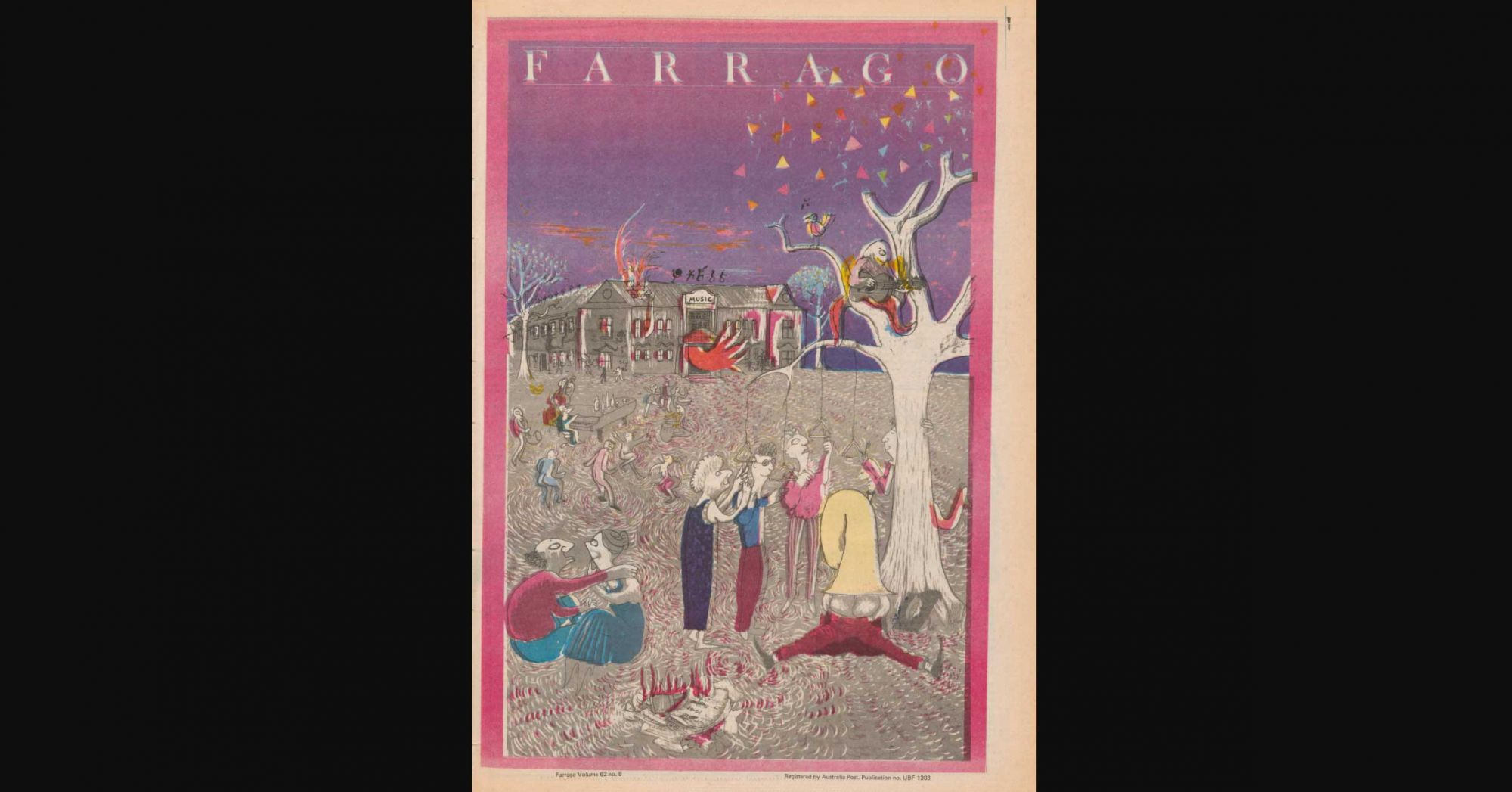
University of Melbourne Student Union and Nigel Eyre, Farrago, vol. 62, no. 8, 1984.
University of Melbourne Student Union (publisher) Nigel Eyre (illustrator) The relationship between students studying music and the Faculty staff has not always been harmonious. The early 1980s was a particularly challenging time for the Faculty of Music, with space issues and concerns about the lack of women on staff. This article, in the student newspaper Farrago, depicts the ‘Con’ on fire, and reports the findings of a survey conducted by the Music Students Society. The article reported that: ‘Students are forced to practise in the toilets, exam results suddenly drop from honours to fails, and the lecturer most popular with students has been effectively sacked. These few incidents are merely symptoms of a deep-seated discontent over the structure of the faculty, a discontent which the faculty has attempted to sweep under the carpet.” Lack of practice space in the Conservatorium building was a core contention, the article noting that ‘Two rooms amongst 240 students means the toilets are often the only free rehearsal space’. The superior rehearsal spaces at the Victorian College of the Arts, with 52 practice rooms available to students, offered a stark comparison. Rare Music, Special Collections, University of Melbourne. -
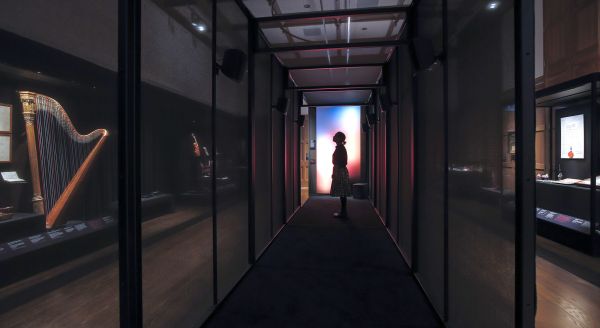
Imogen (Regina Taylor) Cygler, 'Spaces Places' (install shot) 2019, audio 8-channels, Commissioned for Multivocal 2020, photography Christian Capurro
This soundscape explores the experience of moving through the corridors and spaces of any of the music buildings on the University campuses today. Composer Imogen Cygler is a recent graduate of the Bachelor of Music (Interactive Composition) program at the VCA. To create Spaces Places, she recorded students and staff practicing and rehearsing music, much of which she composed herself. One of the instruments incorporated in the soundscape is the EMS Synthi 100, a rare analogue synthesizer held in the VCA’s Electronic Music Studio. Imogen (Regina Taylor) Cygler 'Spaces Places' (installation shot) 2019 Audio installation, 8 channels Commissioned for Multivocal 2020