Founded in 1884 to create a community for students of the University, the Student Union plays a significant role in supporting wellbeing and inclusivity, through Clubs and activities, many of which have a musical face. The Student Union affiliated club MUCS (Melbourne University Choral Society) recently celebrated its 80th year of activity. Student bands and performances have also played a significant part in musical life on campus for many decades. Student bands are often support acts to professional bands, in the ‘Bands, Bevs and BBQs’ weekly events held at the Student Union. The Rowden White Library, run by the University of Melbourne Student Union, has also been a place for students and staff to listen to recordings of music for leisure and pleasure, over many years.
Training in professional therapeutic music began at the University in 1978, with Australia’s first Music Therapy course. Denise Erdonmez (Grocke) was appointed inaugural lecturer in 1980 to teach an undergraduate course, and subsequently expanded the program to include a graduate diploma in music therapy in 1990. Therapeutic approaches included singing, group improvisation, music and movement, and receptive music therapy. Since 2006, students have graduated with a Master of Music Therapy, trained to utilise music professionally for the purposes of wellbeing and therapeutic practices. Wellbeing of students is central to the undergraduate subject offered at the VCA, Wellbeing Orchestra, which explores Tibetan singing bowls and meditation.
-
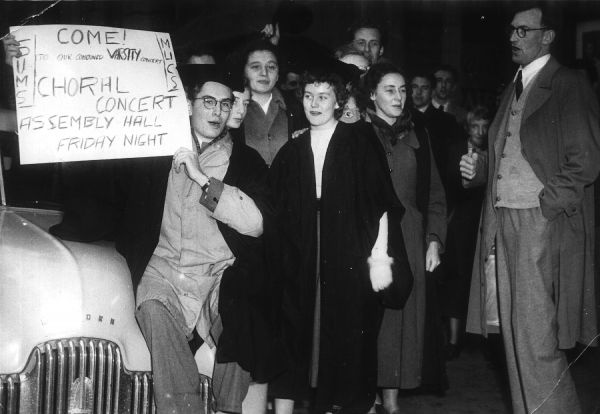
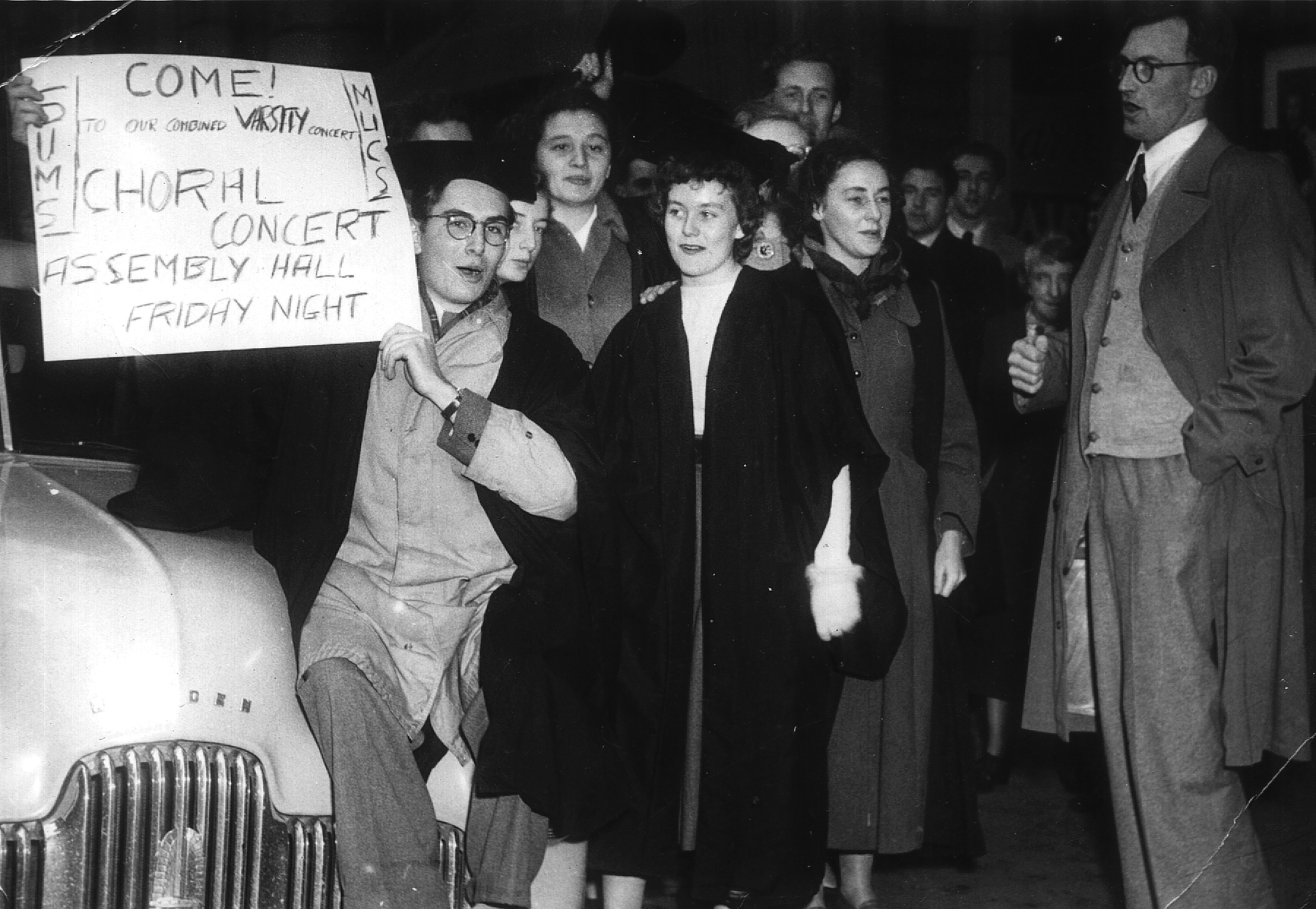
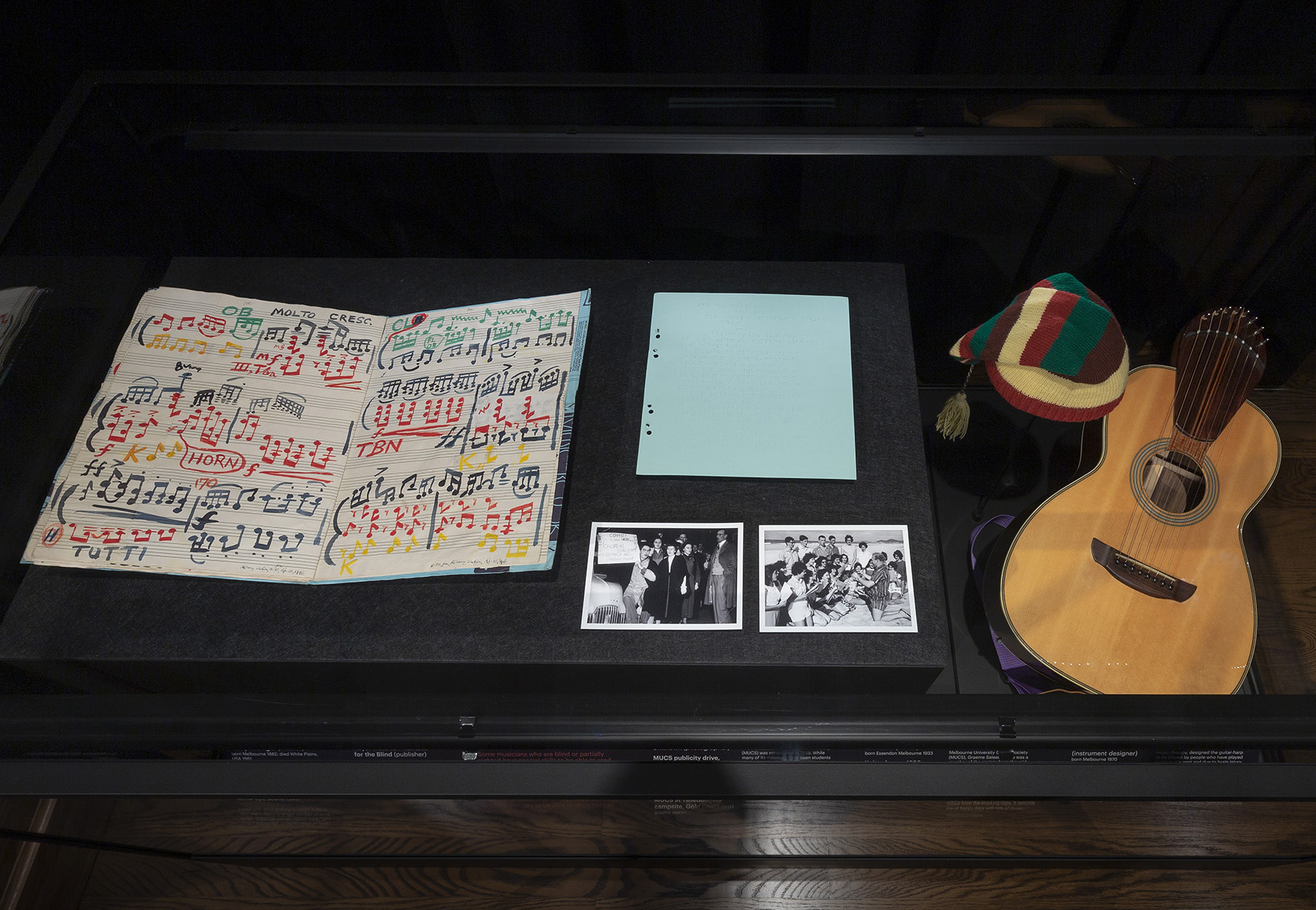
Unknown photographer, MUCS publicity drive, Swanston Street, Melbourne, 1951, with conductor Ron Penny, 1951.
The Melbourne University Choral Society (MUCS) was established in 1939. While many of its members have been members of the Conservatorium, it is open to all singers from both in and outside the university. It has been known across its seventy years of existence for its diversity and inclusion and performs in many high-profile and international settings. Courtesy Australian Intervarsity Choral Societies Association, Melbourne. -
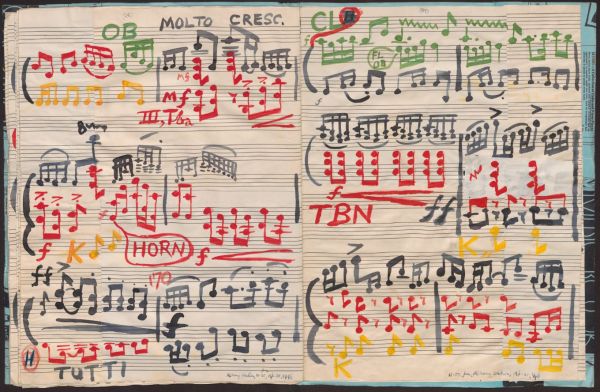
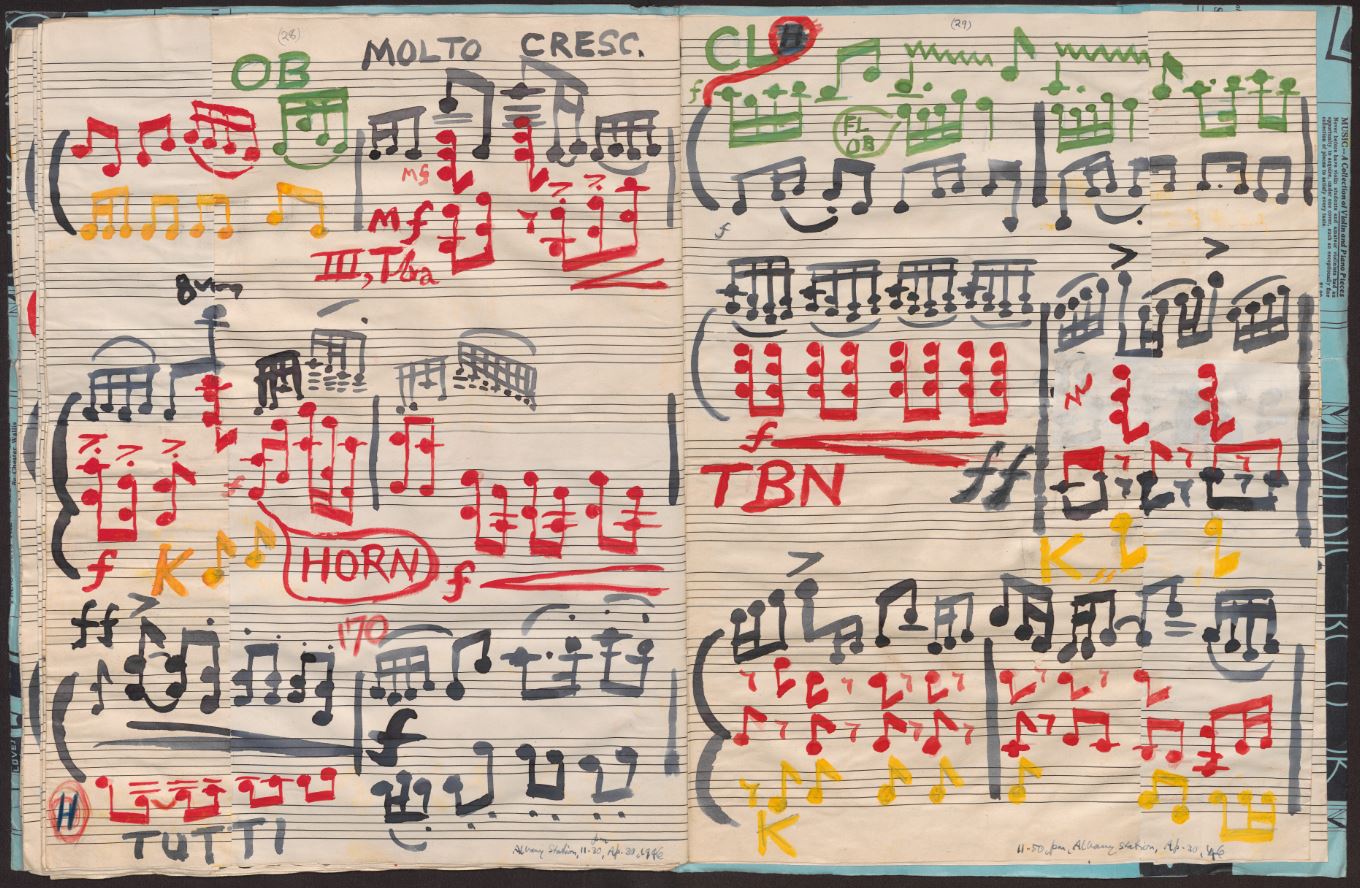
Percy Grainger and Violet Archer, Britannia, A Joyful Overture, blind-eye score [detail], 1946.
Percy Grainger (creator) born Melbourne 1882; died White Plains, USA 1961 Violet Archer (composer) born Montreal, Canada 1913; died Ottawa, Canada 2000 ink, paint, pencil on paper Faced with deteriorating eyesight in his in later years, Percy Grainger devised what he called “blind-eye scores”, which he described as “very large hand-written scores to conduct from”. Grainger greatly reduced the information included in a typical conductors’ score and ensured that he could read these notes easily by using exaggerated melodic shapes, vivid colour-coding for instrumental entries, and emphatic dynamic markings and performance notes. Composed in 1941, Britannia, A Joyful Overture is by Canadian composer Violet Archer, and achieved great popularity during the Second World War when it was broadcast by the BBC to the war front in Europe. Markings throughout show when and where Grainger was while he was working on this score, completing the final pages around midnight at Albany Station on 30 April 1946. Grainger Museum Collection, University of Melbourne. -
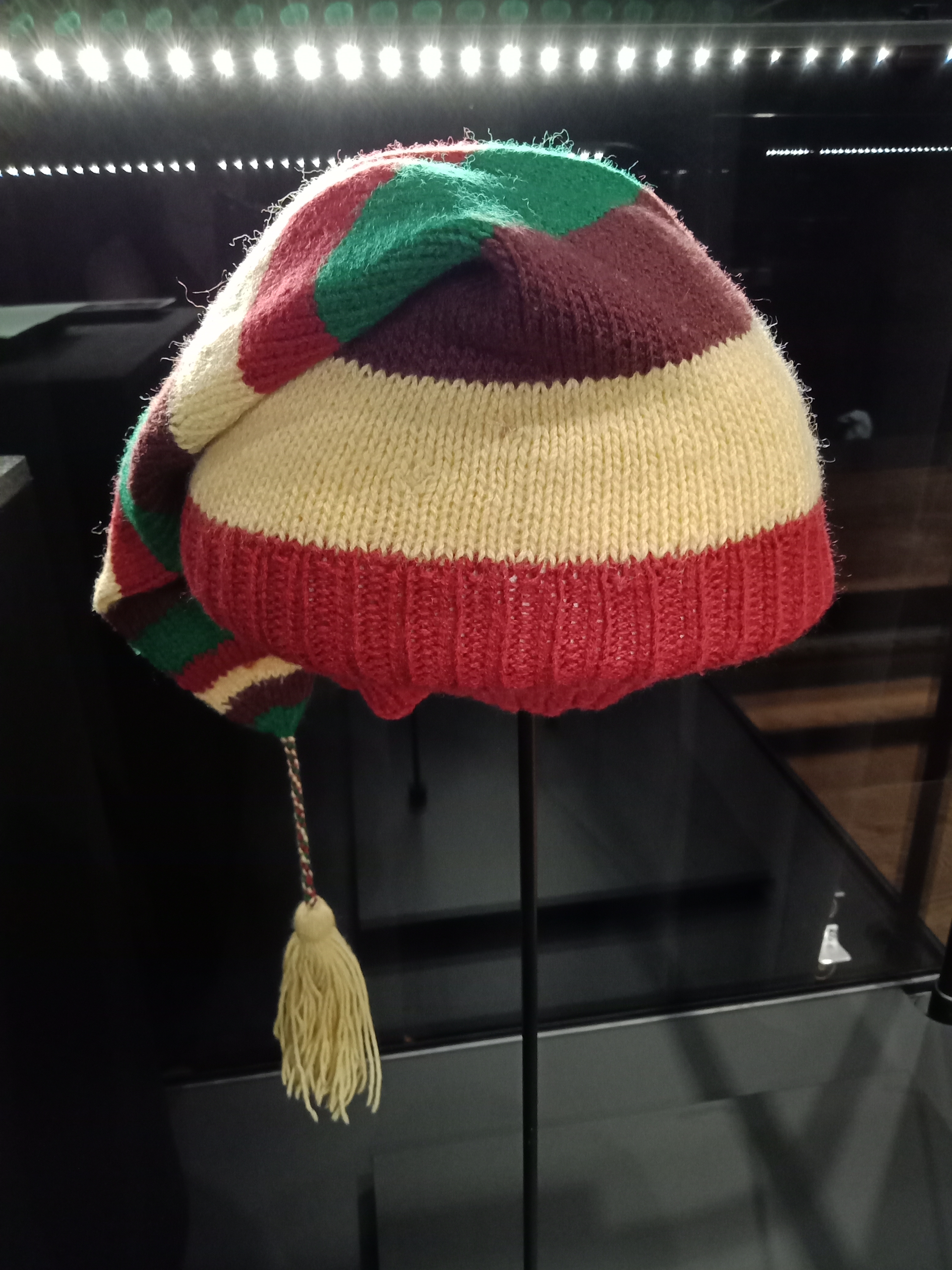
Unknown maker, Knitted cap, c.1950s.
wool This cap was knitted for member of Melbourne University Choral Society (MUCS), Graeme Saleeba, who was a member of the society from the mid-1950s. All MUCS members had caps, of varying lengths, with a tassel or pompom on the end. In lender Lois Saleeba’s words, 'We had International Choral festivals in a different State each year and when we all gathered together there was a sea of colour from the stocking caps. It reminds me of happy days with lots of music...’ On loan from Lois Saleeba. -
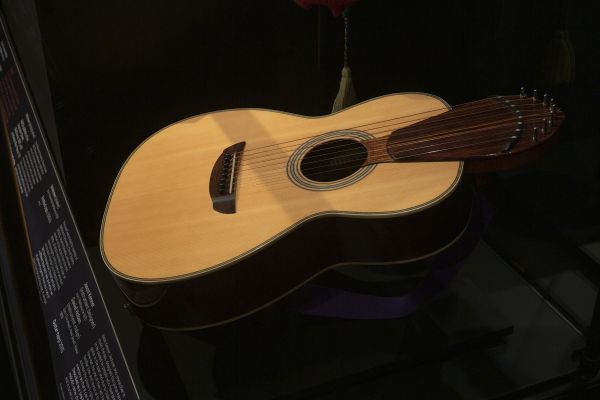
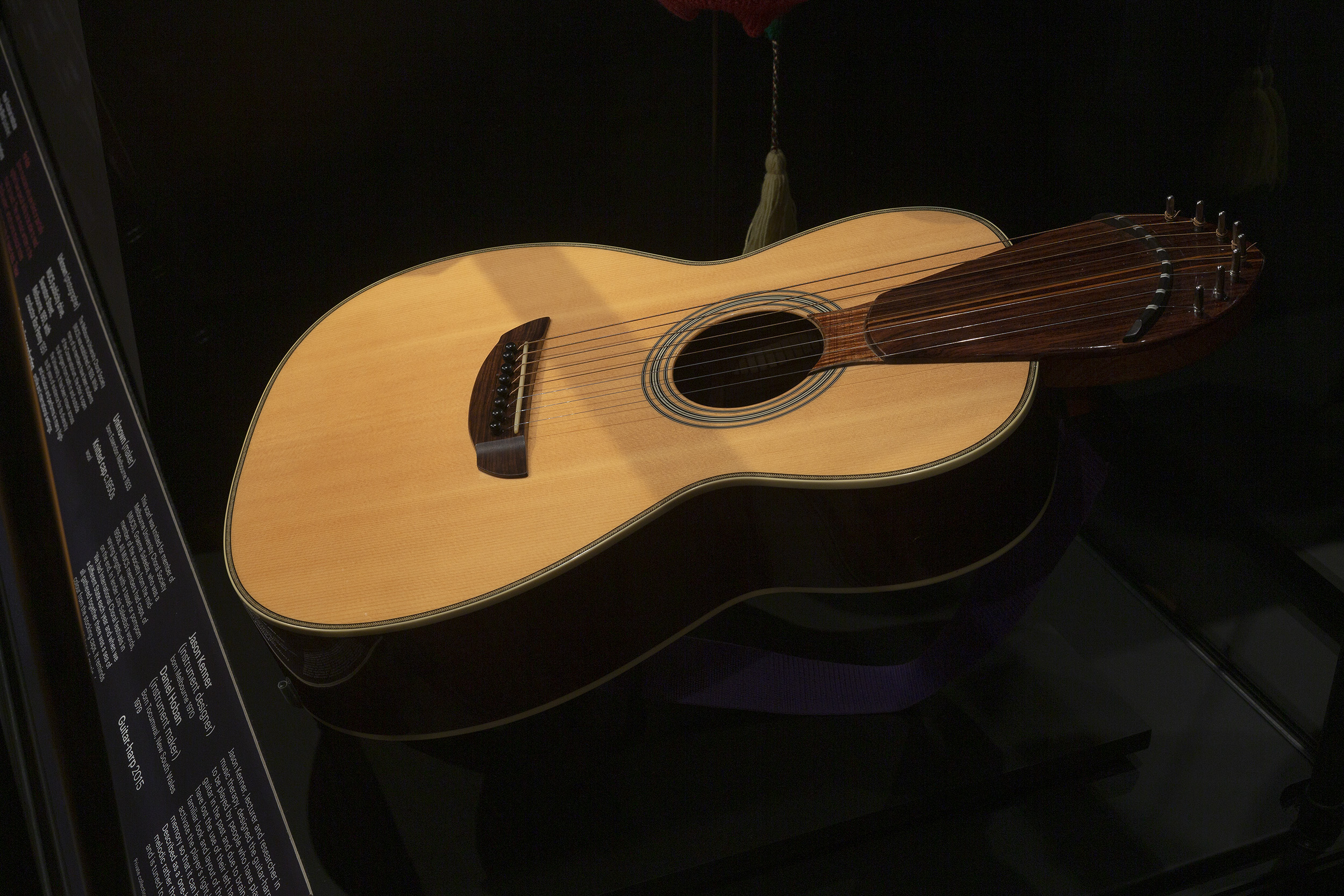
Jason Kenner and Daniel Hoban, Guitar-harp, 2015.
Jason Kenner (designer) born Melbourne 1970 Daniel Hoban (maker) Born Tocumwal, New South Wales 1979 Photo: Christian Capurro Dr Jason Kenner (designer) born Melbourne 1970 Daniel Hoban (maker) Born Tocumwal, New South Wales 1979 Jason Kenner gained his Doctorate from the University of Melbourne in 2020 and is now working in private practice at Melbourne Music Therapy (www.melbournemusictherapy.com) Jason designed this guitar-harp to be played by people who have played guitar in the past and due to brain injury, have lost the use of their left hand. The familiar look and layout of the instrument activate the player’s right-hand procedural memory so that it can be played intuitively. Described as a ‘one-handed guitar’, it is a melodic rather than a chordal instrument and is tuned to a C major pentatonic scale. Private collection, Albany, Western Australia. Photo: Christian Capurro -

Royal Victorian Institute for the Blind, Australian Music Examinations Board Grade 4 Pianoforte, Series 9 [detail], 1982.
Royal Victorian Institute for the Blind (publisher) published score, music braille code University of Melbourne Music Library.