9 March - 7 May 2021
Treasury, Ground Level
March 9 - 7 May 2021
Multivocal celebrates the creation, performance and experience of music at the University of Melbourne, past and present.
Showcasing the cultural collections of the University that focus on music in its many forms, the objects in the exhibition provide a platform for contemporary responses to a long history of musical activity in this place, in the form of new commissions and performance-based events.
Featured content
Explore by theme
Key highlights
-
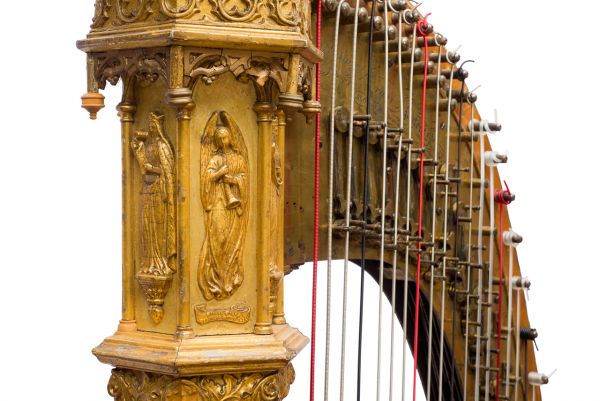
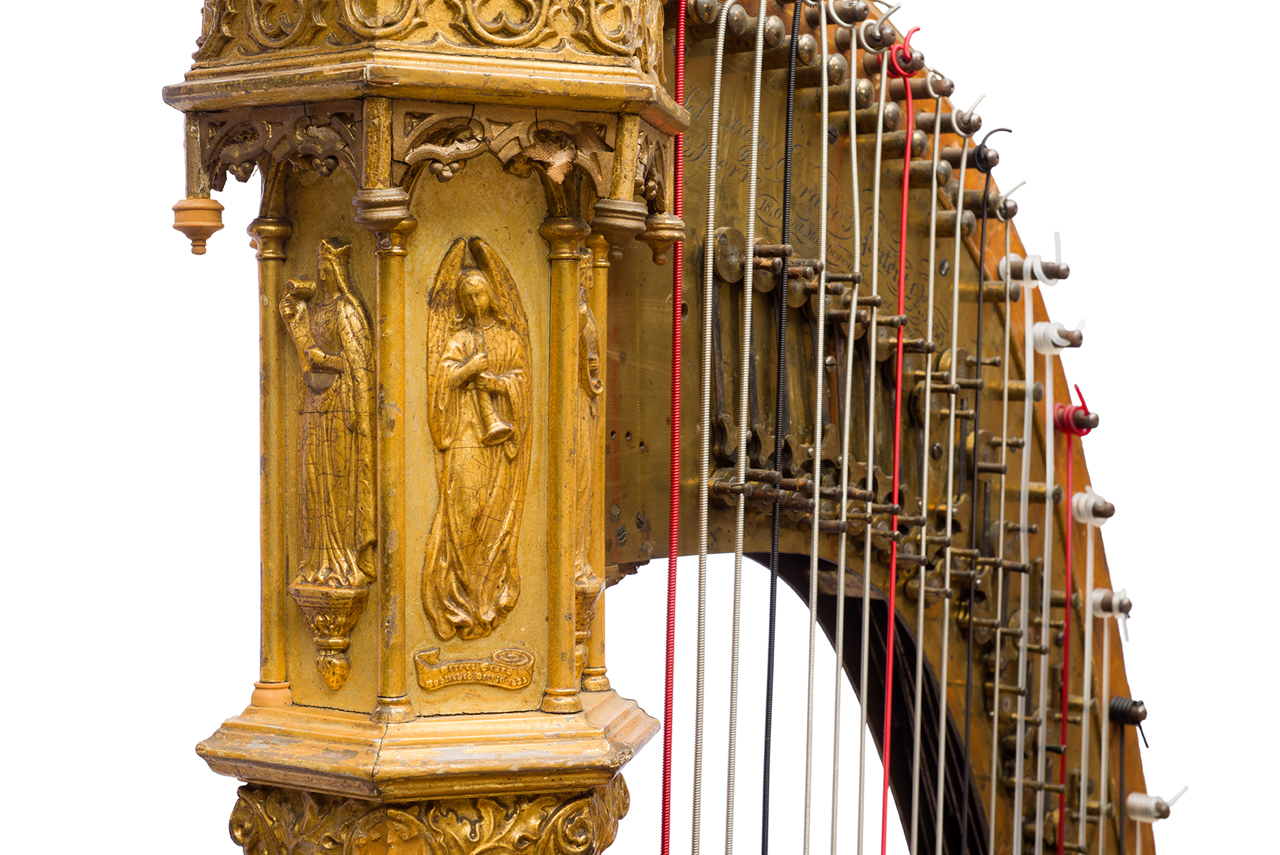
Sebastian Erard and Pierre Erard, London (makers) Orchestral harp 1835. Grainger Museum Collection, University of Melbourne
This harp was owned by Walter Thomas Barker (born England 1864, died Melbourne 1933), the University’s (and Victoria’s) first harp teacher. Barker studied at the London Royal Academy of Music and toured as a harpist across Australasia and the US. He moved permanently to Melbourne in 1895 where he played with the Melbourne Symphony Orchestra and influenced generations of harp players as a teacher. Barker’s widow donated his double-action Erard pedal harp to the Grainger Museum in 1938, the year the museum opened. Barker loved this instrument so much that he did not want it played after his death. -
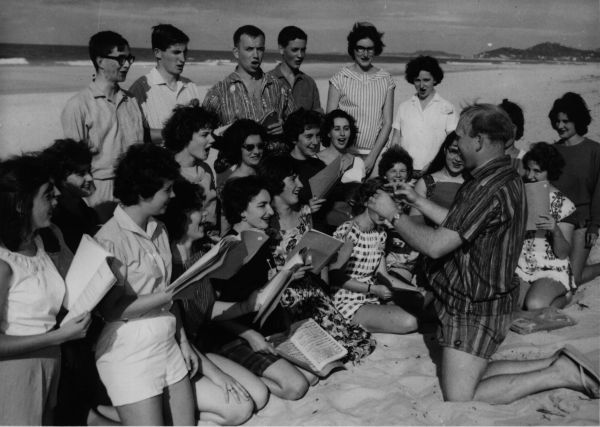
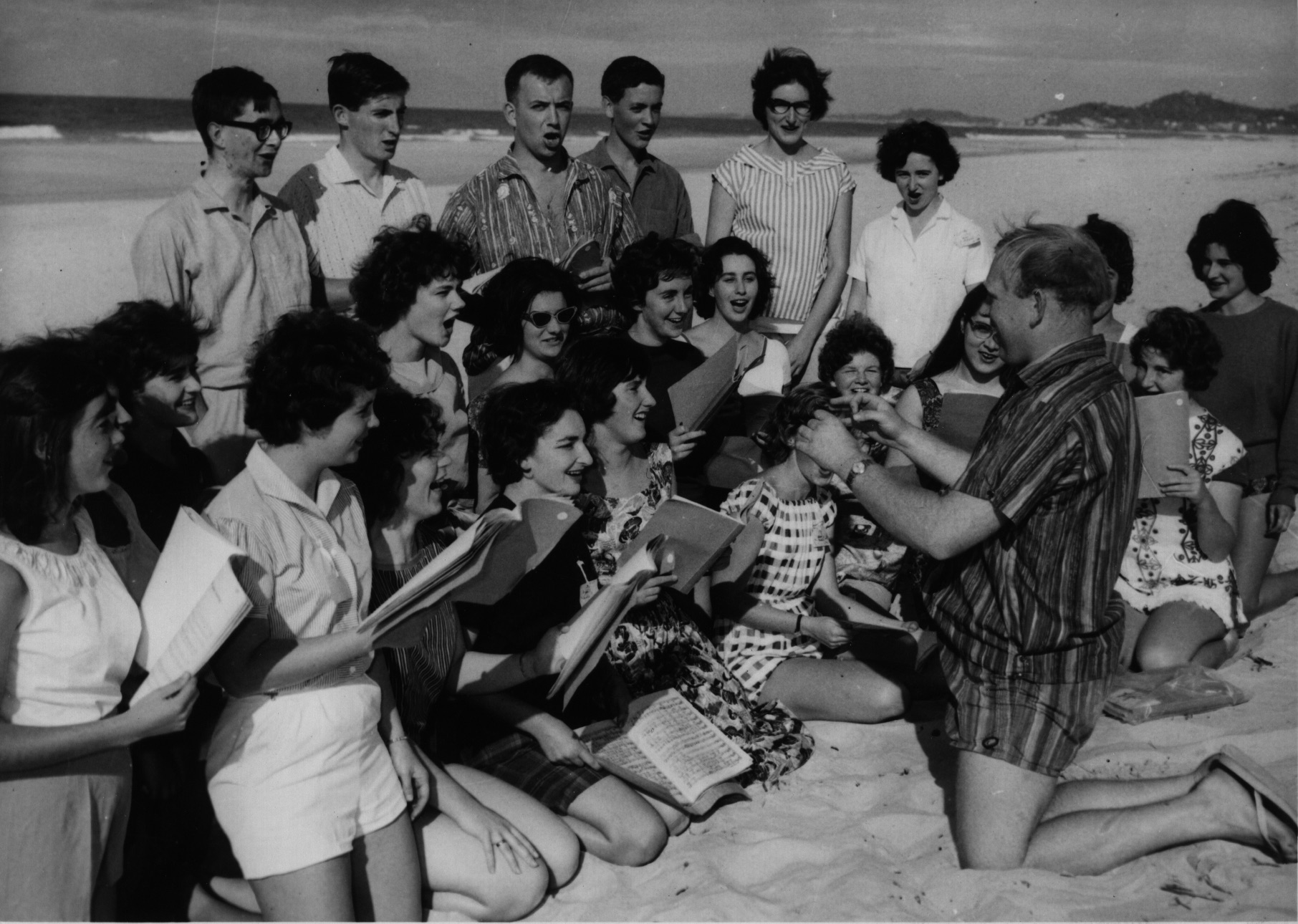
MUCS at the Beach, UMA
-
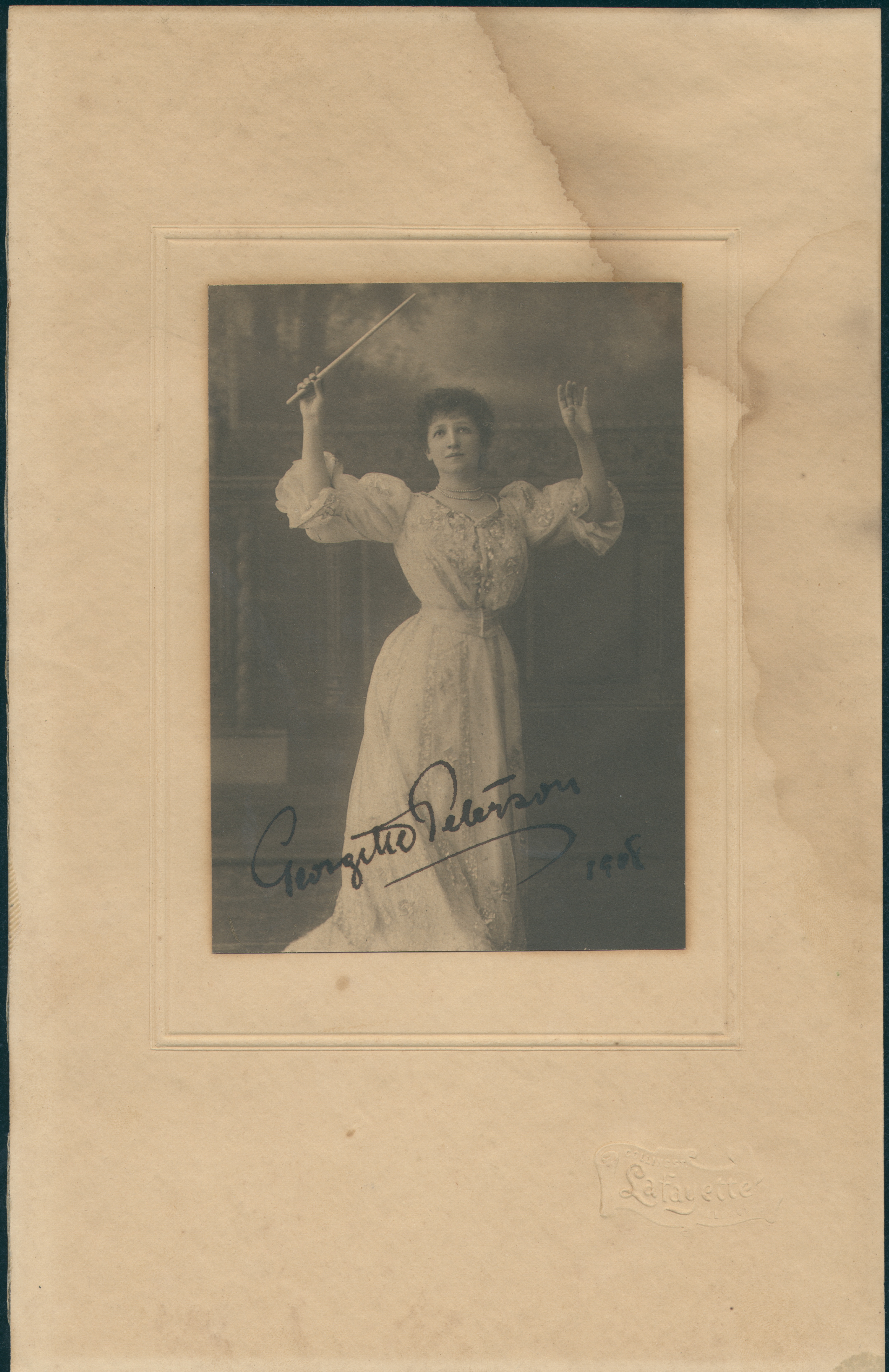
Lafayette Studios (photographers) Studio portrait of Georgette Peterson 1908. Grainger Museum Collection, University of Melbourne
Born in Budapest and studying music and painting at the Royal Budapest Academy, Georgette Peterson (1863–1947) came to Melbourne in 1901 when her husband, Franklin Sievright Peterson was appointed the second Ormond professor at the Conservatorium. Known as both a painter and composer, Peterson formed a choir at the university and in 1907 conducted a 1300-voice women’s choir at the Australian Exhibition of Women’s Work. Over the next years she also ran a smaller women's choir, organising many fundraising events, including for Melba Hall. -
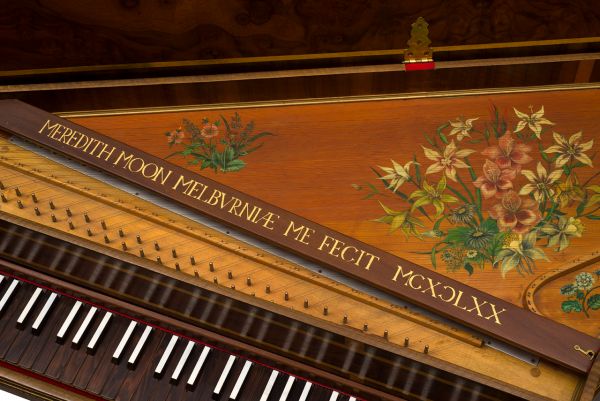
Meredith Maxwell Moon (instrument maker) Spinet 1970. Grainger Museum Collection, University of Melbourne. Gift of the Faculty of Music, 2005.
This instrument was hand-crafted by Faculty of Music lecturer and musicologist, Meredith Maxwell Moon, with its traditional inscription reading MEREDITH MOON MELBURNIAE ME FECIT MCXCLXX. Fascinated by early music, Moon began building reproduction instruments while working at the Bodleian Library in Oxford during the 1960s. In Australia, his expertise fostered the ‘Clifton Hill School’ of harpsichord makers. Through his teaching, personality and character, Moon became one of the legends of the university’s Musicology department, inspiring a generation of prominent scholars, including the eminent Professor Kerry Murphy. Possibly Moon’s last instrument, this spinet was donated to the Faculty’s Early Music Studio at his death. It is a striking example of a particular kind of twentieth-century engagement with early music. -
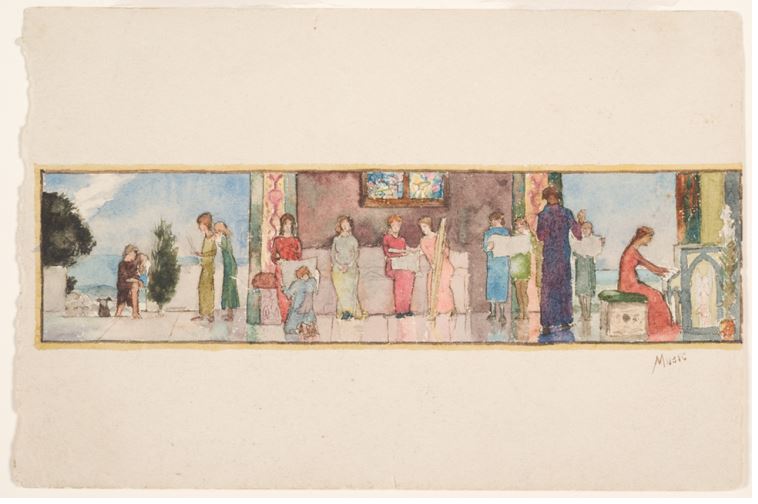
Rupert Bunny (artist), Music (c. 1890–95), ink and watercolour on paper. University of Melbourne Art Collection. Gift of the Bunny Estate, 1948.
-
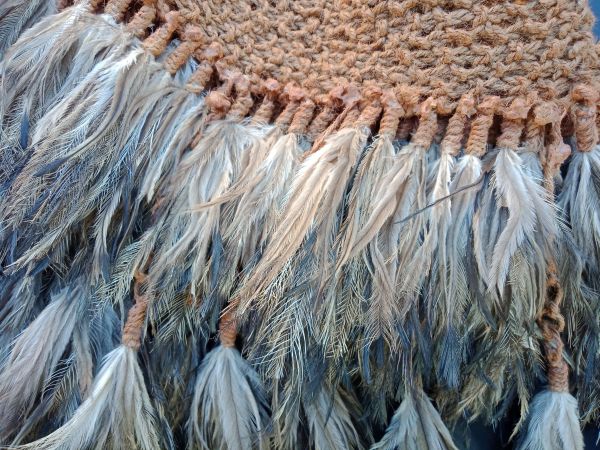
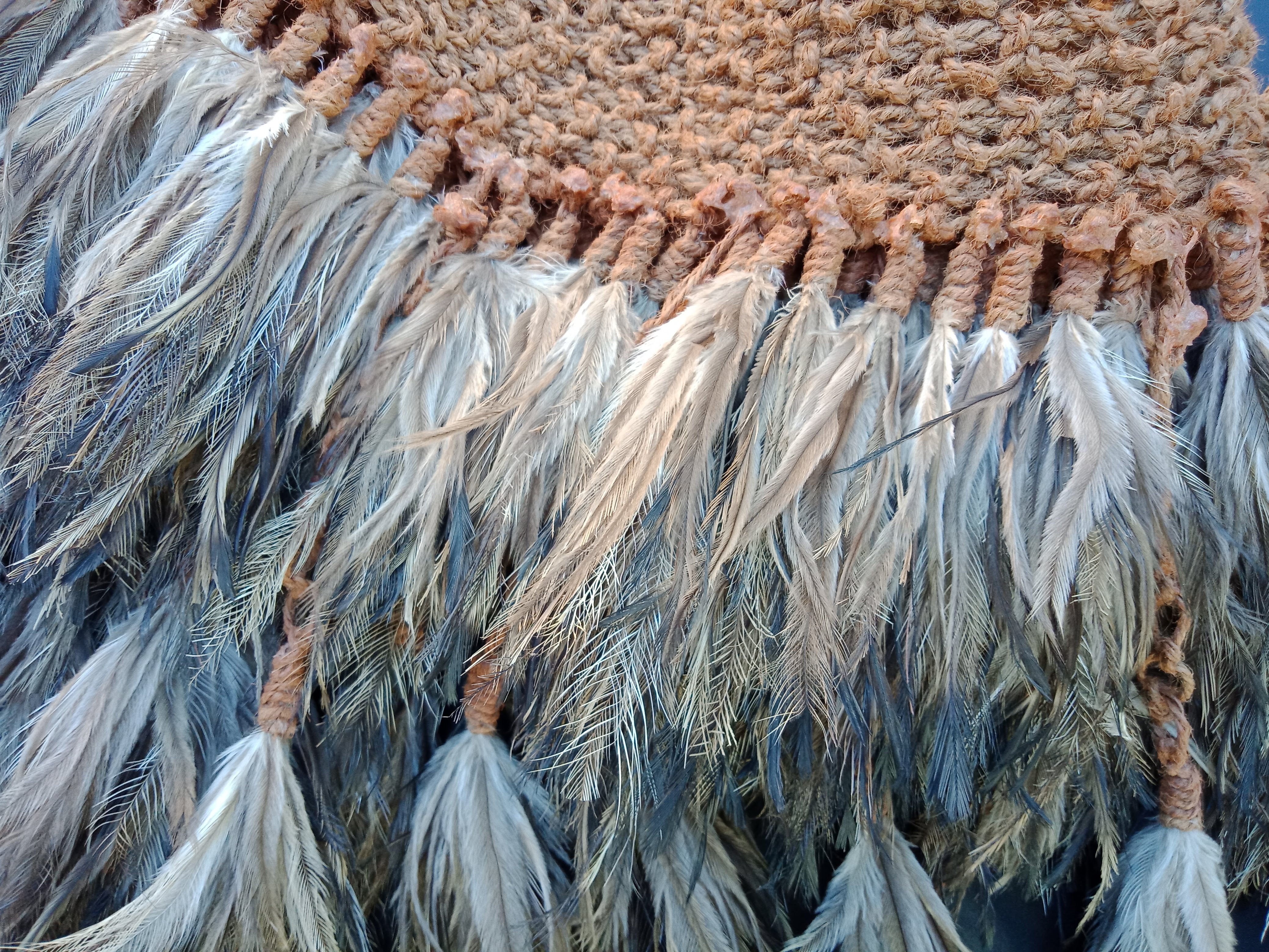
Aunty Fay Carter (artist) Yorta Yorta, Dja Dja Wurrung Elder. Barramul (emu) skirt (November 2016), emu feathers, string, red ochre. Courtesy of Lou Bennett
-
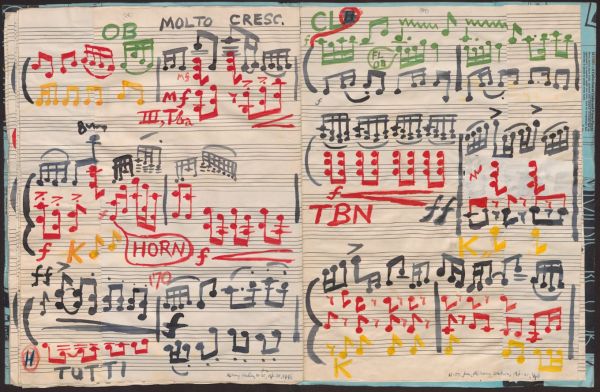
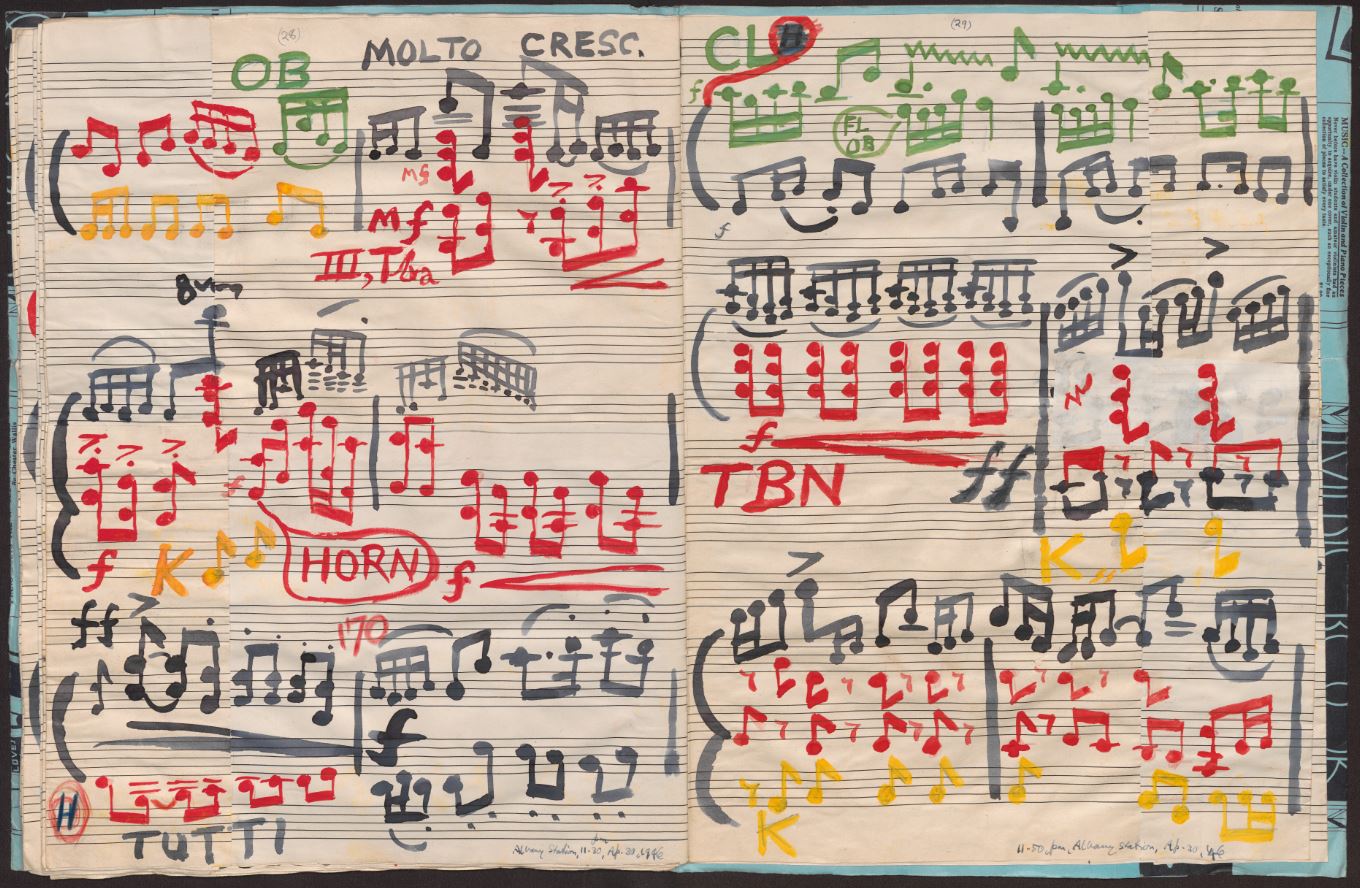
Percy Grainger and Violet Archer, Britannia, A Joyful Overture, blind-eye score [detail], 1946.
Percy Grainger (creator) born Melbourne 1882; died White Plains, USA 1961 Violet Archer (composer) born Montreal, Canada 1913; died Ottawa, Canada 2000 ink, paint, pencil on paper Faced with deteriorating eyesight in his in later years, Percy Grainger devised what he called “blind-eye scores”, which he described as “very large hand-written scores to conduct from”. Grainger greatly reduced the information included in a typical conductors’ score and ensured that he could read these notes easily by using exaggerated melodic shapes, vivid colour-coding for instrumental entries, and emphatic dynamic markings and performance notes. Composed in 1941, Britannia, A Joyful Overture is by Canadian composer Violet Archer, and achieved great popularity during the Second World War when it was broadcast by the BBC to the war front in Europe. Markings throughout show when and where Grainger was while he was working on this score, completing the final pages around midnight at Albany Station on 30 April 1946. Grainger Museum Collection, University of Melbourne.