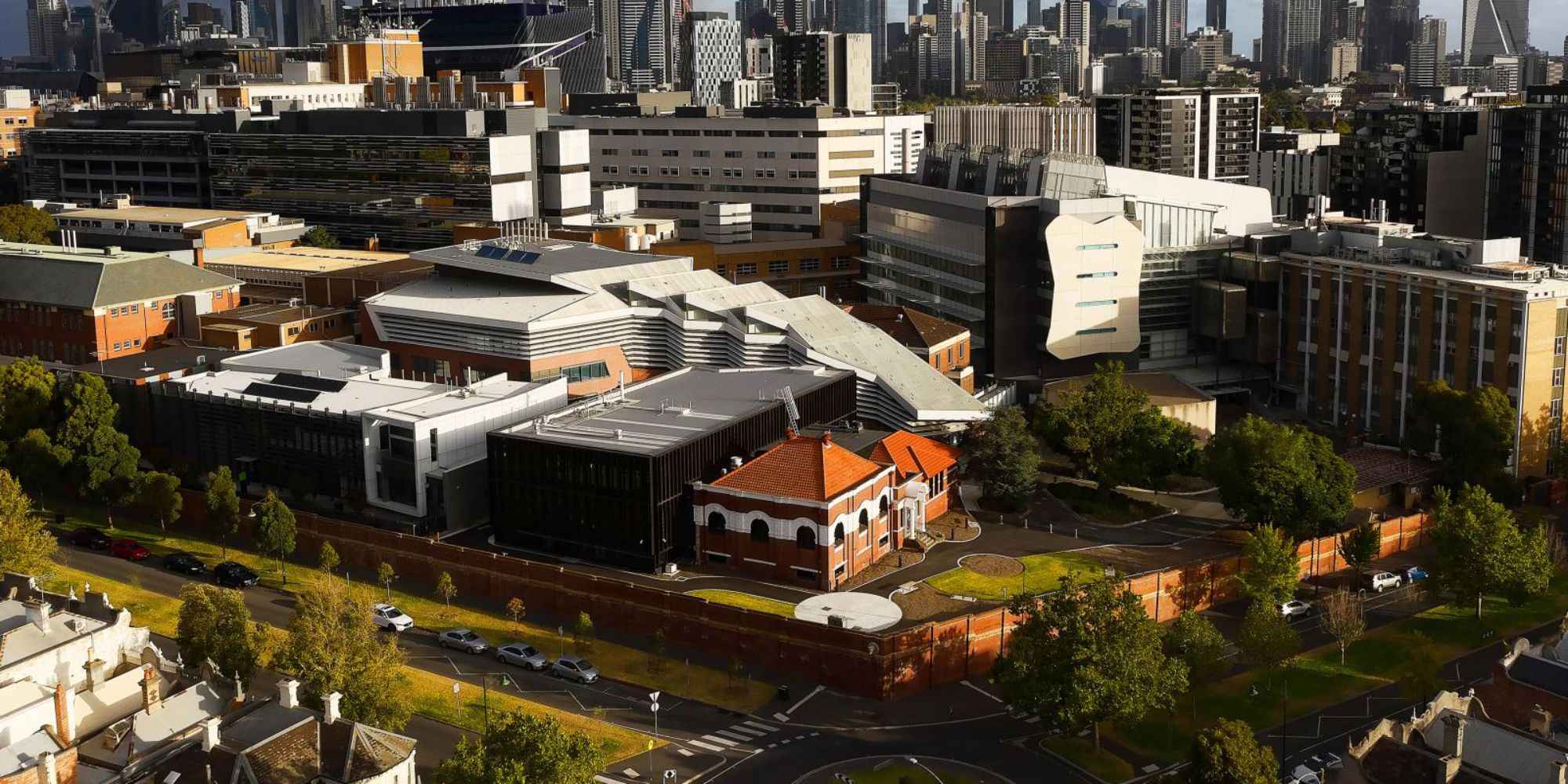
With in-depth capability in protein sciences and cell biology, analytical and synthetic chemistry, pharmacology and chemical/biomedical engineering, as well as access to key platform technologies across the Bio21 Institute, researchers have the opportunity to develop interdisciplinary research programs offering synergies and the potential to contribute critical mass in strategically important areas of biotechnology.
Two broad areas of focus are:
- Structural Biology, which provides an understanding of the organisation of complex biological systems and molecular processes that underpin normal cellular development and disease
- Chemical Biology, the small molecules that impact on biological systems and environmental ecosystems or can be used to manipulate biological processes to provide the basis of novel therapeutics and insect control agents
In addition, Institute-based researchers continue to pursue their own research programs and develop links that add potential to the key interdisciplinary programs. Researchers at the Bio21 Institute have current interests in the following areas:
- Drug discovery and medicinal chemistry
- Anti-infectives - infectious diseases
- Cancer
- Neurosciences, including neurodegenerative diseases such as Alzheimer’s
- Immunology
- Dental biotechnology - Oral health sciences
- Environmental and agricultural biotechnology, such as safe pesticides
Faculty of Science research groups
-
Donnelly Group
Our research focuses on the application of synthetic inorganic chemistry to biology as well as investigating the role of metal ions in biology and the use of metal ions in chemical synthesis.
-
Hoffmann Group
Our research focuses on the application of synthetic inorganic chemistry to biology as well as investigating the role of metal ions in biology and the use of metal ions in chemical synthesis.
-
Jameson Group
The Jones Group's interests are in design, synthesis, characterisation, and utilisation of new advanced organic semiconductors, light harvesting materials and photocatalytic carbon dioxide activation.
-
Maher Lab
The Jones Group's interests are in design, synthesis, characterisation, and utilisation of new advanced organic semiconductors, light harvesting materials and photocatalytic carbon dioxide activation.
-
O'Bryan Group
The Jones Group's interests are in design, synthesis, characterisation, and utilisation of new advanced organic semiconductors, light harvesting materials and photocatalytic carbon dioxide activation.
-
O'Hair Group
Research in our group is focused on the use of advanced MS techniques and molecular modelling methods to explore contemporary problems in chemistry.
-
Rizzacasa Group
Total synthesis of bioactive natural products and the development of reaction methodology.
-
White Group
The research interests of the White group focus on physical organic chemistry, radiopharmaceuticals and conductive polymers.
-
Williams Group
The Williams laboratory focuses on the design and synthesis of organic small molecules that we use to probe biological systems.
-
Bromfield Group
-
Leung Group
-
Monti Group
-
Reddy Group
-
Huston Group
-
Goods Group
-
French Group
Faculty of Medicine, Dentistry and Health Sciences research groups
-
Day Laboratory: Malaria genomics, epidemiology and control
The Day Group researches malaria using molecular epidemiology approaches to study the role that variation in human and parasite genomes play in modulating the transmission dynamics of Plasmodium spp.
-
Edgington-Mitchell Laboratory: Protease pathophysiology
The Edgington-Mitchell Group uses a chemical biology approach to understand the mechanisms by which proteases contribute to normal cellular function and how these mechanisms can go wrong to cause disease.
-
Ghosal Group
Ghosal Group is particularly interested in bacterial molecular machines that are responsible for toxin delivery (bacterial secretion systems), and bacterial cytoskeletal (rather, bacterial ‘cytomotive’) filaments that execute a diverse array of cellular functions.
-
Gooley Laboratory: Receptor structural biology
The Gooley Laboratory focuses on the application of NMR spectroscopy to elucidate structure and protein interactions.
-
Griffin laboratory: Protein biophysics and structural biology
Griffin laboratory researches apolipoproteins and amyloid fibril formation in disease and the structure and function of Interleukin-11 signalling complex.
-
Hatters laboratory: Molecular mechanisms of neurodegeneration
We investigate novel methods and approaches to study the aggregation behaviour of proteins which are the hallmark of neurodegenerative diseases such as Huntington’s, Alzheimer’s and Motor Neuron Disease (MND).
-
McConville Laboratory: Microbial metabolism
The McConville Group focus on important parasitic and bacterial pathogens and undertakes research to identify and validate new drug targets.
-
Mintern laboratory: Vaccine and immunotherapy
Mintern laboratory investigates the underlying mechanisms that ensure effective immunity to fight pathogens and tumours.
-
Parker laboratory: Structural biology and computational Design
Parker Laboratory research visualises the three-dimensional structures of medically important proteins using X-ray crystallography.
-
Ralph laboratory: Antimalarial targets and resistance
Ralph Laboratory identifies and characterises promising drug targets from Plasmodium falciparum and other parasites, as well as studying the modes of action and mechanisms of resistance for existing drugs.
-
Rouiller laboratory: Molecular nanomachines and mechanisms of disease
Rouiller Group researches how molecular machines function to apply this knowledge to improve public health.
-
Stojanovski laboratory: Mitochondrial biology and disease
Stojanovski Lab focuses on understanding the fundamental processes governing mitochondrial function and their implications for human health and disease.
-
Stroud laboratory: Rare disease functional genomics
This research aims to raise the diagnostic rate for monogenic rare diseases, including mitochondrial disease, understand rare disease pathology, and ultimately improve human health through mass-spectrometry-based technologies to functional genomics.
-
Villadangos laboratory: Immunology and cell biology
Elucidating how the immune system carries out the process of Antigen Presentation to detect, seek and destroy pathogens and tumour cells.
-
Anderson Group
Faculty of Engineering and Information Technology research groups
-
Gras Group
The Gras laboratory is focused on five main themes: dairy science and engineering, biotransformations and pharmaceutical production, functional foods and gut health, protein aggregation and materials, and wastewater and environmental microbiology.