Research
Research in the Stroud laboratory aims to raise the diagnostic rate for monogenic rare diseases, including mitochondrial disease, understand rare disease pathology, and ultimately improve human health through the application new mass-spectrometry based technologies to functional genomics.
We work within 3 primary research themes:
i. Mass-spectrometry based functional testing for monogenic rare disease
We aim to increase the diagnostic yield for monogenic (caused by mutations in one gene) rare disease through the development and translation of new mass-spectrometry based tests. The key issue in diagnosis of rare diseases is the extreme genetic heterogeneity that underpins the >7,000 rare diseases. Although individually rare, as a group, rare diseases collectively impact ~8% of Australians (see: http://rarevoices.org.au/(link is external)). Importantly, most rare diseases are subject to the same diagnostic challenges. Currently, the diagnostic workup for most suspected rare diseases involves a first round of genomic sequencing. Genomic sequencing has transformed rare disease diagnosis, raising the diagnostic yield to about 60%. Despite this impressive outcome, up to half of patients remain undiagnosed, and those that do receive a diagnosis often wait months to years.
The key challenge in increasing diagnostic yield is confirming which of the hundreds of variants (mutations) detected through genome sequencing are pathogenic. This can be a time consuming and costly process as it often requires development of biochemical tests for each gene. We have leveraged the next generation of mass-spectrometry and proteomics technologies to pioneer a new functional test suitable for many types of monogenic rare diseases, including mitochondrial disease. Proteomics is capable of 'sequencing' all proteins (the products of genes) in a single test, making it broadly applicable to confirming which of the variants detected in clinical genome sequencing are pathogenic. To date we have used this new technology to assist in the molecular diagnosis of >30 individuals with confirmed rare monogenic disease. Our current work is focused on standardising and benchmarking our approach with view toward its development as a NATA/RCPA accredited genetic pathology test.
Research on diagnostic proteomics in the Stroud lab is supported by the Mito Foundation.
ii. Developing gene-edited cell-based models to understand rare disease pathology
Functional studies in cell-based models are critical for confirming the pathogenicity of novel variants and the involvement of novel disease genes in disease pathology. In this research theme, we are coupling proteomics-based approaches with gene-edited (CRISPR/Cas9) cell-based model systems to understand rare disease pathogenesis, with a focus on defects in multi-protein complexes relevant to mitochondrial disease, but also investigating other complexes with human disease relevance. Much of the work overlaps with the above diagnostic studies and comprises follow-up studies where novel disease genes are functionalised, while other projects in this theme are aimed at understanding fundamental concepts with relevance to rare disease.
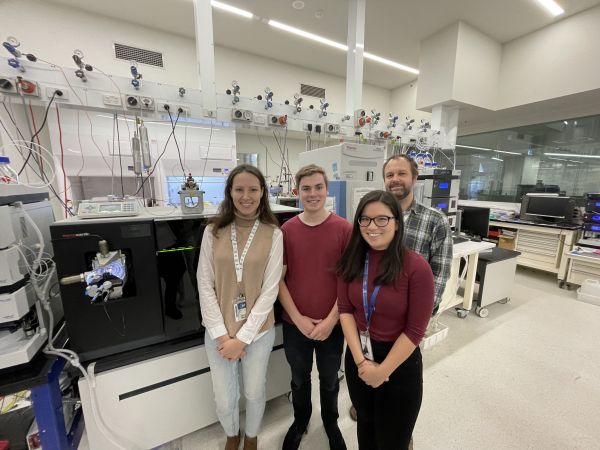
iii. Understanding mitochondrial function through systems biology and multi-omics
This research theme aims to build on the mass-spectrometry method development of the above themes and combining it with transcriptomics (RNAseq), lipidomics and metabolomics to gain a better clearer understanding of the role mitochondria play in disease pathogenesis and potentially develop new methods to aid rare disease diagnosis.
Staff
Dr Daniella Hock, Postdoctoral researcher
Dr Nikeisha Caruana, Postdoctoral researcher
Dr Tanavi Sharma, Postdoctoral researcher
Karena Last, Lab manager
Linden Muellner-Wong, PhD student
Roopasingam Kugapreethan, PhD student
David Robinson, PhD student
Liana Semcesen, PhD student
Minhao Yang, Honours student
Collaborators
Prof David Thorburn, Murdoch Children's Research Institute
Prof John Christodoulou, Murdoch Children's Research Institute
A/Prof Diana Stojanovski, University of Melbourne
Prof Mike Ryan, Monash University
A/Prof Lena Ho, Duke-NUS
Prof Danny Hatters, University of Melbourne
Prof Brett Collins, University of Melbourne
Prof David Bishop, Victoria University