2023 Sustainability Report
Indigenous knowledges
Domain: Mobilising knowledge for action
Aspiration to 2030: The University has respectfully integrated Indigenous knowledges and participation into our approach to sustainability.
Progress against targets
| Target | Target status | Progress in 2023 |
|---|---|---|
| The University has an increased understanding of sustainability from an Indigenous perspective through co-created or Indigenous-led reciprocal learning. |  In progress |
|
Explore our progress
and our stories

Our stories
Supporting Indigenous researchers to pursue vital research with a new PhD course
A new PhD course in Indigenous Knowledge seeks to broaden and deepen University engagement and reciprocal learning with Indigenous knowledge holders and support the development of a new generation of Indigenous researchers. The course is designed to explicitly recognise Indigenous knowledge as its own interdisciplinary subject area and strengthen understandings in important fields including language, education, health and justice.
University of Melbourne Professor Barry Judd, Deputy Vice-Chancellor (Indigenous), said the PhD in Indigenous Knowledge represents a significant change in the way the University engages with Indigenous peoples as holders of knowledge.
“Once, Indigenous peoples were positioned as the passive objects of research, and knowledge was generated about them by outside researchers,” Professor Judd said. “This PhD helps position Indigenous people as active researchers and as the holders of knowledge systems that are both ancient and critically important to solving the social, climatic and environmental issues that confront global humanity today.”
Providing strong mentoring and supervision of PhD candidates in a culturally safe environment will be a key priority, with the first cohort commencing in 2023.
Providing opportunities for two-way knowledge sharing with Indigenous knowledges research seed funding
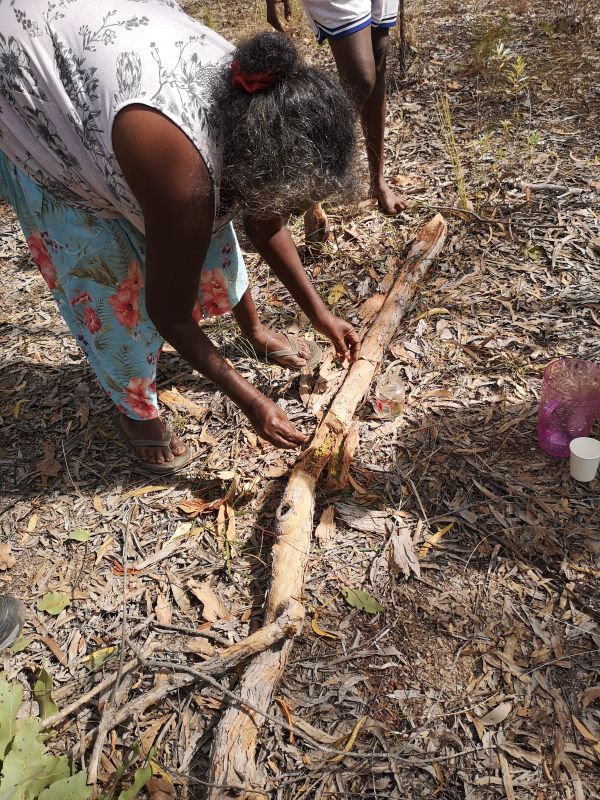
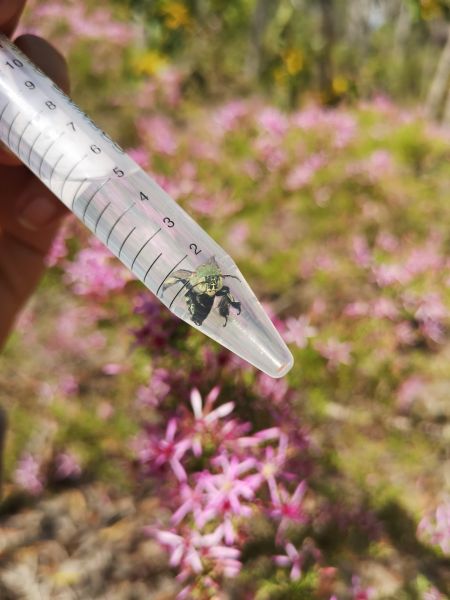
In 2023, the Indigenous Knowledge Institute supported seven projects with seed funding, elevating innovative and interdisciplinary research projects with a focus on Indigenous knowledges. The projects explore and chart Indigenous practices and expertise, working with communities and building or strengthening local partnerships, with several addressing sustainability and climate-related issues. For example, “Two-Way Knowledge Sharing for Native Bee Climate Adaptation in Arnhem Land” aims to address knowledge gaps about climate change adaptation for native bees. The project is conducted in collaboration with Yolŋu rangers from the Laynhapuy Homelands Aboriginal Corporation and investigates the plants used by native bees in East Arnhem Land, how they are affected by climate change, and how they can be managed to support climate change adaptation. The project also advances research into Indigenous knowledge by co-developing a phenological bee forage calendar by, with and for Yolŋu peoples. Read more about the Indigenous Knowledge Institute.
Facilitating knowledge sharing among our Indigenous and First Nations leaders in our region
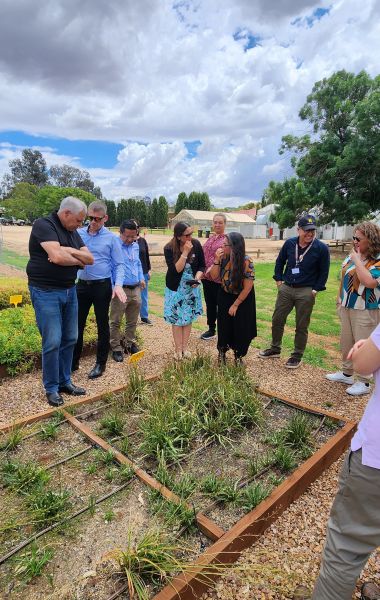
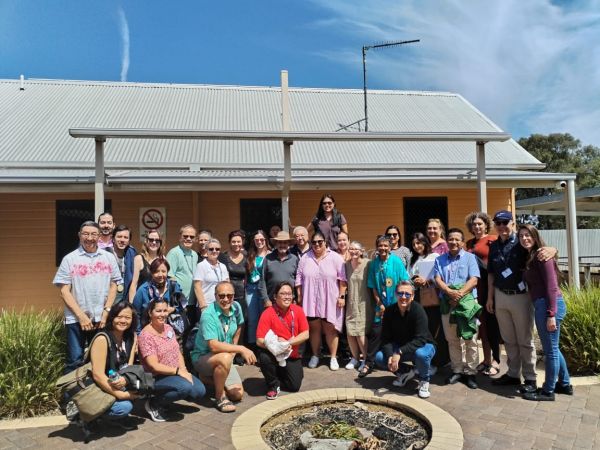
The University welcomed international leaders in Indigenous and First Nations knowledges for the second workshop of the Association of Pacific Rim Universities (APRU) Indigenous and First Nations Knowledges Network. The workshop ran from 19 – 23 November and was hosted on campus in Parkville and Dookie, including travel throughout the scenic Goulburn Valley. Participants from 17 different universities were welcomed to Melbourne (Narrm) by Wurundjeri Elders and had the opportunity to hear from the University’s Indigenous leadership about the University’s Indigenous Strategy, Murmuk Djerring, and Victoria’s work towards Treaty, post-referendum.
Participants attended research showcases related to Indigenous farming and plants, and in the field of risk resilience in agriculture, food security, climate change loss and damage in the Pacific at the University’s Dookie campus. They also spent time on Country in the Yorta Yorta Nation, hearing from the University’s Goulburn Valley community partners and local Indigenous Elders. Workshop sessions focused on opportunities for international university collaborations in the areas of Indigenous knowledge in research and research training, teaching and learning and student support, and leadership and professional development. Discussions took place against a backdrop of continuing economic pressures, often contentious debates over local and geopolitical issues, and the worsening climate crisis.
The APRU Indigenous and First Nations Knowledges Network is led by the University of Melbourne and includes participants from 12 APRU member institutions from across Asia, Latin America and the Pacific. The workshop highlights how global networks are vital to strengthening Indigenous research and collaboration to elevate Indigenous solutions to the big challenges of our time. Read more about the University’s engagement with APRU.
Teaching partnership with the Yambirrpa schools

The Faculty of Education's partnership with the Yambirrpa schools (Yirrkala and Laynhapuy Homelands) in Northeast Arnhem Land centres on a pre-service teacher placement program. The program offers an experience in ‘both ways’ learning framed by Yolŋu philosophy and centres on relationships and the importance of looking after Country. Gurruṯu is their complex kinship system which helps children to understand their place and how they relate to all things. Learning about the importance of caring for Country occurs through understanding relationships and is based on reciprocity, or bala ga lili – to give and take. Pre-service teachers learn how this operates through the curriculum and pedagogy.
Pre-service teachers work alongside Yolŋu and balanda teachers in a ‘both ways’ framework and participate in the Learning On Country program. This program gives students knowledge and safety on country through working with Rangers and Elders with a focus on caring for Country. The Dhimurru and Yirralka Rangers work with teachers to deliver the Learning on Country program and includes Galtha Rom workshops where Yolŋu educators, leaders, teachers and community work together to co-write curriculum. Through this process pre-service teachers experience the importance of maintaining balance, including the environment.
The University's annual Narrm Oration
The annual Narrm Oration provides a platform for Indigenous leaders to share their knowledge and experiences and promotes dialogue between Indigenous and non-Indigenous communities. Over its 15-year history, orators have spoken on themes such as Indigenous rights, histories, languages, environmental and social crises, truth-telling, justice, and the revitalisation of Indigenous cultures.
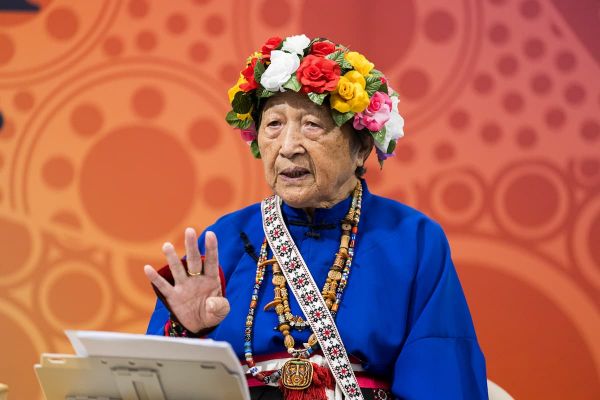
The 2023 Narrm Oration was delivered by Akawyan Pakawyan, a senior leader of the Indigenous Pinuyumayan people in Taiwan. The oration, titled “Cultural Reawakening: a Taiwanese Indigenous woman’s journey through memories and revitalisation”, highlighted the importance of reinstating important cultural practices to help keep the storytelling and language learning of these cultures alive. Akawyan’s life’s work underscores the importance of preserving cultural heritage and knowledge, which are crucial for sustainable development. Her oration, delivered in the Puyuma language, reflected on her life and work as impacted by major historical events, from Japanese and Chinese influences, the threat of assimilation policies on Indigenous languages and traditions, to her own cultural fidelity and legacy. Read more about the Narrm Oration.
Our sustainability strategy
At the University of Melbourne, our efforts in sustainability are guided by Sustainability Plan 2030 - a roadmap for sustainable delivery of our institutional strategy Advancing Melbourne.
Read more about how we are advancing sustainability at the University:
