The Narrm Oration
The Narrm Oration is the University’s key address that profiles leading Indigenous peoples from across the world in order to enrich our ideas about possible futures for Indigenous Australia. Narrm is the Woi Wurrung word for the Melbourne region.
Delivered annually since 2009, the Narrm Oration is held every November on the Parkville campus.
The 2026 Narrm Oration will be delivered by Meriki Onus, Co-Chair of the First Peoples' Assembly of Victoria, Gellung Warl at 5:30pm on Thursday 26 November.
The oration is titled: Lessons from Kooyang Farming and the Future of Economic Self-Determination
For thousands of years the Gunditjmara people built wealth and prosperity through the farming and trade of Kooyang (Eel). From the world’s first aqua culturalists at Budj Bim to now, the reality for First Peoples is very different. With learning from this ancient practice, Meriki looks to our collective future, where Treaty represents an opportunity to restore capability and create lasting economic prosperity for First Peoples. Gellung Warl, the tip of the spear, is the tool First Peoples in Victoria have created to drive that change, and to renew the relationship between First Peoples and the State.
2025 - Marisol Culej Culej
'The Meaning of Good Living, from the Indigenous Peoples' Cosmovision (Maya)’
About the orator
Marisol Culej is originally from the municipality of Huixtán, an Indigenous community in Chiapas. A Tsotsil speaker, she has actively participated in the defense of women's human rights. She is currently a member of the collective Antsetik Ts'unun (Hummingbird Women), where she facilitates self-care and collective healing workshops in communities across the Highlands, Coast, and Northern regions of Chiapas. Marisol has been a popular education teacher in San Cristóbal and is a Tsotsil teacher for those who want to learn about Mayan culture. Throughout her journey, Marisol has continued to strengthen her heart and her commitment to building a more just way of life.
Oration Synopsis
The meaning of good living from the Mayan’ cosmovision implies a harmonious and respectful relationship with nature and the community. The history of the Mayan peoples, including the Tsotsils of Chiapas, is notable for their resistance to colonisation and defense of their territory and culture. Marisol will speak to how Mayan language and traditions reflect a profound connection with nature. Concepts such as Ch'ulel (Spirit or totality of the human being) illustrate the importance of life and spirit in all beings. Understanding this connection, together with valuing and respecting our environment, provides the foundation for developing a sense of good living.
Video credit: Produced by Video and Media. Supporting excellence in teaching and research at The University of Melbourne. le.unimelb.edu.au/vm
2024 - Professor Yalmay Yunupiŋu
'Djambatj Dhukarr – road to excellence’
About the orator
Professor Yalmay Yunupiŋu is a much loved and respected Yolŋu leader from Northeast Arnhem Land. Before retiring in March 2023, Professor Yunupiŋu was a teacher linguist at Yirrkala Bilingual School for over four decades. In recognition of her lifetime dedication to her community, Professor Yunupiŋu was named Senior Australian of the Year for 2024.
Oration Synopsis
In the 2024 Narrm Oration, Professor Yunupiŋu emphasised the importance of Indigenous peoples remaining strong in their language and cultural practices. Drawing on her own educational journey, her family and many years as an educator at the Yirrkala school, she reflected on ‘walking between two worlds’ and shared her deep commitment to mentoring current and future generations of Yolŋu leaders.
2023 - Akawyan Pakawyan
'Cultural Reawakening: a Taiwanese Indigenous woman’s journey through memories and revitalisation'
About the orator
Ms Akawyan Pakawyan, was born in 1938 and is a senior leader of the Indigenous Pinuyumayan people in the Puyuma village of Taitung in Taiwan. Akawyan is a central figure in the restoration and maintenance of Indigenous languages and cultures throughout Taiwan. Orator Image: Peter Casamento
Oration synopsis
Akawyan Pakawyan is a witness to the historical transitions and colonial influences that have shaped Taiwan. Akawyan’s early years were immersed in the juxtaposition of Japanese and Chinese influences. Despite these pressures, Akawyan retained her fluency in Pinuyumayan, a testament to the resilience of her cultural identity. For over three decades, she has been a bastion of cultural preservation, safeguarding the Puyuma language and traditions amidst historical and political upheavals. This narrative unveils the story of a Puyuma woman who not only derives strength from her cultural heritage but also elevates its prominence. Akawyan’s life is a tapestry of resilience and cultural fidelity, a legacy that illuminates the path of cultural revitalisation for the Pinuyumayan and other Indigenous groups in Taiwan.
2022 - Professor Eleanor Bourke AM
'Truth, understanding, transformation: laying the foundations for change'
About the orator
Professor Eleanor Bourke AM is a Wergaia/Wamba Wamba Elder and is Chair of the Yoorrook Justice Commission.
Oration synopsis
Victoria is the first jurisdiction to have actioned the Treaty and Truth elements of the Uluru Statement of the Heart. In May 2021, the Yoorrook Justice Commission was established and Professor Eleanor Bourke, appointed as its Chairperson. Professor Bourke reflected upon Yoorrook’s broad mandate and the important role that truth and story-telling traditions play in keeping alive First Peoples culture. Professor Bourke discussed the significance of truth telling in the context of reform and reconciliation.
2021 – Professor Papaarangi Reid
'Navigating Indigenous Futures'
About the orator
Professor Papaarangi Reid is a member of Te Rarawa iwi in North Hokianga and since 2006 she has been Tumuaki (Deputy Dean – Māori) and Head of Te Kupenga Hauora Māori at the Faculty of Medical and Health Sciences, University of Auckland.
Oration synopsis
Māori have a saying – i ngā rā o mua – the days of the past are in front of us, and therefore we walk into the future bringing our experiences of the past. To live up to the expectations of both our ancestors and our descendants as yet unborn, we need to fully imagine and plan to navigate Indigenous futures; to heal our planet and ourselves, to find joy, and to rebuild respectful relationships. In this oration, I will discuss issues I believe will help or hinder our navigation points into our futures.’
2020 – Associate Professor Michael-Shawn Fletcher
'Our Country, Our Way: How Indigenous people and knowledge can save Australia’s environmental and social unravelling'
About the orator
Associate Professor Fletcher is a descendant of the Wiradjuri and Director of Research Capability at the Indigenous Knowledge Institute, Assistant Dean (Indigenous) in the Faculty of Science at the University of Melbourne.
Oration Synopsis
Australia is in the midst of both environmental and social crises. With the highest rate of biodiversity loss on earth, the country is facing an ever-increasing barrage of massive catastrophic wildfires that wreak untold environmental damage and its First Peoples are among the most disadvantaged and disaffected demographic. In the 2020 Narrm Oration, Associate Professor Fletcher will argue that many of Australia’s current environmental problems can be traced to the impact of British invasion and the violent and devastating effects this has had on Aboriginal and Torres Strait Islander peoples. Embedding the Aboriginal world view and notion of Country into mainstream Australia has the potential to benefit the lives and livelihoods of all Australians and our Country.
2019 – Associate Professor Larry Kimura
‘The Fabric of Hawaiian Medium Education: a Perspective for Indigenous Language Revitalisation’
About the orator
Dr Larry L. Kimura, PhD (Hawaiian), is Associate Professor of Hawaiian Language at Ka Haka ʻUla O Keʻelikōlani College of Hawaiian Language at the University of Hawaii Hilo. Orator Image: Peter Casamento
Oration synopsis
In the 2019 Narrm Oration, Dr Larry Kimura imparted a progression of thirty-six years (1983-2019) of sorting out obstacles to advance the life of the Hawaiian language and cultural well-being. Hawaiʻi now uses Hawaiian as the medium of education from preschool through to high school (P-12) and engages the essential curriculum content to participate in a larger global society through a Hawaiian philosophy of education because, as Dr Kimura states, "Our language binds us to who we are. This setting challenges us to live in our language for today's world. If we cannot live in our language today, how will it survive for the future?"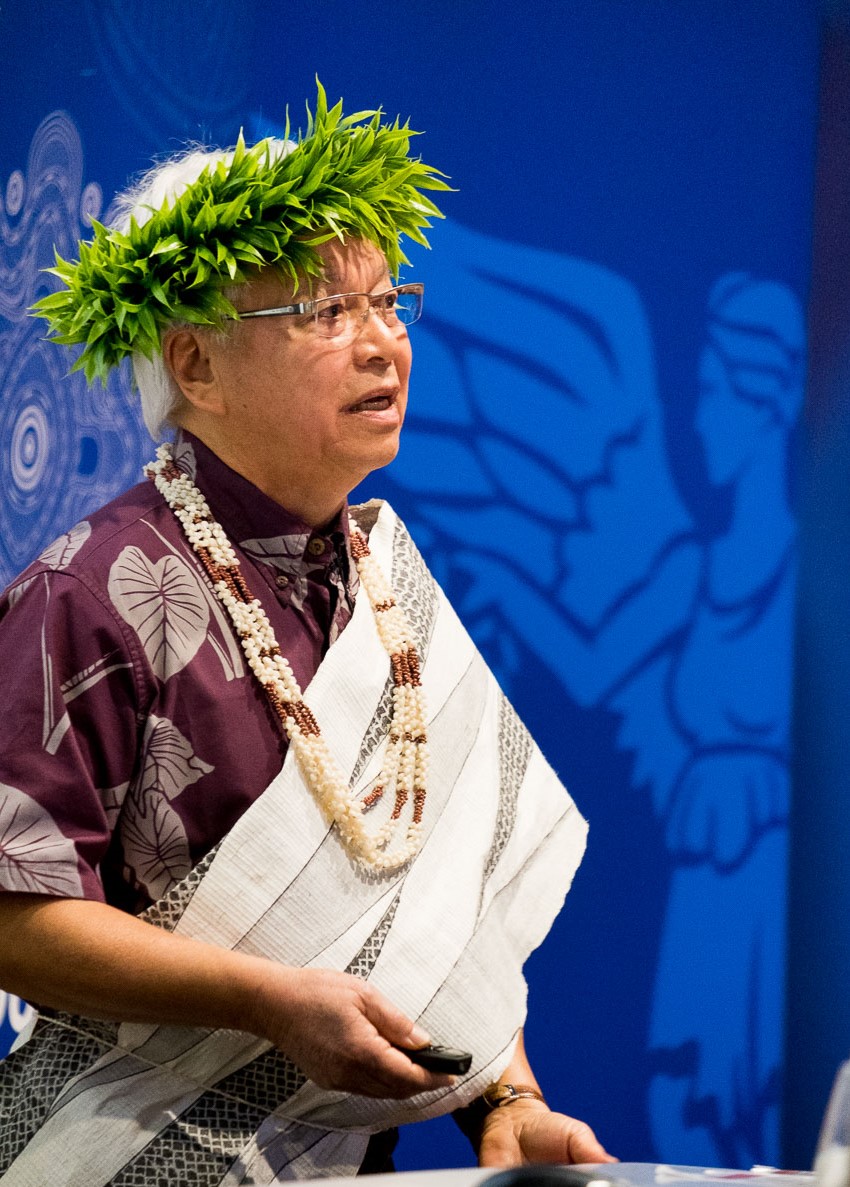
2018 – Niklas Labba
‘The Sámi Parliament of Norway – lessons for Indigenous peoples’ governance’
About the orator
Mr Niklas Labba, is a traditional reindeer herder and Academic Director, Centre for Sámi Studies at University of Tromsø/The Arctic University of Norway. Orator Image: Peter Casamento
Oration synopsis
The story of the Sámi offers profound lessons on constitutional recognition and self-determination for Indigenous Australians today. Only in Norway is the right of the Sámi to self-determination recognised and an agreement between the Sámi Parliament and the Norwegian state in place that the former should be consulted about issues concerning the Sámi people. Niklas Labba offered precious insights into the fundamental importance of First Nations voice and constitutional recognition to the long-term prosperity of Indigenous peoples across the globe.
The Oration was followed by a panel discussion on The Importance of Indigenous Voice in Governance, featuring Niklas Labba, Associate Professor Sheryl Lightfoot (University of British Columbia), Professor Daryle Rigney (Flinders University) and Dr Sana Nakata (Moderator, University of Melbourne).
2017 – June Oscar AO
‘Resilience and Reconstruction: The agency of women in rebuilding strong families, communities and organisations’
About the orator
Ms June Oscar AO is a proud Bunuba woman and a strong advocate for Indigenous Australian languages, social justice and women’s issues, and has worked tirelessly to reduce Fetal Alcohol Spectrum Disorder (FASD). June began her five-year term as Australia’s Aboriginal and Torres Strait Islander Social Justice Commissioner on 3 April 2017. Orator Image: Peter Casamento
Oration synopsis
The Uluru Statement has inspired Indigenous people and many other Australians to think big about their sense of Australian nationhood and the potential for Indigenous recognition and inclusion in Australian nation building. June Oscar suggests that the Australian nation must invest in a strengths-based approach to Indigenous community rebuilding and recovery, and recognise that our Indigenous female leaders are our greatest agents for change and empowerment.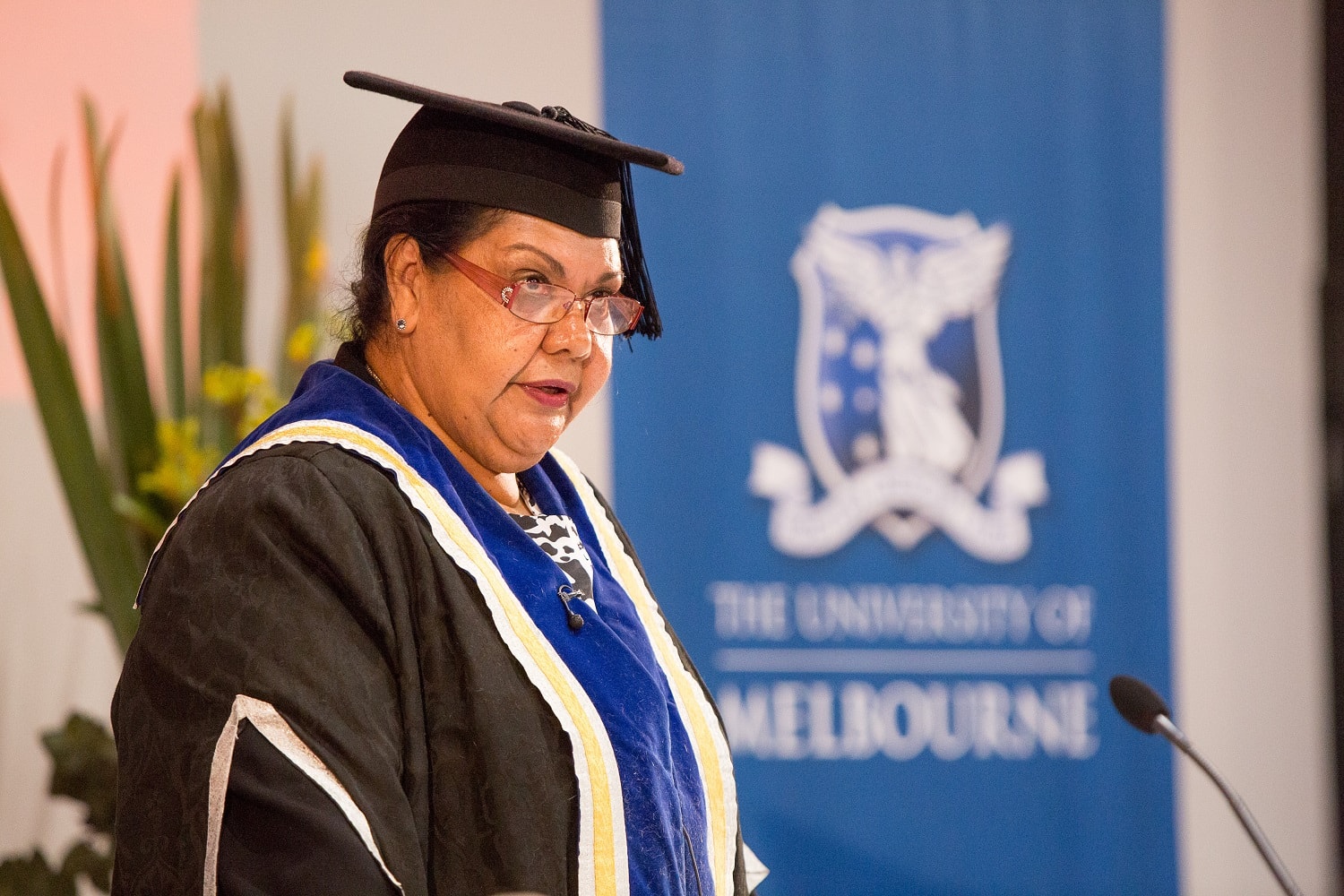
2016 – Stan Grant
'Between the dreaming and the market: Indigenous economic migrants and the world they made'
About the orator
Mr Stan Grant is an Australian man of Wiradjuri and Kamilaroi heritage and award-winning journalist, presenter, filmmaker and author. Orator Image: Peter Casamento
Oration synopsis
2016 has been an annus horribilus for indigenous people. Deaths in custody, protest, violence and a crisis in Indigenous policy all paint a dire picture. Yet amid the gloom there is a spark of hope: more Indigenous kids are finishing school and graduating university, Indigenous performers are topping our charts and winning awards, Indigenous sportspeople dominate in their fields and the Indigenous middle class is growing faster than any other sector of the population. These are the descendants of the great Aboriginal economic migration of the 20th century. Stan looks at how far we have come and the pathway to success.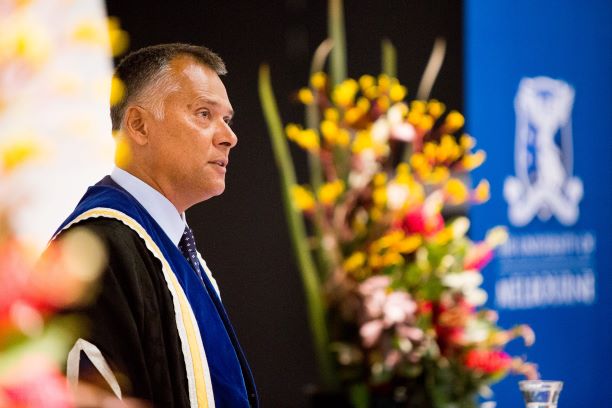
2015 – Professor Marcia Langton AM
'From hunting to contracting'
About the orator
Professor Marcia Langton AM holds the Foundation Chair of Australian Indigenous Studies at the University of Melbourne.
Oration synopsis
Professor Marcia Langton addresses Indigenous economic development: 'The gates have been opened. Indigenous Australians have been formally allowed into the Australian economy. First the iron ore miners, then many of the top 200 Australian corporations, and now the Commonwealth government, have created an Indigenous supply chain by procuring goods and services from Indigenous businesses. This follows the history of economic exclusion from colonial times to the 21st century. In many ways, Indigenous people remain locked out of normal economic participation. So, with one gate open, we should now think about removing the fences.'
2014 – Professor Linda Tuhiwai Smith CNZM
'Indigenous knowledges and how they help us think about the future'
About the orator
Professor Linda Smith CNZM has worked in the field of Māori education and health for many years as an educator and researcher and is well known for her work in Kaupapa Māori research. Her book Decolonising Methodologies Research and Indigenous Peoples has been an international best seller in the Indigenous world since 1988. Orator Image: Peter Casamento
Oration synopsis
Professor Smith’s oration discussed the importance and relevance of Indigenous knowledges to the ways we live our lives now and the ways our following generations can live their lives. Professor Smith began with a discussion about how, internationally, Indigenous knowledges are currently conceptualised, and discussed and raised some critical questions about the implications of those conceptualisations. She then discussed points of convergence with recent scholarship before shifting gear to examine the big challenges we face and the ways an Indigenous knowledges approach can help guide us through.
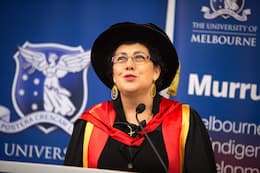
2013 – Professor Taiaiake Alfred
'Being and Becoming Indigenous: Resurgence Against Contemporary Colonialism'
About the orator
Professor Taiaiake Alfred is the founding Director of the Indigenous Governance Program at the University of Victoria in British Columbia, Canada. Professor Alfred specialises in traditions of governance, decolonisation strategies, and land based cultural restoration. Orator Image: Peter Casamento
2012 – Professor Megan Davis
'Aboriginal Women: the rights to self-determination'
About the orator
Professor Megan Davis is Professor of Law and Director, Indigenous Law Centre, Faculty of Law at the University of New South Wales. She is also an expert member of the United Nations Permanent Forum on Indigenous Peoples. Orator Image: Peter Casamento Oration synopsis
Oration synopsis
Professor Davis spoke on Aboriginal women and the limitations of the right to self-determination. She argued that the way self-determination has been configured in international law, and interpreted by the state and Indigenous communities, has been skewed in a way that impedes the capacity of Aboriginal women and girls to freely determine their economic, social and cultural destiny. She provided an alternative view of self-determination based on individual capability – what each individual is able to do and to be. Accordingly, for Aboriginal women to achieve a threshold of wellbeing, the current level of violence, vulnerability and disadvantage they face needs to discussed openly and addressed.
2011 – William L. Iggiagruk Hensley
'Resilient spirit: Alaska Native People and our struggle for land identity and self-determination'
About the orator
Mr William Iggiagruk Hensley is an Inuit Leader known for his extraordinary contribution to the Alaskan Native Land Claims Movement. Willie was elected to the Alaska House of representatives at the age of 25. He played a critical role in the negotiations surrounding the development and enactment of the Alaska Native Claims Settlement Act of 1971 that set aside 44 million acres and awarded $960 million for the Alaskan Natives.
2010 – Dr Manley A. Begay, Jr.
'Indigenous Nation rebuilding renaissance'
About the orator
Dr Manley A. Begay Jr is Faculty Chair, Native Nations Institute for Leadership, Management, and Policy, Senior Lecturer in the American Indian Studies Program at the University of Arizona, and Co-Director of the Harvard Project on American Indian Economic Development at Harvard University.
Oration synopsis
Drawing from the North American context, Dr Begay’s oration provided valuable insights for his Australian audience on issues of Indigenous leadership, governance and resiliency. 'After hundreds of years of control by government, Native nations in the United States and Canada are currently experiencing a political resurgence,' said Dr Begay.
'For Indigenous North Americans, it’s a wonderful time to be alive. I never thought that in my lifetime I’d see a resurgence of this magnitude where Indigenous people and native nations are calling the shots. In turn, wonderful things are happening.'
'That’s the story I bring to you. And it’s a good one.'
2009 – Professor Mason Durie
'Indigenous development: The academy as a site for the transmission of old and new knowledge and the advancement of Indigeneity.'
About the orator
Professor Mason Durie is Professor of Māori Research and Development and Deputy Vice-Chancellor (Māori and Pasifika), Massey University, New Zealand. Oration synopsis