2023 Sustainability Report
Healthy ecosystems
DOMAIN: Walking the talk in our operations
Aspiration to 2030: The University’s campuses support a diverse range of species through healthy ecosystems on campus and connections to ecosystems off campus.
Progress against targets
| Target | Target status | Progress in 2023 |
|---|---|---|
| Each campus achieves no net loss of biodiversity relative to defined baseline years by 2025. |  On track |
|
| Each campus achieves an increase of biodiversity relative to defined baseline years by 2030. |  Not yet started |
|
Explore our progress
and our stories
Our progress
Biodiversity Baseline Data Project – Metric 3 data collection completed
The Biodiversity Baseline Data Project achieved a major milestone in 2023 with the completion of data collection for Metric 3: Number of Understory Plant Species. Data collection was a highly collaborative process involving students and several University teams, led by our Sustainability team, Campus Management and including six students employed as casual assistants. Together, the team collected almost 16,000 data points across our seven campuses, representing an estimated 148,000 plants. Given the significant spatial area that this data collection process covered, each data point represents a cluster of plants of the same species in a given location, enabling an estimate of overall plant numbers. Preliminary results indicate that Burnley and Parkville campuses have the greatest volume and diversity of plant species, while some other campuses, including Shepparton and Dookie, could benefit from additional and more diverse plantings. Further data processing to confirm baselines and other relevant indicators will be completed in 2024.
| Campus | Data points collected | Approximate number of plants |
|---|---|---|
Parkville | 8050 | 69,995 |
Burnley | 4820 | 60,218 |
Werribee | 1102 | 6872 |
Southbank | 367 | 3624 |
Creswick | 806 | 3209 |
Dookie | 520 | 2399 |
Shepparton | 306 | 2052 |
In the cooler months of 2023, three student volunteer planting events were run in collaboration with the Grounds Team and Grounds Contractor to support efforts to increase the number of understory plant species on our campuses. Student volunteers gave 58 hours of their time to plant 3200 plants at our Parkville, Southbank and Werribee campuses.

Our stories
Enhancing research and collaboration at the Victorian Biodiversity Conference
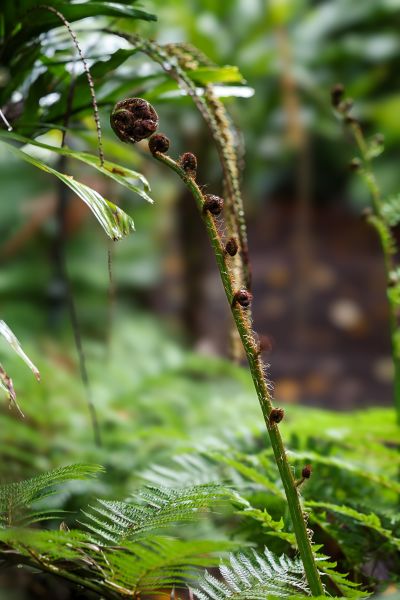
The University hosted the 2023 Victorian Biodiversity Conference on the Burnley campus. Over 600 people attended the three-day conference, which showcased the latest research in conservation science in Victoria. Academics from the University supported the conference, leading insightful discussions on the new Threatened Species Action Plan, ethics of controversial conservation approaches (such as those used to bring back the Thylacine) and the impacts of light pollution on wildlife. Abstract and poster presentations explored a range of conservation-related topics including fire ecology, science communication, urban ecology and advances in current research tools and methods.
The University’s Sustainability team staff members Madeline Taylor and Rachael Miller led the organisation of the conference, convening a committee of 20 members from a network of Victorian universities and organisations. The conference was held in an inclusive and sustainable manner, with a ‘Breaking Barriers Grant’ enabling those with financial barriers to present their research at the conference and all conference sessions livestreamed for those not able to attend in person. Sustainability was prioritised wherever possible, with vegetarian and vegan catering, use of the University’s Choose to Reuse events kit preventing disposable food containers and utensils going to landfill, and all food waste collected for composting.
Our sustainability strategy
At the University of Melbourne, our efforts in sustainability are guided by Sustainability Plan 2030 - a roadmap for sustainable delivery of our institutional strategy Advancing Melbourne.
Read more about how we are advancing sustainability at the University:
