2025 Sustainability Report
Discovery
Domain: Mobilising knowledge for action
Aspiration to 2030: We aspire to be justifiably regarded as a place where students and academics do the highest-quality sustainability research that addresses difficult questions and major challenges.

Progress against targets
| Target | Target status | Progress in 2025 |
|---|---|---|
| Sustainability research is integrated with campus operations and planning, to be an international exemplar of a sustainable community. |  |
|
| The highest-quality research is conducted, contributing to knowledge, action and impact across the disciplinary and interdisciplinary dimensions of sustainability. |
|
|
| Researchers make considered decisions on the sustainability impact of their research practices and activities. |  |
|

Our progress
The University's new research strategy
The University released its new research strategy Advancing Research 2030 - Excellence for Impact, with 'Climate Sustainability and Ecosystem Health' identified as a key impact accelerator. Research under this impact accelerator will help build resilience, support new energy transitions, improve biodiversity, help reverse habitat loss and contribute to effective policy.
Campus Living Lab Accelerator Program
The Campus Living Lab Accelerator Program provided $100,000 in funding to eight living labs in 2024-2025, with project partners from six Faculties, three portfolios, Melbourne Climate Futures, Melbourne Biodiversity Institute and the Melbourne Social Equity Institute. Several living laboratory projects had a strong research focus, such as the University of Melbourne Biodiversity Footprint analysis undertaken by the Melbourne Biodiversity Institute (2024); and the development of the Carbon Offset Procurement Framework by Melbourne Climate Futures and the Sustainability Strategy team (2023). In 2025, academics from Melbourne Climate Futures commenced supporting the review and refresh of the University’s Climate Leadership targets.
Sustainability impact of University of Melbourne researchers
The University’s sustainability impact of research was mapped using Scival and Altmetric (tools for analysing and evidencing research impact), which provided a report overview of research outputs mapped to the United Nations Sustainable Development Goals (SDGs) in terms of the most highly cited, mentioned in social media, patents and policy. Of the University’s 6398 research outputs that mapped to one or more United Nations SDGs from 2022-2025, between 17 and 26 per cent of the outputs within each SDG were among the top 10 per cent most cited for their fields. A random sample of research outputs from all institutions should have 10 per cent of outputs in the top 10 per cent most cited. If the result for an institution is above 10 per cent of outputs in the top 10 per cent most cited, this indicates a better-than-average performance.
Percentage of SDG-related research outputs in the top 10% of citations (field weighted)
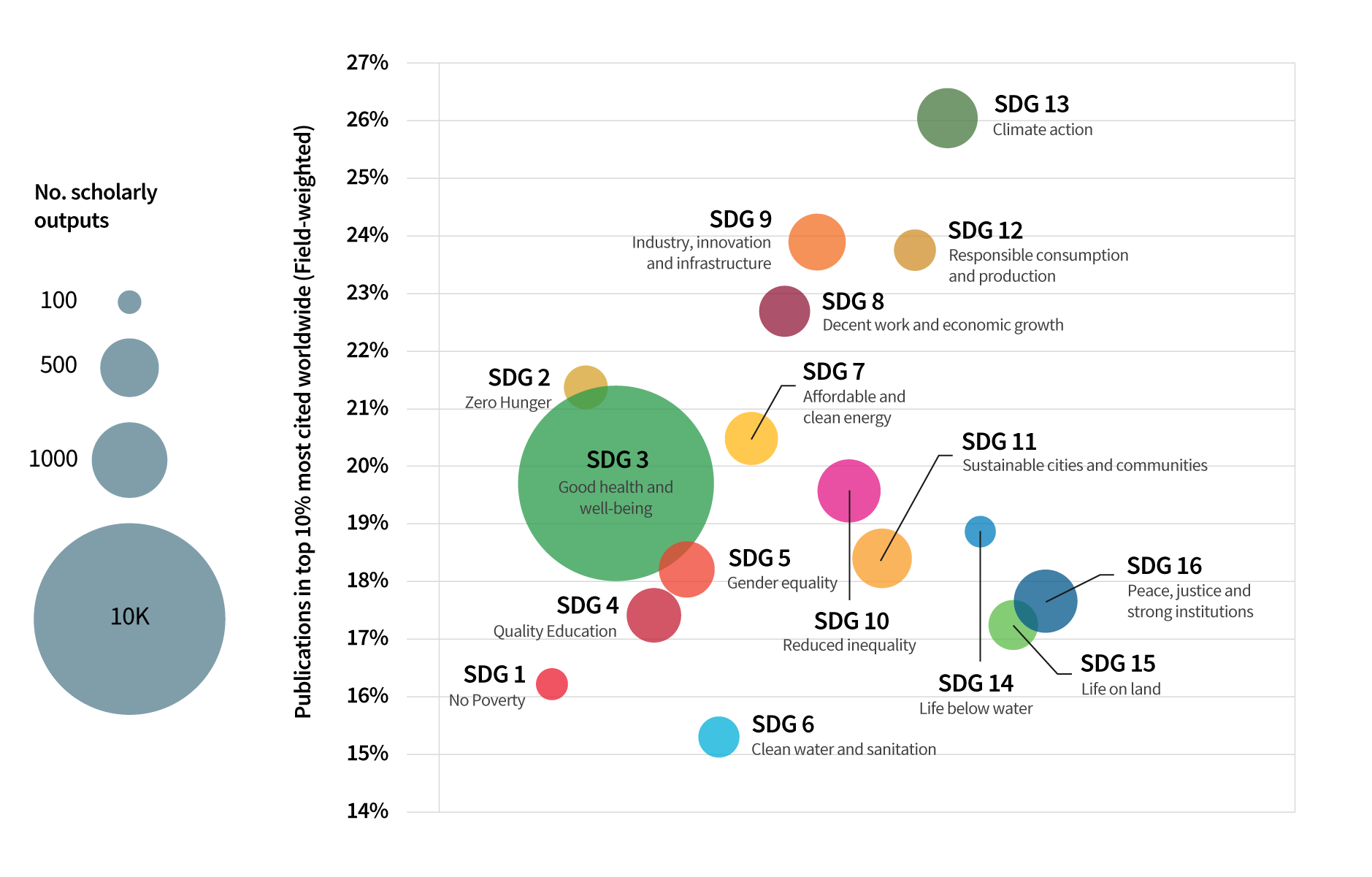
Source: SciVal (Elsevier, Accessed 15-January 2025). SDG mapping based on Elsevier 2023 method. Elsevier does not map to SDG 17.
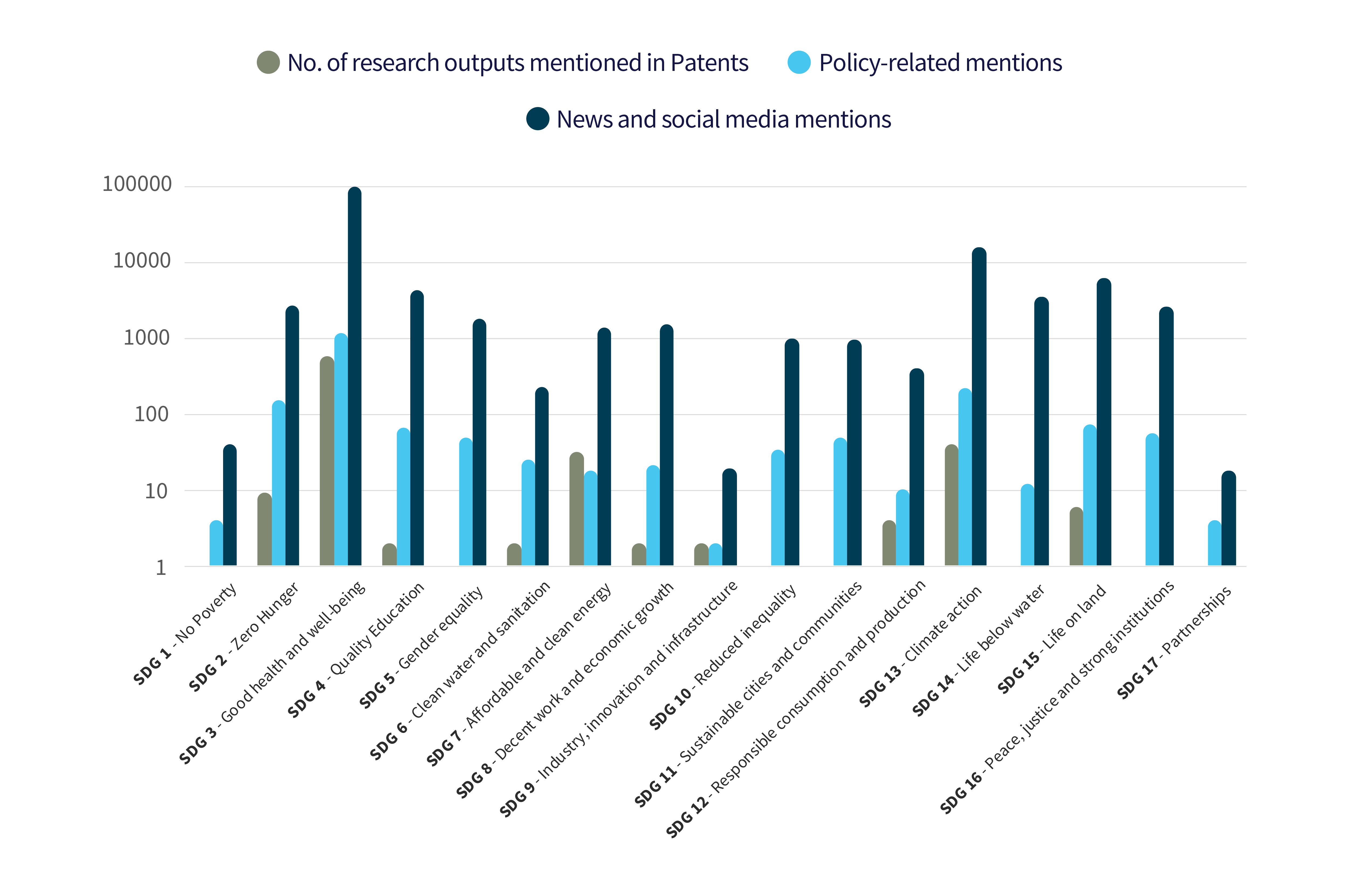
University of Melbourne research outputs related to the United Nations SDGs were highly mentioned in social media, patents and policy in 2025, with SDG 3 (Good health and wellbeing) and SDG 13 (Climate action) receiving the most mentions in social media and policy documents. SDG 3 and SDG 7 (Clean energy) received the highest number of mentions in patents.
Click here to see data table of dataset used above
Number of patent, policy and news/social media mentions for research outputs mapped to SDGs
Source: Altmetric Explorer. SDG mapping based on SpringerNature/Digital Science method.
Click here to see data table of dataset used above
Melbourne Biodiversity Institute
The Melbourne Biodiversity Institute (MBI) awarded seed and sapling funding to 30 innovative new research projects, involving 160 researchers across all nine of the University's Faculties. MBI received over 50 applications seeking $1.5 million in funding, reflecting the breadth and energy for biodiversity research at the University. MBI convened seven research clusters comprising 300 researchers from across the University, focusing on research collaborations and knowledge sharing on key biodiversity topics.
Melbourne Climate Futures
In 2025, Melbourne Climate Futures (MCF) continued its key interdisciplinary research activities, strengthening its impact across climate and health, law and finance in the Indo-Pacific region. MCF provided $250,000 in sapling funding to seven diverse, interdisciplinary research projects as part of its fourth round of CRX funding. The year-long program provided researchers from six of the University’s Faculties with resources to develop their projects, as well as capacity-building workshops on engaging stakeholders, driving impact and monitoring progress. The MCF Research Cluster expanded to 332 researchers across the University, holding bi-monthly interdisciplinary meetings. The MCF Academy now comprises 98 graduate researchers and senior scholars. In 2025, it hosted 14 research seminars and held regular training sessions to enhance members’ skills and networks.
The PAVE – Health: Pacific Action to enhance the Visibility of Evidence on Health and Climate Impacts project was formally launched in March 2025, funded by $4.9 million from Wellcome. The project aims to rapidly upskill policymakers, researchers and health practitioners to draw attention to and reduce climate-related health impacts across four Pacific Island countries: Samoa, Solomon Islands, Kiribati and Federated States of Micronesia.
The Laureate Program on Global Corporate Climate Accountability commenced its five-year research program funded by an Australian Research Council Laureate Fellowship. Professor Jacqueline Peel aims to transform the role of international law and global standards and mechanisms in raising the ambition and ensuring delivery of companies’ climate promises.
Sustainable research practices
Although there is evidence of efforts to enhance sustainability in research practices in several Faculties, the University does not have systemic processes to support progress towards this target. The University continues to encourage all researchers to consider the impacts of their research, including in relation to sustainability through the Research in a Publicly Spirited University and Openness Transparency agenda in the new research strategy,Advancing Research 2030: Excellence for Impact
There are several examples of initiatives focused on making research practices more sustainable, which provide a foundation for the University to build on. The Faculty of Medicine, Dentistry and Health Sciences collaborated with the Procurement team to develop a University-wide Sustainability Supplier Questionnaire for essential laboratory equipment. The Faculty of Fine Arts and Music also worked with the Procurement team to address the sustainability impacts of art and costume workshop procurement. The Faculty of Business and Economics’ Sustainable Research Hub is undertaking work on graduate researcher training for sustainability-related research. The Faculty of Education developed Sustainability Research Guidance to guide Faculty members on reducing the environmental impacts of research activities.
The University will continue to further integrate sustainability-related research into campus operations and planning, and more sustainable research practices in future. This will be a key focus during the refresh of Sustainability Plan 2030 in 2026.
Our stories
Greening Island Schools: promoting education for sustainable development
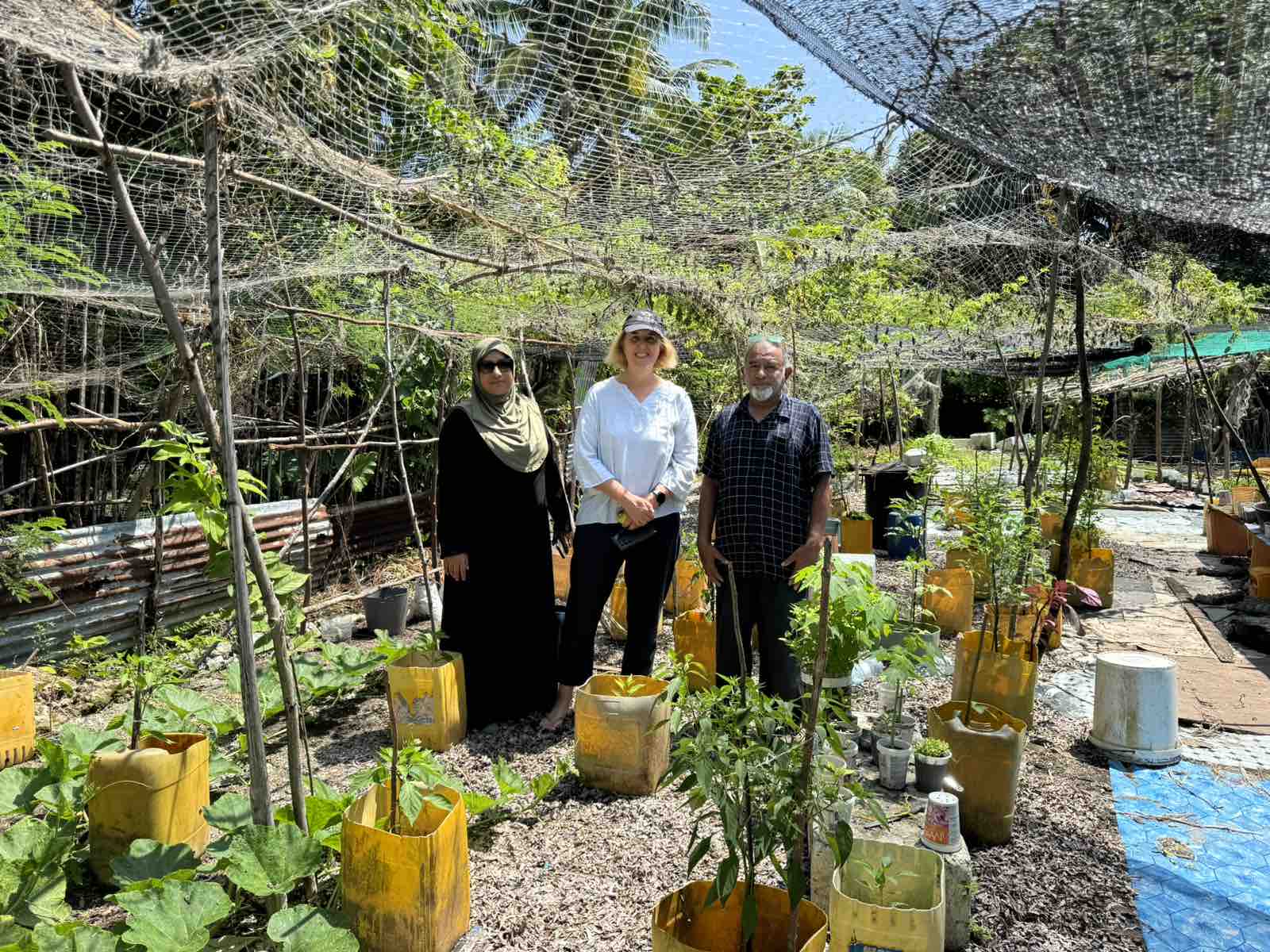
Led by Dr Rhonda Di Biase in the Faculty of Education, the Greening Island Schools project supports schools in the Indo-Pacific to establish and maintain climate-resilient school kitchen gardens and composting. Working with a number of schools in the Maldives, Solomon Islands and Fiji, the project focuses on embedding school gardens in core teaching and learning programs rather than as an extra-curricular activity.
The goal is to facilitate active learning, environmental knowledge and understanding about sustainability among students, and promote nutritional literacy and increased physical activity in contexts where the prevalence of non-communicable diseases is increasing. The project also aims to incorporate traditional forms of knowledge around gardening into the school curriculum, and promote local food production to help address food security challenges in these small island states. Composting is intended to nurture the garden and also reduce food waste.
The project is run in collaboration with local partners including Maldives National University; Live and Learn, an environmental non-governmental organisation; the Solomon Islands Ministry of Education; and Fiji National University. The project team has developed a range of teaching resources specific to each country, with links to each national curriculum across a range of subjects.
The Greening Island Schools project was supported by the Melbourne Climate Futures Climate Research Accelerator program and the DHB Foundation.
Healthcare Environmental Sustainability: creating the evidence to drive adoption of high-value initiatives in Australian hospitals
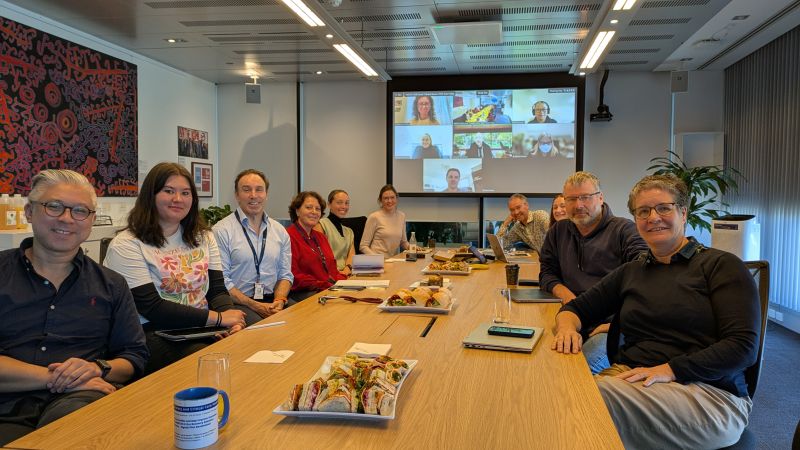
In Australia, healthcare is responsible for approximately 7 per cent of the nation’s GHG emissions, with the large majority arising from hospital-based care.[5] The Australian government has mandated that healthcare systems achieve net zero carbon by 2050. In order to support meeting this target, there is a clear need for research that provides robust evidence on how to optimise hospital operations to reduce emissions and improve financial performance, while ensuring that changes are safe and acceptable to staff.
In 2025, Professor Forbes McGain from the Faculty of Medicine, Dentistry and Health Sciences received Australia's first National Health and Medical Research Council grant for sustainable healthcare projects. Five research projects were launched to generate the data necessary to guide systemic changes in hospital practices, ensuring that Australian hospitals are equipped to meet environmental sustainability targets.
The focus of these projects are on: (1) identifying energy-saving strategies of hospital heating, ventilation and air conditioning systems while maintaining infection control standards; (2) improving the efficiency of steam sterilisation processes and enhancing the use of reusable textiles in hospitals; (3) identifying opportunities for reducing the waste of medical supplies through waste audits, stakeholder perspectives and supporting the redistribution of unused items; (4) promoting the safe and effective use of oral medications over intravenous alternatives to reduce waste, costs and environmental impact and (5); refining and implementing a hospital sustainability toolkit to support environmental initiatives and leadership among healthcare professionals. This research will explore how these hospital sustainability initiatives can offer operational, environmental, social and financial benefits for the health sector.
Faculty of Business and Economics Sustainability Research Hub
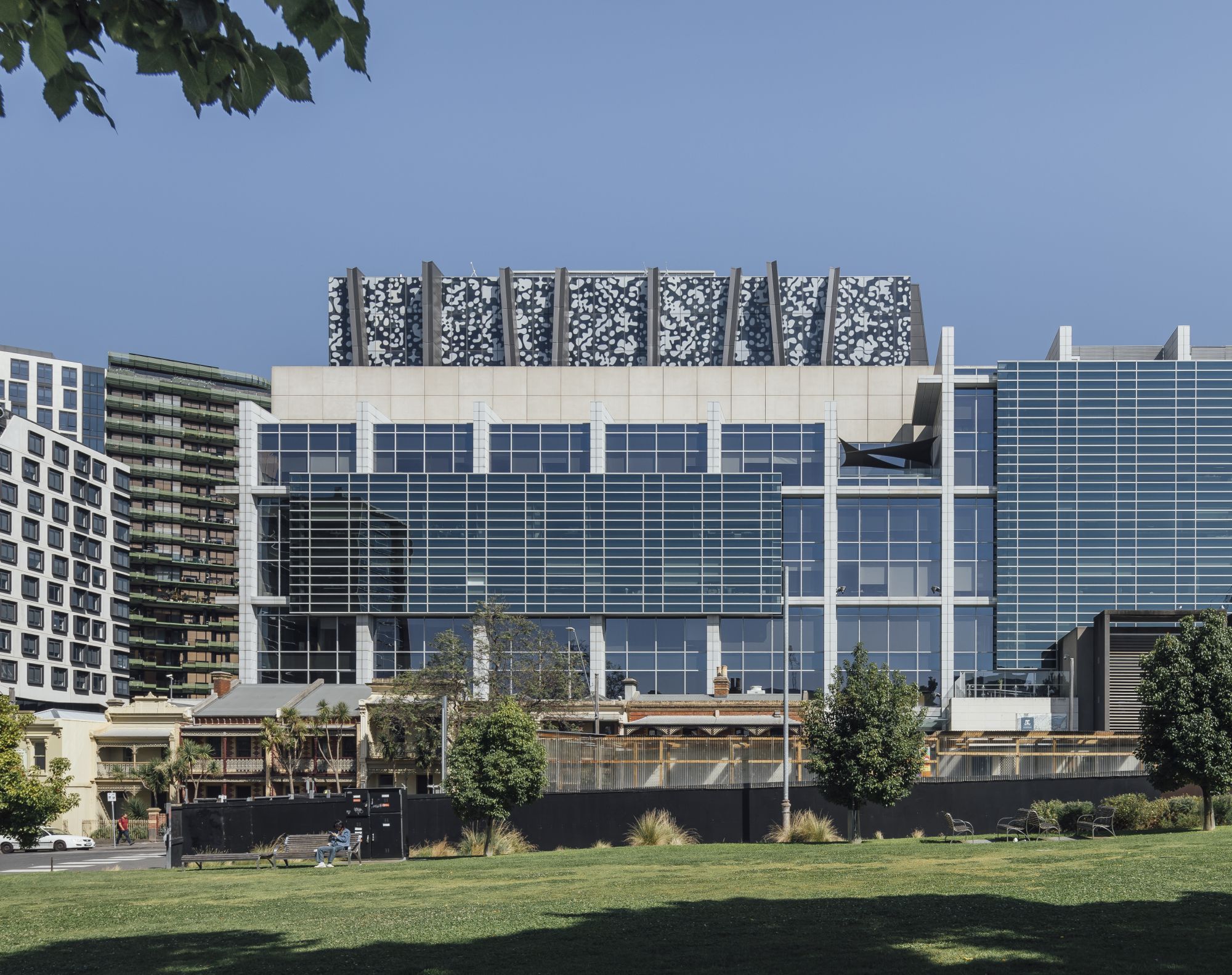
Researchers in the Faculty of Business and Economics’ department of Management and Marketing recognise the sustainability and climate implications of business and consumption practices. Some of their research has been conducted within specialist fields such as corporate social responsibility, stakeholder theory, ethical consumption and transformative consumer research. Many of the issues that these researchers address confront the narrow focus on profit or consumption maximisation, without appreciation or integration of broader impacts on stakeholders and systems. The Sustainability Research Hub, led by Dr Franz Wohlgezogen, provides researchers with a platform to share and learn from each other, and to encourage cross-disciplinary research approaches to complex sustainability and climate problems. Key research topics include: sustainable consumption, biodiversity preservation, just transitions, political corporate social responsibility, integrated sustainability management and governance, and graduate researcher training for sustainability-related research.
Some key University research outputs in 2025 included:
- Professor Hari Bapuji and colleagues’ publication in the Journal of Management on ‘Organizational engagement with poverty: a review and reorientation’;
- Professor Vikram Bhakoo and colleagues’ publication in Production and Operations Management on ‘Beyond compliance-based governance: The role of social intermediaries in mitigating forced labour in global supply chains’;
- Dr Medo Pournader and colleagues editing a special issue in the Journal of Supply Chain Management on ‘Moving Marginalized Communities toward the Centre: Balancing Diverse Perspectives’; and
- Professor Daiane Scaraboto and colleagues editing a special issue in Marketing Theory on ‘Degrowth and the future of marketing.’
New University of Melbourne sustainability in laboratories hub
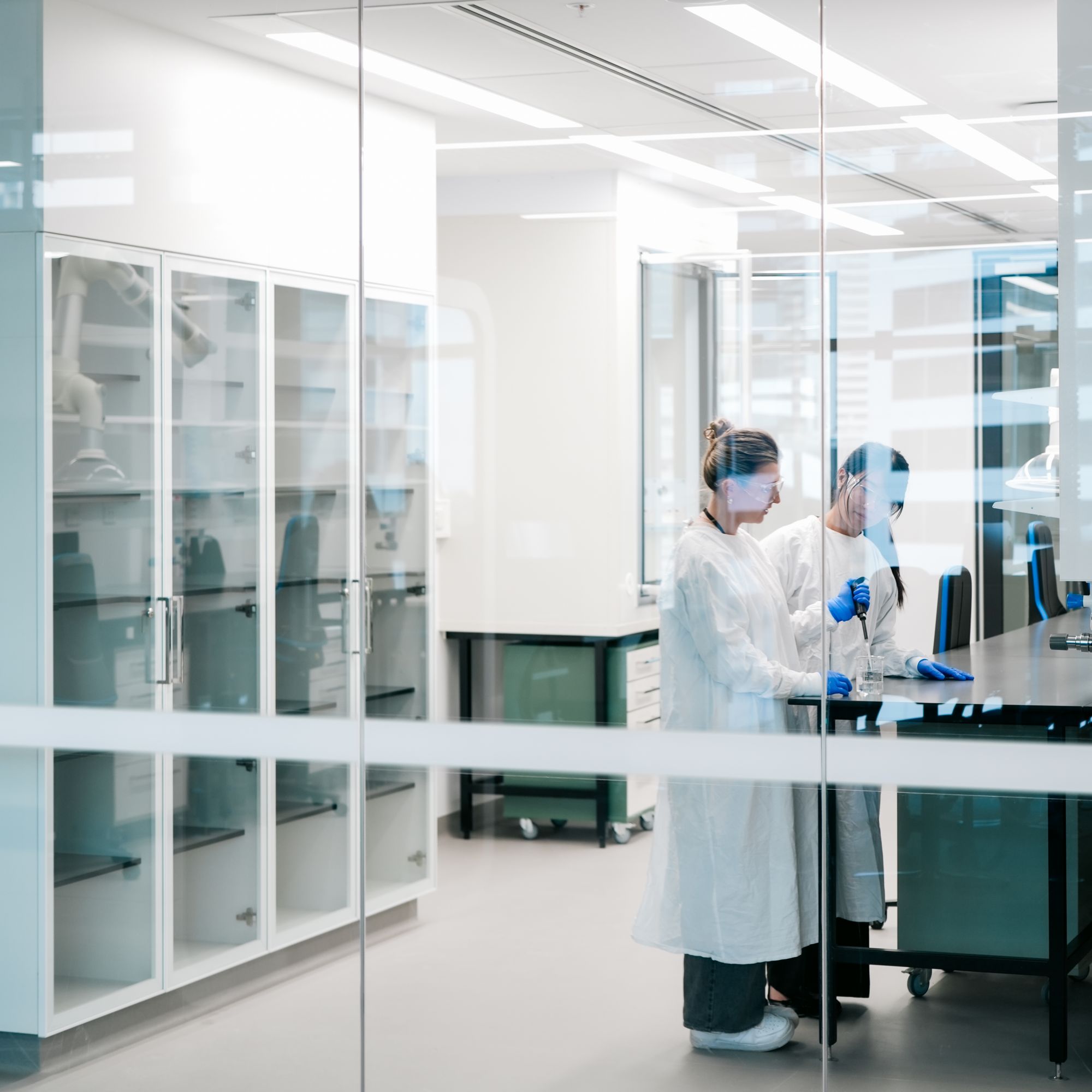
In 2025, the University launched a centralised Sustainability in Laboratories Hub during Sustainability Week. The hub was developed by a cross-unit working group from Procurement, Corporate Development and Sustainability teams. The working group collated and streamlined peer-reviewed and best practice resources into an accessible, user-friendly platform to help researchers embed sustainability into daily laboratory operations. Feedback from University sustainability leaders, researchers and key stakeholders shaped the hub’s content to ensure that it met the practical needs of the research community. The hub provides practical tools, best-practice frameworks, and guidance on procurement, waste reduction, water conservation and energy efficiency.
By raising awareness and supporting the adoption of sustainable practices across more than 400 University laboratories, the hub advances Sustainability Plan 2030 targets to reduce waste to landfill, improve material circularity, cut water and energy use and achieve climate-positive status. Beyond compliance, it builds a culture of sustainability within research, positioning the University as a leader in embedding responsible innovation and driving meaningful change in laboratory practice.
Using AI to support sustainability analysis on campus
The University of Melbourne Artificial Intelligence for Mapping and Insights (UMAMI) is a cross-Faculty sustainability initiative led by the Faculty of Engineering and Information Technology in collaboration with the Faculty of Architecture, Building and Planning. Developed in 2024, UMAMI is a prototype AI-powered campus decision-support tool designed to improve how sustainability and retrofit decisions are made across the University’s built environment.
The project responded to a challenge that while the University holds extensive data relevant to sustainability – such as energy use, carbon emissions, building condition and spatial information – this data is fragmented across systems and often difficult to access or analyse by non-specialist users. Through interviews, workshops and engagement with data custodians and estate decision-makers, the project identified critical data gaps and usability barriers affecting sustainability-led retrofit planning. UMAMI addresses these challenges by enabling users to query complex campus datasets using plain language. The AI system integrates spatial and asset data, allowing staff to identify opportunities for emissions reduction, passive cooling, tree canopy improvements, building reuse, and infrastructure upgrades without requiring specialist software or advanced technical skills. By lowering barriers to data discovery and analysis, UMAMI supports evidence-based sustainability decisions aligned with decarbonisation, climate resilience and campus renewal objectives.
UMAMI demonstrates how AI and spatial analytics can support decarbonisation and sustainability decision-making in large institutional estates, providing an example which can be extended to precincts, cities and infrastructure portfolios beyond the University.
Beyond EPiC: embedding embodied carbon research into policy and practice
Beyond EPiC is a research-led project emerging from decades of sustainability research within the Faculty of Architecture, Building and Planning. Grounded in internationally recognised hybrid life cycle assessment (LCA) methods, Beyond EPiC translates academic research into actionable environmental data, tools and decision-support systems for the built environment.
In 2025, Beyond EPiC’s research achieved direct policy impact through its integration into the New South Wales Government’s BASIX Materials Index. Embodied carbon coefficients developed through University research now underpin mandatory reporting for residential development applications, embedding sustainability research directly into regulatory frameworks.
Beyond EPiC provides practitioners and policymakers with reliable, consistent data to inform early-stage design and procurement decisions. It enables large-scale reductions in embodied carbon by influencing material selection across tens of thousands of homes. It also supports transparency and accountability in environmental reporting. At a sector level, Beyond EPiC demonstrates how University research can move beyond advisory roles to become embedded policy infrastructure, setting a benchmark for research translation, impact and integrity in sustainability governance.
Footnotes
[5] Malik A, Lenzen M, McAlister S and McGain F (2018) ‘The carbon footprint of Australian health care’, The Lancet Planetary Health, 2(1):e27–e35, doi:10.1016/S2542-5196(17)30180-8.
Our sustainability strategy
At the University of Melbourne, our efforts in sustainability are guided by Sustainability Plan 2030 - a roadmap for sustainable delivery of the University's Strategy 2030: Resilience.
Read more about how we are advancing sustainability at the University:
