2024 Sustainability Report
Engagement and partnerships
Domain: Mobilising knowledge for action
Aspiration to 2030: Our partners, collaborators and associated stakeholders have increased their sustainability performance through meaningful engagement and partnerships with the University.

Progress against targets
| Target | Target status | Progress in 2024 |
|---|---|---|
| The University’s community partnerships demonstrate localised and co-created approaches to sustainability. |  On track |
|
| The University has led or influenced discussions with precinct partners to further precinct-specific approaches to sustainability. |  In progress |
|
| The University plays a leading and convening role on sustainability challenges and opportunities internationally, with particular focus on vulnerable and disadvantaged people in Asia and the Pacific. | On track |
|
Explore our progress
and our stories

Our stories
Widening participation with the Communities on Campus program
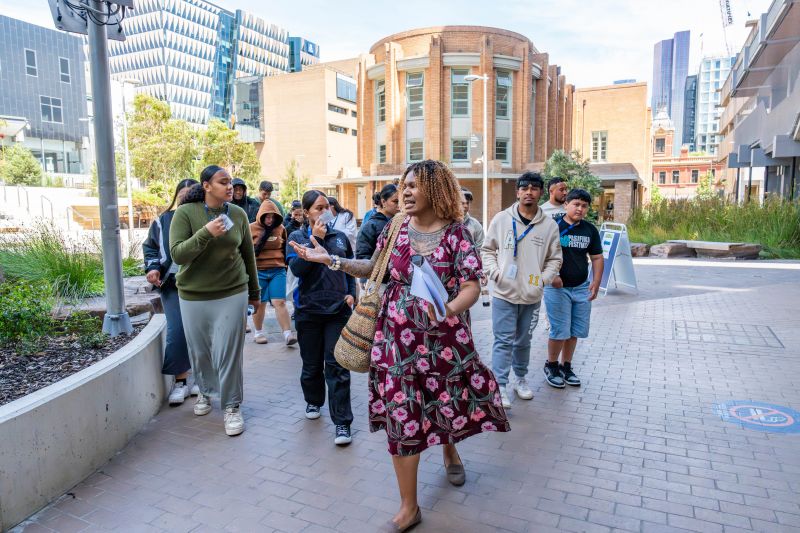
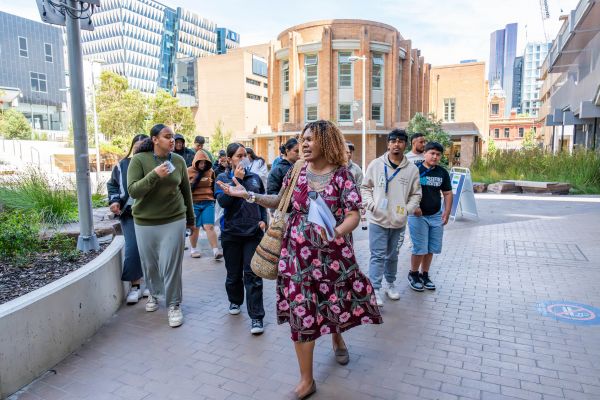
The Communities on Campus program was a collaboration with university colleagues from Widening Participation, Future Students, Oceania Institute, African Studies Group, faculty staff and students and community collaborators. The program welcomes underserved communities from the Goulburn Valley, Melbourne’s West and inner North to our campuses, contributing to the university’s diversity and inclusion, widening participation, Advancing Students and Education and Place goals and plans.
The program included:
- Three visits to the Parkville campus co-hosted with the faculties of Arts, Medicine, Dentistry and Health Sciences and Engineering and Information Technology.
- Two visits to the Dookie Campus to experience the campus and hear about the Diploma in General Studies (DiGS)to support the university’s widening participation, diversity and inclusion.
- Bespoke tours of University Open Day with families and young people from Shepparton and Melbourne.
- Vaka Pasifika collaboration with the Oceania Institute and the Pasefika Schools Network.
- African Culture on Campus Festival co-presented with the East African Women’s Foundation, Victorian Multicultural Commission, African Studies Group, Chancellery Engagement to celebrate and activate cultures on campus and create belonging and connections for our students and local communities.
In total 1850 people experienced our campus and engaged with students and staff. Eighty-four per cent visited our campuses for the first time. Every survey respondent said they would recommend the program to a friend. Sustainable practices and education and social procurement were key components of this program.
The community day is thoughtfully designed to be both innovative and engaging, offering a unique lens into the lives of real people. We are given the chance to learn through music, storytelling, and, perhaps most importantly, by simply being present in our diverse forms—asserting our presence within the walls of the University of Melbourne, even if just for one day... The true highlight for me, however, was seeing the children from the community transform the campus into their own playground, turning what is often a symbol of exclusivity into a space where they could feel comfortable and free. Dr Franka Vaughan (Faculty of Arts)
Engaging with the local community on Carlton Harmony Day
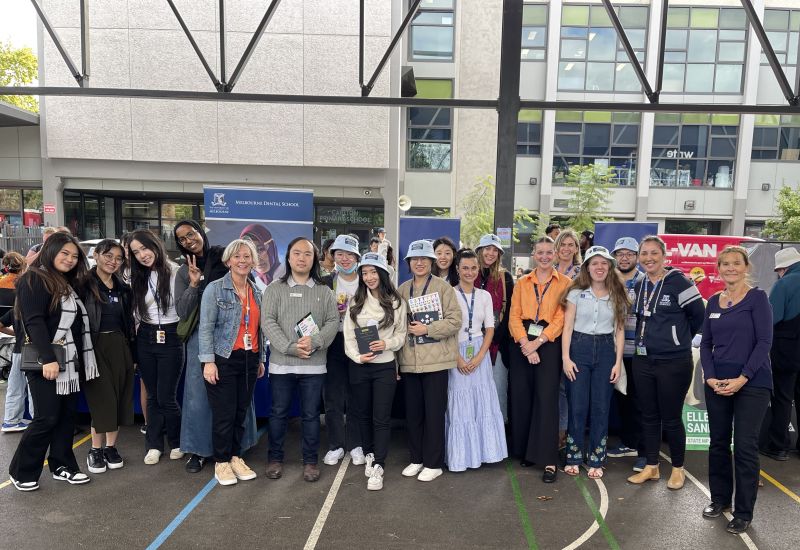
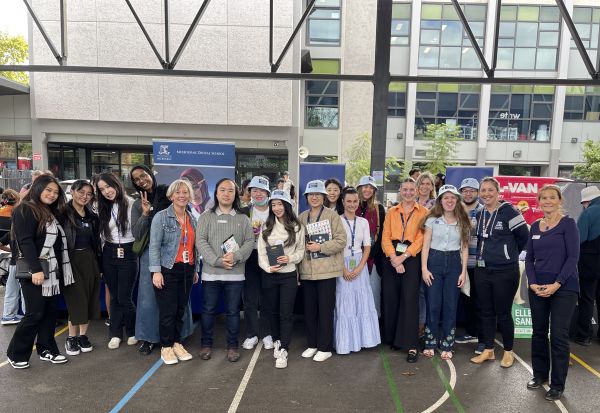
University of Melbourne Executive Master of Arts students (Faculty of Arts) organised the Carlton Harmony Day 2024 for the third year running. Held at the Carlton Primary School, this is a key neighbourhood and community engagement program supporting and serving our neighbourhood and university community. The event was attended by around 400 people, including over 70 UoM students from the faculties of Arts, Medicine, Dentistry and Health Sciences (MDHS) and Fine Arts and Music (FFAM). UoM student involvement included:
- 25 Executive Master of Arts students project-managed the event as part of a subject lead by Dr Anna Kosovac (Arts), gaining valuable real work experience in event logistics, communications, and programming.
- 40 students coordinated by Dr Roisin McGrath (MDHS) provided information to the community across the areas of Oral Health, Speech Pathology, Audiology & Optometry. The successful experience of Oral Health students at Harmony Day 2023 brought about interest and participation from other areas of MDHS.
- 5 FFAM students performed with traditional Chinese instruments alongside Dr. Wang Zheng-Ting from the Conservatorium of Music.
This partnership is enabling service learning for university students and building stronger ties between UoM staff, students and local communities.
Australia-Vietnam Green Economy Summit
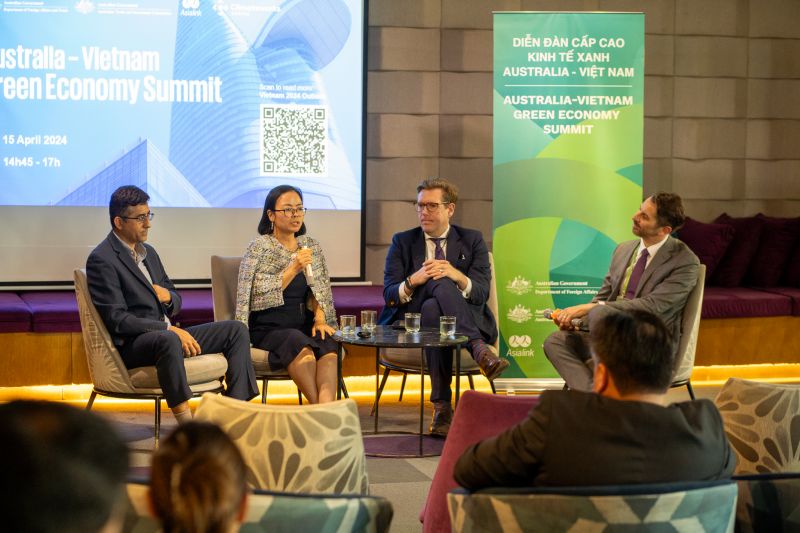
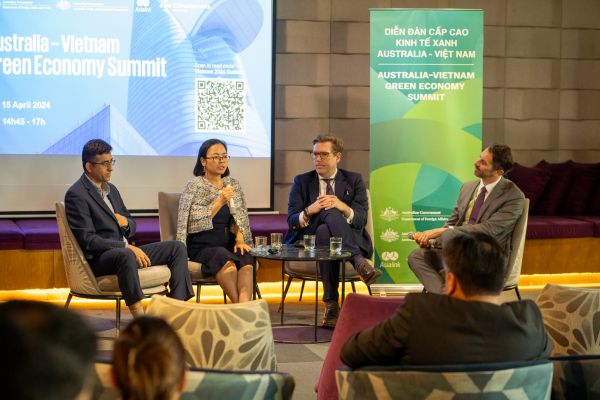
In April 2024, Asialink partnered with Climateworks to co-host the Australia-Vietnam Green Economy Summit in Ho Chi Minh City, to foster new collaborations for the low carbon transition. The summit brought together over 150 policy and industry leaders to discuss opportunities for both countries in the green economy.
The summit was a part of the Australia-Vietnam Green Economy Program, which aims to foster collaboration between government and business in the green economy by developing commercial opportunities, knowledge, connections and business capabilities. It is dedicated to harnessing the green economy's potential, focusing on sustainable development, the creation of jobs and growth, and the transition to renewable resources and net-zero emissions. Read more about the Australia-Vietnam Green Economy Program.
Reach Alliance programs in Colombia, Chile and Australia
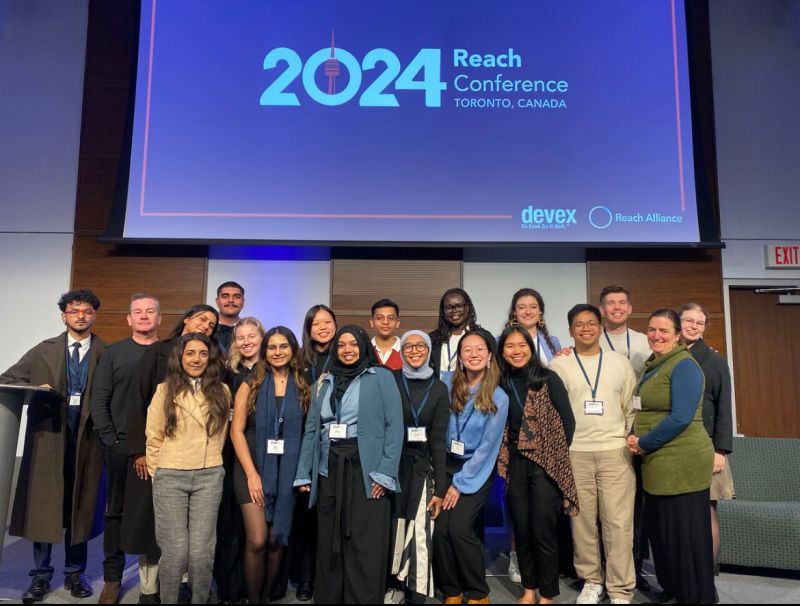
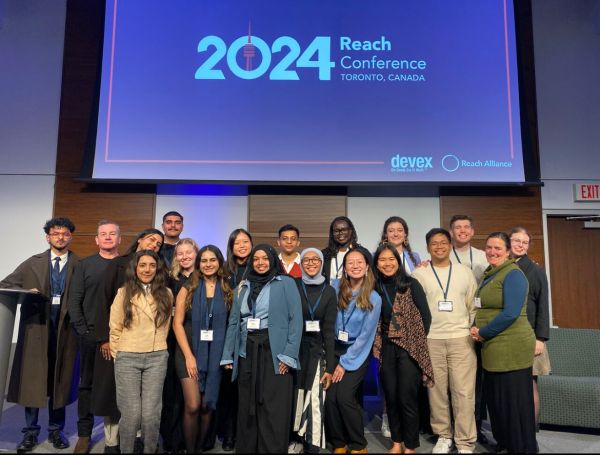
The University of Melbourne is a member of the Reach Alliance, which is a global research network that aims to address the Sustainable Development Goals through finding innovative solutions to reach ‘hard-to-reach’ communities around the world. Students undertake research and investigate local solutions to pressing global challenges. In 2024, 17 University of Melbourne students participated in the program, spending one week engaging in fieldwork research in Townsville, Chile and Colombia. After completing their field research, students created reports to showcase their findings, which have been published by the Reach Alliance.
Case studies explored approaches to supporting Aboriginal and Torres Strait Islander women in prison, the role of grassroots recyclers in Chile’s waste management system, and the efficacy of the “Semillas de Apego” program in Colombia, which supports caregivers of young children impacted by armed conflict and forced migration. Read more about this year’s cohort of student researchers.
Melbourne Climate Futures Australia Awards Fellowship program
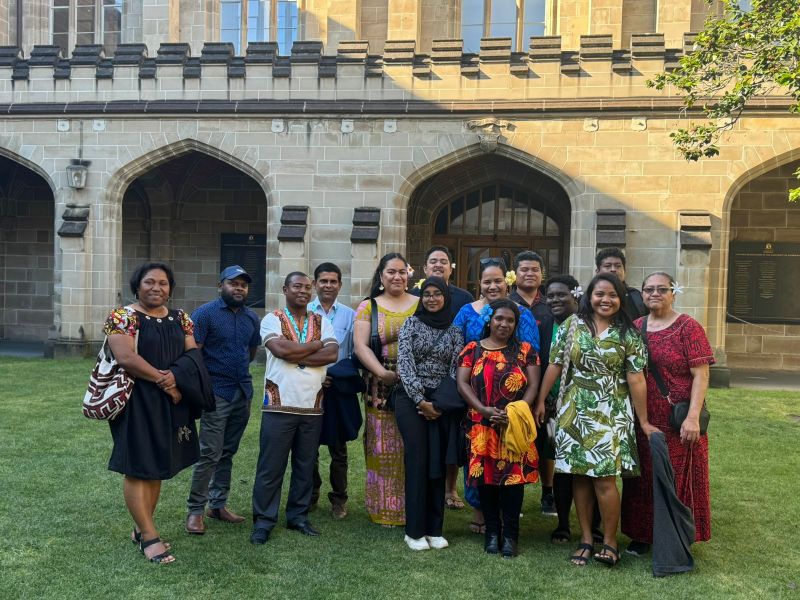
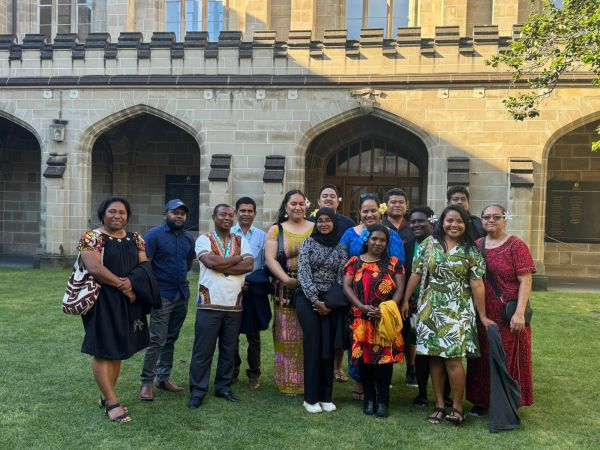
The Australia Awards Fellowship program on ‘Advancing climate adaptation, resilience and just energy transitions in the Indo-Pacific' brought together a cohort of 15 policy leaders from countries across the Pacific and West Indian Oceans, along with the Pacific Climate Change Centre (PCCC) of the Secretariat of the Pacific Regional Environment Programme (SPREP). This is the second year that University of Melbourne has partnered with the PCCC to deliver a capacity building program for a cohort of policy and practice leaders from the Indo-Pacific. The program involved around 50 experts, practitioners, advocates, government and non-government leaders working to advance action on climate adaptation, resilience and just transitions in various contexts.
An implementation workshop will be held at PCCC headquarters in Apia, Samoa, in 2025, where the cohort will reunite to discuss the implementation of their outputs, to explore the pathways from science to services and discuss a range of additional related topics, such as international climate change negotiations.
Sustainability focused activities at the Melbourne Global Centre in Delhi
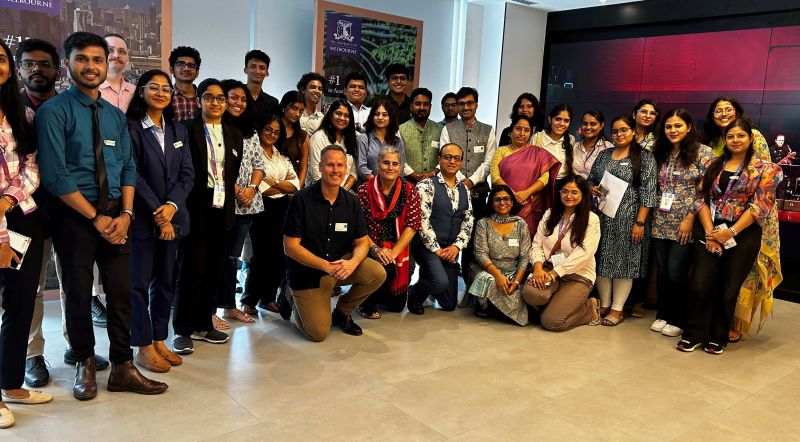
In September 2024, the University opened its inaugural Melbourne Global Centre in New Delhi, India. Between its launch and the end of the year, the centre hosted a range of sustainability-focused events. Key workshops included:
- Faculty of Science Food for a Healthy Planet workshop which coincided with the World Food India Conference in Delhi and explored the global agricultural, environmental and nutritional pressures facing the future of food.
- Four days of climate talks, play, storying, art and science at the Pluriversal Climate Futures Summit community engagement by the Faculty of Education’s SWISP Lab, resulting in the stories of over a hundred climate-impacted youths from India being presented at COP29 in Baku.
- Faculty of Education masterclass and roundtable - Connecting Globally: Australian and Indian schools collaborating around the United Nations Sustainable Development Goals.
- Faculty of Science roundtable on the Impact of Climate Change on Animal Health and Production.
The Global Centre provides a unique opportunity for our sustainability-focused activities to engage with an Indian audience.
Our sustainability strategy
At the University of Melbourne, our efforts in sustainability are guided by Sustainability Plan 2030 - a roadmap for sustainable delivery of our institutional strategy Advancing Melbourne.
Read more about how we are advancing sustainability at the University:
