2024 Sustainability Report
Campuses as living laboratories
Domain: Amplifying action through campus and communities
Aspiration to 2030: The University’s campuses and operations enable real-world opportunities to develop, test and apply sustainability skills and solutions.

What are Campus Living Laboratories?
In the University of Melbourne context, living laboratories are initiatives that leverage the environments of our campuses and precincts, both physical and virtual, as sites that enable sustainability research and applied learning in real-world settings by staff, students and partners. Potential sites include campus landscapes, buildings and infrastructure, data, systems and processes. Read more here.
Progress against targets
| Target | Target status | Progress in 2024 |
|---|---|---|
| The University has curated living labs covering the priority areas of this Plan. |  In progress | Piloted the Campus Living Lab Accelerator Program, with three Living Lab projects funded:
The Faculty of Business and Economics, Faculty of Medicine, Dentistry and Health Sciences, and Melbourne Law School are developing living labs specifically aligned with the goals of SP2030. The University’s Sustainability teams in Campus Management and Corporate Development collaborated with academics and students by giving guest lectures, tutorials and posing real world sustainability challenges in 25 subjects. |
Explore our progress
and our stories

Our progress
Campus Living Lab Accelerator Program
In 2024, a call for applications was issued for campus living lab initiatives. The Sustainability Strategy team offered up to $40,000 to be shared between three to five projects. The purpose of this Campus Living Lab Accelerator Program was to raise awareness of the potential for living labs, build relationships between academic and professional staff, and improve the University’s capability to purposefully increase living lab activity.
Three projects were supported:
- University of Melbourne Biodiversity Footprint, led by the Melbourne Biodiversity Institute, which used organisational data and innovative methodologies to estimate how the University’s operations impact biodiversity via its supply chain (see case study, below).
- Faungi Finder (Fauna+Fungi Finder), led by the Sustainability Delivery team, which is creating a digital interface to more effectively extract on-campus biodiversity data from public domain repositories such as the Atlas of Living Australia. This platform will enable the University to more effectively report against biodiversity targets and metrics, support campus-based teaching related to biodiversity surveys, and help land managers assess current biodiversity and the impact of citizen science initiatives.
- Dookie Materials Hub, led by the Faculty of Architecture, Building and Planning, in which the faculty is reviewing waste materials generated by the Dookie farm operations with a view to repurposing them into construction materials (see case study, below).
Our stories
Shaping the future of farming and energy: The Dookie agrivoltaics project
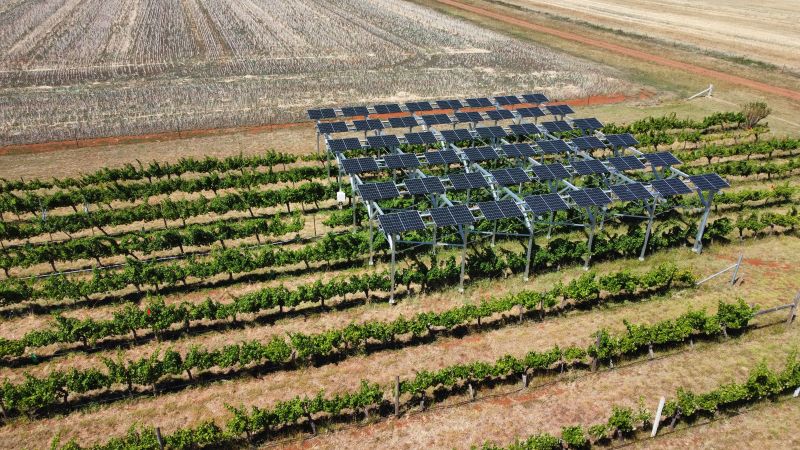
In 2024, the University of Melbourne launched Australia's first vineyard-integrated solar photovoltaic (PV) initiative at its Dookie campus. This groundbreaking project, a collaboration between the Property team and the School of Agriculture, Food, and Ecosystem Sciences, positions the University as a living laboratory for agrivoltaics (the dual use of land for solar energy production and agriculture) research.
The 20 kilowatt (kW) system, made up of 48 solar panels covering 270 square metres of the vineyard, was implemented to study the effects of solar panels on vine growth and productivity. This research could revolutionise land use practices across Australia, demonstrating how co-locating agriculture and solar energy can improve crop productivity, optimise water use, and enhance soil health.
Expected to generate 32 megawatt hours (MWh) annually, the system will cover the electricity demand of the Dookie Vineyard, reducing grid consumption and abating approximately 13 tonnes of carbon emissions per year. This project underscores the University's commitment to creating real-world impact through sustainable innovation and supporting new techniques for the integrated production of food and energy. Read more about the Dookie agrivoltaics project: Using sunshine twice: Is agrivoltaics a win-win for Australian farmers?
Mapping the University’s biodiversity impact

One of the first Campus Living Lab Accelerator Program grants was provided to the Melbourne Biodiversity Institute (MBI) to help support the Institute's work in developing biodiversity impact analysis tools for businesses and to understand how the University impacts nature through teaching, research, travel, investment, and campus administration and management. Understanding biodiversity impacts is critical to driving the University’s sustainability agenda and fulfilling our Nature Positive Pledge. MBI is developing tools that any university or other business can use and modify to analyse their own biodiversity impact. By making tools available and open source, the University aims to assist other Australian universities in assessing the impacts of their operations, and to promote consistency in nature impact reporting.
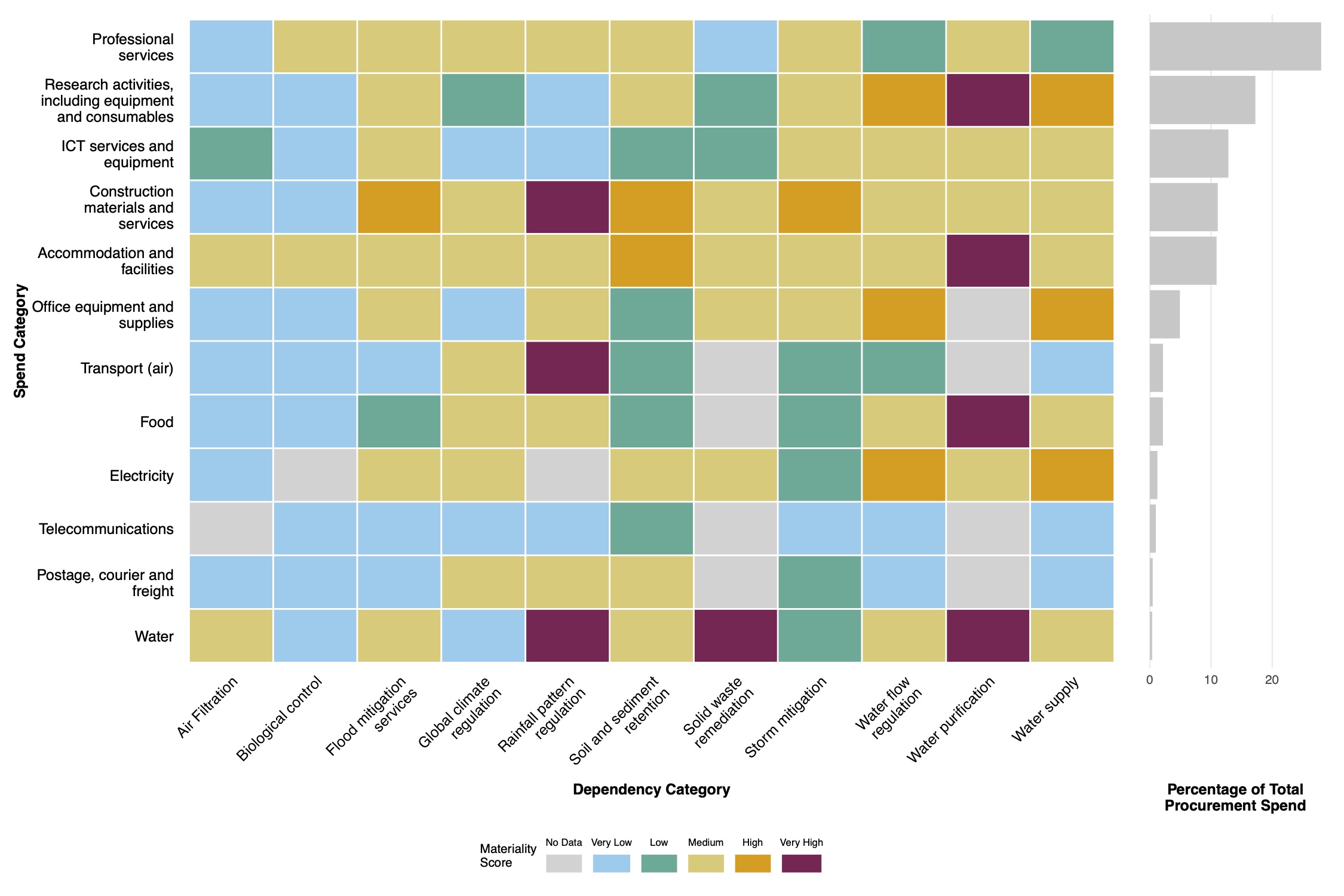
Tools we are developing will help organisations understand material pressures and impacts they have on nature in direct operations, supply chains, and other parts of their value chain. Importantly, these analyses enable businesses to identify where in their operations they most impact on nature and how those impacts can be avoided or minimised. Tools can also be used to measure and understand a business’ dependence on nature. For example, what commodities it used such as paper or clean water that might become unavailable or more expensive because of ecosystem loss or degradation.
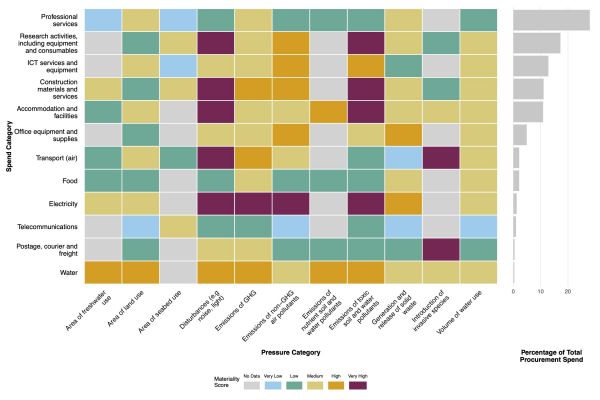
Biodiversity Pressure Heatmap
Biodiversity Dependency Heatmap
How does it work?
The University’s procurement data was mapped into the United Nations’ International Standard Industrial Classification of All Economic Activities. Once mapped, the Exploring Natural Capital Opportunities, Risks and Exposure (ENCORE) datasets were utilised to derive pressure and dependency materiality ratings for each of the economic activities, from Very High to Very Low. Seventy-seven economic activities were mapped initially, then condensed into a shorter list of key University operations for readability. The final heatmap shows areas with high pressure materiality and significant financial expenditure. There are a number of uncertainties in the current analyses that MBI continues to address in ongoing research on biodiversity impact and dependency analysis for businesses.
Closing waste loops at the Dookie Materials Hub
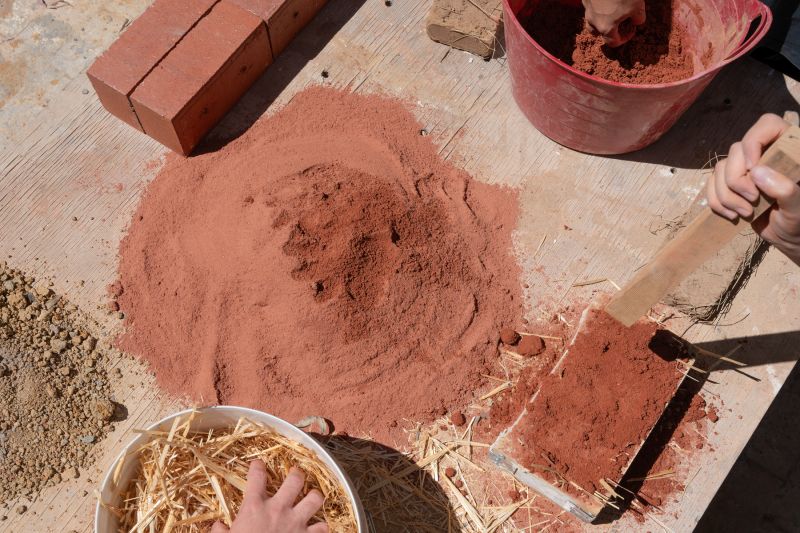
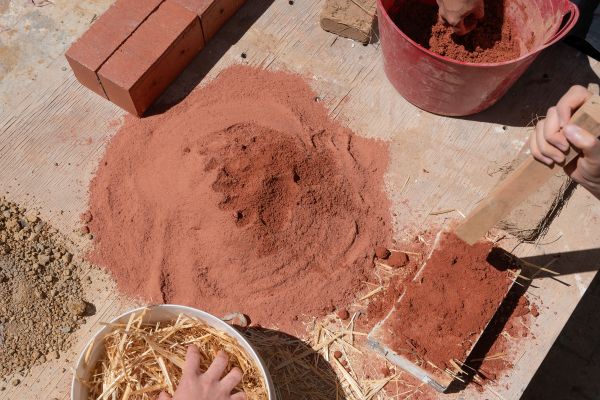
The Dookie Materials Hub is an initiative aimed at closing waste loops on campus by transforming agricultural and other campus-generated waste into low-carbon materials. This project supports sustainable material innovation while embedding hands-on sustainability education into research and practice.
The first phase, set for completion in mid-2025, focuses on mapping waste streams, student-led prototyping, and testing biomaterials such as straw-based composites and unfired earth blocks. A ‘solar press’ is being developed for decentralised soft plastic recycling, addressing key waste streams like silage stretch film and hay bale netting generated from the temporary storage of crops harvested during the summer months.
By leveraging existing agricultural waste streams and developing innovative material solutions, the project aims to establish a closed-loop system that reduces reliance on virgin materials and minimises waste. Aligned with the University’s Sustainability Plan 2030, this initiative promotes climate leadership, circular economies, and sustainability education.
Our sustainability strategy
At the University of Melbourne, our efforts in sustainability are guided by Sustainability Plan 2030 - a roadmap for sustainable delivery of our institutional strategy Advancing Melbourne.
Read more about how we are advancing sustainability at the University:
