2025 Sustainability Report
Healthy ecosystems
DOMAIN: Walking the talk in our operations
Aspiration to 2030: The University’s campuses support a diverse range of species through healthy ecosystems on campus and connections to ecosystems off campus.

Progress against targets
| Target | Target status | Progress in 2025 |
|---|---|---|
| Each campus achieves no net loss of biodiversity relative to defined baseline years by 2025. |  | Biodiversity monitoring shows mixed results across campuses, with many metrics demonstrating ‘net gain’ in biodiversity, but with not enough consistency to fully meet the 2025 target. |
| Each campus achieves an increase of biodiversity relative to defined baseline years by 2030. |  | The University is reviewing its Healthy Ecosystems targets for 2030 as part of the broader Sustainability Plan 2030 refresh in 2026. |
Our progress
Biodiversity baseline metrics
In 2025, efforts under Healthy Ecosystems focused on comparing current state of biodiversity metrics to their respective baseline years, to evaluate how the University is tracking against its target to achieve a net gain in biodiversity by 2030, and planting trees at our rural campuses to work towards a net gain in the number of trees. One hundred and fifty-five trees were planted across the Dookie, Creswick and Shepparton campuses.
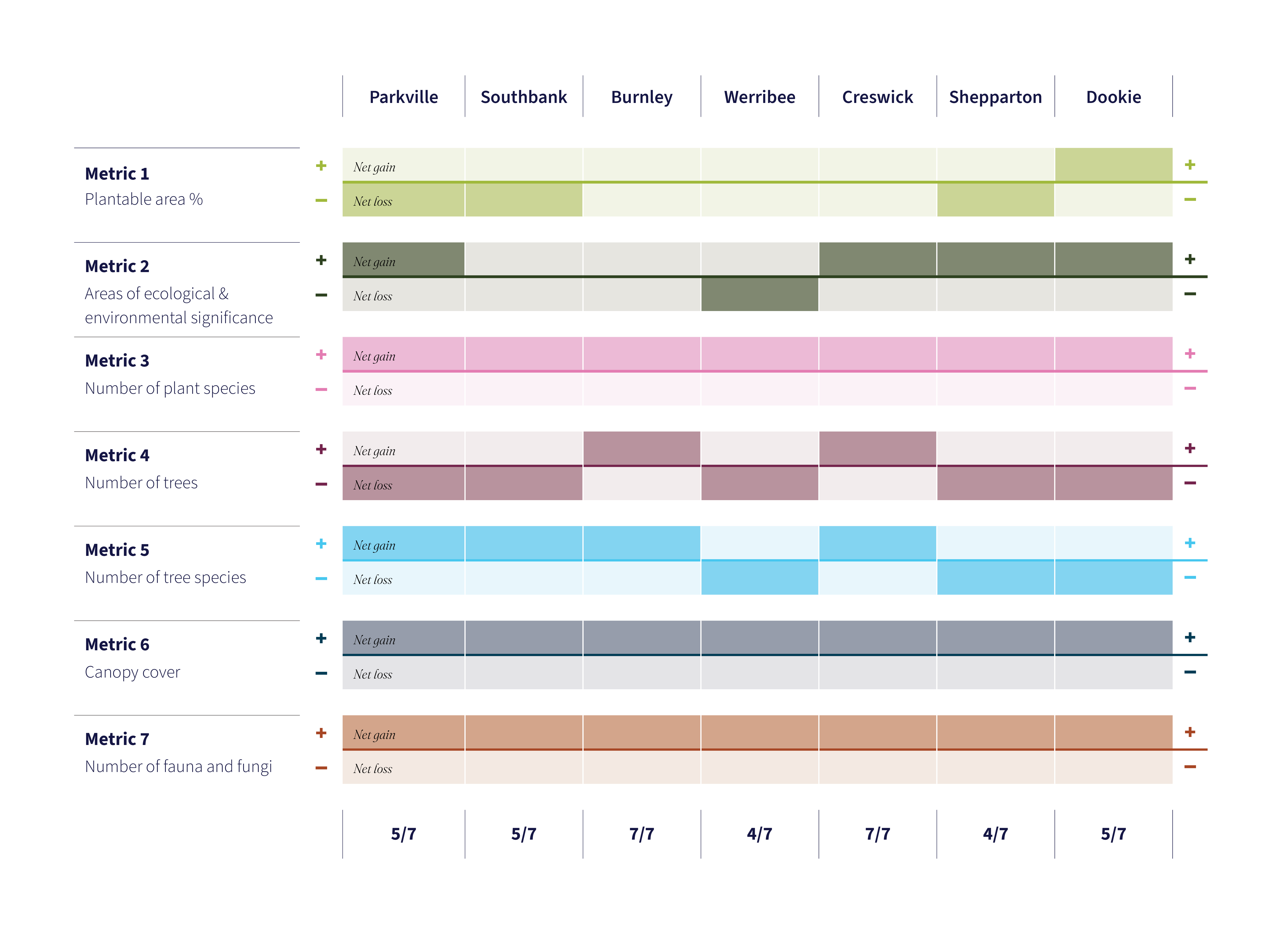
From 2019-2024, the University gathered a significant volume of data to baseline seven biodiversity metrics across all its campuses under the Biodiversity Baseline Data Project. Overall, of the 49 data points (seven metrics across seven campuses), results show that 32 are predicted to incur ‘net gain’; 5 ‘no net loss’ and 12 ‘net loss’ (see table below).
The University's performance on seven key biodiversity metrics
Click here to see data table of dataset used above
Areas of focus for future efforts
Several metrics narrowly meet the criteria for ‘net gain’ (eg by as little as one tree under Metric (4) Number of Trees on one campus) and require efforts in future to ensure that performance does not move backwards in these areas. In some metrics, especially Metric (4), there is ‘net loss’ across the University’s seven campuses – see the case study below for more information. This will require monitoring in future to ensure progress is not lost.
Current estimates show a net gain across two key metrics (Metric 6: Canopy Cover and Metric 7: Number of Fauna & Fungi Species) – exceeding the ‘no net loss’ target. There are mixed results across campuses for the remaining five metrics. For example, Metric (4) did not achieve a net gain across all campuses, despite tree planting efforts on the Creswick, Dookie and Shepparton campuses. Size of remnant vegetation at Dookie and Creswick has been measured under Metric (1) Plantable area. The approach for measuring the health and diversity of remnant vegetation has been developed and trialled but has not yet been formally adopted.
The University will need to do more to maintain and enhance biodiversity on its campuses in future. Biodiversity targets will be reviewed during the refresh of Sustainability Plan 2030 in 2026.
Our stories
Understanding tree growth and loss across campuses
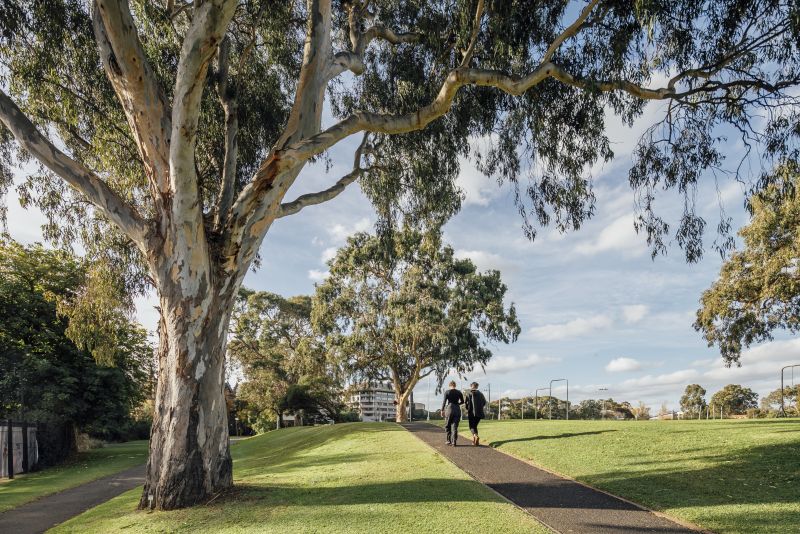
In 2025, the University undertook a comparative analysis of tree numbers across its campuses. The number of trees on each campus recorded in baseline years (see table below) under Metric 4: Number of Trees in the Biodiversity Baseline Data Project was compared with the University’s current tree inventory. Records for more than 12,000 trees were analysed, enabling the University to compare the number of trees with its baseline value as accurately as possible, while improving the accuracy and usability of the University’s current tree management system.
The Burnley and Creswick campuses achieved a net gain in number of trees. Burnley campus achieved this due to minimal tree removals. Although Creswick campus achieved a net gain of 726 trees, only 63 of these were deliberately planted since 2016. Other new trees had self-seeded, including weed species such as Pinus radiata and Arbutus uendo. Dominance of weeds in less frequently maintained areas on campus is a growing concern, with native species facing increasing competition. The University will continue to monitor the growth of weed species on the Creswick campus and may undertake supplemental planting to maintain a ‘net gain’ status for the number of trees.
Parkville campus recorded a large net loss of trees, mostly due to trees being removed during estate development projects. In order to ensure Parkville increases its number of trees, future developments will need to include provisions for new trees to be planted. The University’s Design Standards now require all University developments to conduct a Biodiversity Assessment and, if required, a Biodiversity Offset Proposal to address biodiversity issues.
Metric 4: Number of trees - comparative analysis across campuses
| Campus | Baseline year | Baseline value | 2025 value | Net result |
|---|---|---|---|---|
Parkville | c.2004 | 2802 | 2240 | -20% |
Southbank | 2016 | 159 | 146 | -8.5% |
Burnley | 2016 | 777 | 785 | +1% |
Werribee | 2016 | 2027 | 1840 | -9% |
Creswick | 2016 | 1951 | 2677 | +37.1% |
Shepparton | 2010 | 228 | 227 | -0.5% |
Dookie | 2016 | 2974 | 2753 | -7.5% |
Community planting on the Dookie campus
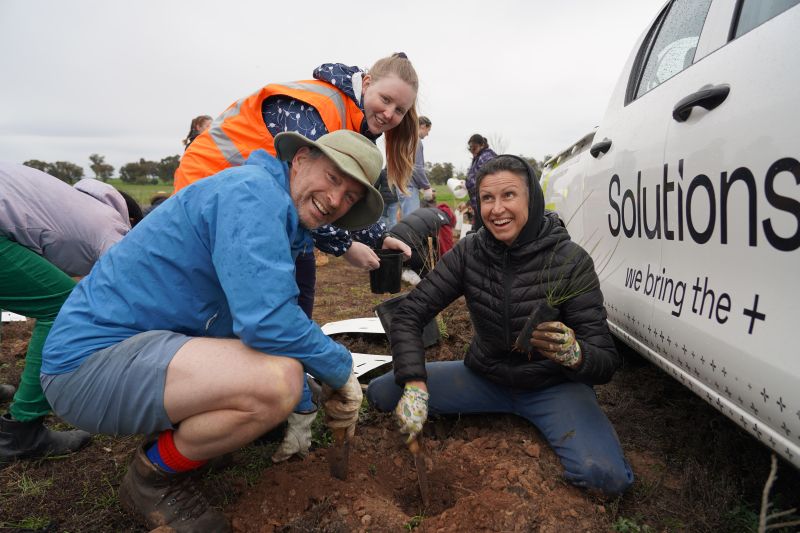
In August 2025, the University ran a community planting day at the Dookie campus. A total of 79 volunteers attended the event, consisting of staff, students and community members. Volunteers planted, staked, mulched and watered approximately 140 tube stock into a new shelterbelt. Species planted were locally indigenous and selected for their future resilience to increasing temperatures.
Students measure bushland vegetation on the Dookie and Creswick campuses
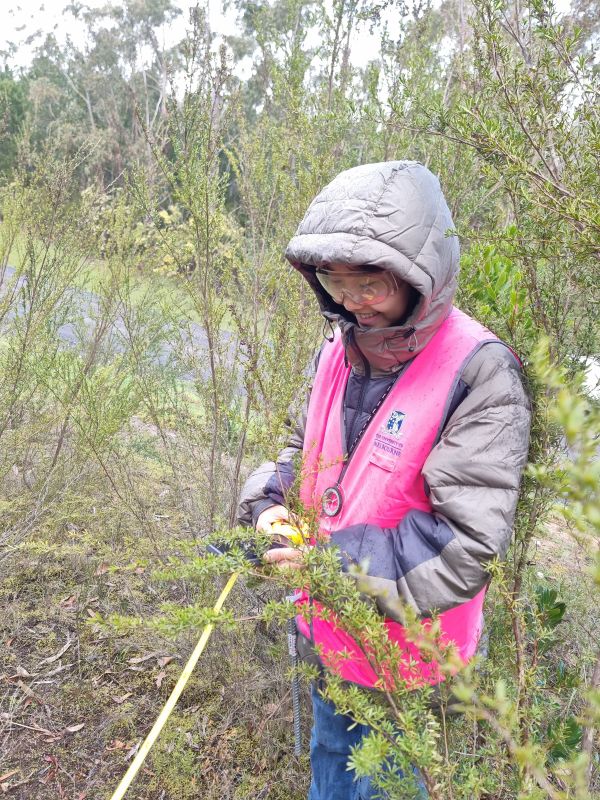
In 2025, a flora baseline was established on the Dookie campus for a patch of semi-remnant vegetation, in collaboration with the subject NRMT10007: Land Resources and Management. Twelve students collected species data along twelve 50-metre transects, collecting data which will enable evaluation of weed control measures in the area.
Building on the methodology established during this project, students from the Master of Environmental Science in EVSC90036/7: Industry Project in Environmental Science gathered data to establish a baseline for the size, health and diversity of two patches of vegetation at the Creswick campus. The students designed and tested a methodology to measure vegetation which would be repeated by future student groups to assist in the ongoing monitoring of these and other vegetation patches within the University’s estate. Students' findings supported initial observations and found that the identified patches of vegetation had a high degree of weediness and that carefully planned weed removal activities would be required to achieve a reduction in the volume and diversity of weed species present on site, as well as an increase in native and indigenous species diversity.
Our sustainability strategy
At the University of Melbourne, our efforts in sustainability are guided by Sustainability Plan 2030 - a roadmap for sustainable delivery of the University's Strategy 2030: Resilience.
Read more about how we are advancing sustainability at the University:
