2025 Sustainability Report
Climate resilience
Domain: Walking the talk in our operations
Aspiration to 2030: Our campuses and operations enable the University community, and the broader communities we are part of, to become more resilient to the impacts of climate change.
Progress against targets
| Target | Target status | Progress in 2025 |
|---|---|---|
| The University reaches and maintains a 'high' climate change preparedness level. |  | Climate change preparedness has improved compared with 2022, however the University has not yet reached the target of a ‘high’ climate change preparedness level. A key focus to reach a ‘high’ preparedness level includes improvements to the University’s climate-related risk management and financial planning and reporting processes. This will also help prepare the University to voluntarily report in line with the Australian Sustainability Reporting Standards (ASRS) in future. |
Our progress
Assessing climate change preparedness
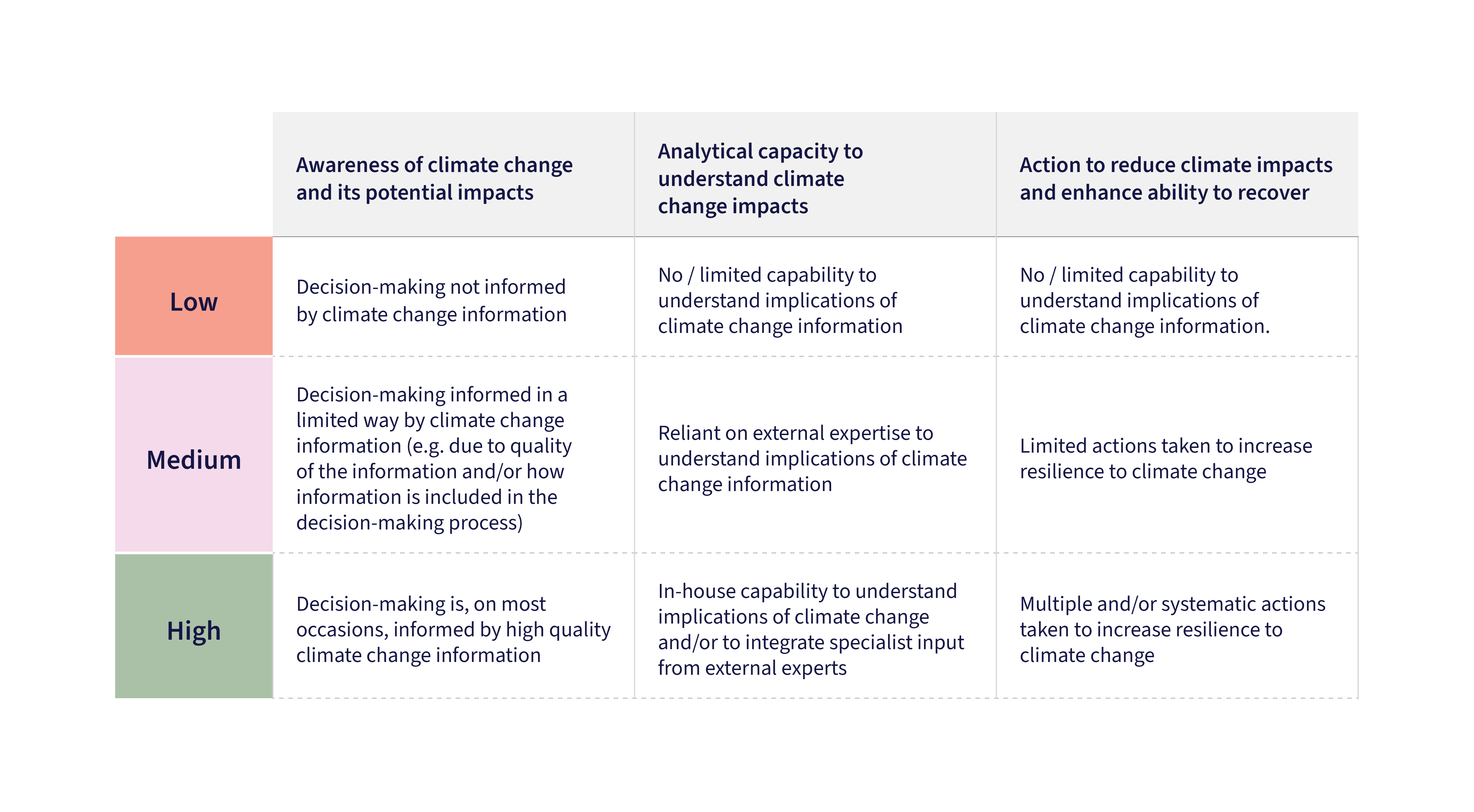
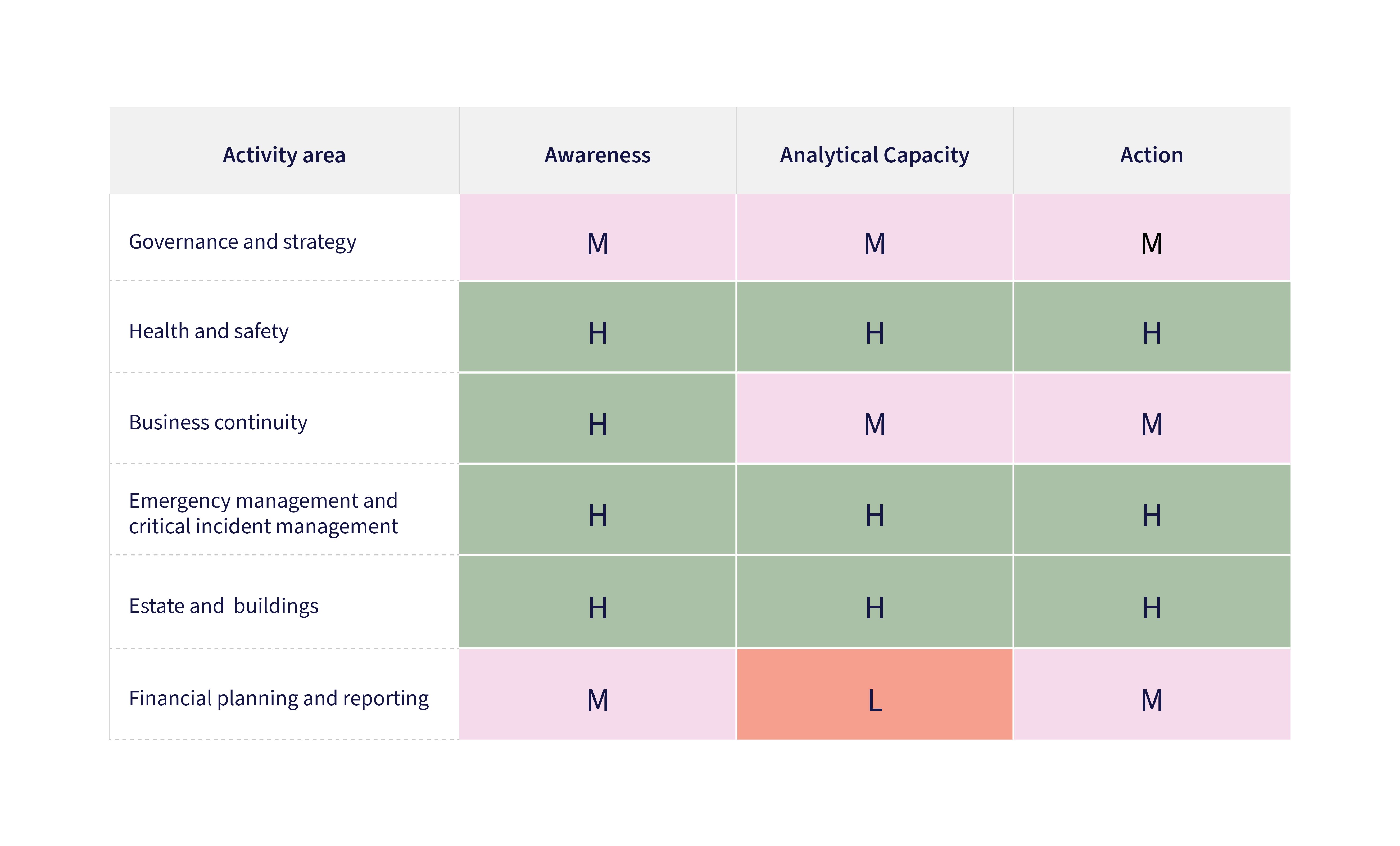
The University assesses its progress towards being climate resilient using a Climate Change Preparedness Framework. The assessment examines climate change preparedness in terms of awareness of climate change and its potential impacts; analytical capacity to understand climate change impacts; and action to reduce climate impacts and enhance ability to recover. The assessment focuses on six functions within the University: governance and strategy; health and safety; business continuity; emergency management and critical incident management; estate and buildings; and financial planning and reporting.
The framework has been applied since 2023 and reassessed annually in 2024 and 2025. Since the initial assessment, the University’s level of climate preparedness increased particularly in estate and buildings and financial planning and reporting functions. The level of preparedness in 2025 maintained from its 2024 level across all key functions of the framework. This has resulted in the University’s climate change preparedness level remaining steady at a ‘medium’ level of preparedness. Results of the assessment are presented below, along with notes on each University function assessed.
The University recognises the need to continue to implement measures to address its climate resilience in future, in light of the physical and transition risks for its campuses and communities as a result of climate change. Climate resilience targets will be reviewed during the refresh of Sustainability Plan 2030 in 2026.
Climate Change Preparedness Framework
Climate change preparedness assessment for 2025
-
Sustainability and climate change risk are recognised at an institutional level via the University Risk Register. University Council and its Audit and Risk Committee have oversight of the University’s management of climate change risk. At a management level, the risk register is reviewed by the University Executive’s Risk Management and Compliance Committee. The Chief Operating Officer is the risk owner. Day-to-day responsibility for identifying and managing climate-related risks and opportunities sits with the leadership of various teams, as outlined for the business functions below. Senior leadership of the University is also made aware of climate change-related risks and opportunities via the University’s annual Environmental Scan, which is part of the University’s high-level strategic and business planning cycle.
-
As the impacts of climate change continue to influence longer, hotter summer fire seasons, and more unpredictable, dangerous fire behaviour, in partnership with the Country Fire Authority, the Bushfire Safety for Workers module has been made available to all staff and students through the TrainMe learning management system.
Since its introduction in late 2024, members of the University community have enrolled to learn more about staying safe during the Victorian fire danger period, and in the event they are threatened by fire. Most participants are those living, working, studying or travelling through high-risk areas. The module enhances the University’s climate resilience by ensuring those who face heightened risk have easy access to an educational resource designed to increase their awareness, preparedness and resilience in the event of fire emergencies which continue to worsen with the effects of climate change. -
The Business Continuity Management program has continued to expand and advance across the University’s portfolios, Faculties, schools, departments and sites. Where applicable, consideration of disruptive impacts of natural hazards and disasters including bushfire, flood and severe weather (storm, wind, lightning etc) has become a standard practice in the development of business continuity plans, thereby enhancing organisational preparedness and resilience.
-
The University applies Australian Standard 3745 (a framework for planning and responding to emergencies in workplaces) to ensure robust emergency preparedness across all campuses. It conducts emergency drills across all buildings and sites to ensure efficacy of occupant emergency response and building emergency infrastructure. Where appropriate, drill and exercise scenarios continue to address potential extreme weather events and natural hazards such as bushfire, heatwave and storm. Ongoing reviews of campus Emergency Management Plans for University locations identified as facing elevated risk (Point Nepean, Shepparton, Creswick) continue to incorporate responses to worsening natural hazards driven by the increasing impacts of climate change.
To address significant disruptive events, the University also maintains a Critical Incident Management Framework (CIMF), supported by a Critical Incident Management team (CIMT) of over 150 members. The team’s capacity to manage the impacts of climate change-driven natural hazards on University operations is a key consideration in planning the annual program of training and exercising.
In 2025, preparedness activities included an exercise involving response to a day of ‘Extreme’ fire danger and a large bushfire threatening the Creswick campus, which followed an information session regarding fire risk and behaviour delivered by discipline expert Professor Trent Penman – Professor in Bushfire Behaviour and Management in the Faculty of Science.
-
The University’s insurers, FM Global, review natural hazard risks as part of regular inspections of each campus. The most recent insurer’s report on climate resilience was received in May 2025.
Climate change risk assessments are required for major projects under the University's building design standards in accordance with AS5334 Climate change adaptation for settlements and infrastructure. Unacceptable risks are managed through design and operational activities. Additionally, the University commissioned a comprehensive Climate Change Adaptation Plan and Microclimate Analysis Report from AECOM. These studies identify risk profiles and overview the external climate conditions and potential investment opportunities across all six University campuses. Together, they inform medium and long-term planning and ensure that priority adaptation actions are integrated into the design and development of critical facilities. The University also contributed to sector development by contributing a case study to a guide published by the UK-based Association of University Directors of Estates.
-
Currently, the University is not required to comply with the Australian Sustainability Reporting Standards because it is registered as a charity with financial reporting obligations under Victorian legislation rather than Section M of the Corporations Act.
In 2024 and 2025, the University contributed to sector efforts as a member of a Climate Change Scenario Working Group coordinated by member-based organisation Australasian Campuses Towards Sustainability. This working group released a set of sector-wide climate change scenarios in June 2025 which universities can use to explore the resilience of their strategies and practices to climate change. The University is currently assessing the application of these working group scenarios to its own specific context and processes.
Our stories
Flashover – capturing the intensity of the Black Summer bushfires
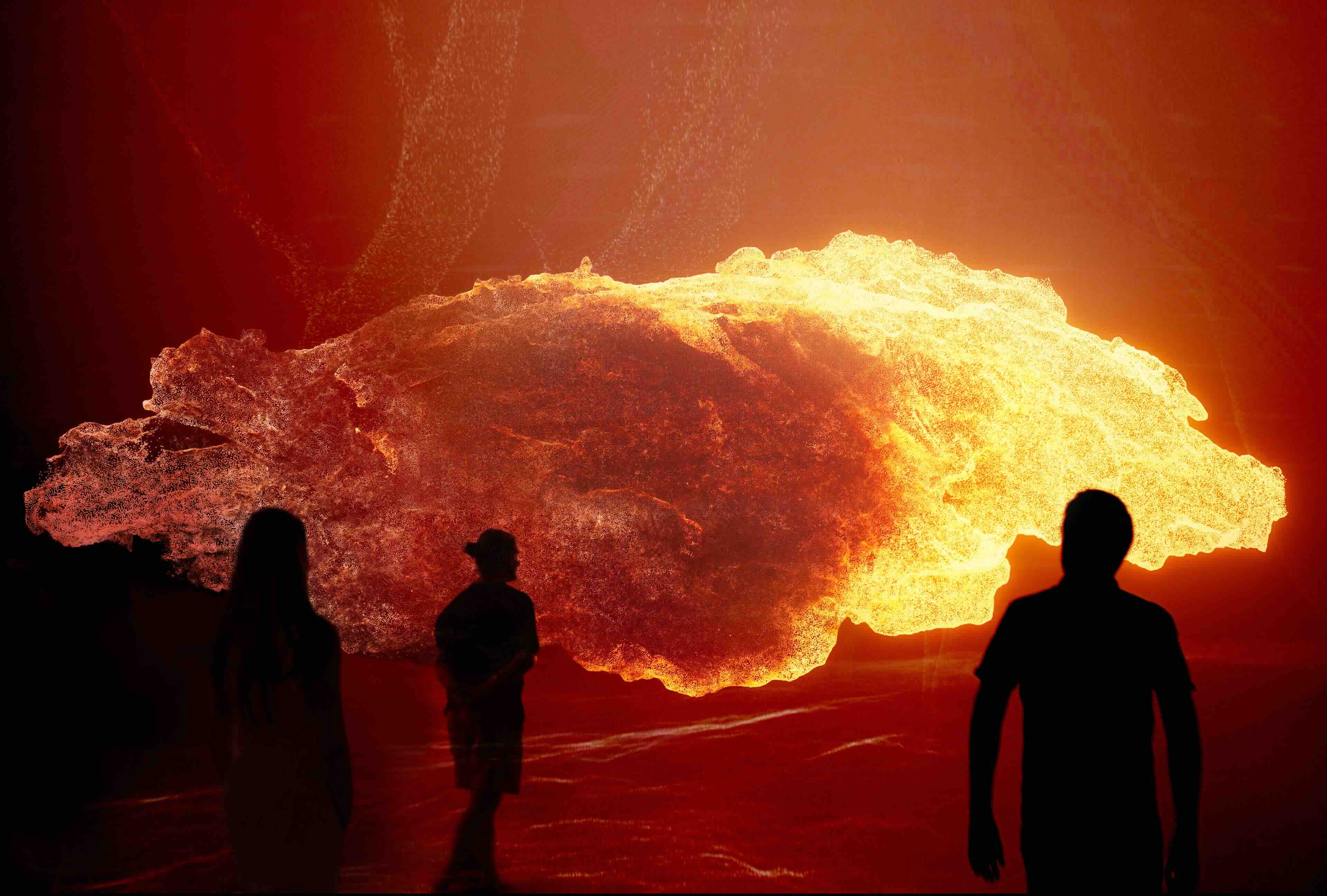
In 2025, Dr Robert Walton and Dr Phillip Wilkinson from the Faculty of Fine Arts and Music and visual artist Dr CJ Taylor developed Flashover, a monumental, immersive media artwork that reimagines the devastating force of the Black Summer fires, based on a volunteer firefighter’s real-life experiences. It combined cutting-edge photography, animation, and immersive sound techniques to represent the unphotographable experience of living through a flashover — an inundating fire front sweeping across the landscape, razing everything in its path. Flashover received wide media coverage including on the ABC's 730 Program.
Our sustainability strategy
At the University of Melbourne, our efforts in sustainability are guided by Sustainability Plan 2030 - a roadmap for sustainable delivery of the University's Strategy 2030: Resilience.
Read more about how we are advancing sustainability at the University:
