2025 Sustainability Report
Engagement and partnerships
Domain: Mobilising knowledge for action
Aspiration to 2030: Our partners, collaborators and associated stakeholders have increased their sustainability performance through meaningful engagement and partnerships with the University.

Progress against targets
| Target | Target status | Progress in 2025 |
|---|---|---|
| The University’s community partnerships demonstrate localised and co-created approaches to sustainability. |  | Grounded in local collaboration and partnerships, the University’s civic and community initiatives respond to and address key issues identified by communities, including food security and waste reduction. |
| The University has led or influenced discussions with precinct partners to further precinct-specific approaches to sustainability. | | Sustainability is integrated into several of the University’s precinct-based partnerships. |
| The University plays a leading and convening role on sustainability challenges and opportunities internationally, with particular focus on vulnerable and disadvantaged people in Asia and the Pacific. | | Throughout 2025, the University continued to strengthen its engagement with institutions and communities in the Pacific. |
Our progress
Collaboration with community partners
Sustainability is an important feature of the University’s collaboration with its community, precinct and international partners.
The University’s civic and community initiatives respond to and address key issues identified by communities. In 2025, this included co-leading a five-year collective action initiative to address food security challenges in Carlton, co-designing and evaluating programs with residents and local organisations. The Melbourne Social Equity Institute co-leads the Melbourne Social Innovation Alliance with STREAT and RMIT, to scale and facilitate food security and circular retail and repair at our campuses. The University also supported a regional transition from short-term food relief to long-term food sovereignty in the Goulburn Valley through research, student engagement and systems-level partnerships.
Sustainability in precinct partnerships
In 2025, the University facilitated and participated in sustainability workshops and ongoing coordination with purpose-built student accommodation (PBSA) partners, driving progress on key topics such as organics diversion, general waste and recycling improvements, resident engagement programs, utilities monitoring and reduction initiatives. It also established a formal Sustainability Working Group framework to align PBSA partners with broader University sustainability goals.
Sustainability and climate are woven through regular engagement activities at Melbourne Connect. In 2025, Melbourne Connect hosted The Future of series, which included sustainability as one of its focus topics.
Faculties have also worked closely with various precinct partners to advance sustainability. For example, the Faculty of Fine Arts and Music works closely with Melbourne Arts Precinct Corporation and the City of Melbourne on opportunities for improved sustainability for the area. This includes collaboration on the Dodds Street re-development to deliver a linear park that runs through the Southbank campus creating green space, while connecting the University with other creative institutions. The project created approximately 1,300 square metres of native grassland planting and added 34 new trees, including wildflower meadows and gum trees.
Working with Pacific Island nations and closer to home
Throughout 2025, the University continued to strengthen its engagement with institutions and communities in the Pacific, drawing on the expertise and focus of leading initiatives such as the Oceania Institute and Melbourne Climate Futures. The University delivered the Asia and the Pacific Outlook Series in Honiara, the Oceania Institute Conversations series in Melbourne and the inaugural Oceania Oration delivered by The Honourable Professor Biman Prasad, Deputy Prime Minister of Fiji. The Australia India Institute released ‘Towards the SDGs, a landmark analysis examining bilateral research partnerships through the lens of the United Nations Sustainable Development Goals (SDGs)’. The University continued to support the Reach Alliance, a global research network committed to advancing the United Nations SDGs via student-led, field-based research. In 2025, students spent five days with the Kowanyama community in Far North Queensland examining the impact of a community-driven teacher retention program.
Our stories
Culturally responsive food systems in the Goulburn Valley
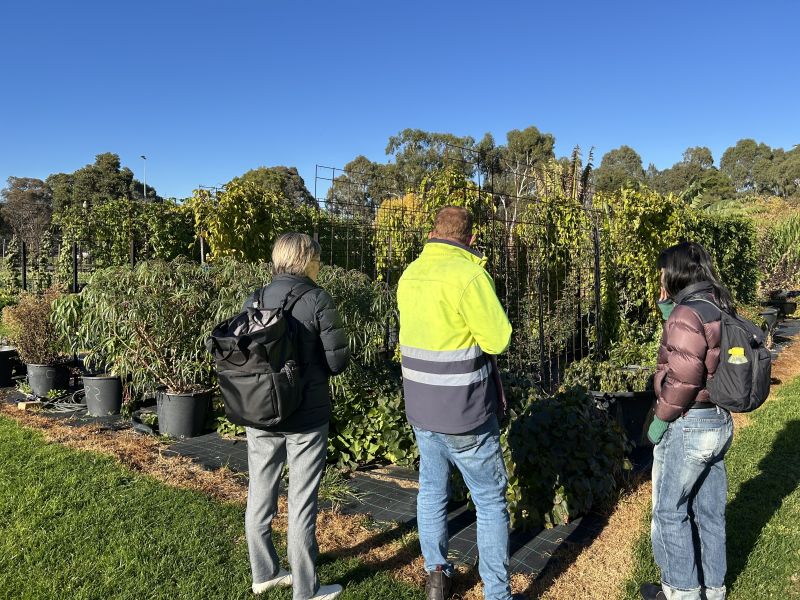
The University is supporting a regional transition from short-term food relief to long-term food sovereignty in the Goulburn Valley through research, student engagement and systems-level partnerships. Two student interns undertook applied research mapping culturally familiar fruits and vegetables preferred by multicultural communities and assessing what could be realistically grown locally, generating evidence-based recommendations for regional food production.
Building on this work, the University has contributed to the Community Food Bowl Framework, supported joint research development with the Goulburn Valley Public Health Unit, and assisted Greater Shepparton City Council’s VicHealth grant bid – including participation in project governance. The Culture, Place and Table initiative addresses structural gaps in food systems by investing in middle infrastructure, strengthening culturally responsive food markets and transferring decision-making authority to community-led governance structures.
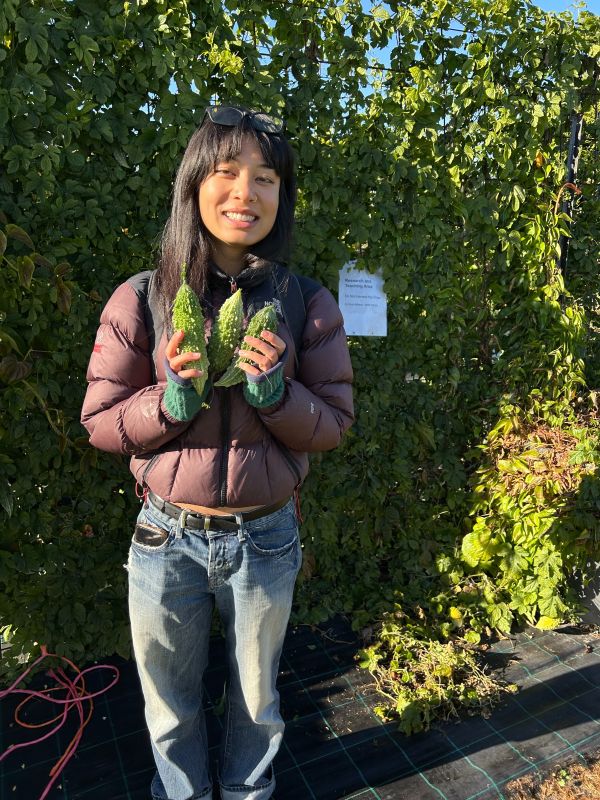
This work aligns with various United Nations Sustainable Development Goals (SDGs): SDG 2 (Zero Hunger); SDG 10 (Reduced Inequalities); SDG 11 (Sustainable Cities and Communities); SDG 12 (Responsible Consumption and Production); and SDG 17 (Partnerships for the Goals). These collaborative programs link research, partnerships, governance and regional capability to long-term social, economic and cultural resilience.
National Reconciliation Week 2025: Partnering for Country and community
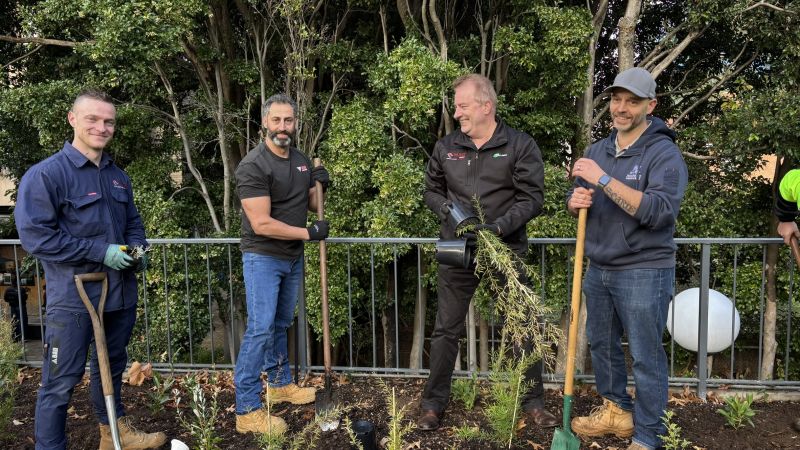
In May 2025, more than 50 Campus Operations and Delivery staff and contractors, including AG Coombs, Nuvo, Reliable Plumbing, Controltech, Landscape Solutions and ISS, came together to mark National Reconciliation Week at the Parkville campus. Participants planted over 400 native species on the South Lawn, including a Manna Gum, a tree traditionally used in smoking ceremonies. The initiative was strengthened through the support of business partners, who either contributed time to deliver the event or donated to the Indigenous Literacy Foundation. These contributions helped support access to culturally relevant books and learning resources for First Nations communities, extending the event’s social impact beyond the University’s campuses.
Strengthening Australia’s sustainability collaboration with India
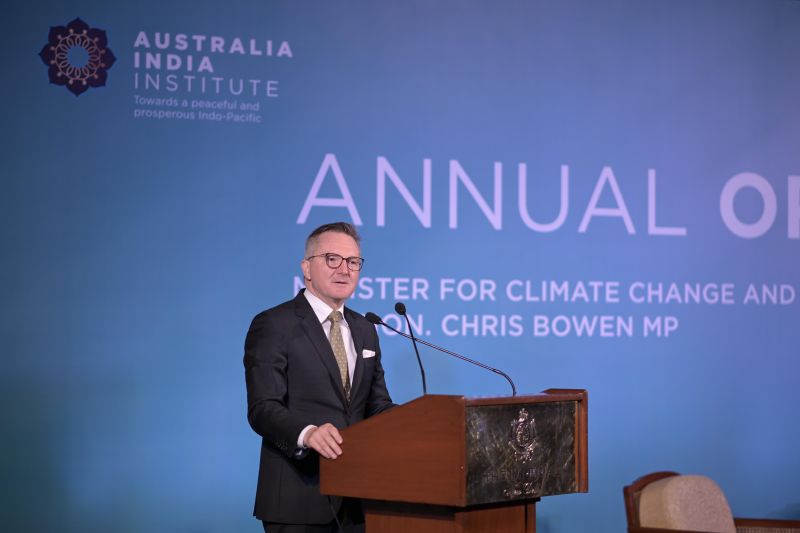
The University, through its wider academic network, has strengthened Australia–India collaboration in sustainability, climate action, and food security. In 2025, the Australia India Institute, of which the University of Melbourne is a founding partner, released Towards the SDGs, a landmark analysis examining bilateral research partnerships through the lens of the United Nations Sustainable Development Goals (SDGs). The report maps joint research outputs since 2015, highlighting areas of strong cooperation, emerging priorities, and opportunities to deepen alignment with both countries’ sustainable development commitments. It highlights the critical role of collaborative research in advancing SDG-related outcomes and guiding more impactful future partnerships.
Australia’s Minister for Climate Change and Energy the Hon Chris Bowen MP delivered the 2025 Australia India Institute oration during an official visit to India. Emphasising the urgency of the global energy transition, he framed Australia and India as essential partners in driving climate action. His remarks followed the launch of the elevated India-Australia Renewable Energy Partnership, signalling a deepening of bilateral cooperation on clean energy and climate ambition.
The Melbourne Global Centre in Delhi hosted key events in Australia-India sustainability engagement, including a major roundtable led by Faculty of Science experts on climate adaptation, mitigation and food security. With global food demand projected to rise dramatically by mid-century, the seminar, delivered in partnership with OP Jindal School of Environment and Sustainability, brought leading researchers together at the Centre in Delhi to share knowledge and develop strategies addressing environmental sustainability and agricultural resilience.
Research Partnerships for Sustainable Development in Indonesia - PAIRPA
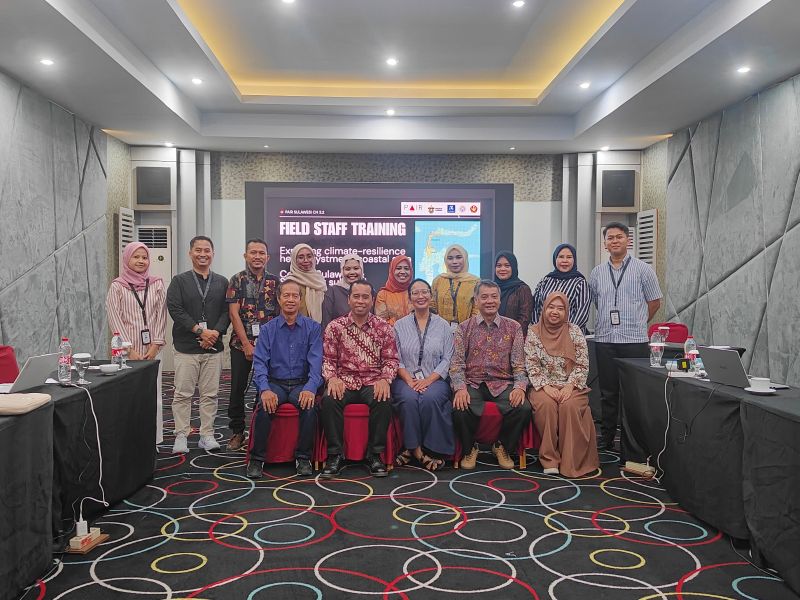
The Partnership for Australia–Indonesia Research (PAIR) is the Australia-Indonesia Centre’s flagship research-to-policy program, designed to strengthen collaborative responses to real world challenges that affect daily life. Through PAIR, University researchers work alongside Indonesian and Australian universities and government partners to generate evidence that informs policy and improves community outcomes.
In 2025, the University contributed to six projects within the PAIR Sulawesi program, funded by the Australian Department of Foreign Affairs and Trade, Indonesia’s Ministry of Higher Education, Science and Technology, and the Indonesia Endowment Fund for Education. These projects address interconnected issues spanning climate change, public health and the transition to a circular economy.
University researchers support this work across multiple domains: reducing single‑use plastic waste in healthcare settings; assessing climate and health risks in vulnerable coastal communities; understanding resilience within local health systems; and developing the infrastructure and regulatory frameworks required to transition community health centres (Puskesmas) to net zero. Additional research examines blended financing and procurement approaches to support sustainable healthcare transitions.
Together, these projects demonstrate how research partnerships can strengthen local capacity, inform national policy conversations, and accelerate progress towards climate resilience and sustainable development across Indonesia’s diverse regions.
Embedded global student experiences: Reach Alliance
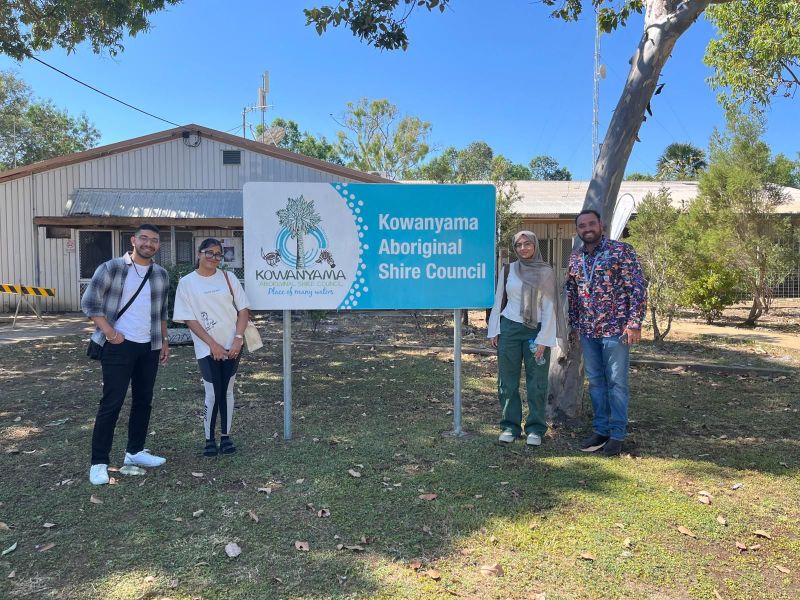
The Reach Alliance is a global research network committed to advancing the United Nations SDGs by supporting student-led, field-based research in ‘hard-to-reach’ communities around the world. Through targeted, community-engaged research, Reach enables teams of students to investigate locally driven solutions to pressing global challenges, with a strong focus on social, economic and environmental sustainability. By sharing findings across its international network, Reach contributes to the development of innovative, scalable strategies that support long-term, sustainable outcomes for communities.
In 2025, the University's Reach students spent five days with the Kowanyama community in Far North Queensland as part of their field research. Students examined the impact of the Kowie Card program, a community-driven initiative aimed at retaining teachers in remote Indigenous communities. The students conducted focus group interviews with teachers, school leaders and council members and presented their findings at the global Reach symposium in Singapore in November 2025.
Community food security partnership in Carlton
Through the Carlton Collaboration Partnership, the University is a partner in the Carlton Food Security Project, a collective action initiative addressing local neighbourhood priorities. Working through the Carlton Community Network, which includes the City of Melbourne, RMIT and over 35 local not-for-profit organisations, the project responds to food insecurity in the Carlton neighbourhood through community-led design, lived-experience participation and coordinated local action.
Community workshops held in 2025 enabled the group to collaborate and activate a multi-year action plan with working groups focusing on immediate food relief, shared advocacy and longer-term systems change. The University’s role involved convening, enabling shared ownership, supporting governance development, and embedding evaluation and documentation to strengthen collective impact. University students, including Narrm Scholars, academics and staff, actively contributed to this partnership program.
Driving sustainable healthcare with health service partners
The Melbourne Medical School (MMS, within the Faculty of Medicine, Dentistry and Health Sciences) works with health service partners to support sustainability progress. The MMS Sustainable Healthcare team leads the University’s Health Service Environmental Sustainability Competition, which encourages healthcare staff to develop quality improvement projects that reduce environmental impact while maintaining or improving patient care.
The competition began in 2022 with the Royal Melbourne Hospital and expanded from 2023 to include Peter MacCallum Cancer Centre and the Royal Women’s Hospital. Over three years, staff led 44 sustainability-focused projects, with cumulative financial and carbon savings amounting to approximately $2.1 million, 2700 tonnes of carbon dioxide equivalent (tCO2e), 4.7 tonnes of waste diverted and 810,000 items kept from landfill. The Royal Melbourne Hospital Pharmacy was also awarded Best Clinical Change Project, for their initiative to reduce the unnecessary use of intravenous fluid bags. Their interventions resulted in savings of over $470,000 and 26 tCO2e.
In 2025 the competition grew to encompass eight university-affiliated health services. Participants are undertaking over 40 projects, many focused on reducing healthcare waste through improved segregation, enhanced recycling or reducing single-use items. Competition participants attended a full-day Sustainability in Quality Improvement (SusQI) workshop led by the MMS Sustainable Healthcare team. This hands-on workshop integrated sustainability into quality improvement methods, equipping participants with the tools and knowledge necessary to develop their ideas into high-impact sustainability projects. The competition was nominated for a Climate and Health Alliance Award 2025 and an MDHS Staff Excellence Award 2025. Read more about the competition on the MMS website.
Melbourne Climate Futures deepens relationships with intergovernmental and Indo-Pacific partners
Australia Awards Fellowship
Melbourne Climate Futures’ capability-building Australia Awards Fellowship program concluded its second round in Samoa in March 2025, and successfully bid to receive a third round of over $500,000 in funding from the Department of Foreign Affairs and Trade, commencing in early 2026. The third round will enhance climate, energy and health resilience, with a broader scope to encompass 15 policymakers from Caribbean, as well as Pacific, small island developing states.
Intergovernmental Panel on Climate Change Seventh Assessment Report
The Intergovernmental Panel on Climate Change announced its Seventh Assessment Report author list, with University researchers contributing to all three Working Groups. Former MCF Director Professor Jacqueline Peel is the coordinating lead author of the Policies and Governance, and International Cooperation chapter of Working Group III, while MCF Deputy Director Kathryn Bowen is a lead author on the Working Group II report on Impacts, Adaptation and Vulnerability. They will contribute alongside five other researchers from the Melbourne Climate Futures Research Cluster and other University academics.
COP30
An expert group of University researchers spanning several disciplines attended the United Nations Conferences of the Parties (COP30) in Belém, Brazil to provide advice and guidance to global representatives. A number of the delegates presented official side events, intended to inform policymakers on tangible means of progressing climate action in their specialised fields.
Our sustainability strategy
At the University of Melbourne, our efforts in sustainability are guided by Sustainability Plan 2030 - a roadmap for sustainable delivery of the University's Strategy 2030: Resilience.
Read more about how we are advancing sustainability at the University:
