2025 Sustainability Report
Community of sustainability learners and practitioners
Domain: Amplifying action through campus and communities
Aspiration to 2030: The University is a thriving community that shares, co-creates and practises sustainability knowledge and action.
Progress against targets
| Target | Target status | Progress in 2025 |
|---|---|---|
| The University’s faculties and portfolios support and learn from each other to embed sustainability in practice and in learning – formal, non-formal and informal. |  |
|
| The University community shows increased uptake of positive sustainability skills, knowledge and behaviours through non-formal and informal learning. | |
|
| The University offers a suite of student-centred, formal and non-formal applied sustainability learning opportunities, informed by inter and trans-disciplinary approaches. | |
|
| Academic and professional staff have increased their participation in and contribution to formal and non-formal learning to develop their general and role-specific sustainability skills. |  |
|
| The University has increased its engagement with alumni regarding sustainability. |
|
|
Our progress
Steady progress towards targets
The University has made steady progress towards all targets in the Community of Sustainability Learners and Practitioners priority area, with four targets ‘met’ and one ‘partially met’.
All Faculties have now appointed an academic leader for sustainability (Associate Dean Sustainability or similar) and identified approximately 740 staff contributing to sustainability in research, education or operations. This includes 590 researchers in the Faculty of Science who have published more than four research outputs that contribute to the United Nations Sustainable Development Goals, and 150 researchers across other Faculties. In 2025, all Faculties convened sustainability committees or communities of practice, where staff shared knowledge on how to embed sustainability in education, research or operations. This demonstrates an overall increase in staff engagement in formal and non-formal learning since Sustainability Plan 2030 was launched. Notably, the Faculty of Education developed guidelines for embedding sustainability in Education and Research.
Sustainability programs and events
Participation in sustainability programs and events remains higher than in 2022, although trends vary across specific activities with some showing a decrease on 2024 numbers. Key programs show significant growth compared with 2022, indicating broader and more diverse participation in sustainability across the University.
- The Sustainability team hosted 135 events with 6,565 attendees (21 per cent decrease in attendance since 2024, but an 80 per cent increase since 2022).
- 360 Green Impact participants completed 1,957 sustainability actions (19 per cent fewer participants since 2024, but an 86 per cent increase since 2022).
- 40 staff participated in the Sustainability Advocates program (25 per cent increase on 2024).
- 900 students in University-managed student accommodation attended 32 sustainability-themed events (64 per cent decrease on 2024 attendance).
In addition to sustainability-focused activities, several major University events now incorporate a sustainability approach, including Melbourne commencement ceremonies, exams, graduations and cultural festivals. This includes saving approximately 125,000 printed pages in the conversion from print to digital exams; and 75 per cent of meals served in reusable crockery in the Campus Canteen. This demonstrates greater awareness of sustainability among staff, and participation in sustainability-inclusive services and events by students since the Sustainability Plan 2030 was launched.
Student participation in applied sustainability learning remains strong, with increases in Melbourne Plus Sustainability Advocacy credentials, volunteering hours and ongoing internship opportunities including:
- 466 students participated in sustainability activities under Melbourne Plus, the University’s co-curricular recognition program, with 297 Sustainability Advocacy credentials awarded (29 per cent more than in 2024).
- 351 student volunteers supported waste management and biodiversity activities for 1,816 hours (19 per cent increase from 2024, and a 71 per cent increase since 2022).
- The Sustainability team hosted nine interns who completed 1,180 hours.
- The Wattle Fellowship welcomed new fellows to its fifth cohort. The Wattle Fellowship is the University’s flagship co-curricular program dedicated to cultivating leadership for global sustainability.
Alumni engagement
In 2025, 1,947 alumni attended one or more of 70 sustainability-focused events in 2025. The number of sustainability-focused events has increased significantly, from 27 in 2022 to 70 in 2025 (159 per cent increase). This is partially due to a broader definition of events included in the 2025 count, from a narrow definition of sustainability to an expanded focus on events connected with the United Nations Sustainable Development Goals.
Our stories
2025 Sustainability Week: learn it, live it, love it
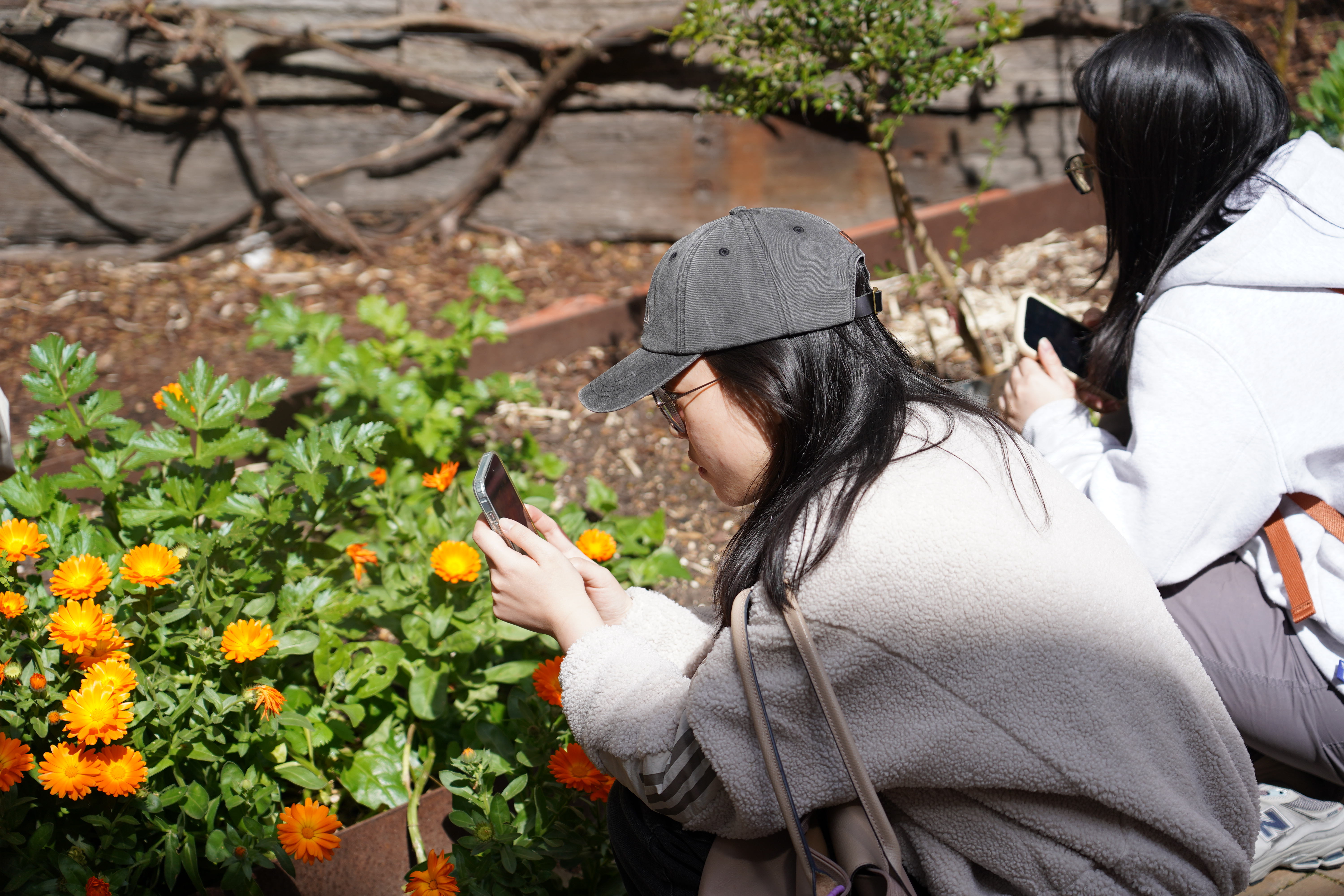
The University hosted its second Sustainability Week program in September 2025 with the theme ‘Learn it. Live it. Love it.’ More than 42 events were held, led by experts from across the University and the wider community. The program explored the world of sustainability across waste, biodiversity, social equity, community engagement and wellbeing. More than 2,000 students, staff and community members participated in events and activities, which ranged from open forums and practical workshops to nature walks and thrift markets,
For the first time, the program was led by the University community, highlighting the breadth of sustainability expertise and experience across the institution. The program featured a range of high-impact discussions, knowledge-sharing activities and new resources that supported practical sustainability action across teaching, research and operations. A standout moment was a circular economy panel with Lottie Dalziel, founder of Banish, a platform dedicated to empowering Australians with the knowledge and tools to live more sustainably, which offered valuable perspectives on waste and sustainability challenges in Australia.
Sustainability Week encouraged participants to embed sustainable practices into everyday life and contribute to a shared culture of responsibility for a more sustainable future, reinforcing the University’s commitment to collective sustainability leadership.
Sustainability Plus – student-driven sustainability engagement
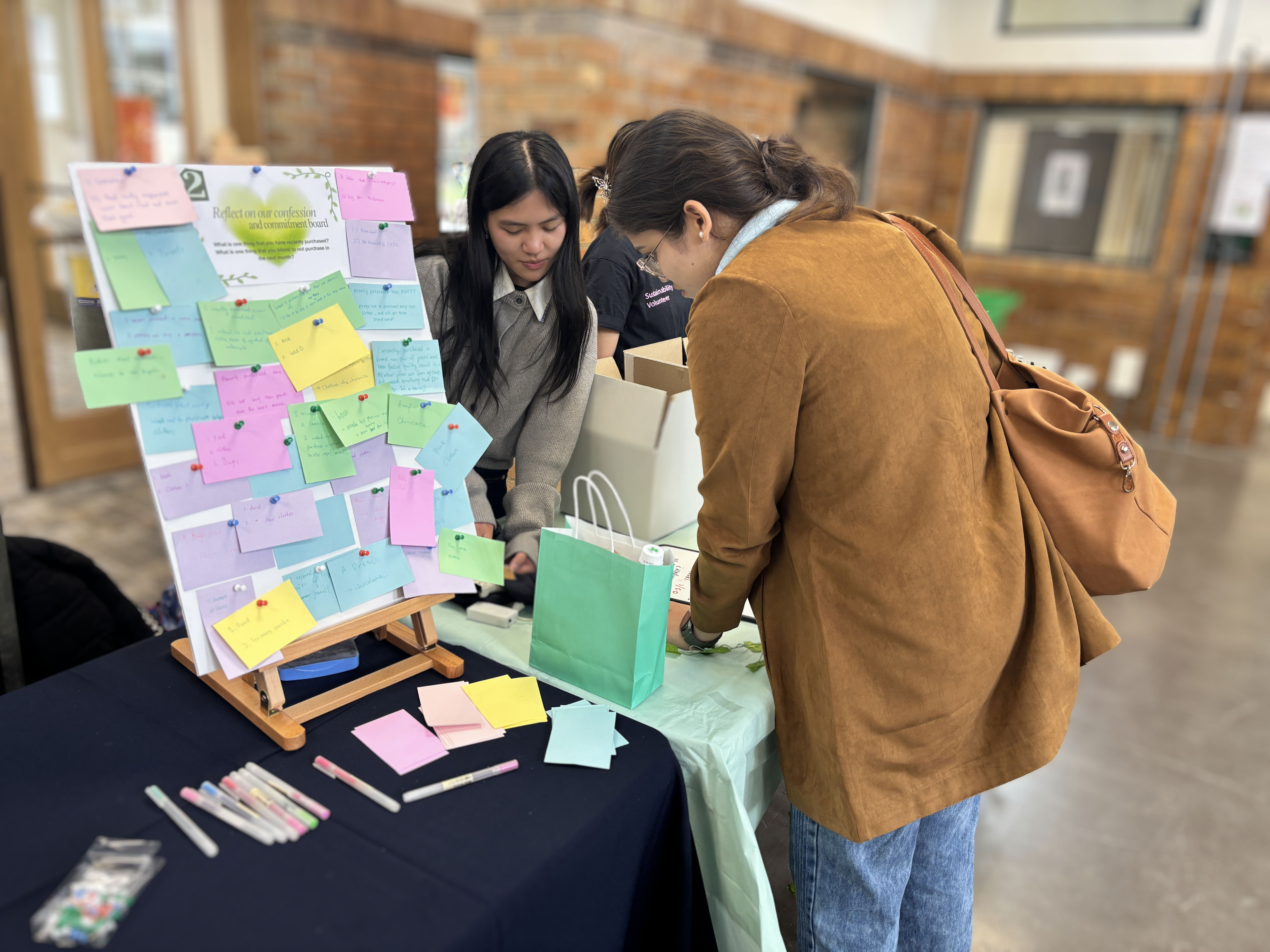
The Sustainability Plus Ambassador program was delivered by Melbourne Plus with the support of Student Services and Amenities Fee grant funding, Students@Work and the Narrm Subsidy Program. It provided a paid student casual role for 10 Sustainability Ambassadors. Over five weeks, the Ambassadors developed their sustainability knowledge and engagement skills and delivered an event at Market Hall with nine student-led activities and approximately 100 student attendees. The activities covered a diverse range of themes, from sustainable practices in food and fashion to reflections on sustainable careers.
The post-event survey feedback was positive. Approximately 85 per cent of respondents agreed that “it feels easier to integrate sustainability into my life” and that they “feel more positive about seeing the impact of my efforts.” This outcome directly addresses the initial challenge identified by the Ambassadors, that students often struggle to see how small individual actions can contribute to sustainability. Attendees also reported an increase in confidence in taking sustainable actions as a result of attending the event.
The Sustainability Ambassador role contributed to Sustainability Plan 2030 target of providing more student-centred and non-formal learning opportunities for students.
The Faculty of Education Student Sustainability Brigade
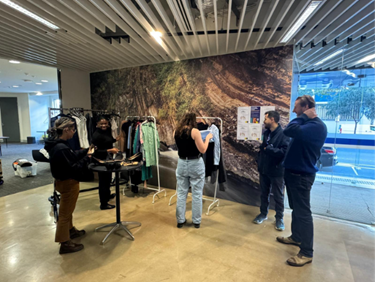
The Faculty of Education Student Sustainability Brigade is a student-led initiative that mobilises graduate researchers to drive sustainability action through collaboration and grassroots organising. The Brigade launched with a second-hand clothing swap organised in celebration of World Environment Day on 5 June 2025. This event provided a practical, accessible entry point for sustainability engagement while fostering a sense of community among students.
The Brigade’s second project was the Joint Students/Graduate Researchers Sustainability Seminar, held in September 2025, which expanded the initiative’s scope beyond the local context. Partnering with the University of Delhi and Pampanga State Agricultural University, the seminar brought together participants from three nations: Australia, the Philippines and India. The discussion focused on environmental policy and present-day student activism, highlighting varied experiences of climate vulnerability while emphasising community-driven sustainability efforts.
The Brigade’s impact extends beyond knowledge exchange, fostering student confidence as climate actors, strengthening international solidarity and validating lived experience as critical insight. Through student leadership and global collaboration, it demonstrates how sustainability education can support justice-oriented, transformative collective action.
Our sustainability strategy
At the University of Melbourne, our efforts in sustainability are guided by Sustainability Plan 2030 - a roadmap for sustainable delivery of the University's Strategy 2030: Resilience.
Read more about how we are advancing sustainability at the University:
