2024 Sustainability Report
Graduates for a sustainable future
Domain: Mobilising knowledge for action
Aspiration to 2030: All our graduates are shaping a more sustainable society through their careers and in their communities.

Progress against targets
| Target | Target status | Progress in 2024 |
|---|---|---|
| Sustainability is integrated into the curriculum to an extent that conscientiously extends, beyond a base threshold, each discipline’s (and associated professions/industries’) knowledge of the helpful and harmful impacts it has for the environmental and human systems we depend on. |  In progress |
|
| Graduates have increased capabilities to shape, lead and succeed in the careers, communities and industries of sustainable societies (year-on-year). |  In progress |
|
Our progress
Overall, progress toward these two curriculum-related targets in the ‘Graduates for a Sustainable Future’ priority area shows active Faculty-level effort, but limited University-wide coordination. This resulted in one target being partially met and the other not met, despite activity and key progress in parts of the University.
Significant work has been undertaken at Faculty level to integrate sustainability in the curriculum, however not at the University-wide scale or scope required to match the target’s considerable level of ambition. Progress to embed sustainability in the curriculum varies across Faculties, with most undertaking curriculum mapping and development:
- The Faculty of Architecture, Building and Planning has made significant progress in embedding sustainability in curriculum, via holistic program reform during the renewal of all Masters programs and development of two new sustainability-focused subjects.
- Two Faculties have a dedicated sustainability in curriculum working group (Faculty of Medicine, Dentistry and Health Sciences – MDHS; and Faculty of Business and Economics), with a new specialisation (Ethics and Sustainability) now available for Bachelor of Commerce students.
- MDHS developed a comprehensive curriculum scoping report in 2024-2025. The Faculty of Engineering and Information Technology has also conducted detailed mapping of its curriculum based on the United Nations Sustainable Development Goals (SDGs).
- The Melbourne Law School (MLS) has developed a working definition of sustainability as it relates to teaching, taking the total number of Faculties with a working definition to seven of nine. MLS expanded its clinical subject offerings to provide students with real world practical experience in sustainability-related law, including climate resilience and sustainability in business.
- The Faculty of Fine Arts and Music and the Faculty of Education have both identified subjects across their curriculum where sustainability is embedded, based on keyword analysis.
- In addition to Faculty-based activities, the University offers a Joining Melbourne Module on sustainability for commencing undergraduate students.
Work has also been undertaken to measure graduate capabilities to contribute to sustainable societies, however not on the scale required to meaningfully address the target or consistently measure progress. While some Faculties provide data on the number of completions from subjects or courses with sustainability-related content, a University-wide approach to measuring sustainability in the curriculum and therefore completions was not established. The Student Self-Efficacy Reflection Tool (aSSERT) has been developed to measure students’ (self-reported) sustainability self-efficacy and piloted in five subjects across three Faculties in 2023-2025. Read more about the aSSERT tool.
Education-related targets will be reviewed during the refresh of Sustainability Plan 2030 in 2026, with a focus on targets which reflect the University’s ambition for its graduates and to enable continued progress by 2030.
Our stories


Alumni advancing sustainability

Tara Susanto
Bachelor of Arts 2015
Tara Susanto embraced a diverse range of experiences during her time at the University of Melbourne, exploring breadth subjects like filmmaking and music, clubs and a double major for her Bachelor of Arts degree. After graduating, Tara worked across various industries before finding her passion in sustainability and co-founding Bumiterra – a community-powered reforestation company based in West Kalimantan, Indonesia, which partners with Indigenous landowners to restore degraded lands through a subscription model for businesses. Bumiterra’s reforestation efforts have restored at least 45 hectares of rainforest to date.
Tara credits her time at Melbourne for giving her the courage to embrace different paths and follow her heart into impactful sustainability work. Looking ahead, she hopes to inspire more kindness, diverse solutions, and a "change of heart" in combating one of humanity's greatest challenges - healing the planet.

Natalie Kyriacou OAM
Master of International Relations 2014
Natalie Kyriacou describes pursuing a masters degree at the University of Melbourne as one of the most transformative experiences of her life. It was here that she found her voice, learned to think critically, and founded her environmental organisation My Green World – a social enterprise focused on educating young people about global wildlife and environmental challenges.
Today, Natalie's passion for the environment guides her work across multiple influential roles. As Founder and Chair of My Green World, Board Director for organisations like the Foundation for National Parks & Wildlife and CARE Australia, and serving on advisory groups like the W20 and XPrize Biodiversity Brain Trust, Natalie pushes for greater environmental and social equity outcomes. Sustainability is the backbone of everything Natalie does, driven by what she sees as her moral obligation to protect the natural world. Natalie hopes to continue building a career that empowers action for the planet while contributing to meaningful environmental and social outcomes.
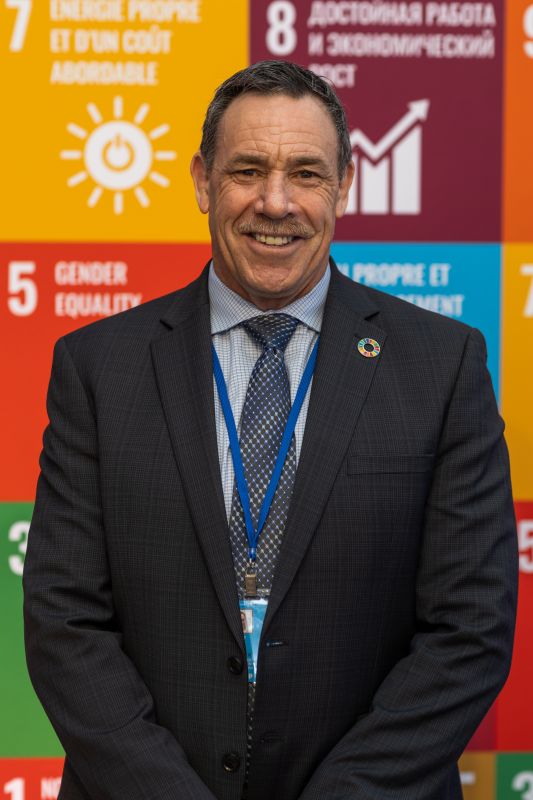
Greg Scott
PhD Engineering 2020
Greg Scott's 20+ year career in international sustainable development, including over a decade at the United Nations, motivated him to pursue a PhD with the University of Melbourne. Balancing his studies with his career proved challenging yet rewarding. Greg's PhD research stemmed from observing implementation struggles in developing nations during his UN tenure as a global adviser on sustainable development.
Now as Executive Director of the SDG Data Alliance at PVBLIC Foundation, Greg leads efforts to assist developing countries, particularly Small Island Developing States, in achieving the Sustainable Development Goals (SDGs). His firsthand experiences identifying roadblocks to progress have shaped his current work providing implementation support.
Greg has come full circle, giving back to the University of Melbourne as a member of the Centre for Spatial Data Infrastructures and Land Administration (CSDILA) Advisory Committee. His decades of field experience combating sustainable development hurdles, combined with academic research insights from his PhD, uniquely position Greg to guide impactful solutions.
Greg's journey demonstrates the valuable synergies between real-world applications and academic study. His work exemplifies how higher education can enhance professional expertise, allowing alumni to make meaningful contributions.
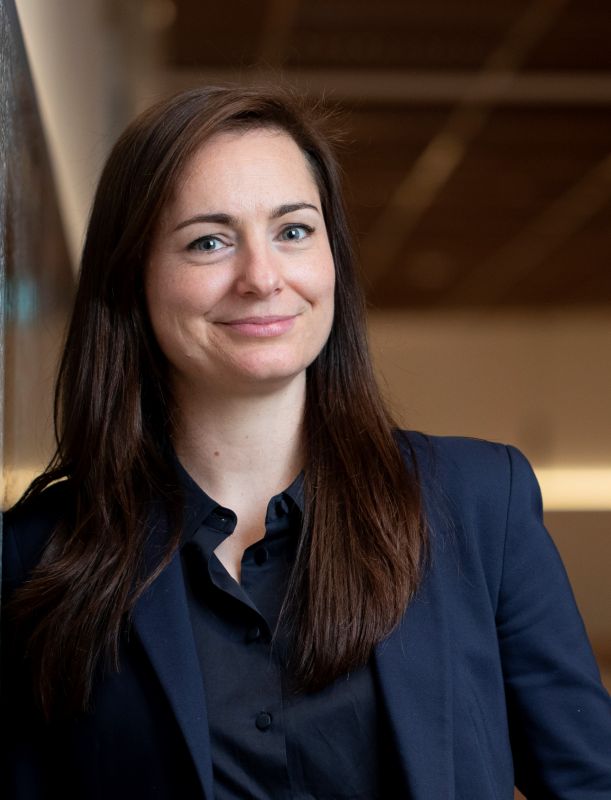
Tania Smith
Bachelor of Science 2007
Bachelor of Commerce 2007
Master of Environment 2013
Tania Smith's time at the University of Melbourne was formative, allowing her to forge lifelong friendships, adapt to new learning styles, and get involved with extracurricular activities offered by the university, such as case competitions, sporting teams and student organisations. Her double degree provided a multidisciplinary foundation, combining commerce and science coursework that prepared her for the diversity of work and adaptability of approach required in her career. Her masters degree also served her well for her current sustainable finance role by providing her with a greater depth of technical skills and more exposure to cross-disciplinary collaboration.
Tania's well-rounded university experiences, from careers fairs to alumni networking, helped pave her path to her current position as Executive Director of Sustainable Finance at Commonwealth Bank. Her longstanding interest in science and the natural world, solidified through environmental science studies, drew her to purposeful work in sustainable finance.
In her role, Tania collaborates with large organisations in structuring labelled sustainable financing (such as sustainability-linked loans), which can support a borrower's ESG performance, financial returns and longevity. Transactions span multiple sectors and often involve working closely with clients on decarbonisation strategies, green buildings and ethical supply chains.
Tania hopes to continue supporting Australia's largest corporates and institutions in advancing towards a more sustainable, resilient and inclusive economy, and she sees nature and climate adaptation finance as the next sustainable finance frontier.
Reconnecting with the plant world through dance
PLANT NATION, choreographed by Gregory Lorenzutti and co-conceived with Professor Marie Sierra, is a site-specific performance that explores the interconnectedness between humans and plants. Inspired by the concept of "plant blindness," where humans often overlook the vital role of plants, this work aims to reconnect audiences with the vegetal world through dance.

Developed through VCA’s artistic production curriculum, 20 Bachelor of Fine Arts (BFA) Dance Students performed outside across the Southbank campus in partnership with plants, fostering plant awareness and visibility. The performance invites audiences to experience dance as a gateway to understanding our interdependencies with nature and regain appreciation for the shared spaces we inhabit with living organisms.
Made possible through an ARC Linkage Grant, PLANT NATION encourages a more attentive perception of our interconnectedness with diverse species, ultimately inserting humans back into circular systems of nature. Through this powerful exploration, the work challenges us to reconsider our relationship with the natural world and embrace a more sustainable coexistence.
Preparing graduates to tackle the climate impacts of the health sector
The University's Graduate Certificate in Climate Change and Health equips students to address the profound health impacts of the climate crisis. The program covers complex climate-health interactions, assessing impacts and developing mitigation and adaptation strategies.
Nurse and previous student Lindsay Scudder values the program's interdisciplinary approach:
“Climate change and health intersects with many different specialities and through panel sessions I had the pleasure of speaking with many leaders in various fields.”
Concerned about healthcare's environmental footprint, Lindsay feels that: "the course provided the skills and knowledge to tackle both the health sector's climate impacts and the health impacts of climate change."
The curriculum prepares graduates for leadership roles in climate-health policy, healthcare sustainability and community resilience programs. With a pathway to the Master of Public Health, the certificate provides a strong foundation to drive systemic changes safeguarding population health in our changing climate.
Our sustainability strategy
At the University of Melbourne, our efforts in sustainability are guided by Sustainability Plan 2030 - a roadmap for sustainable delivery of our institutional strategy Advancing Melbourne.
Read more about how we are advancing sustainability at the University:
