Victorian Public Housing Retrofit
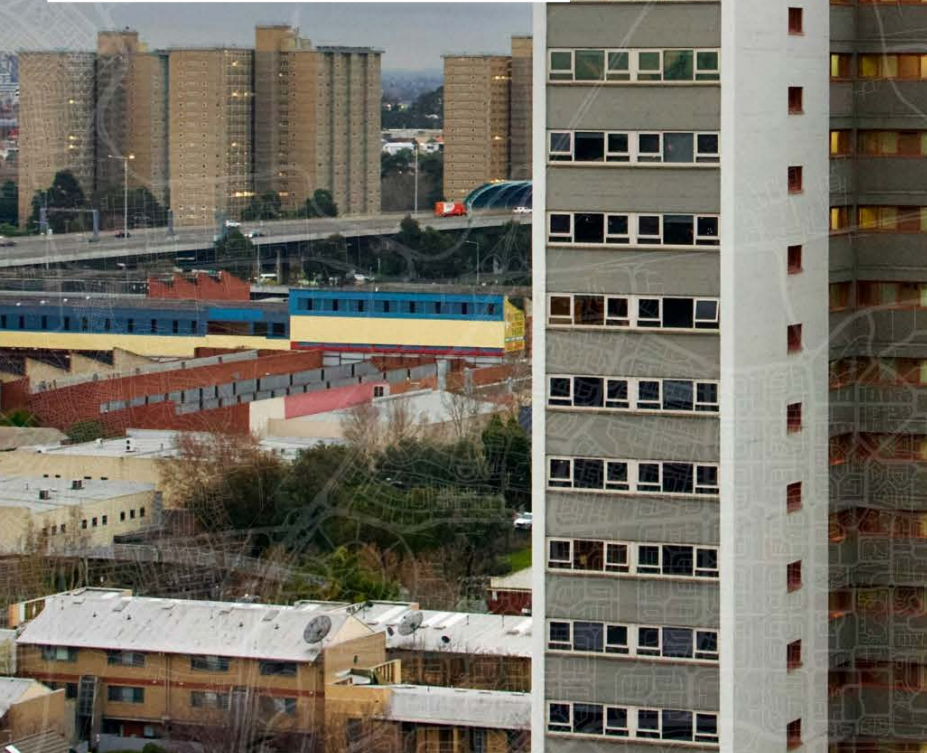
Life-cycle Impacts of Public Housing Renewal in Victoria
Researchers:
University of Melbourne: Enzo Lara-Hamilton, Robert Crawford, Sarah Bell, Kate Shaw, Janet Stanley Dan Hill, Alan Pert
OFFICE: Miriam McGarry, Simon Robinson, Steve Mintern
RMIT: Trivess Moore, Ralph Horne, Louise Dorignon
Overview:
The renewal of public housing estates to meet the needs of current and future generations is a high priority for housing policy in Victoria and around the world. Public housing plays an important role in contributing to Victoria’s total housing stock, and renewal programs provide opportunities to enhance neighbourhoods, increase housing supply and improve housing quality, performance, and sustainability, which is especially important for low-income and vulnerable households. Decisions about public housing renewal are complex. The needs of current and future tenants and residents, the benefits and costs of redevelopment, the total number of homes provided or improved, the quality of the building stock and landscapes, finance and economics, tenure mix, impacts on local neighbourhoods, infrastructure provision, and timeframes for undertaking work are amongst the many factors that must be considered in individual renewal projects and broader policy frameworks. Housing policies and projects have implications for public health, community development, climate change, urban sustainability and resilience, employment and skills, water management and more. These factors and implications mean public housing decisions cannot be made in isolation from other social, environmental and economic objectives.
Outputs:
Lara-Hamilton, Enzo; Bell, Sarah; Crawford, Robert; Stanley, Janet; Shaw, Kate; Hill, Dan; et al. (2024). Life-cycle Impacts of Public Housing Renewal in Victoria - Evidence Review. The University of Melbourne. Report. https://doi.org/10.26188/25345921.v1 Life-Cycle Impacts of Public Housing in Victoria - Evidence Review/Briefing Note