Cultivating a sustainable future at Burnley
Rooted in history and driven by innovation, the University's Burnley Campus brings together teaching, research and philanthropy to shape the future of urban environments.
For alum, horticultural botanist and donor Rob Cross (BSc Monash, 1976; BAppSc(Hort) Melb, 1986), Burnley is more than a campus. It is where his connection to the natural world – shaped by biology, conservation and his mother’s passion for gardening – grew into a career in horticulture and a lasting commitment to the field.
Celebrating 135 years of horticultural education, Burnley remains a living campus where teaching, research and practice come together.
Established in 1891 and set within the heritage-listed Burnley Gardens beside the Birrarung, the campus has evolved from Australia’s first horticultural school into a leading centre for urban horticulture and green infrastructure research.
Today, Burnley’s researchers are responding to some of the most pressing challenges facing cities: urban heat, stormwater management, biodiversity loss and the need for greener, more resilient public spaces.
Shaping sustainable cities
Burnley’s living laboratories, including green roofs, raingardens and experimental plantings, allow students and researchers to test how vegetation and ecological design can create more sustainable urban environments.
Launched in 2012, the Burnley Green Roofs facility is Australia's first dedicated platform for studying plant survival on rooftops. Testing more than 200 species and 3,000 plants, researchers have demonstrated how green roofs can reduce urban heat, retain stormwater and support biodiversity.
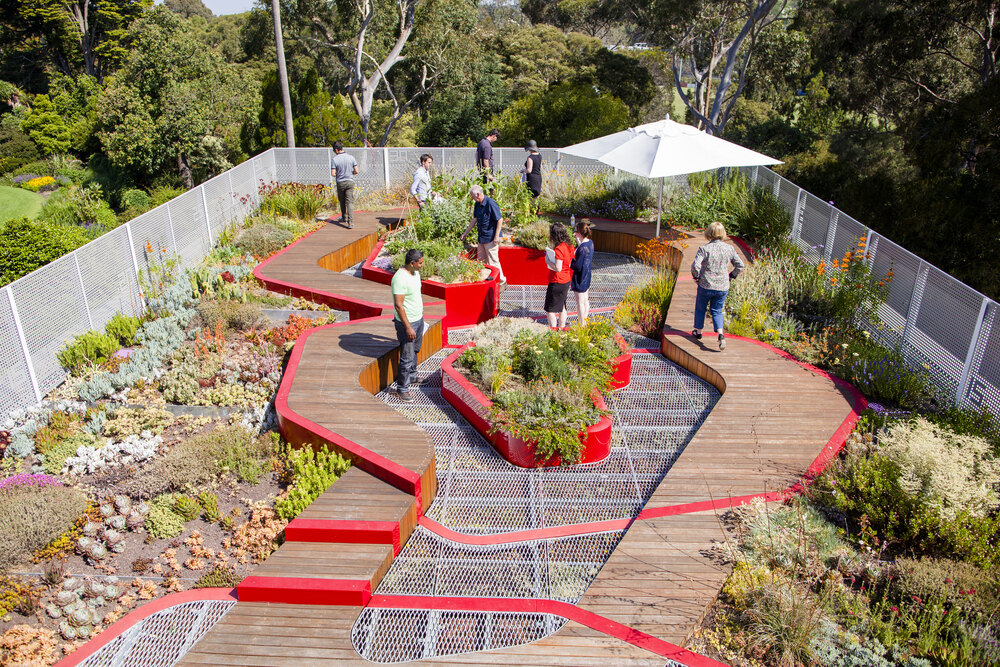
The Burnley Green Roofs are Australia’s first dedicated green roofs for demonstration, training and research.
In 2014, the Burnley Raingarden was developed through Water Sensitive Urban Design research. The system captures and filters stormwater before it enters the Yarra River, demonstrating how plant and soil systems can improve water quality and reduce pressure on urban waterways.
More recently, Burnley researchers have developed Woody Meadows, an innovative approach to low-maintenance urban planting that replaces typical low-diversity gardens with diverse shrub communities of Australian plants designed to withstand heat, drought and changing climate conditions.
Alongside this, more than 1,000 plant species are being tested to support the redevelopment of the Melbourne Arts Precinct, helping identify resilient plants that can thrive in one of Melbourne’s most significant cultural precincts.
Associate Professor Claire Farrell, Director of Burnley Campus, says, “Burnley’s living laboratories allow us to test and translate research into practical solutions for cities, connecting teaching, research and practice to create greener, more resilient and liveable cities.”
A lasting connection
While Burnley’s research is helping shape the future of cities, its impact is also reflected in the people whose lives and careers are shaped by its gardens and classrooms. Rob’s journey is an example of this lasting connection.
Inspired by an open day at Burnley, he enrolled as a mature-age student to study horticulture at the University. Recognised as dux each year of his Bachelor of Applied Science (Horticulture), he went on to build a career in applied plant science and landscape practice, including over three decades as a horticultural botanist at the Royal Botanic Gardens Victoria.
After completing his degree, Rob returned to teach Plant Form and Identification in 1987 and 1988, beginning a long association with the campus through education, presentations and horticultural knowledge-sharing.
He also continued to champion collaboration between Burnley and the broader horticultural community, including through plant science symposia at the Royal Botanic Gardens Victoria. His co-authored book Sustainable Gardens, written with Roger Spencer, remains one of his important contributions to the field.
Continuing this connection, and to acknowledge the significant influence Burnley Campus had for Rob, he and his wife Anne Robertson established the Cross and Robertson Family Prize for Excellence in Urban Horticulture to support the next generation of horticultural leaders.
The prize recognises two Master of Urban Horticulture students who demonstrate academic excellence: a student who has completed their first year with a passion for sustainable horticulture, and a graduating student who has demonstrated active involvement in Burnley campus life.
Together, the prizes reflect Rob and Anne’s belief in the importance of supporting students as they build their own futures and contribute to the rich heritage of Burnley Campus.
Rob and Anne reflect on their gift, “The challenges facing our cities require people with deep knowledge of plants, landscapes and ecological systems. We hope these prizes encourage students at a pivotal point in their studies and reminds them that their work matters in shaping the future of our cities.”
Their work matters in shaping the future of our cities.
Learn more about giving
Delve into stories of donor impact or find public lectures, gallery openings and more.
-
Impact of giving
The generosity of our donor community can be felt across industries – and will continue to improve lives for generations to come. Learn more about how our supporters are building a brighter future.
-
Ways to give
Whether you’d like to make a one-off gift or explore other meaningful options like leaving a gift in your Will, there are plenty of ways you can give to the University for a brighter future.
-
News and events
Stay connected with your passionate University community through thought-provoking public lectures, events celebrating our donor community or expert commentary on global issues.
How can we help?
FAQs and contact details
Find helpful answers to common questions and specialised contact details.
Give to education and research
Learn how you can support students and researchers.
Ways to give
Explore the varied and meaningful ways you can give towards a brighter future for all.