Uncovering vaccines’ hidden protective powers
Dr Miguel A. Berrocal Rubio's journey from childhood fossil hunts to uncovering the unexpected benefits of a century-old vaccine reveals how curiosity can reshape a scientific career.
In his first post-doctoral role since completing a PhD in Human Genetics at the University of Melbourne, Miguel is investigating molecular biology and immune cells at Murdoch Children’s Research Institute (MCRI).
“The work is focused on vaccines and the off-target effects of those vaccines – meaning the unintended benefits,” said Miguel.
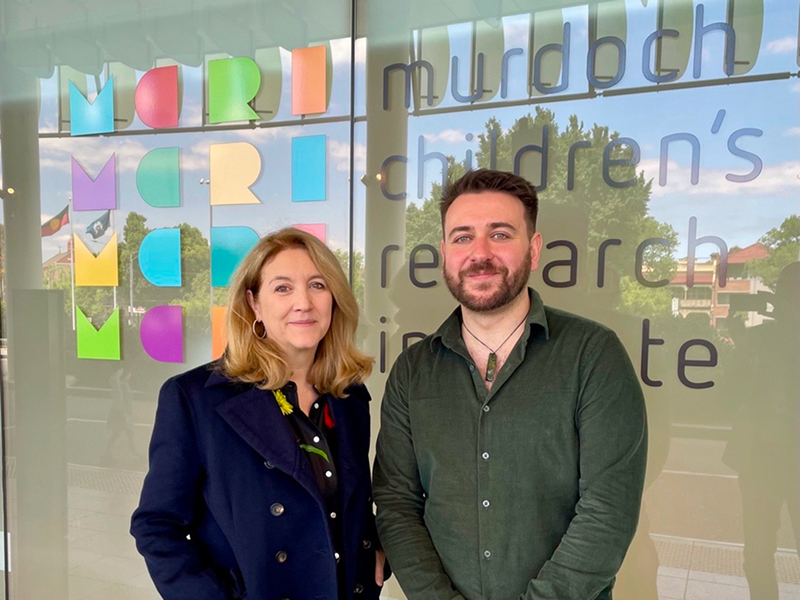
Miguel with Spanish Ambassador to Australia Esther Monterrubio Villar during her visit to MCRI to learn more about his work.
More specifically, Miguel and his lab are looking at the off-target effects of the vaccine used for preventing tuberculosis.
“Off-target effects were seen a long time ago in children when they started using this vaccine. It saved more children than expected, because it prevented respiratory tract infections and many other conditions as well,” he explained.
“What I'm doing now is looking at how this vaccine can be used to prevent or treat viral infections, and more specifically, herpes.”
Discovering a novel idea has always been a motivator for Miguel, and he has developed a small, personal way to savor that feeling and celebrate his accomplishments.
“I very much enjoy the night before I share an outcome, and I’m the only one who knows the answer to a question,” he said.
“Knowing you've pushed that boundary of knowledge a little bit is a really good feeling.”
Though only at the beginning of his career, Miguel hopes to make a great impact on the discipline of human genetics through the years of research that lie ahead.
“I would like to describe a gene that I'm proud of, and hopefully there's a good application for understanding that gene – maybe in helping people with a disease or another condition,” shared Miguel.
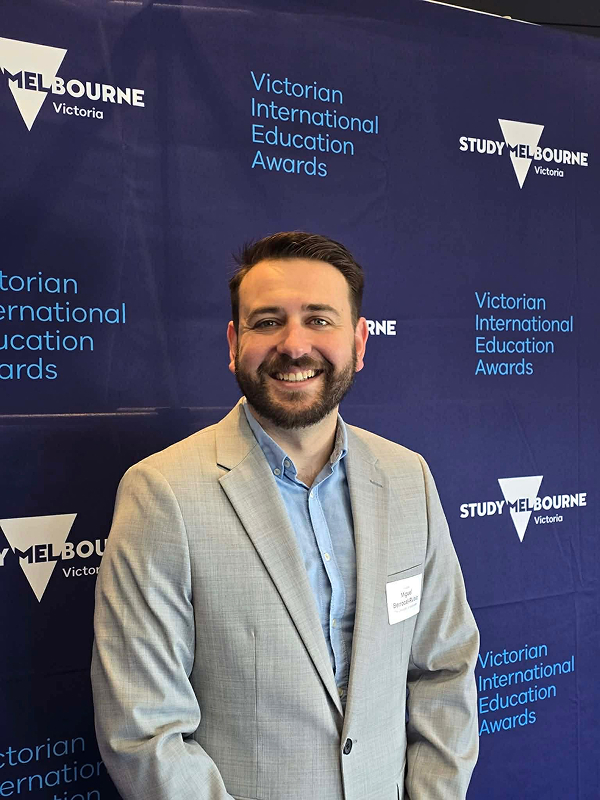
A path shaped by curiosity
Miguel’s fascination with science started young – sparked by an obsession that many young children would relate to.
“It definitely started with dinosaurs,” he said. “I was lucky because near one of the villages where I would spend my summer in Spain, there were a lot of fossils.”
Miguel even went on to do an internship in paleontology but didn’t enjoy the field as much as he expected. It wasn’t the last time his interests and career path would shift.
“I think every scientist is curious, and can get curious about many things,” he said.
“My current interest is human genetics, and so I always try and shift my work towards genetic and genomic detail.”
Miguel took this approach when he steered his PhD studies towards his passion for genomic science.
“The initial plan was to focus a lot more on synthetic biology and genetic engineering, but an opportunity came about with another project that was framed more around discovery,” Miguel explained.
“In the end, that project led to the discovery of hundreds of human genes and tens of thousands of new gene products – so we discovered a lot of very exciting stuff.”
Conversely, Miguel also enjoys being influenced by his peers and treading new scientific ground. His current role at MCRI is a prime example.
“I'm not an expert in immunology, and my team here are very deep in immunology. I'm learning a lot from them,” he said.
“I also like to look for things that are different because I want a challenge, and I think as a scientist, you need a profile that differentiates you from everyone else.”
Friends turned collaborators
Miguel considers his experience at the University as a formative one that has gone on to impact his life in profound ways.
“Completing a PhD gave me a mental structure on how to approach any problem in life,” shared Miguel.
“I think I could radically change my field of work, but I would never lose the structure that I've built in my brain on how to tackle a problem.”
Beyond the critical thinking he learned through study, Miguel also made strong friendships through campus life.
“To start with, I’d just think of them as a new friend in Melbourne, but they also became collaborators that I worked with to produce high-impact papers,” he said.
“I was able to work with my friends and do cool science. That's awesome, and not something that I have experienced anywhere else.”
Miguel’s PhD supervisor, Professor Christine Wells was another University contact that left an impression on him.
“She demonstrated in her career that collaborations can be a powerful contributor to success, and she's shown me that by example,” said Miguel.
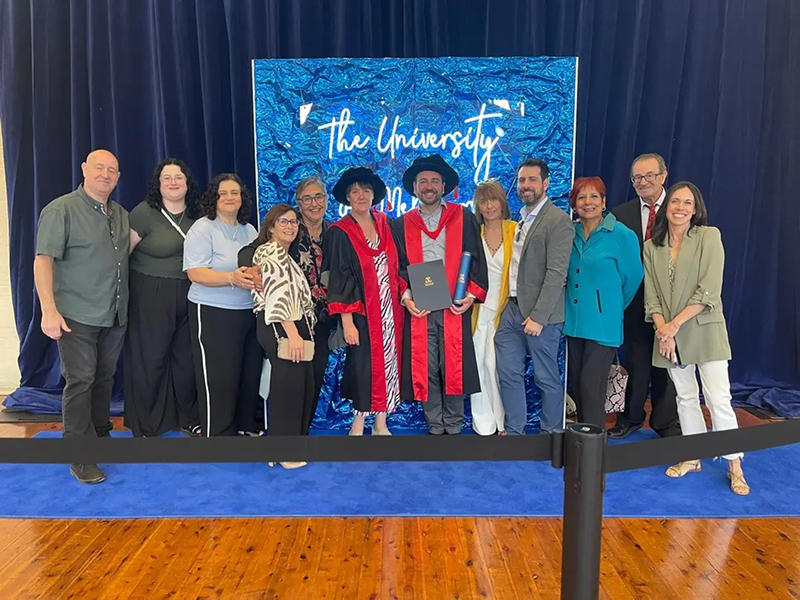
Miguel at his PhD graduation event with Professor Wells (both in red robes) and his family.
“You're not going to be an expert in every field, so it's very important to have good friends and a network that allow you to elevate science together.”
Miguel’s experience as an international student at the University also solidified his perspective that diverse and multifaceted working groups often generate better research.
“Having a multicultural team with different perspectives makes any project more well-rounded and polished,” shared Miguel.
He has experienced these benefits firsthand, describing how Spanish-educated researchers tend to be more theoretical compared to the practical leanings of the Australian research community.
“In Australia, researchers more consider how an idea will be translated it into society or how money can be made from it,” he said.
“I think those different perspectives can be very complementary.”
Commitment to truth
Though early in his career, Miguel is clear on what kind of imprint he would like to leave on science, no matter where his research takes him.
“Culturally, I think science is at a bit of a risky point at the moment,” he shared, alluding to the current climate of mis and disinformation.
“As researchers, we have to be very careful to make sure we're accurate – and not overstate or falsify.”
As a legacy, Miguel simply wants to be known as a researcher with integrity that applies excellent scientific rigor to all he does.
“I would really like to just be known as someone who stays true to what the science says.”
Stay connected
Your diverse alumni network offers unique opportunities for you to grow personally and professionally. Explore events, lectures, inspiring stories, global groups, and so much more.
-
Find an alumni event
From public lectures to alumni events that keep your community connected across the globe, see what’s on at the University of Melbourne.
-
Find a group
Join a vibrant alumni network in your local area to boost your career, build friendships, or connect with like-minded individuals.
-
Alumni Council
The Alumni Council champions your community worldwide, shaping events, student experience and more. Learn how to get involved.
How can we help?
FAQs and contact details
Find helpful answers to common questions or contact the alumni office.
Stay in the know
Learn how to set up your UniMelb account to access perks and discounts.
UniMelb account log in
Access your account to update your personal details and access benefits.