Stopping the extinction of Australian birds
As the CEO of BirdLife Australia, Kate Millar is working to reverse the decline of threatened species and to keep our common birds common.
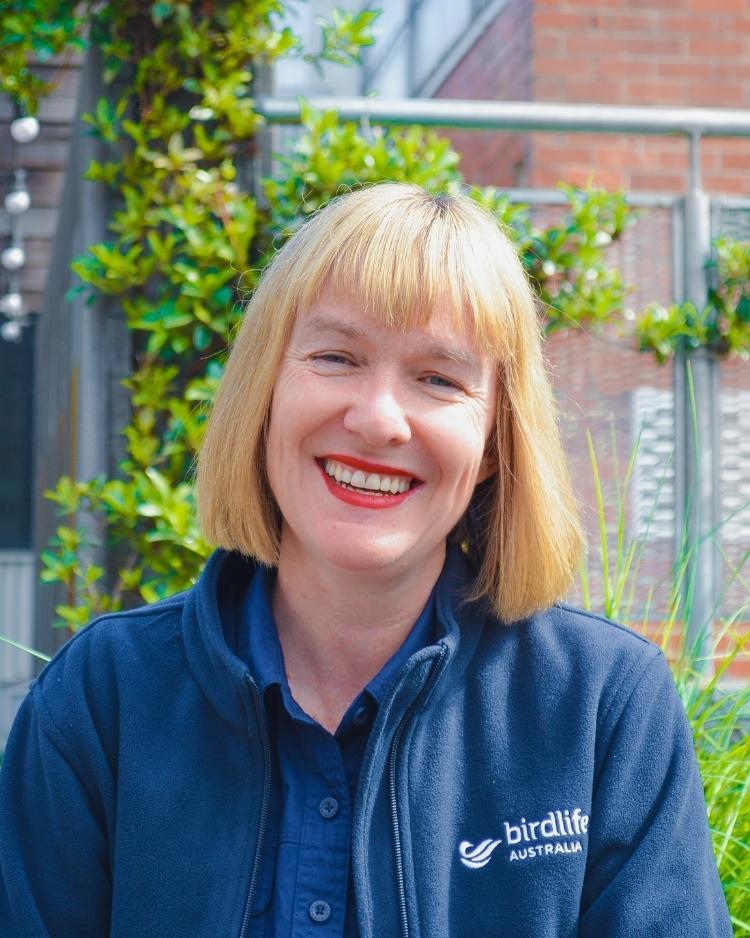
“I get to work with scientists, volunteers, businesses, land managers, First Nations custodians and industry leaders who are passionate about creating a future for birds and stopping the looming extinction crisis,” she says.
Transitioning from fossil fuels to renewable energy is crucial for fighting climate change, but it’s a complex challenge for our energy grid – and for our environment.
“We now have an interactive mapping tool called AVISTEP that can help communities, governments and industry understand where the risks for birds are greatest,” Kate says.
AVISTEP supports a nature-safe energy transition by providing useful data about how local birds may be impacted by new or existing renewable energy infrastructure.
“We want to make sure our supporters and branch members have a really good understanding of what the situation looks like in their particular part of the country, so they can play a positive role in helping this transition go forward.”
Universities build lifelong connections
Kate fell in love with nature early in her life.
“I vividly remember a family holiday to Port Campbell,” she says. “I was doing the junior ranger program and saw glow worms for the first time. I decided then that working in nature was exactly what I wanted to do.”
That passion ultimately took her to the University of Melbourne, where she completed a forestry degree to learn how to understand and care for forests.
“I think we were really fortunate with our particular degree that there was that really strong connection with the industry,” Kate says. “Right from the start, you were always being connected to that on-ground implementation of the learning that you were doing in the university context.”
It was one of the happiest times of her life. What she learned about ecosystem management continues to be relevant in her work to protect bird habitats at BirdLife Australia, while the University’s influence has extended further through the professional networks she forged and the lifelong friends she made. Indeed, her university cohort still gets together every year before Christmas.
How diverse is forestry?
Kate’s experience studying forestry in the early 1990s wasn’t all as sweet as birdsong.
“When I was a student, women were a small cohort facing scepticism and even sexism from some of the old guard,” Kate reflects.
Early in her career, Kate resolved not to be seen as different from the men who dominated the field. She wanted to be judged for the work she did, for her performance, and not for her gender. Yet even that drive to prove herself turned toxic.
“I managed to get myself on this field trip in a really remote part of the Alpine National Park at six months pregnant,” Kate recalls.
She convinced herself and the people around her that she could do the same job as everyone else. But once she was on the field trip, Kate realised how far she was from help if something went wrong with her pregnancy.
“I thought, ‘What am I doing?’” she says.
The experience started to shift Kate’s thinking about what it means to be different.
“Difference should be acknowledged and embraced,” she says. “It’s not about everyone being the same. And, in fact, diversity and inclusion make organisations strong.”
Kate is pleased that student cohorts coming through degrees similar to hers are now more gender diverse. But she thinks we could still do more to identify and remove barriers for people with diverse backgrounds and identities.
Saving birds through Indigenous partnerships
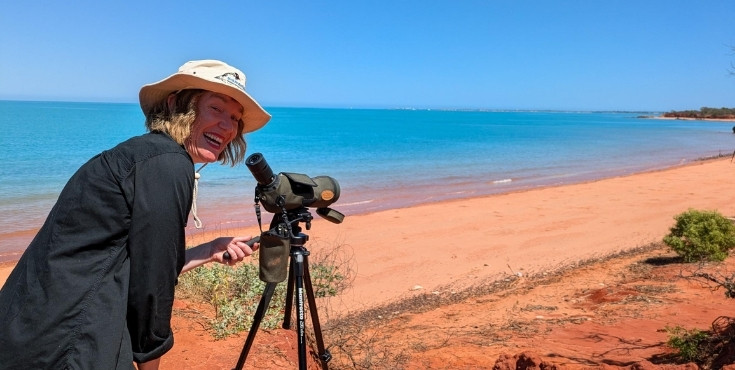
Kate is proud to see her teams at BirdLife Australia building partnerships with First Nations communities.
“To me, that sits at the heart of sustainable practice,” she says.
Bird scientists are working with traditional owners in Northern Territory’s Litchfield National Park on understanding the rare and endangered red goshawk.
“It is the most extraordinarily beautiful bird,” Kate enthuses. “We got to go out with First Nations rangers, and with a film crew, and we actually got to see a female sitting on her nest. We were just losing our minds.”
But the most powerful experience for Kate was hearing the collaborators exchanging knowledge about the red goshawk.
“We had two people observing the same behaviours with different ways of describing them: a Western scientific knowledge base versus a traditional cultural perspective,” Kate says.
Both groups shared the goal of caring for Country and for the communities – human or otherwise – living on it.
“We have a lot of environmental challenges across the country, and that cultural knowledge is a strength,” Kate says. “This is First Nations land we’re working on. We should think about how we can come together for that brighter future with the knowledge and perspectives that we both hold.”
But building such vital partnerships can take time.
“You just can’t rush it,” Kate says. “You have to work in a way that creates deep connections.”
How to show up for Australian birds
Kate hopes to show people that taking care of both nature and people is achievable and essential.
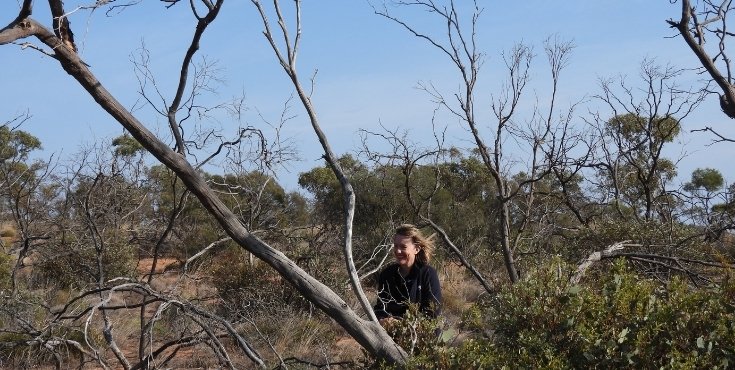
“It’s a long road, but I’m inspired by the trees, shrubs and grasses I planted as a young graduate that are now healing formerly degraded landscapes,” she says.
“Progress in the sustainability space has never been more urgent, and I aim to ensure everyone is welcomed and included in this vitally important and rewarding work.”
The door to BirdLife Australia is open to anyone, she adds, and no contribution is too small. One place to start is the annual Aussie Bird Count, which takes place in October each year.
BirdLife Australia is also looking for scientists and institutions with whom to collaborate, as well as advocates for their campaigns.
“What we find with our supporters is that watching birds helps them feel better,” Kate says. “There are the mental health benefits of getting out in nature and observing it. And then there’s that sense of social connectedness.
“It’s such an awesome group of people that work on birds every day to make a positive difference and anyone can be a part of it.”
Stay connected
Your diverse alumni network offers unique opportunities for you to grow personally and professionally. Explore events, lectures, inspiring stories, global groups, and so much more.
-
Find an alumni event
From public lectures to alumni events that keep your community connected across the globe, see what’s on at the University of Melbourne.
-
Find a group
Join a vibrant alumni network in your local area to boost your career, build friendships, or connect with like-minded individuals.
-
Alumni Council
The Alumni Council champions your community worldwide, shaping events, student experience and more. Learn how to get involved.
How can we help?
FAQs and contact details
Find helpful answers to common questions or contact the alumni office.
Stay in the know
Learn how to set up your UniMelb account to access perks and discounts.
UniMelb account log in
Access your account to update your personal details and access benefits.