VCA alum explores the right to dream in Australia
As co-director, co-producer and screenwriter of Like My Brother – a feature documentaryin cinemas from 17 October – Master of Screenwriting alum Sal Balharrie followed four Tiwi Island Indigenous girls towards their dream of AFLW stardom.
It isn’t the first time Sal has created a story about women on unexpected adventures. Her prolific career spanning visual and written mediums contains many inspiring examples.
But with Like My Brother, Sal had a new message to convey.
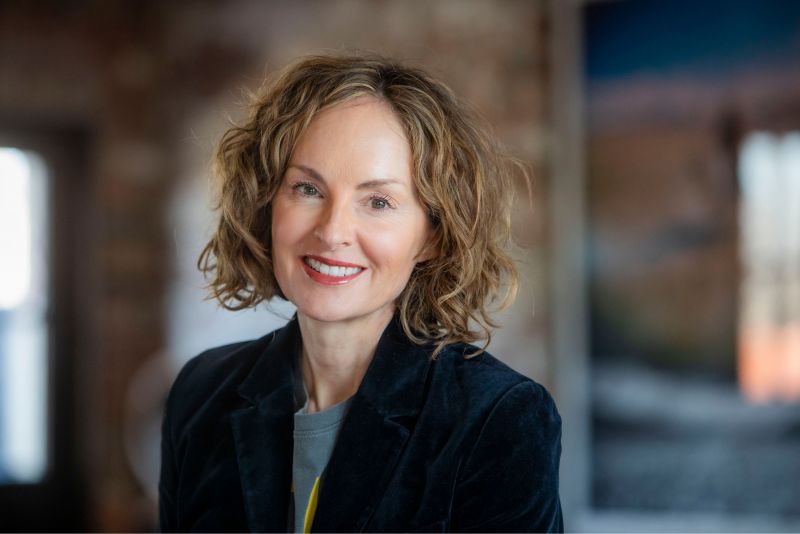
Sal Balharrie. Credit: Mark Chew.
“As a director and writer, I always work with a guiding question,” said Sal. “With Like My Brother, the question was: who has the right to dream in Australia?”
There was one experience during her time on the Tiwi Islands that Sal felt encapsulated the overarching message of the film.
“When talent scouts went to Tiwi College, one of the girls, Freda, really wanted to wear Nike shoes and socks,” she explained.
With limited resources available, many of the Tiwi Island girls play bare foot, but Sal spoke of how Freda was eager to impress.
“She did everything within her power to get shoes and socks. She borrowed them from somewhere, then had to wash them and wait until they dried.”
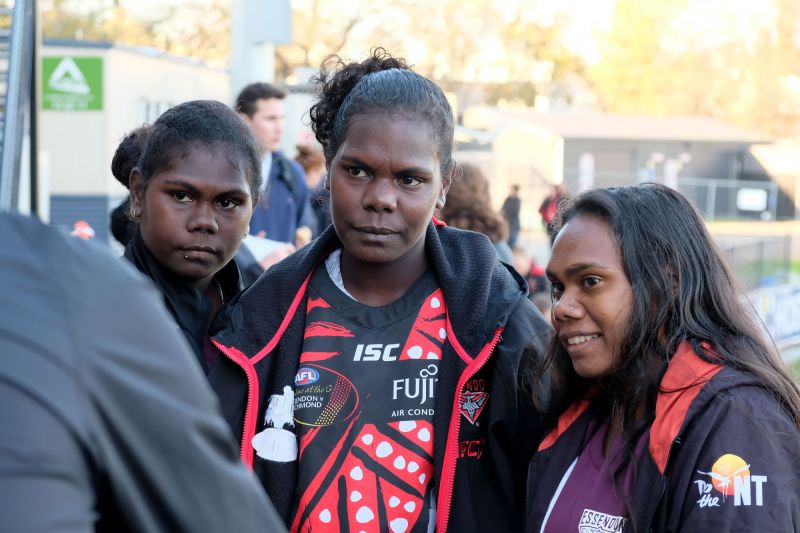
Three of the Tiwi girls starring in the feature, Freda, Rina and Julianna. Credit: Conor Herber.
Sal couldn’t help but notice the contrast of Freda’s experience as an aspiring athlete compared to that of other young Australians.
“If you are a young boy or girl in Melbourne, you're usually going to have somebody who's picking you up and driving you to practise. You're going to have somebody organising your gear and worrying about your nutrition,” Sal said.
“I think this film explores those privileges through the lens of sport, but it can apply to absolutely anything in Australia.”
Strength in numbers
After a seven-year production journey – from concept inception through to the final edits – Sal is eager to praise the team of creatives that helped in ultimately bringing the documentary to the big screen.
“Filmmaking is the most collaborative art form on the planet,” she said, “it’s not just me, but an incredible team of Tiwi co-producers, my co-director and so many others.”
Luritja and Warumungu filmmaker Danielle MacLean co-directed Like My Brother alongside Sal and was instrumental in not only navigating the project culturally but crafting the narrative too.
“We both come from writing drama, and so we looked at the doco as a traditional three-act structure,” shared Sal.
“We had a guiding question for each act: can she do it, will she do it, what will she do next?”

The AFLW Essendon team at the Hangar. Credit: Mark Chew.
While Sal and Danielle are thrilled with where the story landed, forming the narrative was a difficult task.
“As a doco-maker, you have to be curious about uncertainty. You’re always asking, ‘okay, Universe, where am I going?’”
Initially, Sal predicted the shooting for the project would take 18 months, but with each new curveball, her team had to constantly reorient.
“Money was hard to come by, then COVID hit, and there were a couple of stages when I just thought, ‘this is too hard, I can't make this film.’”
When filming did finally wrap, the project team had the daunting task of combing through 400 hours of footage. “That was huge, finding the story and getting it to a rough cut,” she said.
Sal and her team also needed to hold a cultural screening with the Tiwi community amid a devastating time – just one week after the 2023 Voice referendum.
“It was full on, but we were also able to proudly say that this film offers a platform for the community.”
Thankfully, the project’s numerous challenges were punctuated by priceless moments. Sal said her most treasured memories were made while spending time on country building fulfilling relationships.
“You can only make this film at the speed of trust, and I could only build trust in community by spending time with the girls and their families not asking questions, just listening and absorbing,” she said.
“These people don't have a lot, and yet when you go back into the community, it is so joyful – the sense of family and the sense of true-lived connection to country.”
Study for reinvention
Before directing Like My Brother, Sal enjoyed a long creative career. “I just absolutely love the power of a narrative, but actually, writing is my absolute passion,” she said.
She has authored novels, screen adaptations, films, and television series – plus Sal ran her own design and advertising agency in years past.
Suffice to say, when the idea of studying a Master of Screenwriting at the VCA first crossed Sal’s mind in 2014, it wasn’t to fill a gap in experience.
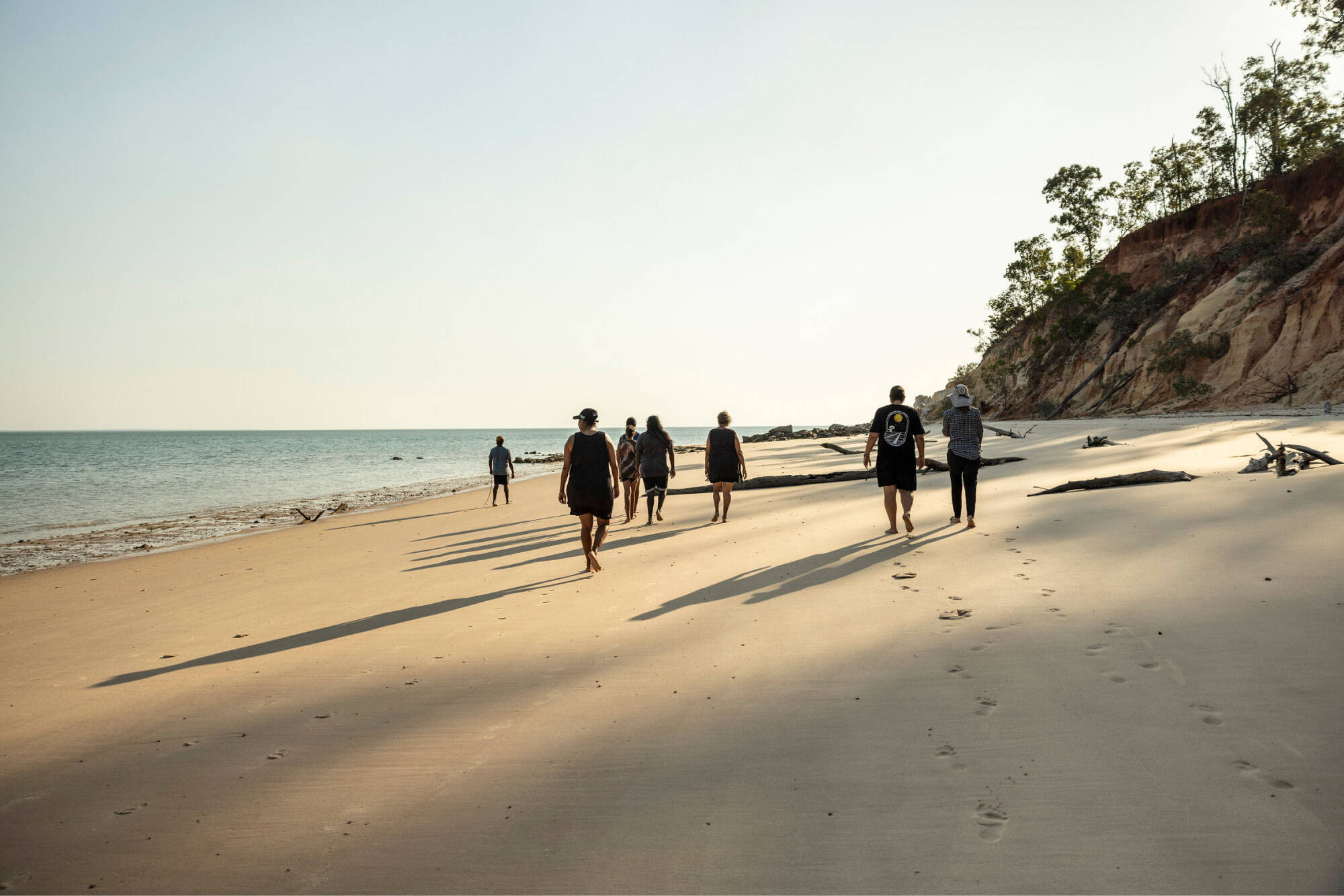
Collecting White Ochre at Pirlangimpi.
“I'd sold a TV show before I applied at the VCA, but I just really wanted to find my voice and be deconstructed,” Sal shared.
“I wanted to draw a line in the sand between somebody who's had this advertising background, to now somebody who is 100 per cent a screenwriter.”
Sal said the two-year course was the greatest thing she’s ever done and shaped a sense of discipline in her as a writer.
“I feel so proud of my time there. Being part of the cohort, I felt so at home, valued and expanded,” she said.
“One of the greatest things I was told during my masters was, ‘you've got to learn this writing structure, you’ve got to know it, and then you've got to hide it.’”
It’s this disciplinary approach that has enabled Sal to pursue many creative projects concurrently.
“I do have a lot of projects on the go, and I throw them at the wall and wait to see what sticks. In saying that, I'm very disciplined – every Sunday I look at my week ahead and I carve it up.”
One upcoming project that Sal is excited about is an animation series for women called Hot House Tiger Mama.
“I'm working on that with a writer from Los Angeles called Abed Gheith who wrote on Community, and Rick and Morty,” said Sal.
Another documentary that Sal will start directing next year feels kindred to Like My Brother.
“It will follow a peloton of famous female cyclists out on the road, and the guiding question there is: why is the term ‘she's so competitive’ the ultimate put-down rather than something positive?”
While Sal is never sure how each of her stories will come to fruition, one thing is certain – her work will continue to highlight the strength and resilience of women throughout the world.
Stay connected
Your diverse alumni network offers unique opportunities for you to grow personally and professionally. Explore events, lectures, inspiring stories, global groups, and so much more.
-
Find an alumni event
From public lectures to alumni events that keep your community connected across the globe, see what’s on at the University of Melbourne.
-
Find a group
Join a vibrant alumni network in your local area to boost your career, build friendships, or connect with like-minded individuals.
-
Alumni Council
The Alumni Council champions your community worldwide, shaping events, student experience and more. Learn how to get involved.
How can we help?
FAQs and contact details
Find helpful answers to common questions or contact the alumni office.
Stay in the know
Learn how to set up your UniMelb account to access perks and discounts.
UniMelb account log in
Access your account to update your personal details and access benefits.