Helping rebuild women’s lives after limb loss
With a Master of Development Studies (Gender and Development) from the University of Melbourne, Zarqa Khan leads transformative programs at UN Women Pakistan that advance women's economic empowerment and financial inclusion.
The spark of inspiration came when Zarqa met a resilient homebased worker named Rehmat Bibi in a rural community who had lost a limb through operating machinery.
Now, Zarqa restores dignity and independence to many others like her.
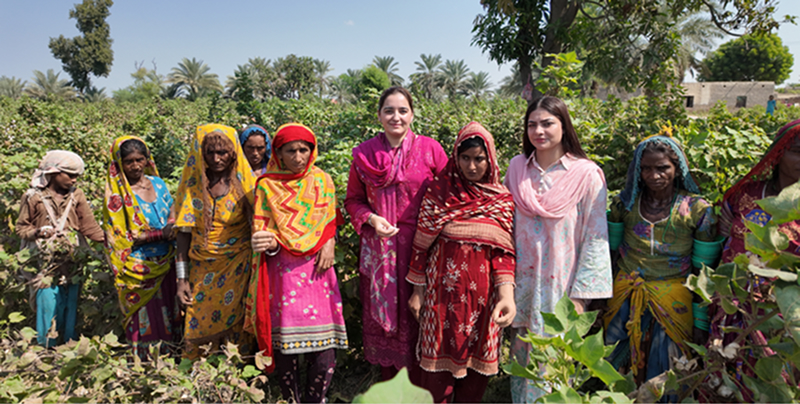
Zarqa (centre) in the cotton fields with the women who power Pakistan's agricultural backbone.
“My work focuses on gender equality through women’s economic empowerment and digital and financial inclusion in Pakistan’s Sindh Province,” she explained.
Zarqa works at all levels – from meeting the women that she serves directly in community to shaping governance and strengthening policy in a leadership capacity.
A recent project that Zarqa spearheaded was the AI-powered prosthetic limb project. She partnered with Bioniks Technologies to design personalised limbs for rural women amputees.
“The purpose of the program was to economically empower women so they can achieve financial independence, exercise greater control over their own decisions, access equal economic opportunities, and reduce their vulnerability to violence against women and girls," she said.
Many women in the rural communities of Sindh, located in the southeastern region of the country, participate in agricultural work. Loss of limbs from operating machinery is, sadly, very common.
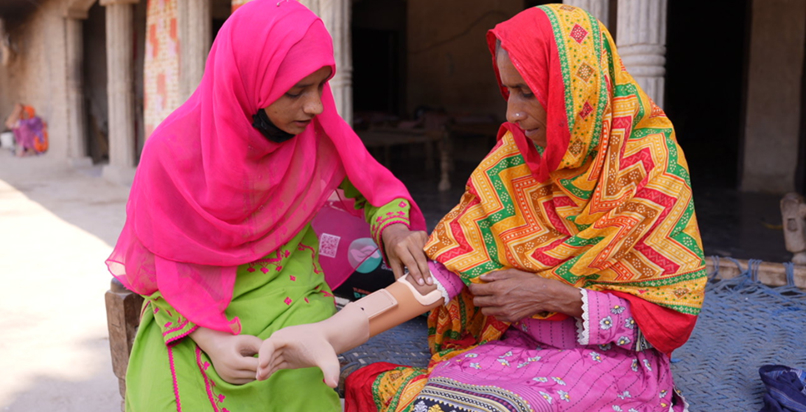
Kainat (left) guides Habiba (right) on how to use her new prosthetic arm.
“There's a lot of social stigma attached to losing a limb. These women are not included in their community’s economic spheres or in decision-making,” she said.
With the impacts of limb loss going far beyond physical disability, Zarqa designed her program to provide wrap-around support to affected women.
“They go through a lot after these accidents, so we provided them with psychosocial support, peer mentorship and livelihood integration to restore their dignity and economic independence,” she said.
Zarqa’s program has not only helped women reenter the workforce by giving them greater physical ability, but it has also helped them take charge of their lives.
“These women are artisans but, previously, could not sell their products. There had always been a middleman, and they would get limited payment,” she said.
“Now, they have established their own businesses and are spending that money on their children’s education.”
Seeing these women and their families’ standard of living improve drastically is what motivates Zarqa every day. “It gives me a sense of accomplishment and I really feel proud.”
Transcending traditional paths
Zarqa’s commitment to advancing gender equality is rooted in her own lived experience.
Like many of the women she now serves, Zarqa grew up navigating deeply ingrained social expectations that shaped the opportunities available to her in Pakistan’s Khyber Pakhtunkhwa Province, in the country’s northwestern region.
“Where I’m from, it was uncommon for families to send their daughters abroad on their own,” she recalled.
“There was a belief that after completing Grade 12, a girl should study medicine. Once she finished her education, the next step was marriage.”
When Zarqa completed high school, she knew her aspirations lay beyond the conventional path. She advocated for herself and earned admission to a public university, taking the first step toward challenging traditional expectations and shaping her own future.
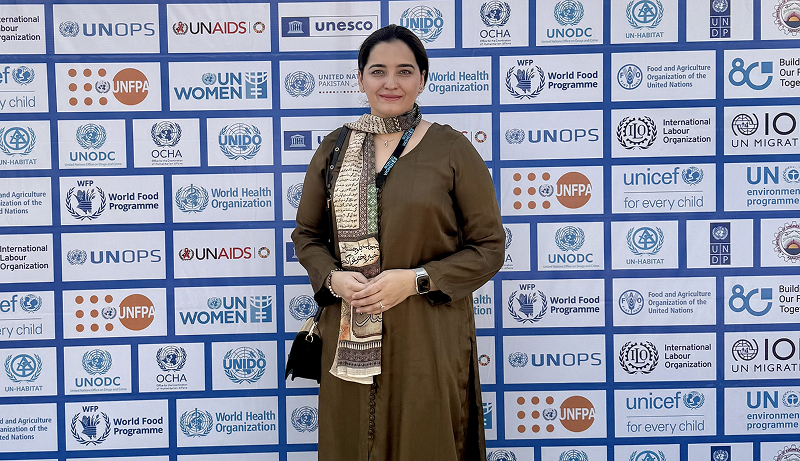
Zarqa at UN Day 2025.
“I enrolled in a Bachelor of Business Administration and Information Technology. After graduating, I joined a civil society organisation for my first professional role,” she said.
“I was fortunate to have a husband who encouraged me to pursue my professional aspirations rather than put them aside.”
That opportunity became a defining moment in Zarqa’s career. It introduced her to the development sector and ignited a lifelong commitment to serving the most marginalised communities.
Pursuing greater perspective
Around this time, Zarqa started dreaming of piloting her own development program, but felt she had more to learn before she could dive in.
“Although I had a lot of practical exposure, I lacked some theoretical knowledge. I really wanted that for the work I was doing in development and humanitarian programs,” she said.
This led Zarqa to the Australia Awards Scholarships – a prestigious opportunity that supports international students’ development so they can drive change and contribute to development in their own countries.
Being shortlisted for the scholarship brought mixed emotions for Zarqa. She was excited by the opportunity to pursue a world-class education, but she was also expecting her first child.
“I declined the offer from the Australia Awards Committee because I felt I could not manage a newborn while undertaking such a demanding program,” she recalled.
“The Australia Awards Committee contacted me and said, ‘Please, don't lose this opportunity. Take some time, recover, and apply again next year.’”
This encouragement proved transformative. Zarqa successfully reapplied for the Australia Awards Scholarship in 2019.
Her husband wholeheartedly supported her decision and planned to join her in Melbourne to help care for their young daughter while she completed her masters degree. However, the COVID-19 pandemic brought an unexpected new set of challenges.
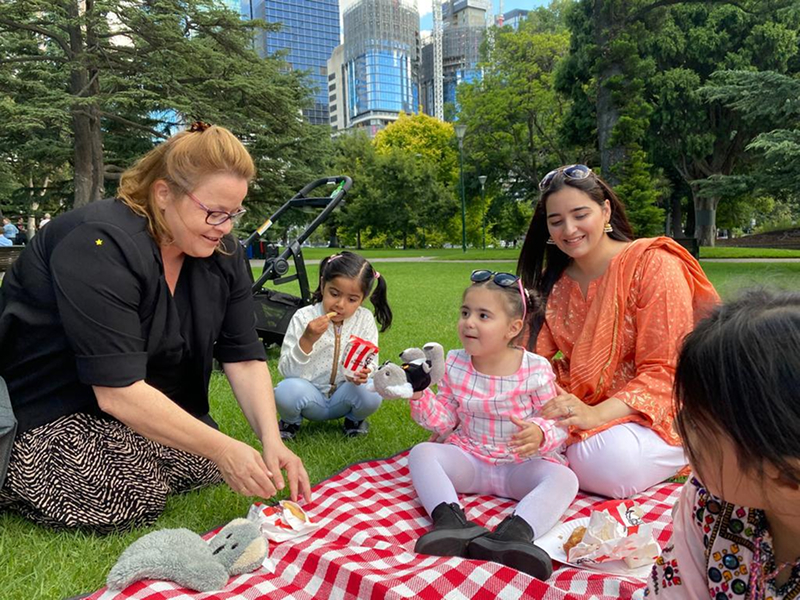
Zarqa (right) and her daughter attending an Australia Awards Scholars picnic in Melbourne.
International travel restrictions and border closures meant those plans could not go ahead, leaving Zarqa to navigate motherhood and full-time study on her own for much of her time in Australia.
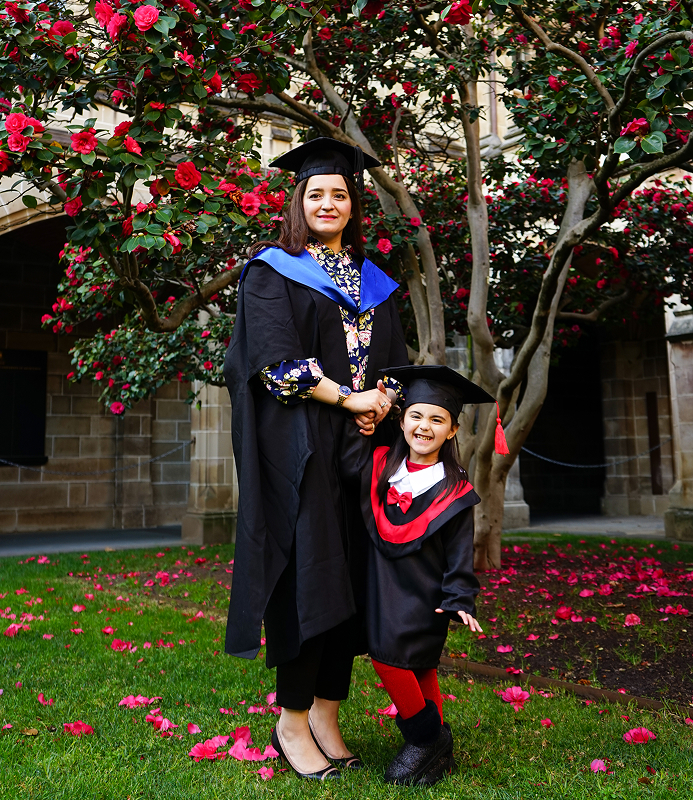
Before formal childcare arrangements were in place, her 18-month-old daughter accompanied her to classes. Zarqa recalls the extraordinary kindness shown by her lecturers, fellow students, and the wider University community.
Later, a vital source of support was the University’s Queensberry Children's Centre. Access to high-quality early childhood education and care provided Zarqa with the reassurance and stability she needed to fully engage in her studies.
“Melbourne is a place with people from everywhere – with different cultures, religions and interests. That really changed my perspective,” she said.
Zarqa’s multicultural cohort allowed her to gain first-hand knowledge of how the development sector operates around the world, and the relationships she built continue to provide her support today.
“A fellow alum and friend is working with the International Organization for Migration. She shares her experiences from the migration sector, which closely intersects with my own work,” said Zarqa.
Zarqa also proudly mentors current and prospective students, sharing her experiences of balancing motherhood, studying abroad, and building a career in international development.
“This scholarship was important for theoretical knowledge, exposure and building my own personality. I believe that it helped me become a better human and serve in a better way.”
Multiplying impact
Since taking up her role at UN Women Pakistan, Zarqa’s influence extends beyond those she helps through her work – she inspires young women and girls who also grew up in her home province.
“I’ve literally become an example for others and they follow in my footsteps. It really has improved the lives of those surrounding me,” she said.
Now eight years old, Zarqa’s daughter enjoys freedom and opportunities that Zarqa had to overcome in her own life.
“If she is interested in something, she can choose for herself – she’ll not have that barrier,” said Zarqa.
As full of ambition as ever, Zarqa is working towards even greater influence in the future.
“I don't want to restrict my work to my own community and my own country. I really foresee my career over the next five years at the global level, leading policy and building these programs,” she said.
To any student or alum facing barriers that seem insurmountable, Zarqa has hard-earned words of wisdom to share.
“My life has been a rollercoaster journey. Challenges do come in life, but you should not lose hope. If you are focused on your goals, you can achieve them.”
Stay connected
Your diverse alumni network offers unique opportunities for you to grow personally and professionally. Explore events, lectures, inspiring stories, global groups, and so much more.
-
Find an alumni event
From public lectures to alumni events that keep your community connected across the globe, see what’s on at the University of Melbourne.
-
Find a group
Join a vibrant alumni network in your local area to boost your career, build friendships, or connect with like-minded individuals.
-
Alumni Council
The Alumni Council champions your community worldwide, shaping events, student experience and more. Learn how to get involved.
How can we help?
FAQs and contact details
Find helpful answers to common questions or contact the alumni office.
Stay in the know
Learn how to set up your UniMelb account to access perks and discounts.
UniMelb account log in
Access your account to update your personal details and access benefits.