Climate intelligence could be the superpower that our expanding cities need
Joseph Glesta is a New Yorker. It’s not a city many tourists associate with nature, but natural spaces have always been important to Joe. His interest in urban green spaces started with work for the New York City parks department.
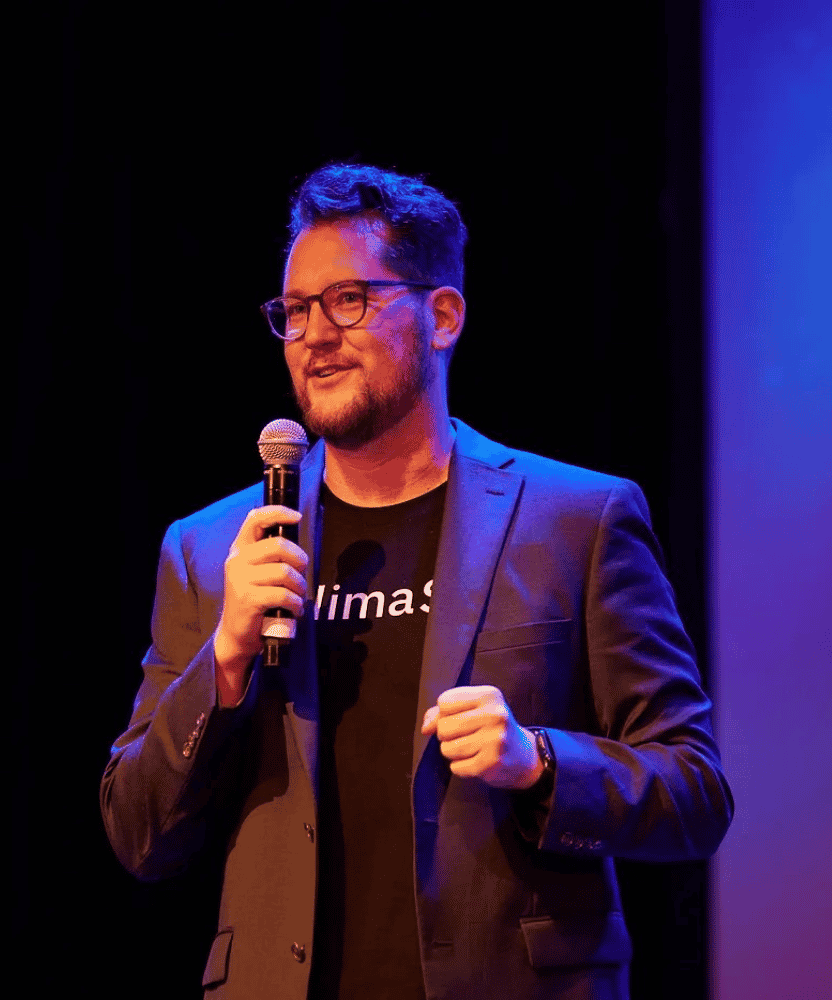
“I always liked that juxtaposition between urban and natural environments,” he says. “I want to live in a beautiful place, but that beautiful place has to have nature in it.”
But in 2008, Joe decided he needed a change of scenery. He found himself driving a tractor in rural New Zealand to earn a bit of money while travelling.
“I saw what nature was in its purest form. I saw an environment worth protecting, and I needed to do something about it.”
Many people find wonder and joy in nature. Yet, few go to the lengths Joe has done to protect it – completing two degrees and co-founding a climate intelligence start-up. What drives him?
“I think there’s a sense of responsibility,” he says. “You either have it or you don’t. My choice was: I need to get more educated in this space, and I need to keep working this problem.”
Why cities need climate resilience
After Joe completed undergraduate studies on sustainability, environment and society in Canada, he chose the University of Melbourne to continue his education.
“I saw the University of Melbourne’s Master of Environment as one of the premier schools and programs to focus on climate,” he says.
The breadth of course content allowed Joe to explore his interests in sustainability, while gravitating towards urban agriculture and green infrastructure.
“Urban agriculture, green roofs, green walls, trees, parks – that’s all part of creating resilience within cities,” he explains.
Almost half of the world’s population lives in cities. When you have hundreds of thousands of people relying on the same infrastructure for power, water, food and transport, the impact of damage and disruptions is magnified. Climate events such as floods, fires, heat waves and cyclones can be devastating. Cities must prepare for these risks.
“We need the data to help inform how we build the cities of tomorrow,” Joe says.
“I want to continue scaling practical tools that help decision makers act earlier and more effectively on climate risk, especially where it affects people’s health and safety.”
Taking climate insight to the next level
Joe’s Uni Melb masters’ thesis on green infrastructure policy became the springboard for founding a climate intelligence start-up, ClimaSens.
“We build climate risk analytics that help organisations understand where and when climate and weather hazards will have the greatest impact, and what to do about it,” he says.
“Our platform analyses acute weather and chronic climate risk from the next seven days to the next 70 years, across hazards including heatwaves, floods, fires and extreme winds, and we focus on making that information decision-ready for real planning and response.”

ClimaSens dashboard
But, back in 2017, Joe found Australia offered little support for climate start-ups.
“I spent years working the day job and doing the nine to five while doing the five to nine at ClimaSens,” he recalls. “That five to nine eventually culminated in a grant that we won through [the Australian Red Cross initiative] Humanitech, with funding from Telstra,” he says.
Today, ClimaSens has successfully piloted data platform HeatSens with the City of Melbourne to explore how data can strengthen heatwave planning. It enabled the City of Melbourne to send alerts to neighbourhoods at highest heat risk and to prioritise locations designated Community Cool Places – indoor, air-conditioned spaces available to people escaping extreme heat.
The company also worked with the Red Cross through Humanitech on a similar project in South Australia. Its work has also been recognised internationally, being selected through Google.org’s Impact Challenge on Climate Innovation and being featured by NVIDIA as one of a small group of climate-focused start-ups highlighted for using Earth-2-related approaches.
Joe and ClimaSens focus on climate resilience and adaptation because the climate data looks bleak.
“You have to maintain a positivity in this, but the reality is all the trends show us that we’re heading in the wrong direction,” he says. “And even if we do everything right, we’re still going to be heading in the wrong direction.
“It’s important for us to secure ourselves and make sure that we’re going to be prepared for the years to come that will not be great for us.”
Supercharging climate change analysis
Machine learning – artificial intelligence – is amplifying climate intelligence. Joe says the industry has gone through its biggest change in decades with recent advances in machine learning and the advent of open-source models from giants including Google and NVIDIA.
“AI touches absolutely everything that we do in climate change analysis; from the aggregation of data to the dissemination of data, to [its] interpretation,” Joe says.
Machine learning’s strength is in combining data sets from different sources and finding patterns in the data – a process that is difficult and laborious for a team of analysts.
However, the biggest barrier Joe faces in his climate risk analysis work is a lack of funding. He thinks governments and institutions should seriously consider their roles in understanding and mitigating climate risks in a warming world.
“I think it’s important to also reflect on the university as a community, and how it faces climate shocks,” he adds.
So, how does he keep going when being confronted every day with evidence of how badly the climate is tracking?
“You get a sense of purpose through the clients that you work with,” Joe says. “They need the data more than you. If they don’t have the data behind those decisions, they can’t help the people at risk.
So, that is the purpose, and that’s why you get up and do what you do. My job is to give superheroes superpowers.
Stay connected
Your diverse alumni network offers unique opportunities for you to grow personally and professionally. Explore events, lectures, inspiring stories, global groups, and so much more.
-
Find an alumni event
From public lectures to alumni events that keep your community connected across the globe, see what’s on at the University of Melbourne.
-
Find a group
Join a vibrant alumni network in your local area to boost your career, build friendships, or connect with like-minded individuals.
-
Alumni Council
The Alumni Council champions your community worldwide, shaping events, student experience and more. Learn how to get involved.
How can we help?
FAQs and contact details
Find helpful answers to common questions or contact the alumni office.
Stay in the know
Learn how to set up your UniMelb account to access perks and discounts.
UniMelb account log in
Access your account to update your personal details and access benefits.