Choreographing courage for future Indigenous artists
As a Bachelor of Fine Arts (Dance) graduate, Amelia’s university years helped her discover not only her artistic voice, but also the confidence to claim it as an Indigenous artist.
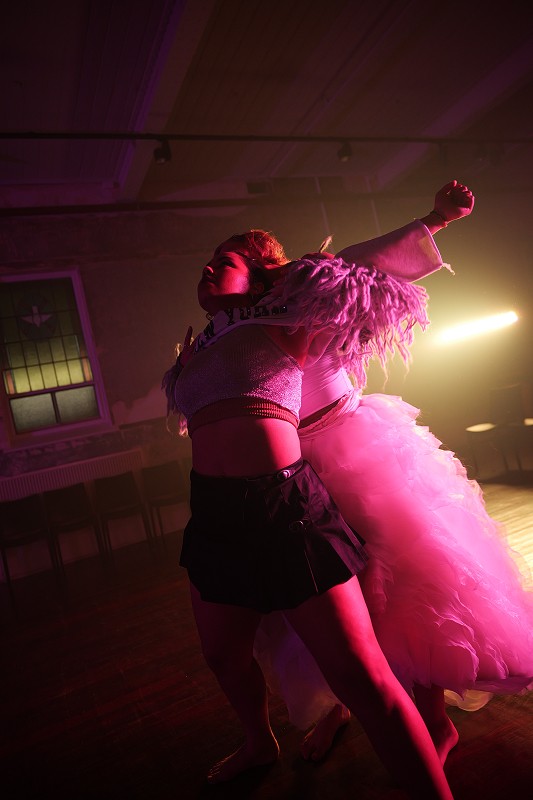
With ten major works to her name and numerous awards and accolades recognising her work, she is now focused on supporting younger Indigenous artists and bringing her artistry to audiences around the world.
Amelia’s passion for choreography emerged early on. She remembers coercing her cousins and siblings into learning her routines, soundtracked by popular music videos.
“I think I've always needed some way to express myself, and I think dancing allowed me to access parts of my mind, body, and spirit that I couldn’t otherwise,” she said.
Amelia’s love of dance only grew during her school years where she attended ballet lessons. She felt challenged and energised by the atmosphere in her classes.
After school, Amelia was accepted into the Victorian College of the Arts (VCA). “I felt like I was in a place where I could grow into what I wanted to be,” she said.
Amid the excitement, Amelia also felt different from many of her classmates and wrestled with the complex emotions that being in that environment brought to the surface.
“I was the only First Nations person in my cohort, and there were lots of people from different demographics and backgrounds that I wasn't used to,” she said.
Ultimately, Amelia grew grateful for her difference, as a question took shape in her mind – one she would honour throughout her career: How can I inhabit this space authentically, as myself?
Discovering strength and support
Amelia found a new sense of confidence during the second year of her dance degree, thanks to Kummarge, a program that supports Indigenous dance students.
“That gave me a lot of confidence. I think it changed things for me to have First Nations support available, it made me feel acknowledged,” said Amelia.
“I also think it's important to bring First Nations people in dance from different cohorts together, so you can talk about your experiences.”
Buoyed by a newfound sense of confidence, Amelia started to recognise her creative strengths.
“I felt like my writing and choreographic projects were quite strong,” she said. “I knew I could build on my technique and skills, but my ability to analyse dance and understand my own artistic voice felt unique.”
Amelia also received scholarship support that helped her feel at home in Melbourne and achieve her artistic goals.
“One of those scholarships supported me to make my first show, Yinarr,” said Amelia.
“I think grants and scholarships gave me the opportunity to be brave and confident, and without them, I wouldn't have been able to do what I did.”
What Amelia undertook straight after finishing her degree was certainly courageous – a solo, interstate tour of her first full-length work before ever performing it in Melbourne.
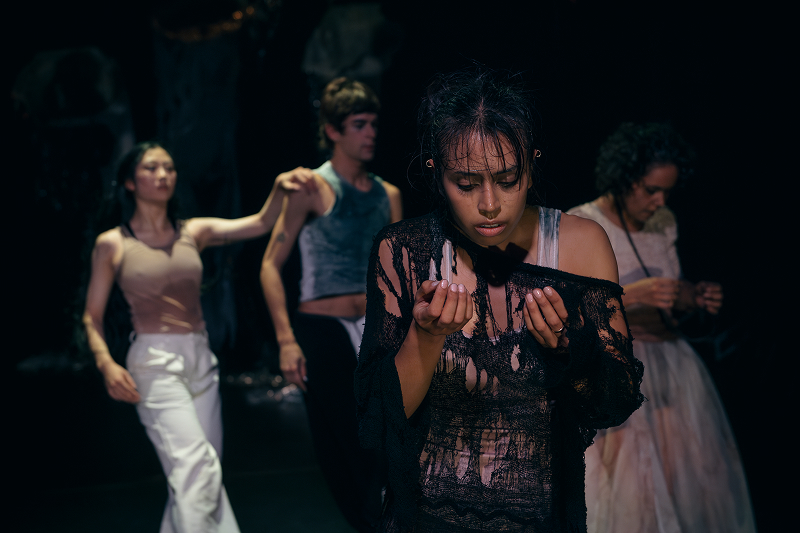
Amelia's 2025 work SAD EYES draws to the surface the complicated intersections of politics, identity and environmental concern.
“I performed at Adelaide Fringe Festival – four shows in a little chapel. It's really hard to get audiences there, so I was performing to less than five people in the audience,” shared Amelia.
“That's probably one of the hardest experiences that I’ve had.”
While performing at the festival was difficult for Amelia, it also instilled greater confidence in her – as she learned to trust herself to take on big challenges.
Contemporary dance on world stages
In the five years that have passed since the debut of Yinarr, Amelia has presented many more acclaimed, full-length works and sharpened her artistic expression.
“I describe my practice as embodied storytelling, abstract narratives and non-linear movement processes. I'm trying to access dance in a more authentic way to myself,” she explained.
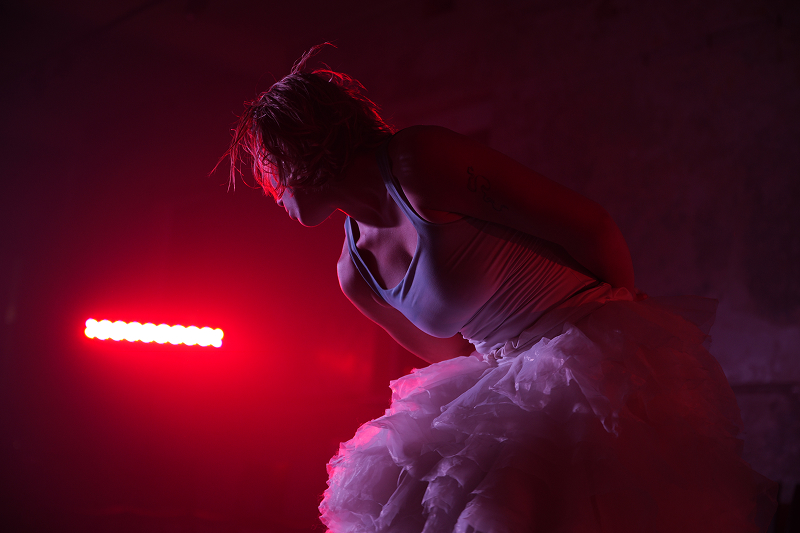
The title of Amelia's work Ngambaa translates to 'mother' in Gamilaraay.
“Most recently, I'm interested in somatic practices. I'm focusing on sensing the story – so instead of telling or interpreting the story, what happens when the body feels it?”
Alongside this embodied approach, Amelia always centres Indigenous practices and storytelling in her work.
“I make the sound, choreograph, direct and dance in most of my shows – and that multidisciplinary approach is an ancient thing that's been around for a very long time for First Nations people. Our practices were never separate,” she said.
Most importantly, honouring her Indigenous and queer identity in her work simply means honouring her personal truth.
“What I'm interested in is being as authentic and as truthful as I can,” she said.
“I don't want to label or stereotype myself into being a particular First Nations person or a particular queer person, but to allow myself to evolve past the boxes and barriers that society, Australia or the colony expect of me.”
Amelia’s bold approach to contemporary Indigenous performance has positioned her as a trailblazer in the field and led to international opportunities.
“I toured my show NGAMBAA to Matriarchs Uprising Festival in Vancouver, and that was amazing, getting to know other First Nations practices and people, and I’m also attending ImPulsTanz in Austria,” she said.
“I’ve learned that people internationally are genuinely interested in what's happened in Australia, the complicated history and the healing that's happening as well.”
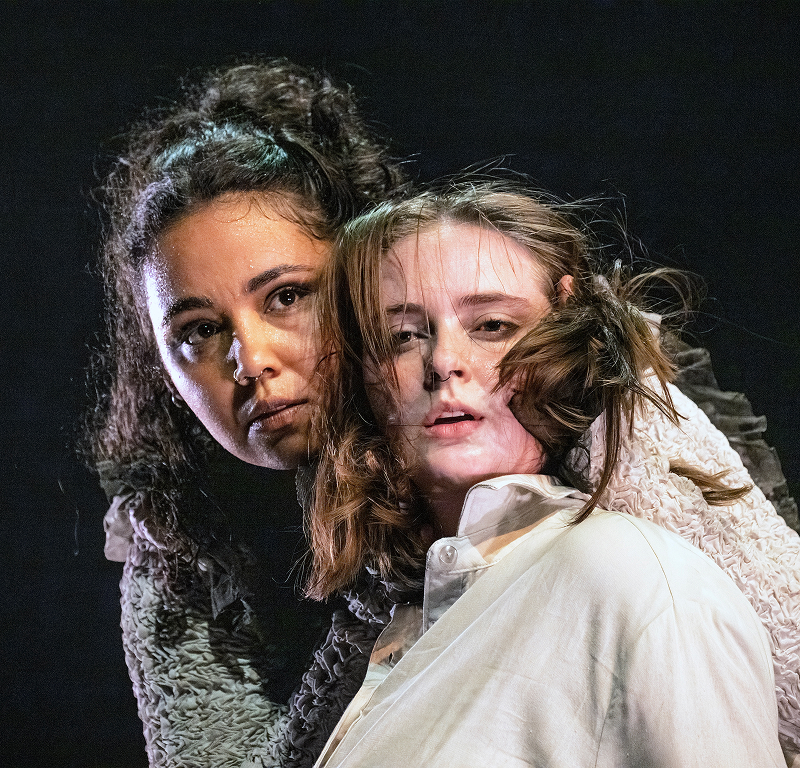
Amelia and performer Keia McGrady performing Ngambaa in Vancouver.
Her ethos extends to her local community, too. Amelia is passionate about helping and inspiring younger Indigenous artists – whether through help writing grants or by offering time in the studio.
“I'm trying to pass that sense of courage onto younger generations, too. I'm trying to encourage them to ask themselves: What do you want to do? What do you want to say? How do you want to say it?”
An artist’s journey
Reflecting on the purpose of her practice, at the heart of it, Amelia hopes to create access for audiences to feel empathy and compassion.
“I want them to be grounded in my practice, and to feel, in a way, acknowledged in what's happening in the space,” she said.
“I think by the audience sensing my feelings, or having a kinesthetic reaction to my movement, I hope in return, it allows them to have a better understanding of their own body and feelings.”
And to other young artists hoping to embark on a bold and fruitful creative career, Amelia has some words of advice.
“Trust your authenticity and your interests, and go live life,” she said.
“If that means you have to work a different job than you had imagined, or go to a different country, I would say go and do it. I think that to be an artist, you need to have perspective.”
Stay connected
Your diverse alumni network offers unique opportunities for you to grow personally and professionally. Explore events, lectures, inspiring stories, global groups, and so much more.
-
Find an alumni event
From public lectures to alumni events that keep your community connected across the globe, see what’s on at the University of Melbourne.
-
Find a group
Join a vibrant alumni network in your local area to boost your career, build friendships, or connect with like-minded individuals.
-
Alumni Council
The Alumni Council champions your community worldwide, shaping events, student experience and more. Learn how to get involved.
How can we help?
FAQs and contact details
Find helpful answers to common questions or contact the alumni office.
Stay in the know
Learn how to set up your UniMelb account to access perks and discounts.
UniMelb account log in
Access your account to update your personal details and access benefits.