Changing minds for climate action in cities
Huey Yoong helps cities move faster and further on climate action, confronting what can seem an overwhelming problem by breaking it down into manageable chunks. Sustainable cities are her focus.
“Sustainability has always been a part of my life, given my Dad was teaching us things like recycling and energy efficiency from a young age,” says Huey, now the Head of Implementation for East, Southeast Asia and Oceania at C40 Cities, a global network of megacities committed to advance climate action.
“As my career continued, the interest in sustainability was growing and it was fantastic discovering the alignment in terms of purpose and my capability to advance the work.”
Relationships are at the centre of everything
Huey completed a Bachelor of Science with a major in psychology and genetics at the University of Melbourne in 2004. Both the technical and human skills she developed through this mix of disciplines have served her well throughout her career.
“In any industry that you go into, there is no way that you’re not going to interface with people,” she says. “You can have technical knowledge but, ultimately, it’s about how you communicate with people and really bring people along.”
The Melbourne Curriculum gave Huey the opportunity to explore her interests before deciding her majors. She encourages students to be open to new experiences and unexpected perspectives.
“It’s alright to make mistakes,” she says. “It’s good to try things out and figure out, ‘Oh, this is not working for me.’ At least you’ve eliminated that, rather than [wondering], ‘Oh, should I have gone for it?’
“I think that really embodies the Australian spirit of giving everything a fair go.”
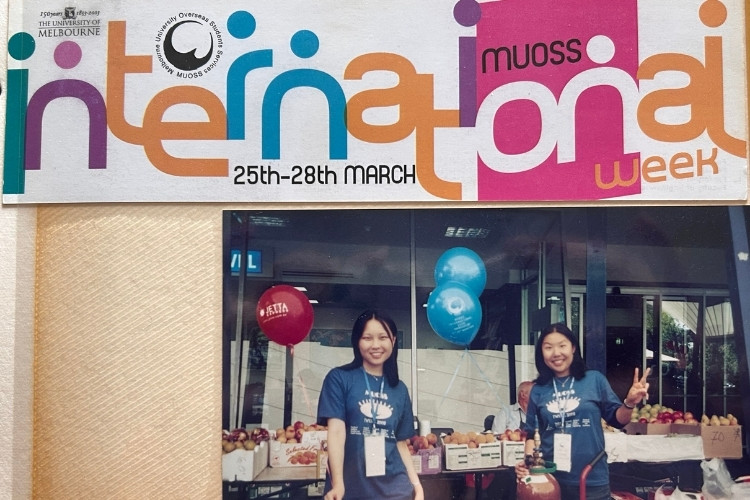
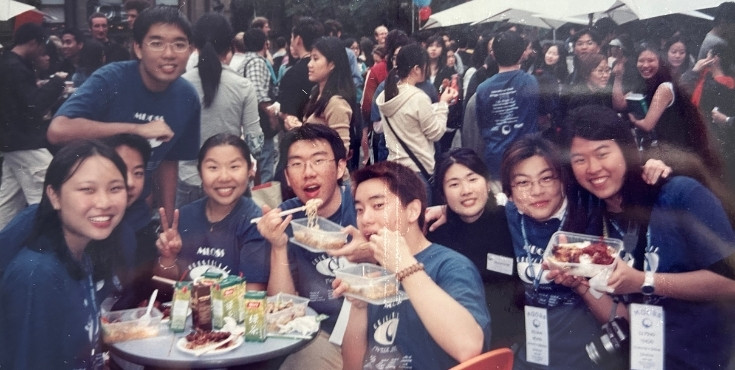
One particular relationship from Huey’s university days has stayed with her. Huey and her best friend, Kerri, initially met in Malaysia, where Huey grew up, before drifting apart, only to reconnect through Melbourne University Overseas Student Services (MUOSS) when they were both studying at the University. Twenty years on, despite living in different countries, Huey and Kerri remain close.
MUOSS creates a space for students to connect over a shared experience of moving to a new country to study and to explore all the amazing experiences that Melbourne has to offer.
“I think Melbourne University Overseas Student Services is a fantastic resource for anybody that’s sort of looking for an international university experience,” she says. “And it certainly has brought me more than I wished for.”
Why ‘people skills’ are necessary for climate action
The same interest in people that motivated her to study psychology now drives Huey’s work with cities to implement urban climate action.
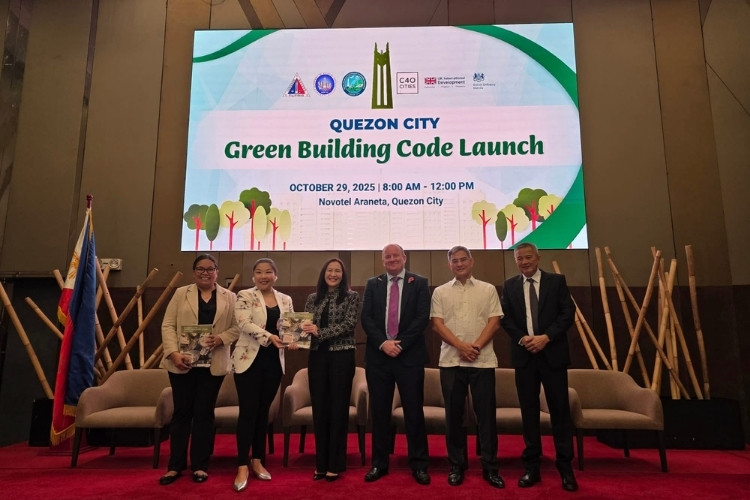
She led the Urban Climate Action Programme – Climate Action Implementation project in Kuala Lumpur, Jakarta and Quezon City, which involved working alongside cities to co-create and deliver climate solutions.
“But a lot of cities are struggling to see how they can address that, because energy systems are usually controlled on a national level. So, what you can actually do within your own jurisdiction is fairly limited,” Huey says.
In response, Huey and her team helped Quezon City pass a Green Building Ordinance, allowing the city to roll out changes sustainably over six years while pressuring compliance by owners. The new code is expected to reduce Quezon City’s greenhouse gas emissions by the equivalent of taking 120,000 cars off the road annually.
“Passing that into binding legislation is really, really gratifying,” Huey says.
However, reaching that point wasn’t easy. For starters, the team encountered resistance from city staff who were resistant to the extra workload, outside their usual focus. How does she work with something like that?
“You need to be humble enough to listen to people and to meet them where they are – but then, at the same time, be able to challenge them and bring them along the way as you grow,” she says. “Aligning everyone to a common purpose helps too!”
Huey’s leadership helped transform the staff from naysayers to internal champions for the project.
“It is immensely gratifying to see changes possible through policies and legislation, but also how it changes peoples’ mindset!”
Climate problems need holistic solutions
The best changes Huey sees in climate action are ones that involve holistic system transformation.
Many systems that keep our society ticking are interconnected. For example, agriculture currently relies heavily on fertilisers. Urea, a common nitrogen fertiliser, is mostly manufactured using natural gas. Our food system needs fossil fuels, even before we consider moving it from farm to table.
“When you move the lever in one area, other bits have to change, and that’s why it needs to be holistic,” says Huey.
China is so advanced in their adoption of electric vehicles because they’ve considered the problem through the lens of people, energy, knowledge and the environment all at once.
“They really look at it as an ecosystem rather than a product,” Huey says.
Melbourne, too, does well in linking heat, water, nature and sustainability, she believes. Droughts and heatwaves are perennial Australian problems. Green spaces can help lower the temperature, conserve water, capture carbon and help people thrive all at once.
Policymakers can enact this kind of systemic change to benefit the climate. But how can individuals and communities contribute?

Many people feel overwhelmed and powerless faced with the vastness and complexity of climate change. Huey has also felt that way. She remembers bawling one evening outside the Maughan Library while studying for her masters at King’s College London.
“[I thought], oh my God, this problem is so huge, and the more that you learn, the more you realise [that]. You really question if change is possible,” she says.
Huey worked through the dilemma by finding a part of the problem – and solution – that she could focus on – sustainable cities.
“I think people have to figure out, what are the chunks that you’re comfortable breaking it down to so as to make a difference,” she says.
Individuals and communities should choose the things they care about, and on a scale they’re able to influence. Outdoorsy people could champion green spaces, for example. Commuters might advocate for better public transport.
“Nobody can change the world overnight or by themselves, but when everyone cares and does little bits of that, it could really accumulate to something that’s meaningful.”
Stay connected
Your diverse alumni network offers unique opportunities for you to grow personally and professionally. Explore events, lectures, inspiring stories, global groups, and so much more.
-
Find an alumni event
From public lectures to alumni events that keep your community connected across the globe, see what’s on at the University of Melbourne.
-
Find a group
Join a vibrant alumni network in your local area to boost your career, build friendships, or connect with like-minded individuals.
-
Alumni Council
The Alumni Council champions your community worldwide, shaping events, student experience and more. Learn how to get involved.
How can we help?
FAQs and contact details
Find helpful answers to common questions or contact the alumni office.
Stay in the know
Learn how to set up your UniMelb account to access perks and discounts.
UniMelb account log in
Access your account to update your personal details and access benefits.