Communicating with care
Getting in front of a camera can be daunting enough, so what if someone is there to speak about trauma? Even if they want to share their perspective in the service of building awareness, they risk opening up old wounds and receiving unwanted responses every time they retell their story.
Media can be a really powerful way to make difficult subjects more human and relatable
Michelle Joy, a Senior Producer with the Video and Media team, has worked on a wide range of projects with researchers and clients who engage with big societal problems to find solutions that make real and sustainable change.
“Making media about taboo topics can help build understanding and hopefully sparks better conversations – especially with the grey areas of a complex topic.”
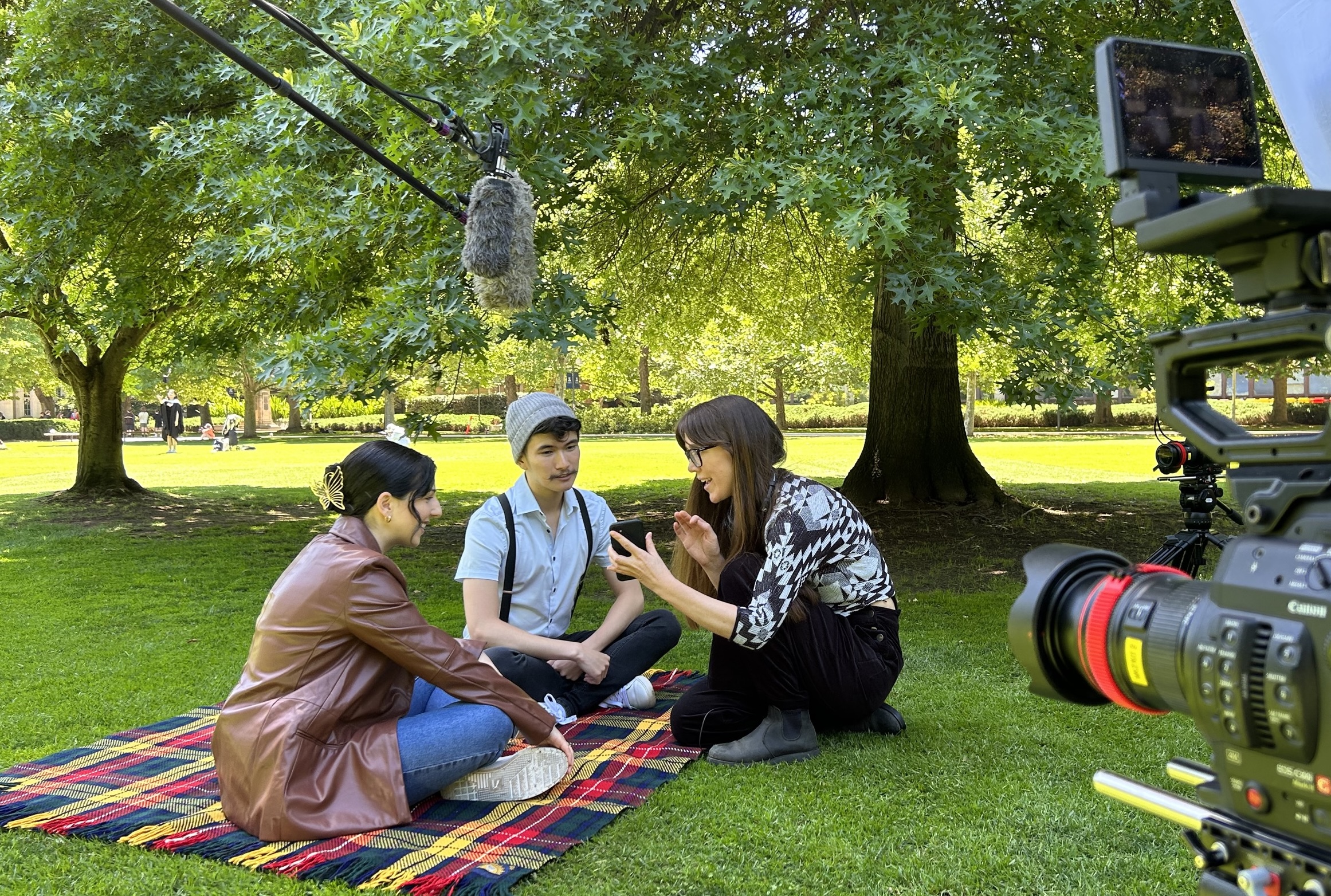
Filming sensitive material comes with risks
Which is why Michelle is on a journey to improve her practice holistically to ensure that everyone she works with – from collaborators through to crew – feels safe and supported.
“We want anyone who comes to us to be able to talk openly and feel more comfortable to have difficult conversations on camera. The more informed we are about facilitating these discussions, the less risk we take in re-traumatising anyone in the process.”
The principles of trauma-informed care:
- Safety
- Trustworthiness
- Choice
- Collaboration; and
- Empowerment.
In her collaborations with researchers and healthcare experts at the University, Michelle has become familiar with the principles of trauma-informed care. This framework helps shape how she approaches her media productions.
But how do they translate to the practicalities of making media content? Michelle says that extensive pre-production planning is essential, to think through and design contingencies that are specific and relevant to each production before filming.
Practical ways that Michelle creates a safer set for both her crew and her clients:
- Participants are briefed early and we work with them to shape the content, with anonymous options available if needed.
- Crew are informed about the subject matter ahead of time and asked to give their consent before coming on set.
- The schedule allows space for longer interviews, giving participants time to reflect and unpack complex topics.
- After filming, both crew and participants are checked in with, and support resources are offered.
Best Practice for the Video and Media team
The University has put increasing emphasis on long-term strategies to address systemic inequalities, with the ultimate goal being to create a safe and diverse environment in which students and staff of the University can thrive.
“As producers, we want to do our best thinking and planning to support these strategies and strive for sets that are safe for everyone involved,” said Michelle, who is currently working in collaboration with the Video and Media team on a Best Practice document for the team to refer to when planning their productions.
"We’re constantly learning, and there are always new tools we can add to our toolkit. It’s worth it, because we know it can lead to powerful results."
"Trauma informed from start to finish. Gentle, kind and safe engagement with the talent in the film, including staff and patients. The feedback continues to be outstanding the more the videos are shared."
- Amanda Morris, Royal Women’s Senior Program Manager, Family Violence
Are you interested in engaging with our team?
We can think with you to design and develop media solutions that will get the results you need, no matter what your situation involves.