Melbourne joins global consortium to advance drug discovery
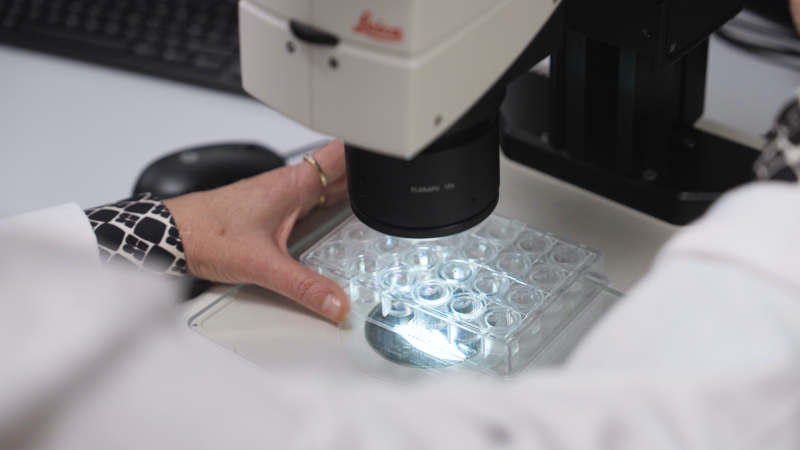
The University of Melbourne has joined the Structural Genomics Consortium (SGC) with the establishment of SGC-Melbourne, a new SGC Affiliated Site and the consortium’s only site in Australasia.
SGC-Melbourne will enable Australian scientists to contribute directly to Target 2035, the SGC-led global mission to develop a pharmacological tool for every human protein by 2035.
Led by University of Melbourne Professor Megan Maher, an internationally acclaimed chemist, SGC-Melbourne will connect Australia’s expertise in protein science, structural biology and chemical biology with the global SGC network, strengthening Australia’s capacity to address rare and challenging diseases.
A key part of Target 2035 is to generate the data to develop the next generation of artificial intelligence (AI) tools for drug discovery. AI has the potential to transform early drug discovery by predicting which compounds are most likely to interact with specific proteins. However, progress is limited by a lack of large, high-quality and consistently generated experimental datasets.
Through Target 2035, the SGC is building a global network of academic and industry partners to generate and openly share the protein–compound interaction data needed to train and test machine-learning models. SGC-Melbourne will contribute Australian expertise, infrastructure and data to this international effort.
The long-term goal is to make pharmacological tool discovery increasingly computational, reducing experimental trial and error and accelerating the identification of promising starting points for future medicines.
“Many medicines work by binding to proteins and changing their activity, much like a key fitting into a molecular lock,” Professor Maher, SGC-Melbourne Chief Scientist, said.
“With thousands of human proteins and billions of possible compounds, finding the right matches is an enormous scientific challenge.
“Through the SGC, we will generate large-scale datasets on how molecules interact with proteins and make that information openly available, creating the high-quality data needed for AI to predict new molecular tools, even for proteins that have so far been inaccessible to science.
“By understanding more of these molecular ‘locks’ and ‘keys’, we can dramatically accelerate the discovery of tools to study the biology of disease and support the development of new medicines.”
SGC Chief Executive Officer Professor Aled Edwards said SGC-Melbourne will be an Australian data-generation hub integrated into the international Target 2035 initiative.
“Target 2035 is a global mission, and achieving it requires a distributed international network of laboratories with complementary scientific strengths,” Professor Edwards said.
“The University of Melbourne, its partners and the wider Australian research ecosystem have the expertise, infrastructure and international connections to make Australia an important hub in this global effort. By enabling proteins to be produced, studied and screened in Australia using shared Target 2035 standards, the hub will allow Australian researchers and industry to contribute directly to and benefit from the global effort, while reducing the expense and delay of shipping samples overseas.”
The University of Melbourne is part of the largest biomedical precinct in the southern hemisphere, bringing together world-leading expertise across multiple disciplines.
SGC-Melbourne will be delivered in collaboration with partner institutions including WEHI, Peter MacCallum Cancer Centre and Murdoch Children’s Research Institute (MCRI).
MCRI Professor David Thorburn, Co-Group Leader of Brain and Mitochondrial Research, said rare diseases are one of the greatest unmet needs in medicine and a major opportunity for the SGC-Melbourne.
“Rare diseases are often overlooked by pharmaceutical companies because the patient populations are small, making drug development commercially challenging,” Professor Thorburn said.
“Although each rare disease affects fewer than one in 2000 people, there are more than 6,000 known rare disorders that collectively affect around one in 12 people.
“One of the biggest barriers to developing new therapies is that we often do not fully understand the function of the proteins affected by disease-causing genetic changes.
“By characterising these proteins and identifying compounds that interact with them, SGC-Melbourne will help uncover the biological mechanisms behind disease, helping to de-risk early-stage discovery research and accelerate progress towards targeted treatment for patients who currently have few options.”
University of Melbourne Professor Moira O'Bryan, Dean of Science, said the establishment of SGC-Melbourne will accelerate discovery across Australasia.
"SGC-Melbourne is a vote of confidence in the quality of Australian science and innovation," Professor O'Bryan said.
“It will unite internationally recognised expertise in key areas of biomedicine including mitochondrial biology, fertility and developmental biology, immunology and infectious disease and cancer with cutting edge expertise in structural biology, protein biophysics, ligand discovery and drug development. Together, this will drive discoveries of exceptional importance.
"SGC-Melbourne also complements Australia’s move to join Horizon Europe, strengthening connections between Australian researchers and international scientific, technology and open-science networks across Europe and beyond."
As part of the collaboration, the SGC will provide access to specialised technologies, screening libraries, world-leading know-how, and data infrastructure developed across its international network.
These contributions will enable the development of SGC-Melbourne and connect the site with capabilities currently available in only a small number of centres globally.