Professor Graeme Clark awarded Queen Elizabeth Prize for Engineering
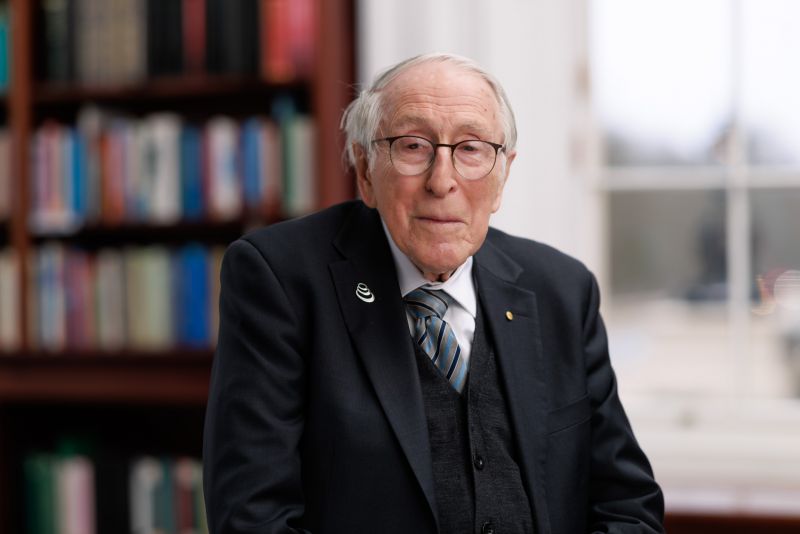
University of Melbourne Laureate Professor Graeme Clark AC has been awarded the 2026 Queen Elizabeth Prize for Engineering. The prize was announced by Lord Patrick Vallance, Chair of the Queen Elizabeth Prize for Engineering Foundation, at the Science Museum in London on 3 February.
Professor Clark pioneered one of Australia’s greatest bioengineering achievements, the Bionic Ear. Developed and commercialised during the 1970s and ’80s, his multi-channel cochlear implant was the first device to allow severely-to-profoundly deaf people to understand speech. It has brought the gift of hearing to deaf children and adults around the world, with the help of industry partner Cochlear Limited.
Professor Clark is one of four scientists to receive the award for their collective contributions to the development of cochlear implants, including advances in electrical stimulation, multi-channel systems, miniaturisation and sound processing.
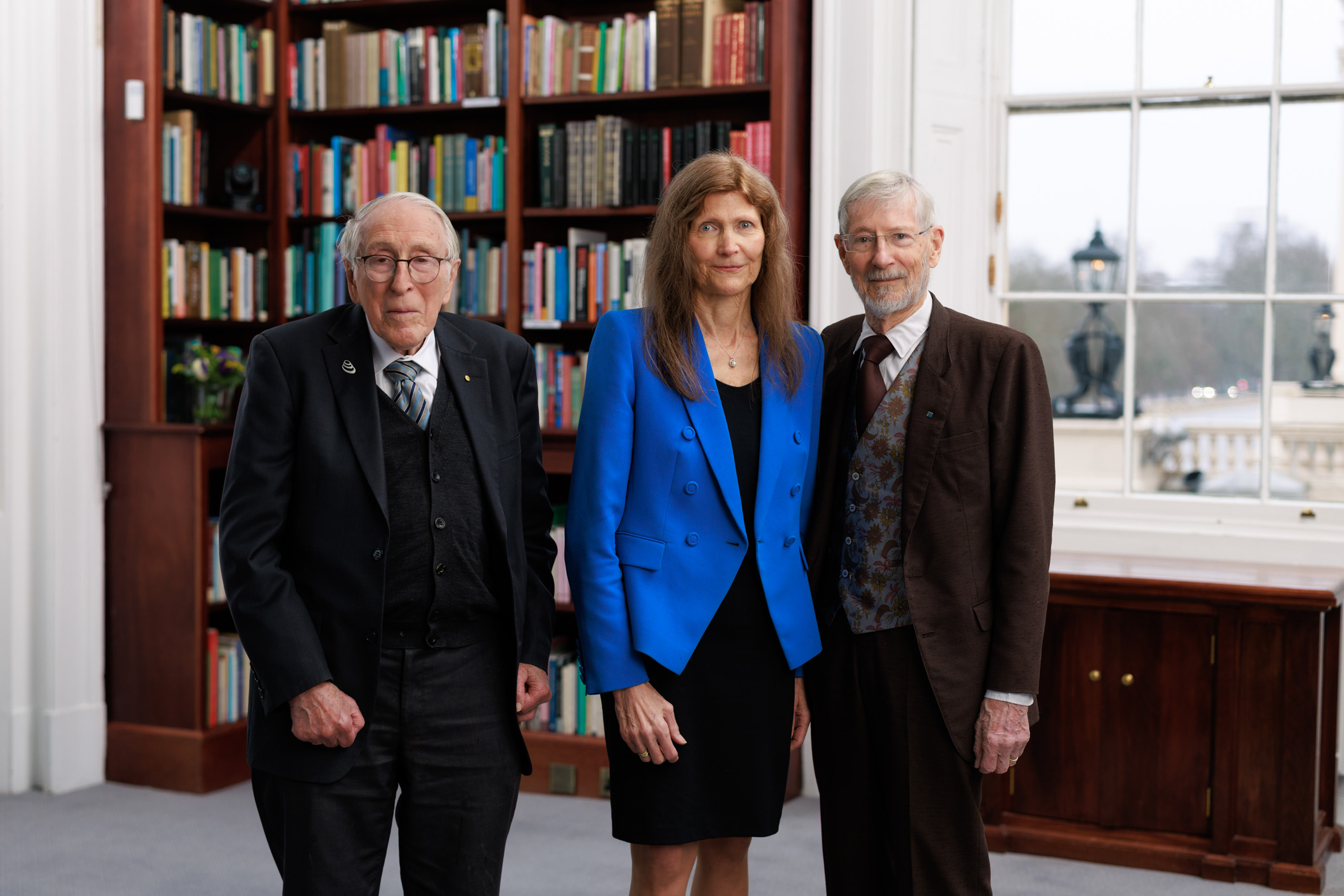 L-R: Professor Graeme Clark, Dr Ingeborg Hochmair and Professor Erwin Hochmair. Picture: QEPrize / Jason Alden.
The groundbreaking work of Professor Clark, Professor Erwin Hochmair, Dr Ingeborg Hochmair and Professor Blake Wilson has transformed cochlear implants from experimental devices into reliable neural prostheses used by over a million people globally.
University of Melbourne Deputy Vice-Chancellor (Research) Professor Mark Cassidy congratulated Professor Clark on the award and his outstanding career achievements.
“Professor Clark’s academic rigour, tenacity, curiosity, leadership, innovation and collaboration have had enduring positive impact on people around the world,” Professor Cassidy said.
“He exemplifies the mission of our university to deliver transformative research for the benefit of society.”
Professor Clark is the only Australian to receive the award this year and has received many honours during his career, including being named Senior Australian of the Year in 2001. His work in auditory brain science was inspired in part by his own family’s experience.
“Over time, this research showed that multi-channel stimulation of the auditory nerve could restore elements of hearing, opening the door to an entirely new field of medical engineering,” Professor Clark said.
“I am honoured to be recognised alongside my colleagues by the Queen Elizabeth Prize for Engineering and proud to see how this field has grown to help people with a wide range of neurological conditions.”

L-R: Jonathan Narbett (Director of QEPrize), Prof Clark, Dr Ingeborg Hochmair, Professor Erwin Hochmair and Lord Vallance. Picture: QEPrize / Jason Alden.
Professor Dame Lynn Gladden, Chair of the Queen Elizabeth Prize for Engineering Judging Panel, said the winning innovation stood out for the judges because of its clear and demonstrable impact on people’s lives.
“Modern neural interfaces represent engineering at its most powerful, translating deep scientific understanding into practical solutions that restore essential human functions,” she said.
“While the field encompasses a range of different technologies at different stages of maturity, together they exemplify the engineering excellence the Queen Elizabeth Prize for Engineering seeks to recognise – work that combines rigour, creativity and major contributions to society.”
Professors John Donoghue, Alim Louis Benabid, Pierre Pollak, Jocelyne Bloch and Grégoire Courtine also received the prize for their work in developing neural interfaces. The nine 2026 Laureates join a distinguished group of engineers whose work has improved the lives of millions of people worldwide. They will share the £500,000 prize and will be formally honoured at a Presentation Ceremony at a later date, when they will receive a unique trophy, designed by the 2026 Create the Trophy winner Kayla Taqiya, aged 21, from Indonesia.