Renowned economist Sri Mulyani Indrawati delivers the 2026 Southeast Asia Oration
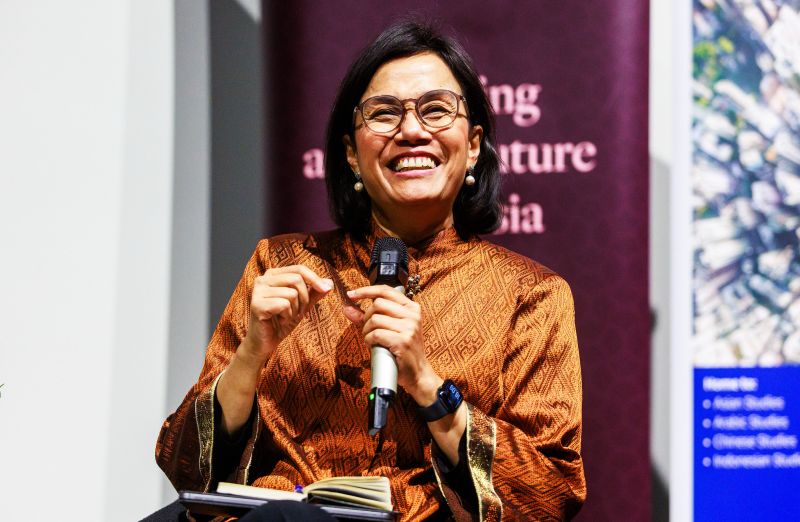
Renowned economist and former Indonesian Finance Minister Dr Sri Mulyani Indrawati delivered the 2026 Southeast Asia Oration at the University of Melbourne last night, calling for deeper regional cooperation and a renewed focus on productivity, human capital and institutional strength to help ASEAN avoid the middle-income trap.
The Oration welcomed a diverse audience of policymakers, academics, business leaders, diplomats, students and Indonesia diaspora. In an address titled ASEAN: Avoiding the Middle-Income Trap through Cooperation, Sri Mulyani outlined the major economic and geopolitical challenges facing Southeast Asia and the policy choices required to secure long-term prosperity.
“ASEAN stands at a historic turning point,” Sri Mulyani said. “The growth model that served the region exceptionally well for decades is reaching its limits.
“Escaping the middle-income trap is not simply about increasing GDP per capita. It is about transforming the quality of growth. It requires stronger institutions. More productive firms. Better education. Greater innovation. Cleaner energy. More resilient supply chains. And above all, deeper cooperation.”
Drawing on East Asia’s development experience, Sri Mulyani argued that slowing global trade, population ageing, technological disruption and geopolitical fragmentation are reshaping the foundations of economic growth.
She urged ASEAN economies to transition from export-led growth to productivity-led growth, invest in education and technological capability, strengthen governance and fiscal discipline and deepen regional economic integration.
“The future of ASEAN will not be shaped by external forces alone. It will be shaped by the policy choices we make today and by our willingness to act on them,” she said.
The Oration followed the Southeast Asia Update, which brought together leading experts, policymakers and practitioners to explore major political, economic and strategic developments and discuss Southeast Asia’s evolving role in an increasingly complex global environment.
Professor Michael Wesley, Deputy Vice-Chancellor (Global, Culture and Engagement) at the University of Melbourne, emphasised the importance of convening such conversations.
“Sri Mulyani’s address highlights both the extraordinary achievements of Southeast Asia’s development journey and the complex challenges that lie ahead,” Professor Wesley said. “Her message reinforces the importance of strong institutions, investment in people and regional cooperation in building a more prosperous and resilient future for ASEAN.
“As a globally connected university, the University of Melbourne is committed to convening conversations that foster informed dialogue and strengthen the partnerships needed to address shared challenges and identify opportunities in our region.”
Rachel Thompson, CEO of Asialink, reflected on the significance of the event.
“For more than 35 years, Asialink has been committed to strengthening Australia’s engagement with Asia,” Ms Thompson said. “The Southeast Asia Oration and Update bring leading regional voices to Australian audiences, fostering dialogue, partnerships and connections that help Australia engage more deeply with Southeast Asia.”
The Southeast Asia Oration is a collaborative initiative presented by Asialink and the Asia Institute at the University of Melbourne, with support from the ASEAN Australia Centre. Through this annual event, regional leaders and experts come together to share insights and foster meaningful dialogue, deepening understanding of critical political, economic, social and cultural issues, and strengthening networks for positive change throughout the region.