Professor Richard Robson wins Nobel Prize in Chemistry

University of Melbourne Professor Richard Robson is one of three scientists awarded the 2025 Nobel Prize in Chemistry.
Professor Robson, Professor Susumu Kitagawa from Kyoto University and Professor Omar M. Yaghi from the University of California were recognised by the Royal Swedish Academy of Sciences for their development of metal-organic frameworks (MOFs).
Metal-organic frameworks are a new class of solids being developed into gas and energy storage devices, catalytic reactors and other potentially revolutionary products.
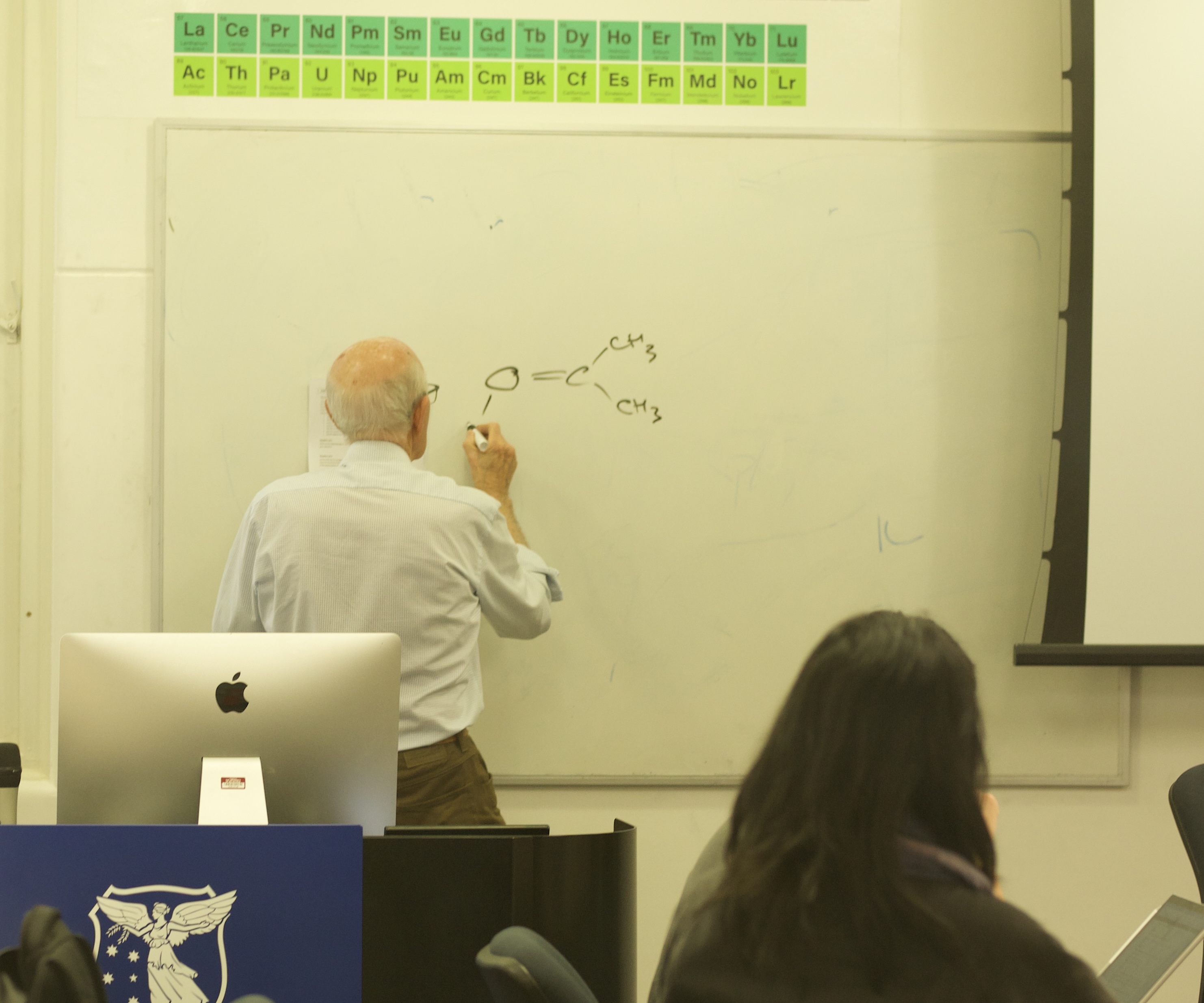 Professor Robson taking first-year students through a chemistry tutorial, the day after his Nobel Prize was announced. Picture: Mireille Stahle/University of Melbourne.
Professor Robson was back at work hours after the announcement, taking a first-year chemistry tutorial.
“It’s a great honour and pleasure,” Professor Robson said.
“We’re trying to make organic units with specific geometric and chemical properties, that are designed to interact with infinite structures of targeted connectivity and geometry.
“In the early days I was working alone, but it was only when I had collaboration with people like Bernard Hoskins and Brendan Abrahams that the whole thing became viable.
“They provided the real science, and I was just the hand waver.”
University of Melbourne Vice-Chancellor Professor Emma Johnston AO congratulated Professor Robson for winning a Nobel Prize, the highest possible recognition for his achievements.
“This is the kind of blue-sky research that not many people get the opportunity to explore, and even fewer make the kinds of breakthroughs Professor Robson has achieved,” Professor Johnston said.
“Australia needs to recognise that this long-term fundamental research is what allows us to then translate that research into products, like the ability to store and transfer hydrogen safely.
“As long as we continue searching for solutions for the world’s greatest challenges, fundamental research is essential. There are still serious scientific and technological hurdles to overcome. If we are to solve these, it will be drawing on the foundation of long-term fundamental research that universities enable.
“This is a testament to Professor Robson and others who are inspired and motivated by a deep curiosity about how the world works, and to the institutions that support and enable long-term fundamental research for the benefit of society.”
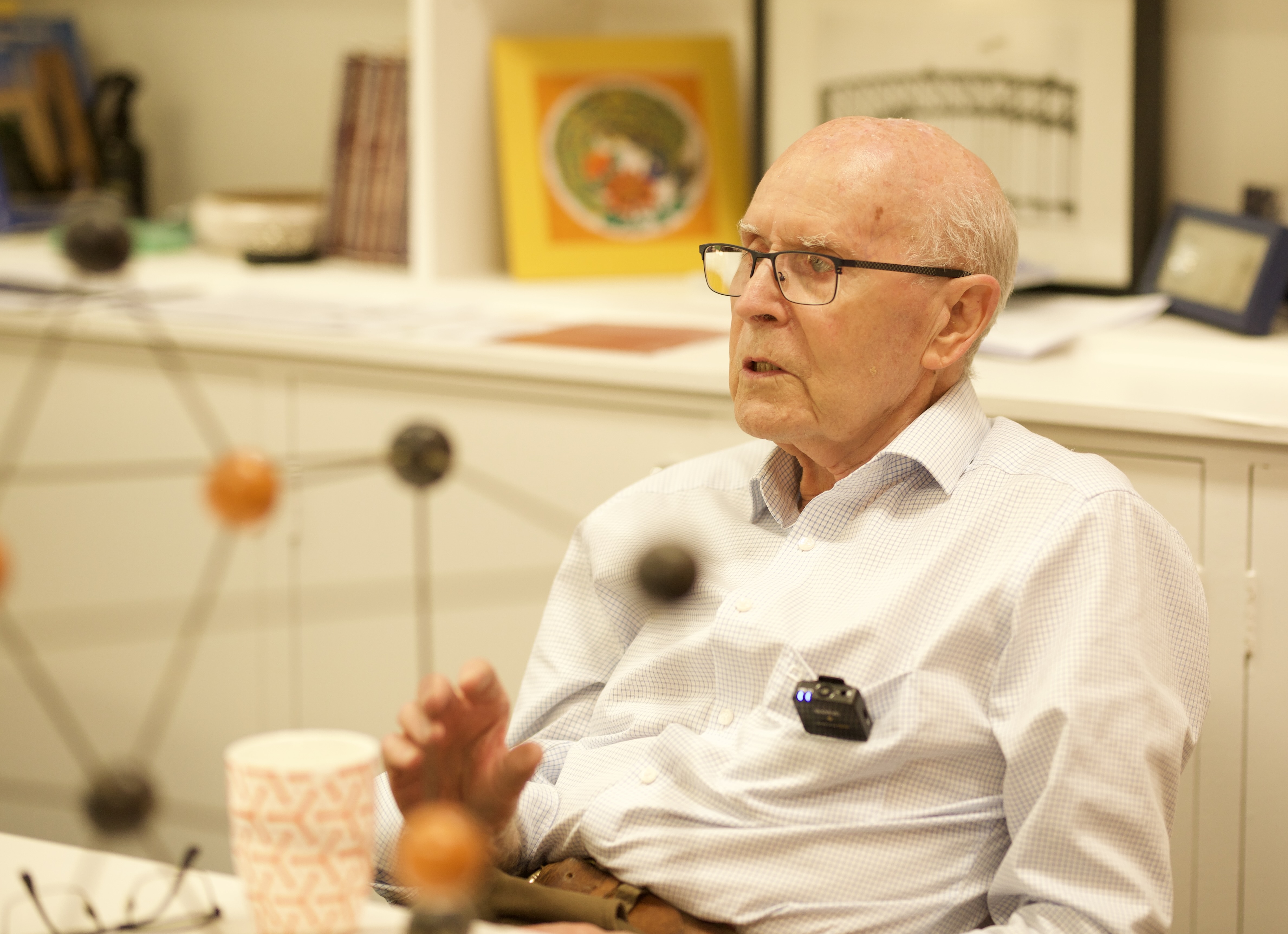 Professor Robson, who has been a lecturer and researcher at the University of Melbourne since 1966, on campus after the announcement. Picture: Zoya John/University of Melbourne.
Professor Robson has been a lecturer and researcher at the University of Melbourne since 1966. He produced the first metal-organic frameworks in the early 1990s and has continued to explore different forms of metal-organic frameworks ever since.
Among many awards, he was elected a Fellow of the Royal Society in 2022 and had a Professorial Chair at the University of Melbourne named after him in 2024.
University of Melbourne Deputy Vice-Chancellor (Research) Professor Mark Cassidy said the Australian research community will be excited for Professor Robson, and for the recognition this award brings to Australian research.
“Professor Robson is a humble man who has achieved this honour by simply doing what he loves – going into the lab every day, talking with students, thinking big chemistry thoughts for decades and running experiments,” Professor Cassidy said.
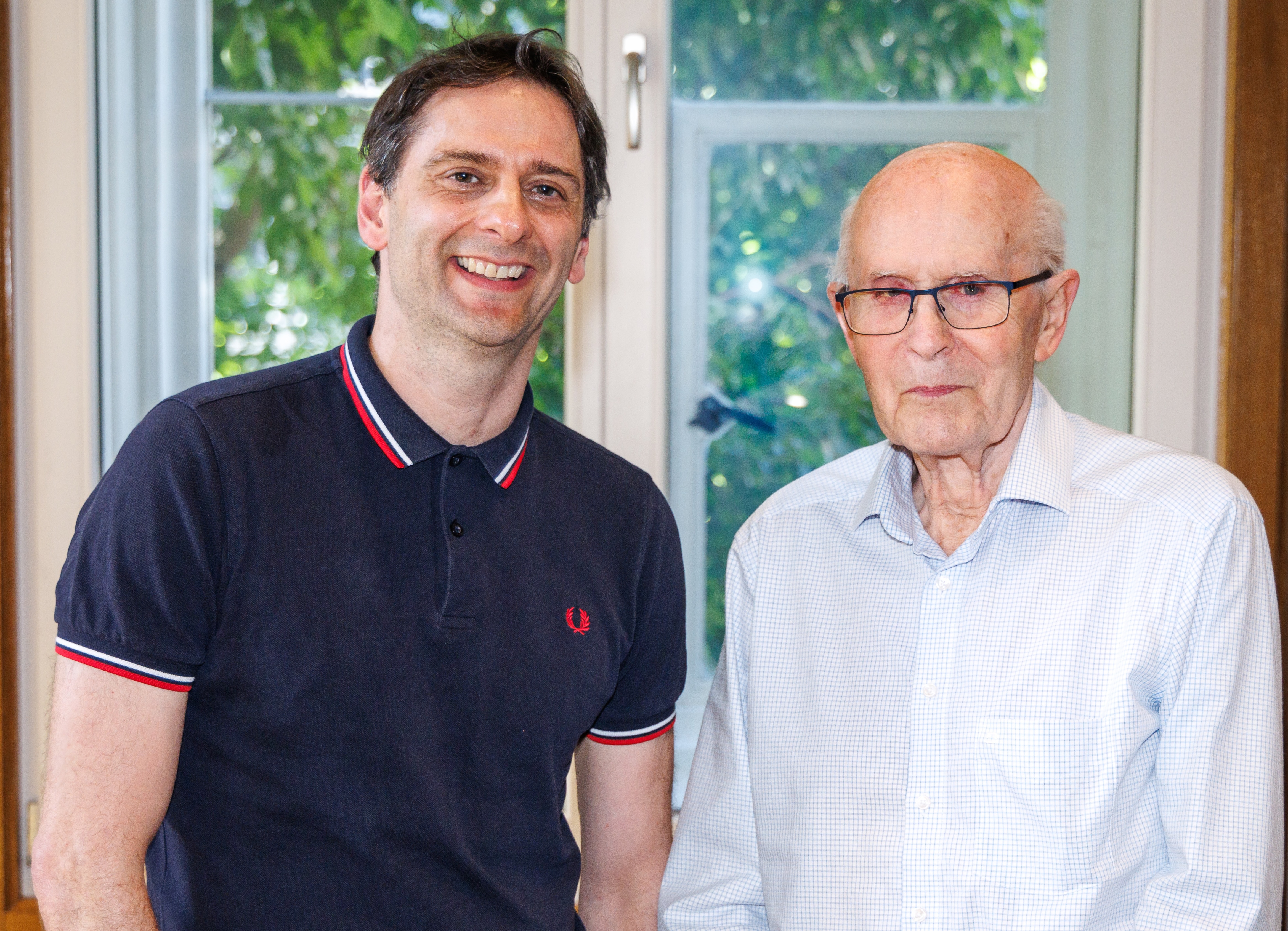 Professor Paul Donnelly, the inaugural Richard Robson Chair of Chemistry, with Professor Robson. Picture: University of Melbourne.
“He has been a valued member of our School of Chemistry for almost 60 years and has collaborated with and inspired countless academics and students with his wisdom and the wonderful story of how he came to build the first examples of what are now known as metal-organic frameworks.
“This award will no doubt spark a flurry of further research to develop MOFs into products that could be crucial to the renewable energy revolution.
“This is a wonderful day for Professor Robson and Australian science.”
Other University of Melbourne Nobel Laureates include Elizabeth Blackburn (Physiology or medicine, 2009), Sir James Mirrlees (Economic Sciences, 1996), Sir John Eccles (Physiology or medicine, 1963), Sir Frank Macfarlane Burnet (Physiology or medicine, 1960), and Peter Doherty (Physiology or medicine, 1996).
Tilman Ruff was a founder of ICAN, the International Campaign to Abolish Nuclear Weapons, which was awarded the Nobel Peace Prize in 2017.
In addition, former University of Melbourne academic James A Robinson was awarded the 2024 Nobel Prize in Economic Sciences.
More content:
Professor Robson tells of his reaction to winning the Nobel Prize and reflects on his research.
Read more about Professor Robson in this Pursuit article.