How 18-month-old Hudson heard for the first time thanks to Professor Graeme Clark
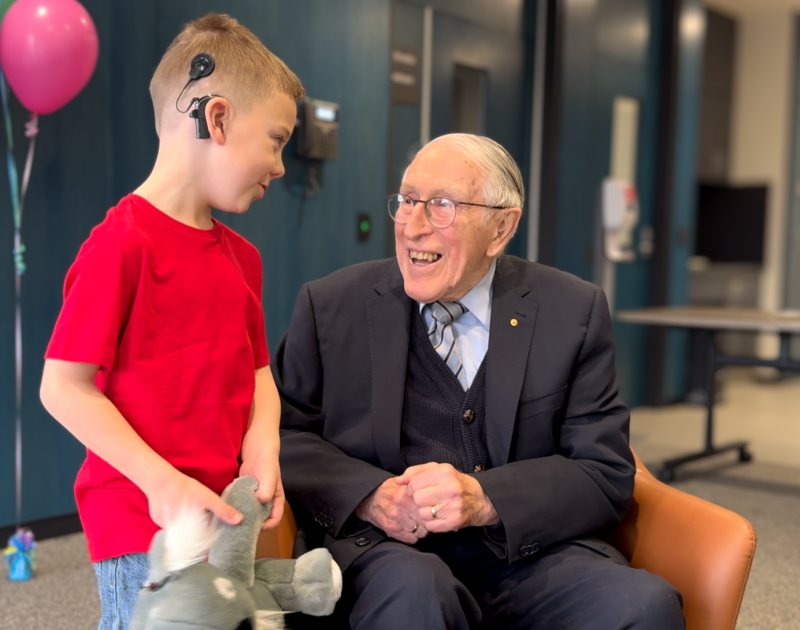
Kate remembers the day perfectly her 18-month-old son Hudson heard sounds for the first time after receiving a multichannel cochlear implant.
“We left hospital and we walked over to the Fitzroy Gardens,” Kate said. “We walked up to a beautiful waterfall and he was sitting in the pram and he was just staring at the waterfall.
“Seeing his little face locked onto the waterfall because he could hear it, it was such a beautiful moment.”
Hudson, now six, is one of hundreds of thousands of people worldwide who can now hear thanks to Laureate Professor Graeme Clark AC and the team who developed the multichannel cochlear implant, a tiny device developed at the University of Melbourne nearly 50 years ago.
It brought together medicine, engineering and industry to transform lives and was a defining moment in Australian biomedical innovation, kick starting an ongoing global transformation in hearing health.
This month marks the 40th anniversary of the first child to receive a multichannel cochlear implant developed specifically for children, as well as the establishment of the first public hospital Cochlear Implant Clinic, based at The Royal Victorian Eye and Ear Hospital.
Professor Clark and his team at the University of Melbourne and Eye and Ear had performed the world’s first clinically successful implant of a multichannel cochlear device, restoring hearing to an adult in 1978.
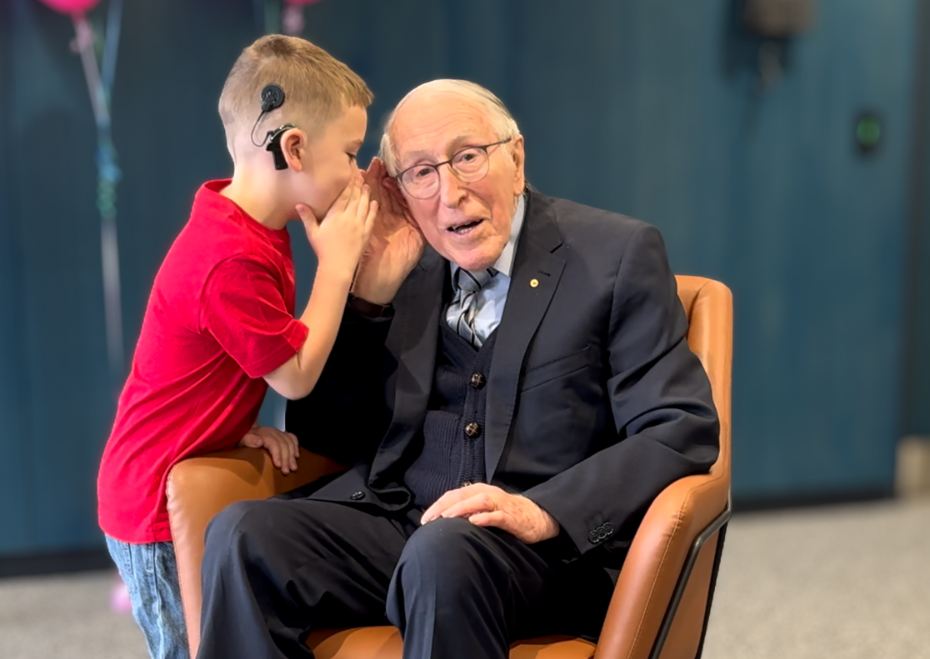
Professor Graeme Clark AC and Hudson at the Royal Victorian Eye and Ear Hospital. Image credit: Taylah McLean/University of Melbourne.
Professor Clark, who celebrated his 90th birthday this month, said he is still moved by videos of people hearing certain sounds for the first time.
“This is a testament to the research and engineering performed in partnership with the Eye and Ear, the University of Melbourne and Cochlear Limited,” Professor Clark said.
The Royal Victorian Eye and Ear Hospital hosted an event on August 20 to mark the milestones, celebrating the thousands of lives changed by the clinic, the research and partnerships that continue to advance cochlear implant technology.
University of Melbourne Vice-Chancellor Professor Emma Johnston AO said: “The success story of the multichannel cochlear implant highlights the enduring impact of Professor Clark’s entrepreneurial vision and tenacity to develop what some believed was impossible.
“The University is proud to honour his profound and ongoing impact in biomedical engineering and innovation, and his legacy continues to inspire the next generation of leaders and how we approach cross-disciplinary research.”
Professor Clark’s achievements encapsulate the vision of the University’s Graeme Clark Institute for Biomedical Engineering, named in his honour, which seeks to continue his legacy and transform healthcare through biomedical engineering solutions that deliver global health, societal and economic benefits.