Blog Post - Keshia's Story
Interview with Keshia Arbour
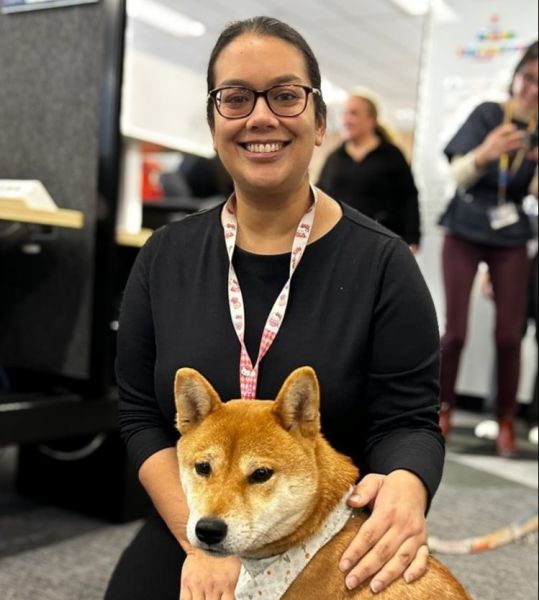
Keshia is a Proposal Manager in the Medical Research Future Fund (MRFF) team in Research, Commercialisation and Innovation (RIC) at the University of Melbourne. Keshia is also a member of the UoMNP Staff Advisory Group.
She works with researchers to help turn their ideas into funding proposals for the MRFF and turn their ideas into research that helps improve, and sometimes even save, the lives of many Australians.
In her own words, she shares her journey navigating ADHD through schooling, university, working in research management and parenthood.
Introduction
When I sat down to write this blog, I wondered what I wanted to say, as this is the first time I will be openly talking about being neurodivergent.
I decided not only did I want to talk about the parts of my journey that are common for many neurodivergent people who are diagnosed as adults, but about something I think we need to see more of: stories about finding out you are neurodivergent and being challenged as you process your diagnosis.
My experience of getting diagnosed with ADHD was something that looks a bit different to a lot of the stories I see in the media, and my journey was one that was a bit longer to reach this point of being proud of my neurodiversity and being ready to talk about it.
Childhood and Schooling
For as long as I can remember, I think there are two terms that have been consistently used to describe me: chatty and “a bit… different”. When I started primary school, these two things became obvious as I often got in trouble for not waiting my turn to speak, talking too much in class, or daydreaming. Making friends, despite my best efforts to try and fit in, felt like a struggle, as if somehow the other kids knew I was different.
I have a very clear memory of being around eight or nine, and starting to wonder if I was an alien. I even asked my mother if I was an alien, and when she said no, I remember this feeling of crushing disappointment because I felt like if that was true, it would explain why I just couldn’t fit in with the other kids.

It is easy for me to gloss over my early years at school and say — “well, having undiagnosed ADHD didn’t affect me because I was a good student who was well-behaved”. However, I have memories of not wanting to go to school because it was a real struggle.
It was hard for me because I could not contain these feelings of being both overwhelmed and excluded. I remember arriving coming home and passing out on the sofa most afternoons. I was so tired from spending the whole day trying to not fidget, to pay attention, to remember to not talk too much, to try to fit in, and to try and ignore some of the less-kind students.
This continued into high school, but I got a lot better at masking some of my ADHD traits. I still struggled a lot with focusing on things like assignments, and an emerging pattern of me starting the semester with a lot of enthusiasm, but then burning out when I got to the final hurdle began to show. I did well in my exams because, as I have now realised, I really excel at tasks with hard deadlines and time pressure.
Navigating University and graduate research
Without the constraints and boundaries of primary and secondary schooling, I struggled to adjust to university. Although moving to a bigger pond really helped me find some great friends, I also thrived being able to study and research my interests. But the same issues popped up again: I would start the semester brilliantly, and unless the final assessment was an exam, I would really struggle to maintain that energy and focus.
Like many people in research management, the first step in my career was in academia. I think in many ways academia can be a haven for neurodiverse people, but also quite a double-edged sword.
The constant demands to keep performing, and not being able to finish a task without thinking about the next, is challenging for ADHD.There is also the temptation of committing to too many things without finishing the first and going down rabbit holes (ask any ADHD person about the time they started looking at something and somehow found themselves on a random Wikipedia page…).
Early career in academia
Despite appearing to be doing very well, I was very deeply unhappy with myself and what I perceived to be my failure to be a better, normal person. I realise now I was holding myself to standards that I was never going to achieve, because they were standards that were impossible even for someone with a neurotypical brain. What seemed so easy for my peers, seemed to just be beyond comprehension at times for me and I just truly wanted to do, and be, better.

When I was in graduate school, one of the two major turning points that lead me to getting diagnosed with ADHD occurred. I think after years of trying to fit in and do my best, it just became too much, and it led to me burning out and deciding it was time to leave academia. I carried a lot of self-criticisms as a result, and I would keep coming back to a place where I would scold myself and say you need to change, you need to grow out of this.
I struggled to find friends amongst the other graduate students, and more than once, I overheard someone mention how annoying I was. Not only that, but I really did internalise this, and I began hoping and believing that the discomfort I felt within myself would magically change once I turned thirty: perhaps, I would be less “different”.
Adult diagnosis
The year I turned thirty, I worked in a job that required a lot of focus and attention to detail. I went through the same pattern of spending all day struggling to keep focused, then coming home and crashing. I felt at times that the team I worked with focused far more on pointing out what was wrong with my personality rather than acknowledge my performance. In hindsight, it was probably one of the least welcoming environments for a neurodivergent person with ADHD to be engaged in. This was the second turning point in my journey towards a diagnosis because it made me begin to realise that I was never going to “grow out of it”.
It was at that time, that one day, very randomly, I came across an article about being diagnosed with ADHD as an adult. It was a true revelation; the author was someone like me: they were someone who had done very well academically, went to graduate school, successfully held jobs but then had so many parts of themselves that were contradictory to these achievements. If I am honest, I felt a bit scared: It was the first time it occurred to me that I was actually different, and this wasn’t going to change.
I kept coming back to that article and every time I read it, it felt like I was slowly beginning to understand that I could have ADHD. I can’t remember what exactly made me decide to pursue a diagnosis, but I just decided it was time.
After I got diagnosed, I remember feeling like this was something I needed to hide and that it would create more problems for me. The way forward in my mind was to just try and work harder on fixing myself. Many people will talk about the grief they felt when they were diagnosed, and often this is grieving what could have been had they been diagnosed earlier.
However, I felt a lot of anger when I got diagnosed because I felt like I had spent most of my life not being able to ever feel comfortable and confident in myself, because despite my best efforts, people just didn’t seem to understand that this was who I was and how my brain worked.
Embracing neurodiversity and parenthood
I decided to become more open about having ADHD once I returned from parental leave, because I think becoming a parent helped me move to a deeper place of self-acceptance. Thinking about how my child could also be neurodivergent, I realised I needed to be able to teach them how to love and accept themselves, but I could only do this if I led by example.

I had a wonderful affirming experience at work a few weeks ago during a workshop. We had to pick words to describe ourselves, and the first word I picked was “verbal”. I found myself reflecting on how I would have felt about this word 10 years ago (I don’t think I would’ve picked it because I thought it was bad), 5 years ago (I would’ve picked it and then felt bad as I felt it was a negative thing) and now, I picked it thinking “That’s me!” with a smile.
While the words didn’t come with any kind of connotation, I think it demonstrated how powerful these types of descriptors can be for neurodiverse people, and where we are in our journey of accepting ourselves.
The advice I would give to a neurodiverse student or staff member is that it is important to remember your journey may not look like anyone else’s. It is okay to feel confused, angry, upset or even a little bit bitter when you are diagnosed. I think what has brought me to this point has been finding my people, and my people are so many different types of people; they’re my teammates, my colleagues, my neurodivergent friends, my neurotypical friends, my spouse and my family.
And I am grateful to be given the opportunity to be on the UoM Neurodiversity Staff Advisory Committee, and I believe becoming more open about being neurodivergent has been incredibly healing for me, as I am able to try and actively create a more neuro-affirming world in my own little way.