
Melbourne’s future 2030 and beyond: navigating growth, sustainability and community wellbeing
The University of Melbourne is partnering with The Age for the Melbourne Assembly, a conversation we must have about Melbourne's future as it heads towards becoming Australia's largest city.
On 19–21 October 2026, the Melbourne Assembly brings together key University of Melbourne academics, business and community representatives, policy makers and government leaders to explore and answer the big questions shaping Melbourne's economic, social and cultural development.
Share what matters most to you about Melbourne’s future
Make your choice and watch it become part of a collective picture of what people want for the city’s future.
Shaping Melbourne’s future together
As Melbourne grows into Australia's largest city, navigating its future requires bold, collaborative ideas. The Melbourne Assembly brings together diverse community voices, expert evidence and policy leaders to tackle major social and economic opportunities. Supported by the University of Melbourne, the initiative fosters meaningful dialogue and practical problem-solving to ensure our city continues to thrive.
For generations, the University has been deeply intertwined with Victoria’s intellectual, economic and social fabric. A thriving Melbourne drives a thriving University, and vice versa. Through world-leading research, education, and civic engagement, we’re committed to ensuring that growth benefits all Melburnians. The Melbourne Assembly is a natural progression of this mission, uniting expertise across the community to drive vital conversations that will define Melbourne’s path forward.
Explore the latest insights shaping Melbourne’s future
For in-depth analysis, we have brought together a series of thought leadership and research articles across Melbourne Assembly's four themes.
Featured content

Our University of Melbourne contributors and speakers at Melbourne Assembly
At the Melbourne Assembly, hear from leading University of Melbourne experts with wide-ranging expertise in education, innovation, identity and communities, sustainable planning and cultural engagement. University of Melbourne speakers include:

Professor Carolyn Evans
Professor Carolyn Evans is the Vice-Chancellor of the University of Melbourne. Before that, she was Vice-Chancellor and President of Griffith University. She has also been Deputy Vice-Chancellor and Deputy Provost at the University of Melbourne...
Read Professor Carolyn Evans's bio
Professor Carolyn Evans Incoming University of Melbourne Vice-Chancellor
Professor Carolyn Evans is the Vice-Chancellor of the University of Melbourne. Before that, she was Vice-Chancellor and President of Griffith University. She has also been Deputy Vice-Chancellor and Deputy Provost at the University of Melbourne and Dean of the Melbourne Law School. Professor Evans holds degrees in law and arts from the University of Melbourne and a doctorate in law from Oxford, where she studied as a Rhodes Scholar. She is a Fulbright Senior Scholar, fellow of the Academy of Social Sciences in Australia and has been on the boards of the State Library of Victoria, Committee for Economic Development Australia, and Open Universities Australia. She is currently the Chair of Universities Australia, the peak body for the university sector.

Professor Dan Hill
Professor Dan Hill is a leading international designer and urbanist whose work shapes how cities, institutions and public systems evolve. The current director of the Melbourne School of Design in the Faculty of Architecture, Building and Planning...
Professor Dan Hill Director, Melbourne School of Design at University of Melbourne
Professor Dan Hill is a leading international designer and urbanist whose work shapes how cities, institutions and public systems evolve. The current director of the Melbourne School of Design in the Faculty of Architecture, Building and Planning, Dan has held executive innovation and design roles with the Swedish government’s Vinnova (Stockholm), Arup (London and Sydney), SITRA (Helsinki) and the BBC. He is a former Mayor of London’s design advocate and visiting professor at UCL Institute for Innovation and Public Purpose. He sits on the boards of Regen Melbourne and Collingwood Yards.

Professor Marek Tesar
Professor Marek Tesar FPESA is Dean of the Faculty of Education at the University of Melbourne. As an internationally recognised leader in educational innovation, he is committed to shaping the future of education through research and collaboration.
Read Professor Marek Tesar's bio
Professor Marek Tesar Dean of Education at the University of Melbourne
Professor Marek Tesar FPESA is Dean of the Faculty of Education at the University of Melbourne. As an internationally recognised leader in educational innovation, he is committed to shaping the future of education through research and collaboration. Drawing on his experience as a qualified teacher, Professor Tesar's work explores how education can better prepare children and young people for the future. His scholarship bridges research, philosophy, policy and practice to reimagine education and foster innovation in teaching and learning. Professor Tesar has built an extensive international network of partnerships with universities, governments and organisations to advance educational innovation, research excellence and global collaboration. He is a fellow and past president of the Philosophy of Education Society of Australasia, and co-founded COLAB – Collaborative Online Learning Across Borders, a global partnership connecting universities across Australia, Asia, Europe and North America. In 2025, he received the Bloch Distinguished Career Award from the Reconceptualising Early Childhood Education Society in recognition of his outstanding contributions to the field.

Dr Tiriki Onus
Tiriki Onus is a Yorta Yorta and Dja Dja Wurrung artist, academic and filmmaker, and is Pro Vice-Chancellor (Indigenous), as well as being the head of the Wilin Centre for Indigenous Arts and Cultural Development, and co-director of the...
Dr Tiriki Onus Pro Vice-Chancellor (Indigenous), Head of the Wilin Centre for Indigenous Arts and Cultural Development, Office of the Vice-Chancellor, University of Melbourne
Tiriki Onus is a Yorta Yorta and Dja Dja Wurrung artist, academic and filmmaker, and is Pro Vice-Chancellor (Indigenous), as well as being the head of the Wilin Centre for Indigenous Arts and Cultural Development, and co-director of the Research Unit for Indigenous Arts and Cultures, in the Faculty of Fine Arts and Music at the University of Melbourne. In his role as PVC, Tiriki Onus supports the delivery of Murmuk Djerring with a particular focus on students. The role champions cultural safety, reducing historical fear and improving engagement and dissemination of Indigenous knowledge among students, within the university community and beyond. As an artist and educator, his work fosters innovation in research, development, advocacy, representation and inclusion of Indigenous arts and cultural practices and practitioners in the academy. He is a board member of Melbourne Theatre Company and Vic Screen. He is a cultural adviser to Victorian Opera and artistic and cultural adviser of Shepparton Art Museum.
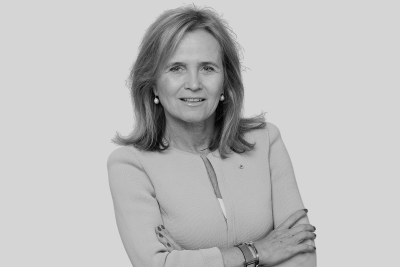
Professor Sharon Lewin
Named Melburnian of the Year in 2014, Sharon Lewin’s work as an infectious diseases physician and virologist has put her at the centre of global health crises for the past two decades. Her pioneering work focused on finding a cure for HIV earned her...
Read Professor Sharon Lewin's bio
Professor Sharon Lewin Director, Doherty Institute, University of Melbourne
Named Melburnian of the Year in 2014, Sharon Lewin’s work as an infectious diseases physician and virologist has put her at the centre of global health crises for the past two decades. Her pioneering work focused on finding a cure for HIV earned her the presidency of the International AIDS Society, while her expertise shaped both state and federal government public health responses during the COVID-19 pandemic. As the inaugural director of both the Peter Doherty Institute for Infection and Immunity and the Cumming Global Centre for Pandemic Therapeutics, she leads major research hubs tackling infectious diseases and pandemic prevention.
Precincts as Shared Spaces for Melbourne's Future
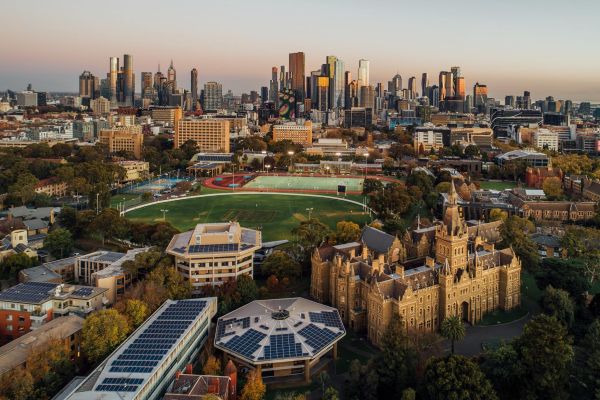
The University of Melbourne is central to three major Melbourne precincts. Far more than physical spaces, they are catalysts for solving the greatest challenges facing our city. Across the biomedical, innovation and cultural precincts, the intersection of education, research and industry creates unique environments where discovery translates into real-world impact.
Melbourne Arts Precinct
Inspiring artists, creative excellence and industry connection
Learn more about Melbourne Arts PrecinctMelbourne Biomedical Precinct
Breakthrough treatments and healthcare innovation
Learn more about Melbourne Biomedical PrecinctMelbourne Connect
Economic innovation – new industries, start-ups, and competitive advantage
Learn more about Melbourne ConnectStay connected with Melbourne
The University of Melbourne invests approximately $1.6 billion annually in research that supports Melbourne’s economy, strengthens communities, tackles major challenges and develops the city’s future leaders and innovators.
Impact showcases research highlights from across our faculties and precincts: our discoveries, collaborations, and innovations. These critical contributions to our nation's future are made possible by the brilliant work of our people and partners.
Pursuit provides the latest news, analysis, research, and insights from world-leading minds.
FAQ’s about Melbourne Assembly and the University of Melbourne
Melbourne Assembly is a collaborative forum involving the University of Melbourne, The Age and community leaders to explore the future of Melbourne, higher education, innovation and civic participation. The following FAQs provide additional information about the event, speakers, themes and the University's role.
-
The University of Melbourne is a key partner in the Melbourne Assembly, contributing academic expertise, research insights and thought leadership to discussions about Melbourne's future. Through leading researchers, subject matter experts and public engagement initiatives, the University helps facilitate evidence-informed conversations on the economic, social and cultural issues shaping Melbourne and Victoria.
-
The Melbourne Assembly explores how higher education can adapt to the evolving needs of students, employers and society. As a key thematic pillar of the event, Innovation and Education will examine workforce readiness, industry partnerships, digital transformation and the role of universities in addressing complex social and economic challenges.
-
As one of Australia's leading research universities, the University of Melbourne participates in the Melbourne Assembly to contribute evidence-based perspectives on issues affecting the future of Melbourne. The forum provides an opportunity for academics, industry leaders and community members to engage in informed discussions that support public understanding and future decision-making.
-
Research insights related to the Melbourne Assembly can be found through University of Melbourne’s thought leadership platform Pursuit. These resources provide evidence-based analysis and academic perspectives on the key topics discussed throughout the forum, including education, innovation, technology, sustainability and social policy.
-
The Melbourne Assembly brings together leading University of Melbourne academics and researchers from disciplines relevant to Melbourne’s future. Speakers include the University’s incoming Vice-Chancellor, Professor Carolyn Evans; the Director of the Melbourne School of Design, Professor Dan Hill; the Dean of Education, Professor Marek Tesar; the Head of the Wilin Centre for Indigenous Arts and Cultural Development and Pro Vice-Chancellor (Indigenous), Dr Tiriki Onus; and the Director of the Doherty Institute, Professor Sharon Lewin.