Strengthening global pandemic preparedness
Established with a visionary gift from international businessman and philanthropist Mr Geoffrey Cumming, a global initiative is driving revolutionary research into lifesaving disease treatments.
The Cumming Global Centre for Pandemic Therapeutics brings together top researchers from around the world to ensure that when the next pandemic inevitably strikes, we can rapidly develop effective treatments and save millions of lives.
Speed and agility are key to a successful pandemic response. By focusing on developing ‘plug and play’ platform technologies that can be applied in any pandemic scenario, no matter the pathogen, the Cumming Global Centre aims to ensure scientists can quickly pivot to new pathogens as they emerge, and develop therapeutics in much shorter timeframes than currently possible.
Meet two researchers working on pioneering new approaches to treating infectious diseases.
Opening powerful possibilities for coronavirus treatments
Dr Shane Devine and his team at the WEHI are focused on new treatment options for coronaviruses – the large family of respiratory viruses that cause illnesses ranging from the common cold to pneumonia and COVID-19.
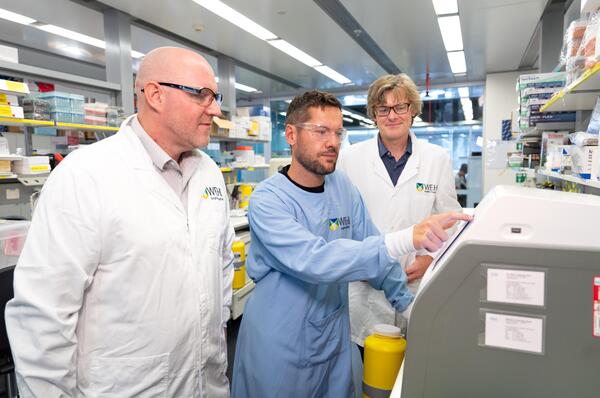
Airborne illnesses are particularly difficult to control, making coronaviruses a likely source of the next pandemic. Dr Devine says, “An effective treatment for coronaviruses would completely change pandemic management.”
Dr Devine’s project specifically aims to inhibit the papain-like protease (PLpro), an enzyme that plays a key part in the replication of coronaviruses. In a world-first, Dr Devine’s team has developed small molecules that target PLpro across diverse coronavirus varieties. Early tests have shown promising results.
The ability to inhibit PLpro activity could yield therapeutics that target multiple strains of a virus, which would be an invaluable resource in combating novel pathogens as they change over time.
"We are making PLpro inhibitors that will literally stop coronavirus in its tracks,” Dr Devine said.
Harnessing the body’s natural immune response
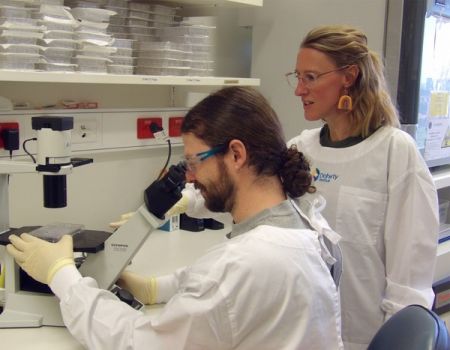
Dr Annabell Bachem from the Peter Doherty Institute of Infection and Immunity – a joint venture between the University of Melbourne and Royal Melbourne Hospital – is leading a groundbreaking study on programmed cell death. This natural response causes infected cells to self-destruct to prevent disease from spreading in the body. By studying how pathogens evade or suppress this defence mechanism, Dr Bachem’s research aims to apply therapeutics that can trigger programmed cell death, stopping pathogens from replicating, and reducing the severity and duration of illness.
Leveraging the body’s natural response – rather than targeting specific pathogens – means this versatile approach could potentially be applied to new pandemic threats. Dr Bachem hopes it will also lead to broad-spectrum therapies that can be used to treat a variety of viral and bacterial diseases, not just a single virus.
We might develop a therapy that helps us with not just one pandemic, but potentially the next five pandemics.
Learn more about Dr Bachem's research here.
The security to take risks
These researchers are able to pursue lifesaving breakthroughs with philanthropically supported Foundation Grants from the Cumming Global Centre. In a funding landscape that unfortunately often rewards low-risk research, where profitability and incremental progress is often prioritised over major discoveries, the Cumming Global Centre’s unique, mission-driven approach encourages innovation and pursuit of transformative projects that will have the greatest benefit to humanity. Long-term support frees the best scientific minds from onerous funding applications, to focus on research that will fundamentally change the way we manage and treat infectious disease.
Learn more about giving
Delve into stories of donor impact or find public lectures, gallery openings and more.
-
Impact of giving
The generosity of our donor community can be felt across industries – and will continue to improve lives for generations to come. Learn more about how our supporters are building a brighter future.
-
Ways to give
Whether you’d like to make a one-off gift or explore other meaningful options like leaving a gift in your Will, there are plenty of ways you can give to the University for a brighter future.
-
News and events
Stay connected with your passionate University community through thought-provoking public lectures, events celebrating our donor community or expert commentary on global issues.
How can we help?
FAQs and contact details
Find helpful answers to common questions and specialised contact details.
Give to education and research
Learn how you can support students and researchers.
Ways to give
Explore the varied and meaningful ways you can give towards a brighter future for all.