Rewiring hope for mental health
With support from the Blue Sky Foundation, psychiatrist Dr Leo Chen and his team are exploring new ways to use brain stimulation to treat complex mental health conditions.
The arrival of Claire’s* first child should have been a joyful new chapter. Instead, it became the beginning of an exhausting battle with postnatal depression.
After her son was born, Claire could not sleep. She was constantly overwhelmed by thoughts that she was doing everything wrong: dressing her baby incorrectly, failing him as a mother, becoming a burden to her husband.
She tried to push through. As a health professional in Melbourne, Claire knew what was recommended – to exercise, socialise, seek help from a GP. She even began antidepressant medication and worked on behavioural strategies with a psychiatrist. But she continued to feel miserable.
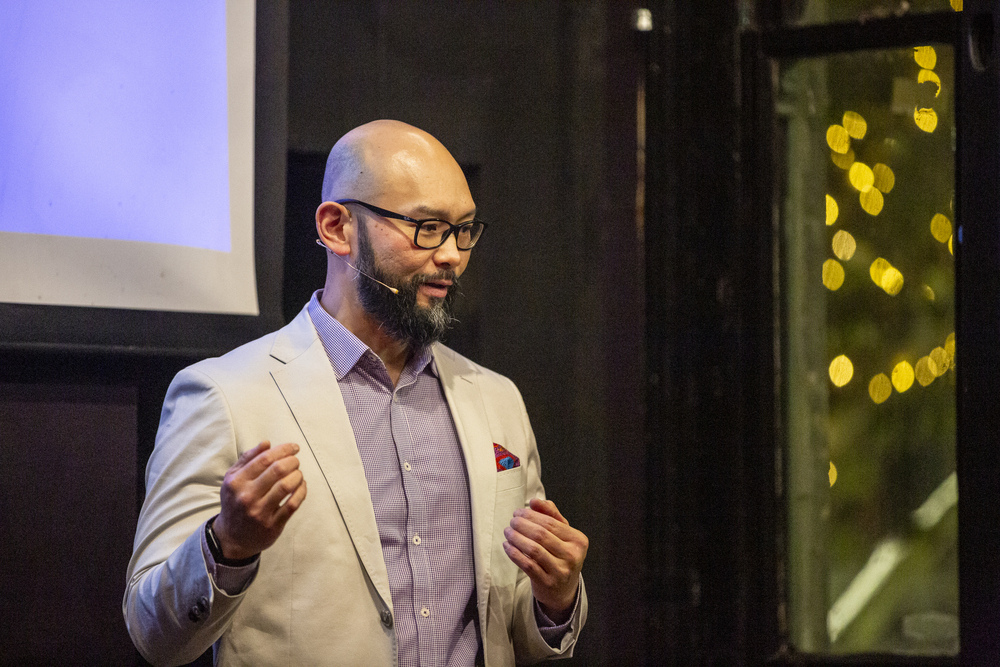
Hope found in TMS
Claire was eventually referred to Dr Leo Chen, Associate Professor of Psychiatry at St Vincent’s Hospital, who used a technology called Transcranial Magnetic Stimulation (TMS) to treat her depression. TMS uses targeted electromagnetic pulses administered through a wand about the size of an open hand to stimulate areas of the brain involved in mood, behaviour and decision-making.
For decades, TMS has presented a crucial alternative for patients with depression like Claire, who find conventional therapies or drugs do not work. After a course of treatment, and a few top-ups, Claire began to feel like herself again. She believes TMS saved her life.
In a recent podcast discussing Claire’s treatment, Dr Chen reflected, “Almost in a cascading way, the depression became more manageable because it was less severe. All the other helpful treatments and strategies – getting support from families, partners, exercise, behavioural strategies, mindfulness practices – they became more accessible to her.”
Expanding what’s possible
Since treating patients like Claire, Dr Chen has continued to explore new ways to use TMS. Now, with support from the Blue Sky Foundation, he and his team are working to expand access to TMS, pioneering ways to use the technology to target brain networks driving other serious and treatment-resistant conditions. This research could be a game changer for psychiatric conditions as diverse as drug and alcohol addiction, chronic pain and eating disorders.
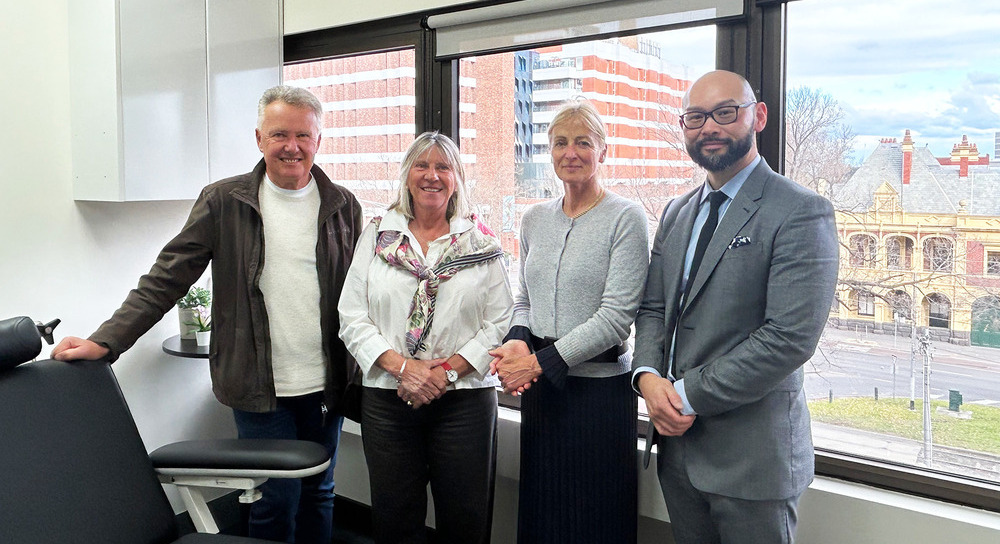
Blue Sky Foundation and Dr Leo Chen at the Brain Stimulation Lab.
TMS can influence the brain in a precise, non-invasive way.
Dr Chen says, “The opportunity now is to apply that expertise to conditions where people have had too few effective options for far too long.”
The Blue Sky Foundation have played a vital role in advancing transformative research and clinical trials in brain stimulation therapies, enabling Dr Chen and his collaborators to pursue new treatments for conditions where current options are often inadequate.
One of the most significant areas of focus is anorexia nervosa. Approximately 1.1 million Australians live with an eating disorder, and anorexia is among the most severe. Despite its devastating physical and psychological impacts, effective treatments remain limited, particularly for people who have not responded to existing care.
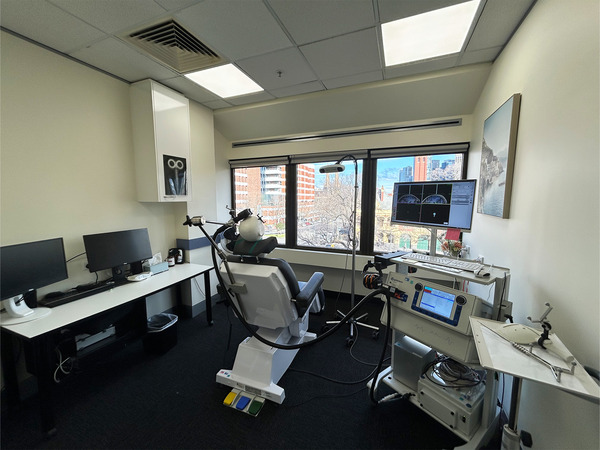
With support from the Blue Sky Foundation, Dr Chen’s team is pioneering a new approach to treating anorexia nervosa with TMS, building on an earlier breakthrough where Dr Chen and collaborators identified a brain network from brain lesions that caused anorexia thinking and behaviours.
That finding offers a new way of thinking about treatment. Rather than focusing only on the symptoms of anorexia, Dr Chen’s work aims to directly influence the neural circuits that may help treat the illness, and others like it, from its source – in the brain.
“For the first time, we have a clearer biological target for some of the mental health problems that make these illnesses so difficult to treat,” Dr Chen says. “That gives us a real opportunity to develop therapies that are more targeted, more effective and ultimately more hopeful for patients and families.”
*A pseudonym has been used to protect patient identity.
Listen to Associate Professor Leo Chen's Raising the Bar talk 'Brain network therapies: targeting circuits, transforming outcomes' here.
Learn more about giving
Delve into stories of donor impact or find public lectures, gallery openings and more.
-
Impact of giving
The generosity of our donor community can be felt across industries – and will continue to improve lives for generations to come. Learn more about how our supporters are building a brighter future.
-
Ways to give
Whether you’d like to make a one-off gift or explore other meaningful options like leaving a gift in your Will, there are plenty of ways you can give to the University for a brighter future.
-
News and events
Stay connected with your passionate University community through thought-provoking public lectures, events celebrating our donor community or expert commentary on global issues.
How can we help?
FAQs and contact details
Find helpful answers to common questions and specialised contact details.
Give to education and research
Learn how you can support students and researchers.
Ways to give
Explore the varied and meaningful ways you can give towards a brighter future for all.