A legacy of languages
The largest ever bequest towards research of Australian languages is supporting Indigenous community-led language documentation.
When a language ceases to be spoken, we lose more than words. The disappearance of a language comes with an irreplaceable loss of culture, identity and scientific knowledge.
When Professor Rachel Nordlinger worked with Wambaya Elders to create the only dictionary of their language – which has been spoken in the Barkly Tablelands region of the Northern Territory for thousands of years – she learned that Wambaya names existed for native trees that had never been identified by non-Indigenous botanists.
Professor Nordlinger and her team at the University of Melbourne Research Unit for Indigenous Language (RUIL) hope to end the historical loss of Indigenous languages, and preserve the meaning and knowledge held in these words for future generations. Supported by a generous gift in Will from the late Duncan Leary, RUIL works with communities across the country to document and promote Indigenous languages, and raise public awareness of how important these languages are.

in Gangulu.
The 50 Words Project
A key initiative of RUIL, the 50 Words Project aims to make fifty words from every Indigenous language of Australia available for everyone to hear and learn.
The languages and words are displayed online on a 50 Words interactive language map of Australia, allowing users to easily find information relevant to their local area. The project now showcases words from 97 languages, with more added regularly as communities around Australia contribute.
Community involvement is vital in the creation of these resources.
Professor Nordlinger says, “We have partnered with language centres around Australia to arrange in-community recordings and to support community-led language documentation.”
The written words are accompanied by audio provided by a language speaker. “It’s easy sometimes for Australians to think of Indigenous languages as something of the past, but by having the audio, it brings them to life. It becomes real, which is why it is so moving to hear the voices," Professor Nordlinger says.
A vital contribution to language conservation
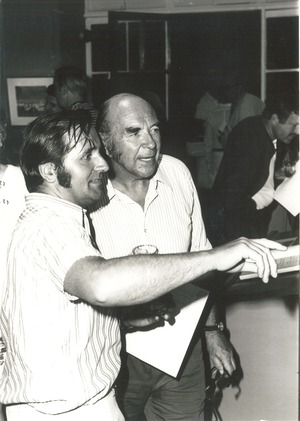
In 2017 RUIL received Duncan Leary’s extraordinary multi-million dollar bequest for the research of Australian Indigenous languages. Though we know little about Duncan Leary’s connection to Indigenous languages, he was evidently a passionate linguist, speaking five languages in addition to English. He graduated from the University of Melbourne in 1955 with a Bachelor of Arts and maintained a strong association with the University for the rest of his life. He studied many subjects through the University's continuing education program (now known as the Community Access Program), including a number of Indigenous history and culture subjects.
Duncan Leary’s generosity will continue to have a substantial impact on Indigenous language research and the ways in which the University is able to support Indigenous communities to maintain their linguistic heritage. His bequest ensures that RUIL’s efforts can continue for many years to come, with impact echoing through future generations of Australians.
Learn more about how you can create a lasting legacy with a gift in your Will.
Learn more about giving
Delve into stories of donor impact or find public lectures, gallery openings and more.
-
Impact of giving
The generosity of our donor community can be felt across industries – and will continue to improve lives for generations to come. Learn more about how our supporters are building a brighter future.
-
Ways to give
Whether you’d like to make a one-off gift or explore other meaningful options like leaving a gift in your Will, there are plenty of ways you can give to the University for a brighter future.
-
News and events
Stay connected with your passionate University community through thought-provoking public lectures, events celebrating our donor community or expert commentary on global issues.
How can we help?
FAQs and contact details
Find helpful answers to common questions and specialised contact details.
Give to education and research
Learn how you can support students and researchers.
Ways to give
Explore the varied and meaningful ways you can give towards a brighter future for all.