Fingerprints, faces, and privacy
Biometric security protects your devices and data using features like fingerprints or facial recognition that's always private, encrypted, and safely stored.

Passwords and PINs are great, but what if there was an even more secure way to log into your devices and accounts? Allow us to introduce you to biometrics.
 If you unlock your phone just by looking at it, or your laptop logs you in with the touch or swipe of a finger, you’re already on the biometrics bandwagon. You know it’s quick and easy, but have you stopped to ask, “What exactly is going on, why is it recommended, and is it really safe?”
Biometrics use unique physical traits (like your fingerprint or facial features) to confirm it’s really you. Each company calls it something different, but essentially, they all do the same thing. Face ID and Windows Hello unlock your device by recognising your face, and Fingerprint Unlock or Touch ID, use your fingerprint to verify your identity.
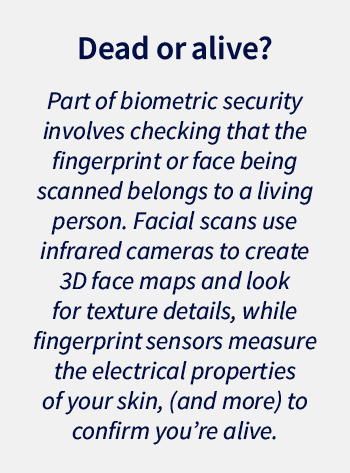
Aside from being faster, it’s also more secure than just using a password. A fingerprint or facial scan is much harder to fake or steal, and when used alongside or as part of multifactor authentication (MFA), it can really supercharge your defences against cyber criminals.
But who owns my fingerprint or face scan?
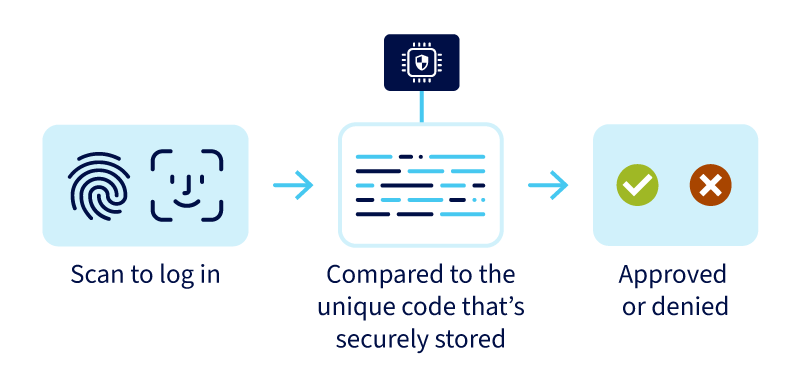
At this point you may be wondering “Where does all that biometric data go?” The good news is it doesn’t go anywhere! Built into each device is a secure chip that’s cut off from the internet, never backed up to the cloud, and fully encrypted.
Your biometrics are never saved as an image – they’re converted to a unique code (a mathematical representation that can never be reversed back into an image) and locked behind a digital door that only the secure chip can unlock. The data isn’t sent to the cloud or shared with app developers (or anyone else). Even the operating system can’t access it, instead asking the secure chip to do the heavy lifting to confirm if it’s a match.
 Another important thing to note is that under Australian law, biometric information is considered sensitive information. That means it belongs to you. Even if the device you’re using belongs to someone else (like a company issued laptop), the data stored on that secure biometric chip belongs entirely to you. And as mentioned above, it can’t be accessed or used in any other way.
So next time you unlock your phone with a touch or glance, you can do it knowing it’s safe. Biometrics make everyday security simple – keeping your data private, your devices protected, and control firmly in your hands (or face).