Don't let scammers ruin your eggcellent holiday
Easter holidays are prime time for travel scams, including fake accommodation listings, hijacked hotel accounts, and travel document fraud. Stay vigilant with these tips to avoid falling victim.
This time of year many of us take advantage of the Easter public holidays for some time out and much deserved travel. Sadly, it’s also a popular time for scammers, and travel scams are on the rise. In fact, Marnie Wilking, Booking.com's Head of Internet Safety warned last year that they were seeing an increase of up to 900% in travel scams.
Below are some common scams that continue to do the rounds, and some tips for how you can avoid falling prey to them.
Fake accommodation listings
This scam involves fake accommodation listings on popular platforms like Booking.com and Airbnb. Scammers lure unsuspecting travellers into paying for non-existent accommodation, leaving them out of pocket and with nowhere to stay.
How to avoid it
- Check how long the property has been listed: Fake listings are constantly being taken down, but scammers re-create them again, and again.
- Check the most recent reviews: Scam listings will have a flurry of negative reviews.
- Stay within the booking site or app: Don’t follow any links to messaging apps or external sites to make payment.
Hijacked hotel accounts
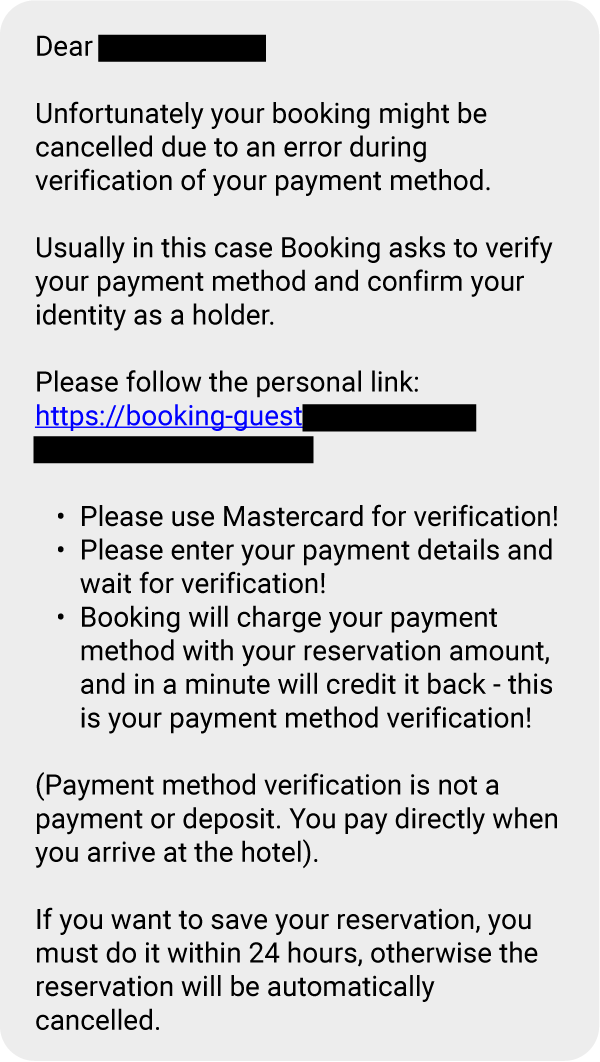 Another common scam involves receiving a message through an official channel claiming that you need to verify your credit card details to re-confirm your booking. The message, will include a link to a fake website designed to steal your sensitive information and money. Click the image on the right to see an example of this scam which resulted in Australians losing more than $337,000 in 2023.
How to avoid it
- Slow down: These messages often have a sense of urgency – pause for a moment before you act.
- If in doubt, contact the hotel: Use a verified channel (eg. call, social media, or email) to check if the request is genuine.
- Be suspicious of any links: Payment or additional information requests should always occur within the same secure booking site.
Travel document scams
As more countries around the world introduce electronic travel authorisations (like the UK’s recent introduction of their ETA), scammers are creating fake websites mimicking official government pages, tricking travellers into paying for fraudulent visas or travel documents.
Not only does this risk the theft of sensitive information and money, it could also land you in some hot water if you’re found to be travelling with fake travel documents.
How to avoid it:
- Follow advice from official sources: DFAT’s Smart Traveller website has all the information you need to know about visa or travel permits requirements for Australian passport holders and where to go to apply. If in doubt, contact the embassy, consulate or country representative directly.
- Be suspicious of fast and cheap offers: As these documents are issued by governments or their contracted providers, they all have a standard processing time and cost.
Stay alert and remember, if an offer seems too good to be true, it probably is.
Even when you're excited about an upcoming trip or booking last-minute travel, take a moment to slow down and look for warning signs of a scam. By staying vigilant and following these tips, you can help ensure a safe and enjoyable travel experience during the Easter break and beyond!