Chatbot of the Common People: Can AI stand in for the ordinary layperson?
For centuries, throughout the common law, courts have tried to determine the understandings, words and actions of the ordinary person – and now some of them are asking ChatGPT for help. Could it be the answer or will it just open a whole new can of worms?
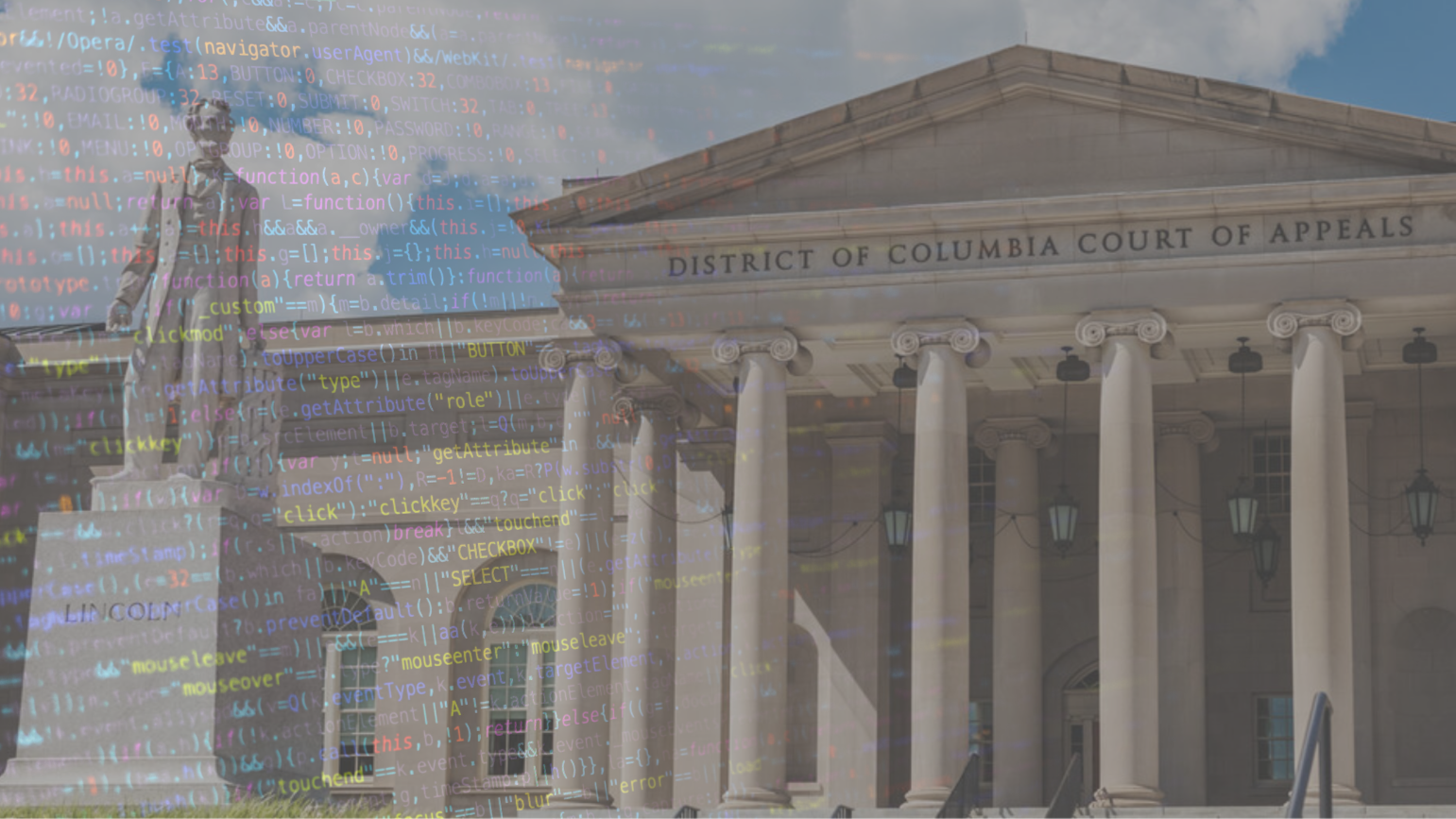
Could Generative AI aid courts in their understanding of the everyday?
Composite: Leslie Banks; Mitchell Luo/Unsplash
This broader piece formed the basis for 'The law relies on being precise. AI is disrupting that', an article written by Andrew Lim and Prof Jeannie Paterson and published in Pursuit, the University's award-winning research news website, on 23 June 2025.
Ordinariness is everywhere in the law. Think of the reasonable person “of ordinary intelligence and prudence” or the ordinary meaning of words based on “their general and popular use”. It pervades areas from consumer law (would the ordinary person have read the terms and conditions?) to statutory interpretation (what would this law mean to the ordinary person?) and beyond.
But judges, the people who resolve these questions of ordinariness, aren’t exactly particularly ‘ordinary’ people. They have specialised training and often work in cloistered chambers. For this very reason, the US Supreme Court for most of the nineteenth century mandated its justices ride town-to-town hearing cases to give them exposure to everyday citizens and conditions outside the capital.
Today, some judges are now offering an even more radical approach: seeking the counsel of ChatGPT.
On the Ordinary Meaning of Words

Was this trampoline installation 'landscaping'?
US Court of Appeals for the 11th Circuit
In mid-2024, facing a US Court of Appeals case about a trampoline instalment gone wrong in Alabama, Justice Kevin Newsom was struggling to decide whether an insurance policy’s coverage of ‘landscaping’ included the installation of a trampoline.
Justice Newsom checked three dictionaries and found three very different answers. His Honour considered a ‘visceral, gut-instinct’ feeling, only to decide it didn’t seem very legally compelling. [1] And then his Honour tried something radical.
Newsom J opened up ChatGPT and typed in two questions:
- What is the ordinary meaning of ‘landscaping’?
- Is installing an in-ground trampoline ‘landscaping’?
Justice Newsom would spend roughly two-thirds of the judgment justifying this decision and grappling with whether generative AI really can discern ‘ordinary meaning’. [2] The judge’s argument may seem compelling. After all, these models are trained on vast corpuses of the English language – books, newspapers, user prompts – covering all sorts of speech in all sorts of contexts. Their reading is not limited by background, interests or age in the way a human judge (or even dictionary-compiler) might be.
Drawing on this idea, Newsom J even predicted the rapid expansion of this methodology into statutory and constitutional interpretation. A professed originalist who long believed in the idea that any law could only be interpreted to hold the meaning it had when originally written, Newsom J had in the LLM a tool that could ostensibly simplify such analysis. His Honour, while acknowledging possible technical complexities, suggested that an LLM trained only on materials predating, say, 1787, could swiftly illuminate the meaning that ordinary American citizens would ascribe words at the time the US Constitution was drafted. [3]
All that said, Newsom J ended by sounding a note of caution: in his Honour’s view, LLMs should still remain “one tool among many”, to be held up and tested against dictionary meanings, historical context and common sense. [4]
From Common Meaning to Common Sense
Yet if LLMs can tell us what the meaning of something would be to the ordinary person, could they also tell us what that same ordinary person would do or know in certain scenarios?
Justice Joshua Deahl of the DC Court of Appeals certainly thought so. In February 2025, his Honour dissented in a case concerning whether leaving a dog in a car on a hot day amounted to criminal animal cruelty. [5] It hinged on a simple question: could you say, beyond a reasonable doubt, that the harmful potential of these actions was common knowledge?
Drawing on Newsom J’s example, his Honour turned to ChatGPT. Justice Deahl took two fact scenarios: the one in the case, and the one in an analogous case (involving a dog left outside in cold conditions). For the former, the chatbot advised “Yes, leaving a dog in a car under these conditions is very harmful”; whereas for the latter, it simply suggested “several factors” that harm might depend on. To Deahl J, this represented sufficient confidence – the former was common knowledge beyond reasonable doubt, and the latter was not. [6]
However, allowing ChatGPT to interpret a criminal standard seems somewhat more problematic than our earlier ‘ordinary meaning’ example. ‘Beyond reasonable doubt’ is an invocation of the presumption of innocence, itself a balancing of complex moral questions. More broadly, criminal law asks us to consider human behaviour against our intuitive sense of our society’s normative principles. It seems there needs to be some human input and some human messiness involved in this calculus.
When Common Sense isn't that Common...
 The ordinary man, while rhetorically tied to London buses and Melbourne trams, is a character of legal fiction.
Composite: LondonBusBreh; Liam Davies; Colin Smith / London Bus Museum
And perhaps that goes to the heart of the problem. The reasonable person with their ordinary meanings is, after all, entirely fictional. When judges speak of the hypothetical man on the Clapham omnibus (or to Melburnians, the person on the Bourke Street tram), they are not proposing grabbing a few commuters on their morning commute and doing a straw-poll [7]. Rather, they’re trying to reconcile tightly worded legal rules, contracts and principles with the unruly, corporeal world.
That disconnect is the wider question at stake – and ChatGPT can’t answer it alone, no matter how widely it reads.
LLMs whose processes are, at base, aimed at working out the most likely word to follow a bunch of others, cannot truly consider ‘common sense’. Their hallucinations, coupled with an overconfidence bias, mean they are just as (if not more) likely to offer up confident-but-rubbish answers in attempting to mimic human speech. Add to the mix concerns about bias, especially without clear understandings of the training data used on the free general-purpose models used in these cases (ChatGPT and Bard/Gemini), and these models no longer seem to be oracles of ordinary personhood.
Further, an inconsistent approach towards LLMs’ usage – using them to provide a sense of external authority when other analysis cannot substantiate a gut feeling – creates a dangerously false sense of security. They give a veneer of seemingly authoritative evidence to back up what ultimately remain instinctual reactions, rather than forcing the process of extensive engagement and logical reasoning that can refine those reactions. In China, where some courts have been implementing generative AI models aimed at aiding junior judges by offering them potential questions from the bench and generating reasons based on simple yes/no answers to disputed issues in the case, significant concerns about more junior judges relying on its reasoning have emerged. [8]
 Shenzhen Intermediate People's Court in China now offers reasons-generating AI models for junior judges
South China Morning Post
That said, even if generative AI could reason perfectly, the use of such models undermines a more fundamental aspect of judgment-writing and legal adjudication. Justice Robert Beech-Jones of the High Court of Australia suggested earlier this year that ‘judges give reasons to explain to the loser why they lost…[so they] know that they were heard’. Automating even part of this decision-making process is an abdication of judicial responsibility. It diminishes the transparency of decisions and the public’s confidence in them.
A judge’s core responsibility has remained unchanged across the centuries: resolving the tension between clinical legal language and the often-messy nature of our lived realities. The allure of LLMs’ data-backed outputs should not distract from the fact that these decisions are a technology-neutral and invariably imprecise endeavour. While it may present new pieces of information in making these decisions, generative AI cannot be treated as any more authoritative or reliable than any other source.
At least for now, context remains king – and still requires an element of good old-fashioned human judgment.
_______
Andrew Lim is a CAIDE Research Associate, currently in his first year of the Juris Doctor at the University of Melbourne, having completed a Bachelor of Science in Physics and a Diploma of Languages in Latin.
Many thanks to Calvin Collins, Damian Curran and Prof Jeannie Paterson for comments on an earlier version of this blog post.
_______
[1] Snell v United Specialty Insurance Company (11th Cir, No 22-12581, 28 May 2024) slip op 5–8 (Newsom J).
[2] Ibid 8–29 (Newsom J). Interestingly, when running these same queries through ChatGPT-4o at time of writing (April 2025), it more extensively engages with the counterarguments, opening with the claim that ‘it kind of depends on the context’, as opposed to the qualified ‘Yes’ given to Newsom J.
[3] Ibid 27–28 (Newsom J).
[4] Ibid 22, 28–29 (Newsom J).
[5] Ross v United States (DC, No 23-CM-1067, 20 February 2025) slip op 27–31 (Deahl J).
[6] Ibid 37–39 (Deahl J). We also re-ran these queries into ChatGPT-4o and Claude at time of writing (April 2025). ChatGPT-4o offered that ‘it is very harmful—and potentially fatal’ in the first case, and ‘it can be harmful’ in the second; and, when asked directly about whether it was suggesting a ‘beyond reasonable doubt’ standard, it agreed with Deahl J’s extrapolation. Claude answered the first with ‘Yes, [it] is extremely dangerous and potentially fatal’, and the second with ‘Yes, it's potentially harmful’, though claimed that neither conclusion met a ‘beyond reasonable doubt’ standard.
[7] At least not generally – though some have suggested, especially in consumer protection contexts, utilising juries to determine questions of ordinary or reasonable conduct. Indeed, Roberts CJ of the US Supreme Court suggested a few years back that some questions might be resolved by ‘tak[ing] a poll of 100 ordinary…speakers of English and ask[ing] them’: Transcript of Oral Argument at 51–52, Facebook v Duguid, 141 US 1163 (2021).
[8] This itself creates plenty of other worries, sufficiently extensive they will not be dealt with in this article.