Thinking about out-sourcing your love life to an algorithm?
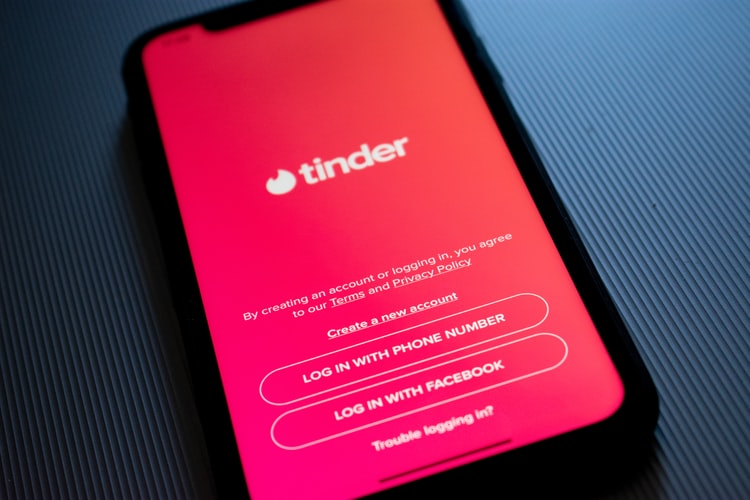
In August, the Choice Study highlighted issues of discriminatory pricing on Tinder. Co-Directors Jeannie Paterson and Tim Miller, with CAIDE Project Officer, Gabby Bush, discuss the issues of discriminatory algorithms, explainability and consumer protection.
Everything in our lives has moved online, but for lots of singles in your area, its been online for ages.
Tinder exploded into the dating scene in 2012 and users grew by millions even in the first two years. In 2020, Tinder has 50 million active profiles and is available in 196 countries.
The app boasts other interesting statistics like being the top-grossing non-game mobile app or that 13.6% of couples that met online end up in marriage – despite most users using it for hookup purposes.
However, behind the phenomena that is Tinder (or bumble, hinge or OKCupid) there are algorithms; algorithms that suggest potential matches based on a number of variables, such as gender, age, your school, and your personal interests. Some of the data is obvious, (have you set your radius to 5km in align with Victorian government restrictions?) lots of it is not so obvious.
The Choice Study released in August found that Tinder Plus was charging users over the age of 30 double what those under 30 were being charged; and the figures were inconsistent, with prices varying even in the described aged brackets. Furthermore, there was differential pricing between those in regional and urban areas, people who were queer and between binary genders.
Paying for premium services on dating app gives users extra services: an unlimited number of ‘swipes’ (how many profiles they can view in a 24 hour period,) allows you to see who has liked you already (on Tinder you can only see this after you have both liked each other,) to go back to a previous profile if you decide that you do like them after all, and view profiles of people in zones outside your direct geographical area. There is a variety of reasons that people pay for these extra services, many of them simply involving having to spend less time searching and more time matching.
However, the pricing difference for these services raises concerns over the tinder algorithm. It demonstrates what is sometimes called differential pricing, that is pricing that is tailored to each individual user depending on how much they are prepared to pay. Moreover, this isn’t accidental: differential pricing usually occurs by the design of the firm involved.
The explainability of a dating app algorithm
Co-Director of the Centre for AI and Digital Ethics, Associate Professor Tim Miller spoke with Gizmodo about the findings of the survey. Miller specializes in explainability of algorithms, and notes that Tinder offers no explanation for the prices quoted to users. What’s more, businesses are likely to be disincentivized from telling consumers what data they are using and how they are using it for fear of losing the trust consumers have in their businesses.
Miller suggests that a way to counteract this behavior from businesses could be users grouping together to see what prices they are being charged in order to push back and change the parameters.
But even if a group of people did have the time and energy to form a group of people to see this, we are talking about online dating. While there is now less taboo around online dating, there is still taboo around paying for online dating. This predisposes people not to disclose that they are paying for the app – making it easier to get around explaining their algorithms.
This loophole, fueled by the status quo, is where consumer protection law comes into play.
Protecting consumers from bias and discrimination
From a legal perspective this lack of transparency in the Tinder pricing model leads to two possible responses.
Some forms of discrimination, based on what are sometimes called ‘protected attributes’ are contrary to anti-discrimination law. Tinder claimed, in the Californian law suit which prompted the Choice Survey, that the age differential in pricing was due to the wealth of their users – older users, they claimed, would be able to afford to pay more for the service. Is this illegal?
Under the Universal Declaration for Human Rights , and in Australian Law, yes. Choice quotes an anti-discrimination specialist who says that Tinders’ differential pricing would be unlawful age discrimination.
Differential pricing based on other attributes may also be contrary to the Australian Consumer Law. If customers think they are paying the same price as the next person or even the ‘best price’ when they are in fact paying more, this may amount to misleading conduct contrary to law. Trivago was found to have engaged in misleading conduct earlier this year when its algorithm recommended hotel rooms based on who paid the most for ad clicks, not on the basis of the best price available. In addition, even if the terms of the contract users sign up to allow the provider to change the pricing without good reasons for doing that, then the terms may also be invalid because they are unfair under the Australian Consumer Law.
How do we make sure online dating is ethical?
In designing algorithms that don’t allow for discrimination and ensures consumer protections for users, we create a fairer platform for online dating.
But there are other insidious elements of allowing an algorithm to curate out dating choices for us for a fee.
While the Choice survey gets to the heart of the issues of the algorithm that generates prices, what are the algorithms doing with non-paying users? Are we seeing an algorithm that decides who finds love and who doesn’t according to problematic bias and discrimination against race, gender and age? The feedback that helps these algorithms to improve is based on whether users want to match with other people. If people prefer faces of the same colour skin as them, the matching algorithms will learn to segregate daters based on colour.
Even without endless swipes and the ability to see who has liked you already, finding love (or lust) can be difficult and is a deeply human thing. Are machines best placed to decide this for us? Or should we simply view them as a tool and give that person in the café our number on a napkin anyway?