Tania Pouwhare’s career was always guided by a love of humanity, but purely focused on economic policy – until her impact was expanded through the Atlantic Fellow for Social Equity program.
The University of Melbourne’s Indigenous-led Fellowship includes an intensive foundational year followed by a lifelong collaborative Fellowship program – an experience that cemented the importance of sustainability as an element of Tania’s work.
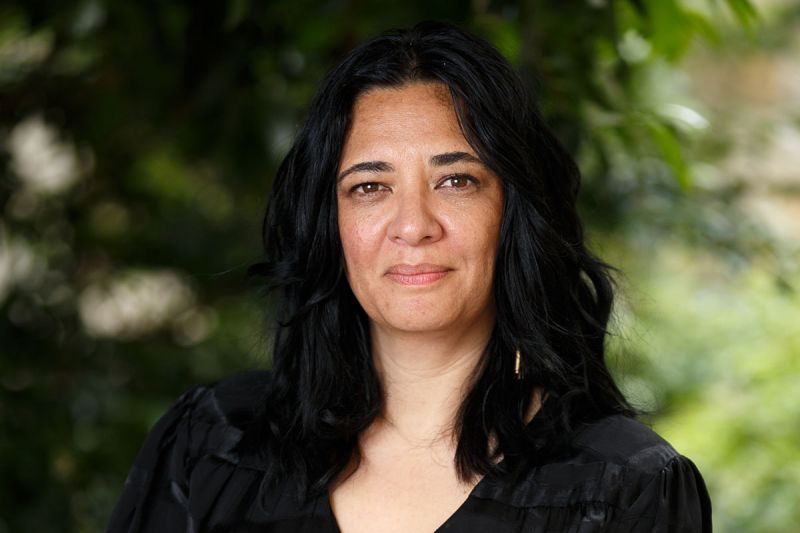
Tania Pouwhare
“New opportunities arose out of that and not just theoretical possibilities, but ones that I could actually implement because I had new tools, knowledge and people to draw on,” said Tania.
Although a sustainable career focus came with time, Tania has always felt a personal connection to the environment.
“As a Māori, your place in the world as part of nature, and obligations and responsibilities to it, is instilled in you from a very young age,” she said.
“All our cultural beliefs are tied to our planet's health, so much so that we even have forests, mountains and rivers that have legal personhood status here in Aotearoa New Zealand.”
Leading ambitious change
Most recently, Tania and two other Atlantic Fellows for Social Equity alumni came together to speak at the First Nations Clean Energy Symposium on 8-9 May 2024.
The symposium was an opportunity for First Nations leaders, businesses, clean energy industries and policy makers to come together and strategise for clean energy solutions across homes and communities.
“Our collective indigeneity is a real strength to be tapped into, and thanks to the leadership of the First Nations Clean Energy Network, we have an opportunity to start a trans-Pacific grass-roots movement that is meaningful and at scale,” said Tania.
Tania said her co-presenters at the Symposium, Karrina Nolan (Yorta Yorta) and Jonathan Kneebone, are outstanding Atlantic Fellows with a lot of experience in climate justice, environmental protections and epistemic justice.
“Our vision isn't for the faint hearted. It’s incredibly ambitious, and I couldn't think of two more expert people to team up with to learn from and collaborate with.”
For Tania, witnessing a colleague – a single mother of three – struggle to pay her inflated electricity bill through the pandemic inspired her to search for solutions to such injustices.
“Her budget for power was $2.60 per day, which simply isn't adequate for a reasonable standard of living,” said Tania.
“It struck me that, if in a parallel universe, other single mums owned the power company, there's no way she would've been cut off. People like a mother of three don't have any stake in the economy, but what if they did?”
This inspired Tania, Karrina and Jonathan to consider cooperatively owned, hyper local infrastructure – starting with the basics like energy.
“The real game changer for economic equity is power – who gets to decide the purpose of the economy, and who gets to benefit?” said Tania.
Growing self-determination
Tania also embarked on a new role in 2024, Pou Kahukura at Mana Ātea.
The role enables Tania to work with whānau (family) to support the mana motuhake (self-determination) of tangata whaikaha (disabled people).
Much of Tania’s work focuses on executing a Just Transition – an approach to moving towards sustainable development while doing the utmost to respect human rights – and her latest role is no exception.
“Tangata whaikaha aren't even on the 'radar' for a Just Transition but are at most risk of alienation as a result of climate change and its economic shocks,” said Tania.
“If you're Māori and disabled, you're also highly likely to be poor and have very limited choices.”
Tania is eager to ensure that tangata whaikaha have access to, and some control over, their food systems.
“We're also looking at quality housing that is universally designed, affordable, beautiful and low carbon, with collectivised opportunities for hyper-local, renewable energy generation.”
Prior to starting at Mana Ātea, Tania worked at Auckland Council and was “fortunate to be able to design sustainability” into her former role.
“As the General Manager of Innovation, I refocused our economic regeneration work on a Green New Deal,” said Tania.
“I've been incredibly lucky to support Māori and Pasifika-owned businesses registered with NZ's supplier diversity intermediary and a whole new market has been created, keeping jobs, profit, IP and opportunity circulating in the 'brown' economy.”
Beyond the business objective of fostering a greater, more inclusive circular economy, Tania also acknowledged that these projects support the goals of Māori people too.
“From an Indigenous perspective, an objective was to meet our obligations to both te taiao (natural world) and our people,” she said.
“We don't want to just be the workers, but the owners of and decision-makers in new ventures too.”
Game-changing connections
Reflecting back on her career, Tania can see that the Atlantic Fellowship for Social Equity marked a turning point.
“It wasn't really until I joined the Fellowship at the University that I found practical and tangible ways of integrating climate justice with my economic equity work through a Green New Deal approach,” said Tania.
A Green New Deal requires mass mobilisation through public policy, rather than incremental change, which Tania knows is inadequate for reaching climate targets.
But the highlight for Tania was the connections she made with Fellow alumni along the way – a community which continues to inspire and encourage her.
“I really enjoyed the varied and hybrid curriculum and range of expert presenters but, undoubtedly, it was the other fellows who made my time at Melbourne University a pure delight,” she said.
“Being part of a such a high calibre, Indigenous-led movement for social, economic and environmental change was the highlight.”
What’s more, Tania knows that the power of coming together with other passionate Indigenous leaders to ignite radical social change can’t be understated.
“Our regard for the natural world, how important it is to our cultures, is universal across Indigenous populations so we have a vested interest in ensuring we leave our biosphere healthy and sustainable for future generations.”
Stay connected
Your diverse alumni network offers unique opportunities for you to grow personally and professionally. Explore events, lectures, inspiring stories, global groups, and so much more.
-
Find an alumni event
From public lectures to alumni events that keep your community connected across the globe, see what’s on at the University of Melbourne.
-
Find a group
Join a vibrant alumni network in your local area to boost your career, build friendships, or connect with like-minded individuals.
-
Alumni Council
The Alumni Council champions your community worldwide, shaping events, student experience and more. Learn how to get involved.
How can we help?
FAQs and contact details
Find helpful answers to common questions or contact the alumni office.
Stay in the know
Learn how to set up your UniMelb account to access perks and discounts.
UniMelb account log in
Access your account to update your personal details and access benefits.