Woodward, Marles and Littlejohn Medals awarded for research excellence and impact
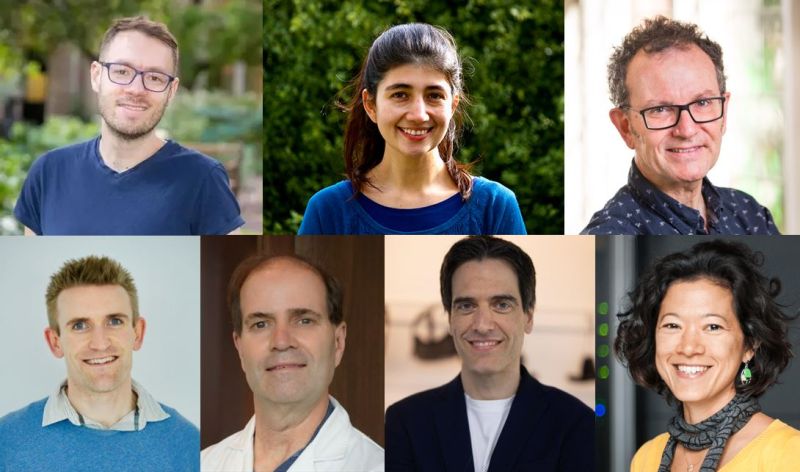
The University of Melbourne has announced the recipients of the 2026 Woodward, Marles and Littlejohn Medals, celebrating outstanding contributions to research excellence and impact.
Advancing knowledge in areas ranging from cancer immunotherapy to contemporary philosophy, youth mental health to the preservation of endangered languages, our researchers remain at the forefront of discovery, shaping innovation and tackling complex questions to improve the way we live.
University of Melbourne Deputy Vice-Chancellor (Research) Professor Mark Cassidy AM said this year’s medal recipients highlight the vital role University research plays in achieving enduring positive impact for the communities we serve.
“The 2026 medal winners have shown inspiring commitment to achieving impact through boldness, curiosity and excellence in their respective disciplines,” Professor Cassidy said.
“Their work is an important reminder that universities exist to expand the boundaries of knowledge, and our researchers play a critical role in enabling informed public discourse, decision-making and innovation.”
Woodward Medals
The Woodward Medals, established by former University Chancellor Sir Edward Woodward and Lady Woodward, recognise knowledge and research excellence across Humanities, Arts and Social Sciences (HASS), and Science, Technology, Engineering and Mathematics (STEM) disciplines.
- In HASS,Professor Samuel Baron has made an outstanding contribution to contemporary philosophy through a pioneering research program that challenges conventional understanding of the fundamental nature of reality. His published works have reshaped international debate on whether space and time are fundamental features of the universe or emerge from more basic causal structures.
- In STEM, Dr Iliana Medina Guzman led the largest global experimental study to date investigating how predators shape the evolution of animal colouration. Published in Science, the study was the first globally replicated experimental test of theories proposed by Darwin and Wallace more than 150 years ago, providing important insights into biodiversity conservation, habitat degradation and biological invasions.
Marles Medals
The Marles Medals are named in honour of Ms Fay Marles AM, an alumna and first female Chancellor of the University of Melbourne, and recognise significant research impact in HASS, STEM and Health and Medical Sciences (HMS).
- In HASS, Associate Professor Nick Thieberger has made a transformative contribution to the preservation and accessibility of linguistic and cultural heritage through the creation of the Pacific and Regional Archive for Digital Sources in Endangered Cultures (PARADISEC). Established to address the loss of valuable research records, PARADISEC supports more than 4000 users and provides access to over 46,000 curated items from 101 countries.
- In STEM, Professor Kim-Anh Le Cao was recognised for her profound impact on the life sciences through her development of mixOmics, the leading open-source software platform for integrating complex multiomics datasets (combining measurements from two or more distinct biological layers). The platform is used in 155 countries and has contributed to advances in areas including COVID-19 treatment, malaria vaccine development, livestock breeding and coral reef conservation.
- In HMS, Professor Mario Alvarez-Jimenez’s pioneering work in youth mental health led to the development of the Moderated Online Social Therapy (MOST) platform, a world-leading model of digitally enabled mental healthcare. Since 2020, the platform has been implemented across more than 500 services, supporting over 10,000 young people annually and facilitating referrals for more than 40,000 young Australians. It has since been expanded internationally across Europe and North America.
Littlejohn Medal
The Littlejohn Medal recognises contribution to knowledge and research excellence in Health and Medical Sciences (HMS). Named after the University of Melbourne’s Dr Jean Littlejohn OBE CBE MB MS DLO FRACS (1899-1990), the Littlejohn Medal for 2026 was awarded jointly to:
- Professor Phil Darcy and Professor Paul Beavis for their internationally recognised contributions to cancer immunotherapy and pioneering advances in chimeric antigen receptor (CAR) T-cell therapy for solid tumours. Their research has generated multiple patents, secured major national and international funding, and established pathways for first-in-human clinical trials.